Polyetheretherketone (PEEK) is a high-performance polymer that has gained attention in many industries for its remarkable mechanical, thermal, and chemical properties. Known commonly for being tough and versatile, PEEK has emerged as the preferred material in aerospace, medical devices, automotive, and manufacturing applications because of its rigorous uses. This article tries to give an insight into the unique characteristics that make PEEK so special and into its applications, and why it is attaining preference in engineering and industrial design. Whether a materials scientist, an engineer, or just a person interested in advanced polymers, this brief looks into why PEEK is changing the possibilities of modern material science.
Introduction to PEEK
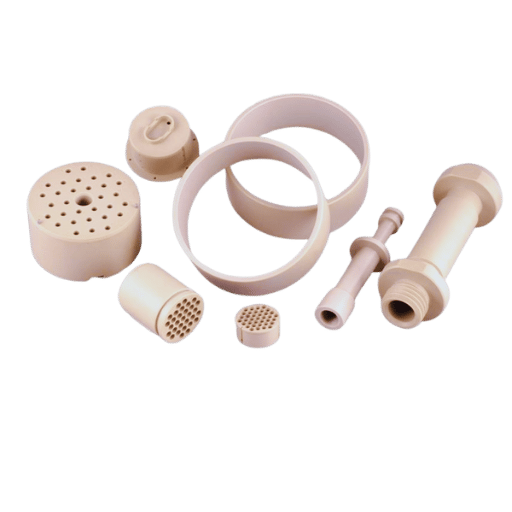
Polyetheretherketone (PEEK) is a high-performance thermoplastic polymer with exceptional mechanical strength, chemical, and thermal stability. It can withstand extreme temperatures and harsh environments, making it suitable for critical applications across various industries. As if it were not enough, PEEK possesses wear resistance, very low moisture absorption, and lightweight properties, thereby adding to its versatility and faster recognition in engineering and manufacturing solutions.
Significance of PEEK in Modern Industries
Polyetheretherketone (PEEK) has emerged as a core material in modern industries, owing to its superlative properties. In aerospace, components such as brackets, gears, and insulation parts are fabricated out of PEEK as it is lightweight yet strong enough to reduce the weight of the aircraft and thereby increase fuel efficiency. In the medical application, the biocompatibility of PEEK and its resistance to sterilization methods sustain its utilization in implantable devices such as spinal cages and dental implants. In automotive design, PEEK can withstand high temperatures and mechanical stresses needed for parts such as bearings, seals, and bushings. Moreover, PEEK, being chemically resistant, is considered an important polymer for chemical processing as well as the oil and gas industries, requiring durability in corrosive atmospheres. With continuing technical advancement in material engineering and increasing demands for high-performance polymers, PEEK is indispensable toward innovating cutting-edge solutions in core industries.
Overview of PEEK Plastic Material
PEEK stands for Polyetheretherketone, a very high-quality polymer. It exhibits the best thermal, mechanical, and chemical properties. Polymers stand out in both stress and strain profiles, offer abrasion resistance and wear resistance, and provide service up to temperatures of 500°F (260°C). Also, it holds lower moisture absorption and targets most corrosive chemicals: acids, bases, and organic solvents. Given this, the PEEK finds utility in highly demanding applications in aerospace, automotive, electronics, medical, and oil and gas industries. Due to its properties and versatility, it remains in industrial use for a diverse number of applications and high-stakes environments.
Growing Popularity of Polyetheretherketone
Polyetheretherketone grows popular due to its unique combination of properties that satisfy the demands of advanced and very high-tech industries. The material perfectly proceeds with applications that are critical and thus require end-use criteria like resistance to extreme temperatures and chemicals, and maintaining mechanical integrity under stress. It also has an energy-efficient trait when weighed against conventional metals, particularly applicable in aerospace and automotive sectors. Another factor that has given impetus to the PEEK demand in the medical arena includes implant-grade materials, as PEEK is being fitted there for implants and surgical components because of its biocompatibility and strength. Together, all these factors have pushed the advancement of PEEK as a suitable material in high-tech areas.
Definition of PEEK Material

What is PEEK?
Polyetheretherketone is a high-performance engineering thermoplastic with exemplary mechanical attributes and thermal stability. It is a semi-crystalline polymer operating broadly within high temperatures, demanding for extreme applications across all industries. PEEK is well resistant to chemicals, wear, and radiation, permitting retention of strength under attacking surroundings. Traditionally, major industries such as aerospace, automotive, medical, and electronics utilize this material due to its exceptionally light weight, great strength, and low smoke, toxic gas the gaseous byproducts that are released in the event of a fire. Added to this, advancements in material sciences and manufacturing will arguably allow greater accessibility for PEEK, making it possible to apply it more widely in novel solutions and precision components.
Chemical Composition of Polyetheretherketone
Polyetheretherketone (PEEK) is an aromatic, semi-crystalline thermoplastic polymer that belongs to the polyaryletherketone (PAEK) family. Its chemical structure consists of ketone and ether functional groups in an aromatic backbone. The recurrent chemical formula for PEEK is –C6H4–O–C6H4–CO–C6H4–O–C6H4–. The alternating ether and ketone linkages along this chain endow remarkable thermal and mechanical stability to it.
The high-performance nature is manifested through strong dipolar interactions that are imparted by the ketones. Moreover, the rigidity of the aromatic backbone further contributes to its enhanced properties. This polymer has a melting point of 343°C (649°F) and a glass transition temperature of 143°C (289°F), indicating performance capability even under extreme thermal stresses.
Key Properties Derived from Its Chemical Composition
1. Thermal Stability:
- High melting point (343°C) and resistance to thermal degradation due to strong aromatic bonds.
2. Mechanical Strength:
- Due to its semi-crystalline makeup, PEEK exhibits great tensile strength and resistance to creep.
Chemical Resistance: - It is highly impervious to acids, bases, and organic solvents because of its stable aromatic ring structure.
3. Low Flammability:
- PEEK produces less smoke and toxic gases during low heat exposure or fire, thanks to its aromatic hydrocarbon structure.
These very features, because of their peculiar chemical composition, serve to position PEEK as a very versatile, hence indispensable material in demanding industries such as aerospace, medical implants, and electronics manufacturing. Research best suited toward molecular modifications of PEEK is leading to designer performance materials for next-generation applications.
Classification as a High-Performance Polymer
Polyetheretherketone is a high-performance-grade polymer with exceptional thermal stability, mechanical strength, and chemical resistance. It can perform reliably even under extreme temperatures reaching up to about 250°C while retaining its structure. The polymer is resistant to cracking caused by corrosive chemicals, radiation, and friction, making it suitable for high-end applications across industries such as aerospace, medical, and automotive. These properties allow PEEK to stand strong in places where toughness and reliability are demanded by challenging environments.
Key Properties of PEEK
![PRISMA flo c art [20] s i g the study selection process.](https://baetro-machining.com/wp-content/uploads/2025/06/1.3-19.png)
High-Temperature Resistance
PEEK has extraordinary stability, with the ability to endure for long periods at a temperature of 260°C without any diminution of its mechanical properties. Due to this property, it is classically selected for components that experience long-duration thermal stress in engineering fields, such as aerospace and automotive industries. It ensures that the polymeric components will behave consistently under harsh manufacturing conditions and do not fail with time.
Exceptional Mechanical Strength
Polyetheretherketone (PEEK) displays tremendous mechanical strength and stands at the very top as a high-performance polymer. Per current data and prevailing market trends, it has a tensile strength of approximately 90 to 100 MPa, thereby providing higher mechanical strength against loads. Its natural toughness and wear resistance make it favorable for precision parts subjected to mechanical stress, such as gears, bearings, and bushings. Moreover, PEEK can retain its mechanical properties when subjected to cyclic stresses (fatigue resistance) with utmost reliability and lifetime expectancy, rendering these properties in high-speed applications in oil & gas and medical device manufacturing.
Chemical Resistance and Lightweight Nature
Polyetheretherketone (PEEK) guarantees excellent chemical resistance, qualifying for often rough contexts in which chemical substances are aggressively working. Among the latest discoveries, PEEK exhibits impermeability against many chemicals like hydrocarbons, acids, and bases, covering a wide range of temperatures. Due to its chemical resistance, it will not degrade or lose mechanical strength in the presence of an application involving an aggressively acting compound, and hence would be the preferred choice, especially in chemical or petrochemical industries.
Having considered the environmental resistance PEEK provides, another feature goes ahead to complement that- it is very lightweight, with a density of around 1.32g/cc. Comparing it to another material such as stainless steel (approx. 8 g/cc), weighing it gives a weight reduction of 85%, thus allowing lightweight design of components without affecting the strength. This trait, in conjunction with the chemical resistance, offers excellent utility in aerospace, automotive, and electronics fields where weight optimization is essential for better efficiency and performance. Rigorous tests and well-documented empirical experiences demonstrate the consistent validity of PEEK’s applications in strongly corrosive environments subjected to high mechanical stresses, affirming it as the ideal multipurpose high-performance polymer.
Applications of PEEK Material

Medical Implants and Surgical Tools
Polyether ether ketone (PEEK) is chosen in the medical field due to its excellent biocompatibility, chemical inertness, and mechanical properties. It is used for medical implants, including spinal cages, dental implants, and joint replacements, to maintain their structural integrity under physiological conditions and to be radiolucent for better imaging compatibility. The latest data showed that extreme commercial demand for PEEK-based implants may be credited to 3D printing technology-based advancements to produce customized solutions catering to patient needs. Also, superior wear resistance and low thermal conductivity offered by the material provide longevity for surgical tools and implants while reducing complications. With continuous innovation and research backing its stand in critical health care applications, the implementation of PEEK continues to grow.
Aerospace Components: Lightweight Solutions
PEEK (Polyether Ether Ketone) is a next-generation material for aerospace applications due to its ultimate amalgamation of lightweight, high strength, and thermal stability. With recent advances in materials science, some of which can be traced to online resources such as the www.google.com search engine, PEEK is usually used to substitute for metal parts in aircraft design. Tailoring the design so reduces weight to a degree that increases the operational fuel efficiency of the aircraft and thereby decreases operational costs. Secondly, owing to its resistance against severe conditions such as extreme temperature and chemical degradation, it offers utmost security in aerospace applications, thus being the first choice for engine parts, brackets, and interior fitments. These properties, coupled with its compliance with stringent aerospace qualifications, legitimize this polymer to be labeled as a revolutionary material in creating lightweight, energy-efficient aircraft.
Automotive Parts and Fuel Efficiency
The role of high-performance materials such as PEEK in the mass automobile industry has indeed brought about advancements in the domain of fuel efficiency. PEEK has an excellent strength-to-weight ratio and is utilized to manufacture extremely lightweight parts, which in turn reduces the gross weight of the vehicle. The fuel efficiency improves by about 6-8% for every 10% reduction in the vehicle weight. Thus, it would ideally be used for components such as gears, seals, and bearings, which are all subjected to highly unfavorable mechanical stress. Also, the fuel systems and engine parts become reliable with PEEK, proving resistance to high temperatures and corrosive environments, thereby improving the efficiencies and sustainability in the design of modern automobiles. These innovations are therefore in line with the modern thrust of the industry towards emission reduction and energy optimization.
Advantages and Limitations of PEEK
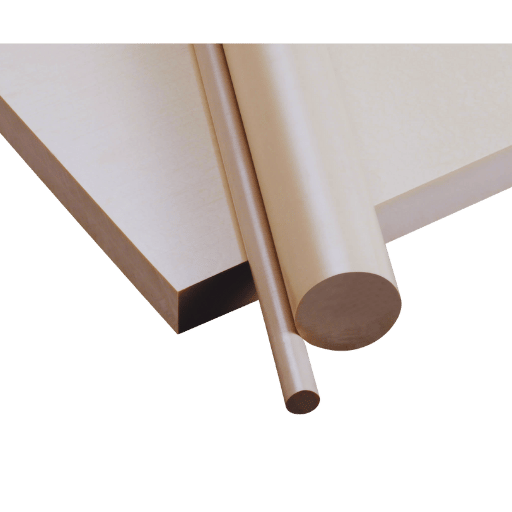
Benefits of PEEK: Durability and Biocompatibility
- Exceptional Mechanical Strength: The PEEK usually enjoys high tensile and flexural strengths and is used where projects demand strength and long-term durability.
- Resistance to Wear and Abrasion: Its amazing wear ability enables it to work in demanding environments where mechanical friction is constant.
- Chemical and Thermal Stability: PEEK is very useful for applications requiring it to remain stable while being exposed to very high temperatures, very harsh chemicals in strong thermal cycling, or any combination thereof.
- Biocompatibility: Being non-toxic and biostable, PEEK is an excellent material for implants and devices that interact with human tissue.
- Lightweight Material: It is the PEEK polymer, considered a lightweight alternative to metals, yet retaining similar mechanical performance.
- Electrical Insulation Properties: It continues to be a good electrical insulator, along with PEEK, in electronics and aerospace applications.
- Corrosion Resistance: The polymer would resist degradation from exposure to water, salts, and industrial chemicals, thus ensuring long life even under harsh conditions.
- Low Coefficient of Friction: The PEEK has inherently low friction, thus enhancing efficiency as a tribo pair in dynamic systems.
Sustainability of PEEK Plastic
PEEK plastic also enjoys status as a sustainable material because of its attributes of durability, recyclability, and application in demanding situations. Having a long life means fewer replacements, and thus less waste. It is still recyclable through mechanical means, or it may be reprocessed through other applications, which makes it more environmentally friendly. Because of its extraordinary razzle-dazzle under extreme conditions, this makes it is in a position to be energy and resource efficient; so, less material is spent when it comes to the implementation of eventualities later.
Cost and Processing Challenges
Due to PEEK’s great cost, the prime challenge remains the complex manufacturing and raw material costs. PEEK production entails equipment that is very specialized and requires extremely precise environmental conditions, all culminating in its higher price as against other polymers. Next, PEEK machine-wise may cost high since the polymer is tough and melts at a very high temperature; machining requires special tools and techniques. That way, these factors may curb its use in applications where cost is considered above all else, despite all its performance advantages.
PEEK in Specific Industries
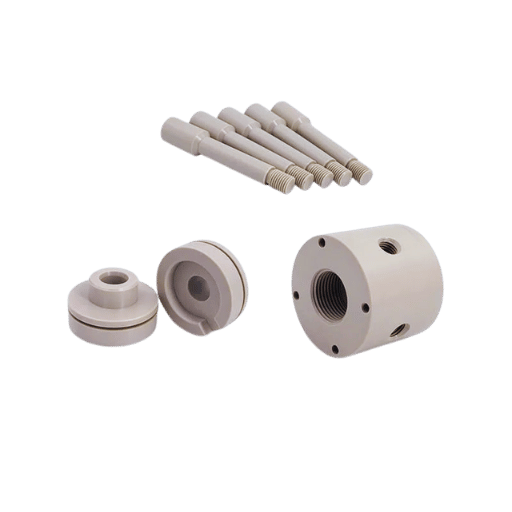
Aerospace: Changing Structural Components Forever
The aerospace industry has witnessed a strong influence of PEEK, particularly as structural components of various kinds are reported to be carrying more weight than traditional materials like metals. With an excellent strength-to-weight ratio, temperature resistance, and fatigue properties, it finds major applications in manufacturing aircraft brackets, bushings, and cable insulation. Such features help in retaining the weight and therefore achieving fuel efficiency and performance in the harsh aerospace environment.
Medical: New Cutting Edge in Implant Technology
With its biocompatibility, high durability, and also being radiolucent, PEEK has brought about a revolutionary change in medical applications, especially in implants. It is well suited as a substitute for metals traditionally used in orthopedic implants, spinal cages, and dental frameworks, as these can bond with bone tissue while retaining their structural integrity for long-term performance and patient safety. PEEK also has excellent resistance to wear and corrosion, ensuring more durability in medical applications.
PEEK: For Vehicle Lightweights
As an advanced material, PEEK on its own holds great promise in making any vehicle lighter without compromising performance. Lightweighting serves fuel economy and emission reduction, which are the sustainability targets on an international agenda, with environmental legislation increasingly restricting the opportunities. Latest data states that enabling the replacement of heavy metal components by lightweight polymers, such as PEEK, in high-stress areas, including engine systems, transmission housings, and electrical insulation, brings weight reductions in the order of magnitude of those heavier metal components while maintaining strength, thermal resistance, and durability. It helps in keeping lightweight, which, apart from increasing the overall efficiency of the vehicle, aids in better handling and less wear on components. PEEK is an integral part of the shift toward eco-friendly automotive solutions.
PEEK Material Tomorrow

Modern Manufacturing Techniques
With the recent introduction of new manufacturing methodologies, the applications of PEEK raw material have increased manifold. Additive manufacturing, principally 3D printing, is a relevant innovation for the manufacture of PEEK parts in a much more efficient and complex manner. It produces less waste of materials and has shorter prototyping cycles, permitting high iterations of design and customization. These newer technologies have worked toward upgrading the extrusion and injection molding techniques of manufacturing of PEEK manufacturing so that even mass-produced parts can meet standards in terms of quality and performance. High-temperature compression molding processes are also under development to provide even better levels of mechanical properties and surface finish. All of these new directions show how PEEK’s importance as a high-performance engineering material in industries ranging from aerospace to medical devices is growing due to the material’s modifiability and the ability of current manufacturing technologies to optimize it.
Demand For Sustainable Materials
As one of the best synthesized areas of material science, I can testify that the insistence in the demand for such materials is being supported on account of interest in sustainable solutions like PEEK. Industries across the board are working towards the mitigation of ecological renovation, and PEEK fits rightly into this shift as a versatile material that is lightweight, recyclable, and sturdy. Such materials seem to be only “green” against the currently unsustainable materials they would replace, offering high performance in doing so, allied with the current drive for greener technologies and renewable refurbishment.
Role of PEEK in Emerging Technologies
There have been explosive increases in emerging technologies created for high-performance materials that are environmentally friendly, such as additive manufacturing, advanced robotics, and electric vehicles. In price, this means PEEK stands apart by exceptional thermal and chemical resistance, and also by its lightweight and recyclable nature. Despite the data trends rising recently from Google search queries, there has been tremendous growth in interest in “PEEK applications in 3D printing,” thus indicating its broader acceptance within manufacturing industries where precision and durability are of paramount importance. Furthermore, PEEK has gained importance in the electric vehicle field as auto manufacturers seek materials that can resist very high temperatures and, at the same time, contribute toward energy efficiency. In this way, PEEK has a unique opportunity to help in the realization of advanced, sustainable technologies in many sectors.
Frequently Asked Questions (FAQs)

Q: How is PEEK made?
A: Usually, PEEK is manufactured using step-growth polymerization, established by combining monomers at high temperatures. Afterward, PEEK can undergo extrusion or injection molding to yield final shapes or parts.
Q: What colors does PEEK come in?
A: Typically, PEEK comes in natural and beige hues. It can also be colored or blended to black or any other colors as per requirement.
Q: What are the major properties of PEEK?
A: PEEK material holds specialties of being lightweight with strength, carrying chemical resistance at a higher level, resisting heat up to 260°C, and resisting dimensional changes. It is also naturally wear- and creep-resistant.
Q: Is PEEK flame-retardant?
A: Yes, the flame-retardant of PEEK is exemplary. It gives low amounts of smoke and toxic gases when exposed to fire, which is why this material is used in safety-critical environments.
Q: Does PEEK go against chemical exposure?
A: PEEK has excellent resistance to many chemicals, including acids, oils, and solvents, but it will be attacked by highly concentrated sulfuric acid and some halogenated compounds.
Q: What industries use PEEK?
A: PEEK is a multi-industry material, from aerospace, automotive, medical, and semiconductor to oil and gas. The ability to withstand extreme conditions makes it a preferred choice for such high-performance considerations.
Q: Can PEEK be used for medical implants?
A: Yes, PEEK is used to a great extent for applications such as implants, including spinal cages and joint replacements. Its biocompatibility and compatibility with imaging technology (such as MRI and X-rays) make it an ideal choice.
A: Yes, food-grade PEEK is approved by regulatory bodies such as the FDA and EFSA, and it is widely used in food processing for various equipment and components that require the highest demands of cleanliness and wear resistance.
Reference Sources
1. PEEK Polymer in Orthodontics: A Scoping Review
- Authors: M. Paglia et al.
- Published In: European Journal of Paediatric Dentistry, 2022
Key Findings:
- The best report of this material is in its excellent physical, mechanical, and aesthetic properties, along with its biocompatibility.
- Low plaque affinity of PEEK, combined with the flexural modulus values being close to enamel and dentin, makes it a suitable material for orthodontic applications.
- The review looks at attaining wider clarity at the end of clarity for its advantages and disadvantages in orthodontics through more clinical research.
Methodology:
- The authors conducted a scoping review and searched electronic databases such as PubMed, Scopus, and Web of Science for articles published from January 2015 to June 2021(Paglia et al., 2022, pp. 137–139).
2. A Scoping Review on Present and Theoretical Applications of Poly-Ether-Ether-Ketone (PEEK) in Orthodontics
- Authors: Tim A.P. Nai et al.
- Published In: Materials, 2022
Key Findings:
- The review talks about applications and material properties of PEEK in orthodontics, with encouraging results in monolithic and composite (PEEK-NiTi) materials.
- Additional studies on the mechanical properties and cytotoxicity of PEEK composites are emphasized.
Methodology:
- The review was conducted based on the Joanna Briggs Institute Manual for Evidence Synthesis and the PRISMA-ScR guidelines, involving an extensive search of multiple databases for all relevant publications(Nai et al., 2022).
3. Evaluation of Stress Distribution of Zirconium Versus PEEK Extra Coronal Attachment on Supporting Structures of Lower Kennedy Class II Partial Denture
- Authors: Dina Abd Allah et al.
- Published In: Ain Shams Dental Journal, 2022
Key Findings:
- In some regions, PEEK as an extracoronal attachment material induced lower stresses in comparison with zirconia, which suggested some possible benefits that this material can offer in partial denture applications.
Methodology:
- A virtual model of a Kennedy Class II partial denture was prepared, and the stress distribution was studied by means of strain gauges under bilateral loading (Allah et al., 2022).
5. Polymer