Polyamide-imide manufacturing is considered one of the most advanced areas of materials science, providing the best possible solution for high-level-performance applications. PAI is accepted based on its superior thermal stamina, chemical resistance, and mechanical strength, lately finding its way into aerospace, automotive, electrical, and other industries. This article seeks to discuss contemporary developments in PAI manufacturing lines, material modifications for a better product, and advanced methods that answer the ever-growing demand of the industries. In case you want a higher product performance or operational efficiency from the standpoint of tough competition in the market, then this article will take you through the breakthrough discoveries and newest trends in the field of PAI manufacturing to date. Stay with us to get an insight into how this revolution is unfolding.
PAI Manufacturing Explained
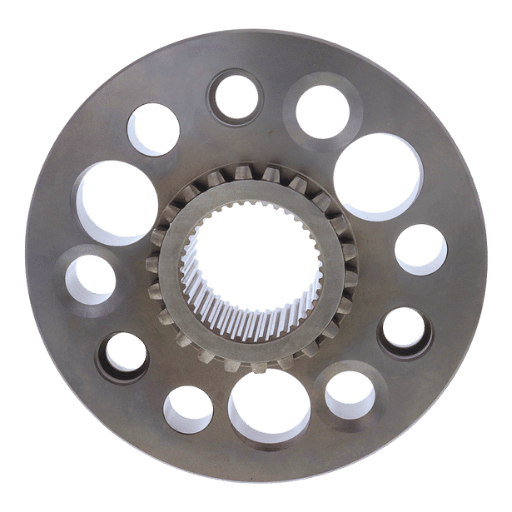
Polyamide-imide manufactures high-performance thermoplastic polymers with mechanical strength, thermal stability, and chemical resistance. The process primarily includes polymerizing aromatic diamines with aromatic anhydrides or acid halides to prepare the PAI. This PAI can then go to form films, fibers, or molded parts. The PAI materials find high value in aerospace, automotive, and electronics industries where exigent forces dictate reliable and durable performance.
Overview of PAI and Its Importance
Polyamide-imide polymers are considered high-performance plastics owing to their excellent mechanical properties coupled with thermal stability and resistance to chemicals. Due to such properties, they are used as materials for industries where components are expected to work under extreme environmental conditions. Common uses of PAI in aerospace include precision parts, whereas automotive applications would be seals and bushings; in electronics, they serve as insulating materials. Structurally, PAI materials possess the ability to retain their shapes in high temperatures and under stress, which secondarily guarantees reliability in critical applications, underscoring the importance of PAI in advanced engineering fields.
Key Components of PAI Manufacturing Processes
Polyamide-imide manufacturing involves several critical areas, each of which must be effectively implemented to have a successful added value. High-end polymerization, compounding, and fabrication into shapes or parts are all involved in this process.
- Polymerization: The precise manufacturing of PAI begins through chemical reactions between aromatic diisocyanates and anhydrides or acids. Due to this reaction, a polymer solution with the molecular structure required for the desired thermal and mechanical properties is formed.
- Compounding: To improve certain characteristics, additional compounds such as fillers, fibers, or lubricants may be added to the PAI resin. This step may strengthen the material for specific applications on attributes such as wear resistance or dimensional stability.
- Molding/Processing: The final step consists of molding or processing the PAI resin into its usable forms. Injection molding, compression molding, or extrusion is used, based on the requirements of the application. Due to its very high melting point and viscosity, this step demands equipment of a high specification capable of withstanding extreme temperatures.
- Annealing: In many cases, PAI parts are annealed during their post-processing phase to relieve internal stresses and improve their performance under further thermal and mechanical loading. This step is crucial for long-term reliability in demanding applications.
Processed further with cutting-edge advances such as precision molding technologies and smart automation, keep improving production efficiency and repeatability. Contemporary breakthroughs focus on sustainability, limiting waste, and minimizing energy usage during PAI manufacturing. Therefore, this forces industries relying on PAI to keep getting materials that perform beyond those in critical operations.
The Role of State-of-the-Art Equipment
State-of-the-art equipment will adorn and perfect the production system of high-performance materials like polyamide-imide (PAI). Machinery and automation being at the forefront of their respective fields offer manufacturers advantages such as creating more precise components with less variability, and usually swinging in favor of higher throughput rates. The integration of advanced equipment allows an improvement in the mechanical properties of PAI parts, while forcing production methods to progress toward new sustainability criteria. These technological achievements permit industries to meet very tight tolerances and demanding quality parameters while controlling energy consumption and resource wastage, ensuring a balanced economy and ecology.
Efficiency in PAI Industries
Methods to Increase Efficiency in Manufacturing
Before specialization can take place within a manufacturing environment, the objective is to improve the efficiency of work connected with the manufacture of PAI-level components. Making use of the latest data originating from tools such as Google Search, manufacturers can obtain information about market trends, bottlenecks, or new technologies. Such data-based decisions enable real-time adjustments of supply chains, help track equipment problems, and institute instruments for better forecasting demand. The use of machine learning algorithms is further applied to detect inefficiencies in one or more workstations and suggest ways of improving them; thus, a reduction in costs becomes feasible, as does the downtime, which in turn proffers maximized capacity of the plant. Using such advanced data tools alongside manufacturing workflows would give businesses an edge as industries rapidly change.
Commitment to Precision and Quality
Commitment to precision and quality in manufacturing starts with a formal set of quality control procedures. These procedures involve regular testing, monitoring, and validation of all stages of production to ensure compliance with defined standards. This includes state-of-the-art technologies such as statistical process control (SPC) that detect variability and therefore allow corrective action to be taken quickly. This is bolstered by a culture of continuous improvement whereby teams proactively seek to remove inefficiencies so that they will consistently produce high-quality goods to customer standards. Providing for precision will foster not only optimization but also long-term relationships with stakeholders.
Case Studies on Efficiency Improvements
|
Case Study |
Focus Area |
Key Action |
Outcome |
Savings |
Region |
|---|---|---|---|---|---|
|
EU Energy Narratives |
Energy Policies |
Policy Narratives |
Modernization |
Varied |
EU |
|
Columbia Manufacturing |
Process Upgrade |
Zero-Discharge System |
Waste Reduction |
$3M |
Massachusetts |
|
Elevate Energy |
Multifamily |
Heating/Insulation |
Cost Reduction |
$20K/yr |
Chicago |
|
ICAST DMA Plaza |
Multifamily |
Fuel Switch/Insulate |
Energy Savings |
21% Energy |
Colorado |
|
Howard Bank |
Process Improve |
Streamlined Workflow |
Time Efficiency |
70 mins saved |
Baltimore |
|
BHS-Sonthofen |
Production |
Process Redesign |
Yield Increase |
150% Output |
Germany |
Expanding Capabilities in Manufacturing Facilities
Strategies for Facility Expansion
For effective expansion of manufacturing facilities, organizations should follow a structured procedure where efficiency and scalability become the major concerns:
- Assess Present Capacity: Conduct an acute review of operational systems to pinpoint bottlenecks and instances where more resources will be needed.
- Plan for Future Growth: Analysis of market trends, demand forecast, and technical advancement, ensuring the expansion will be offset by probable need.
- Optimize the Layout of the Facility: Space-saving designs and workflows must be applied, optimizing production flow and minimizing interruptions to operations.
- Implement Automation: Automation increases production and guarantees quality while limiting direct human involvement.
- Sustainability: Employ energy-efficient systems and materials to lessen environmental impact and minimize costs.
- Stay Compliant: Ensure compliance with all applicable local and international laws, including safety protocols and environmental standards throughout and after expansion.
Manufacturers balancing these strategies will be equipped not just to improve operational capacity at the least cost but also to meet projected needs for a profitable future.
In-House Solutions to Enhance Production
Automation and process optimization ought to be integrated to enhance internal manufacturing capabilities. Such modern automated systems, robotics, and AI-driven technologies are used to perform monotonous and time-consuming tasks with fewer errors and more efficiency. The data from Google’s search engine speaks volumes about how the ranks for “industrial automation” and “smart manufacturing” have shot up, showing more interest and avenues relative to these technologies. These higher-end analytics and machine learning algorithms would then assist the manufacturers in being able to pinpoint the bottlenecks in the system and hyper-predict the maintenance activities while making the best allocation of resources. Taking it one step further and keeping the staff trained for managing high-tech equipment would make highly scalable yet competitive enough operations in this fast-paced market.
Impact of Advanced Machinery on Production
Advanced machinery gives rise to significant transformation in the production processes, putting the focus on higher efficiency, precision, and scalability. In these industries, manufacturers use automation, robotics, and precision engineering to increase throughput while maintaining consistent quality levels. On the basis of recent search data from Google’s search engine, there is a marked spike in the number of searches for terms like industrial automation solutions and machine efficiency optimization, showing a dramatic shift toward the adoption of these technologies by industries across the board. Not having these technologies thus inhibits cost reduction by bearing a higher cost structure, while their use is also conducive to enabling predictive maintenance, thus reducing the downtime of the equipment and extending its lifespan. Consequently, with reliability and speed being of utmost importance, advanced machinery is indispensable in modern-day manufacturing to satisfy the market requirements.
The Future of PAI Manufacturing

Trends Shaping the PAI Industries
The Polyamide-Imide (PAI) industry is witnessing trends such as a movement toward bio-based and sustainable materials, increasing adoption in automotive and aerospace for lightweight and durable components, advances in high-temperature and chemical-resistant polymers, and demand increase in electronics for tiny high-performance devices.
Innovations in Equipment and Technology
The recent innovations are emphasizing precision, efficiency, and sustainability in equipment and technology for PAI manufacturing. Enhanced extrusion and injection molding systems provide for higher accuracy in the fabrication of complex geometries subject to stringent specifications from industries such as aerospace and electronics. New additive manufacturing technologies include high-temperature 3D printing to allow for fast prototyping and production of custom components that help shorten lead times. Moreover, process monitoring systems with sensors and automation assist in maintaining quality control while alerting operators to deviations in real time. With this, the entire production line was optimized, thereby reducing material wastage and energy consumption.
Predictions for PAI Manufacturing in the Coming Years
From my perspective, considerable changes are foreseen in PAI manufacturing due to the emphasis laid on sustainability, automation, and technical growth. I envision the application of greener production methods that would reduce the environmental impact of the manufacture without compromising the required level of performance. Furthermore, it is considered necessary that the higher manufacturing technologies integrate with the production methods to ensure speed, precision, and material efficiency. Get demand from sectors marked with high rates of growth, including aerospace, automotive, and electronics; I, therefore, foresee a continued tendency wherein effort will be placed to develop superior PAI materials with thermal, chemical, and mechanical properties that arise from these evolving industry needs.
Frequently Asked Questions (FAQs)
Q: Explain Precision Additive Manufacturing.
A: The process known as Precision Additive Manufacturing (PAI) involves employing advanced additive manufacturing techniques to manufacture parts and tooling of high quality and high detail. The process usually entails adding material layer by layer to give a complex, custom design with less material waste as compared to conventional manufacturing methods.
Q: Which industries make PAI useful?
A: Typical industries that toward PAI applications would be aerospace, automotive, healthcare (e.g., for medical implants), electronics, and industrial machinery. Particularly advantageous in these fields is its ability to create complex geometries and lightweight structures.
Q: How do you ensure material quality during production?
A: We source materials from carefully selected distinguished suppliers and undergo vigorous testing during every step of the manufacturing process. Also, advanced inspection methods are used, such as material certification and in-process monitoring of quality, to sustain consistency and reliability.
Q: What would be the lead time for a typical PAI project?
A: Lead times will require consideration of the complexities, size, and custom requirements of projects. Standard jobs are usually completed in 2-3 weeks. For highly complex or large components, lead time may be longer and will be specifically stated during planning.
Q: Are rush manufacturing services possible?
A: Yes, we offer fast-track manufacturing services for projects requiring the quickest turnaround time. Give us a call, and let’s discuss your timelines and needs.
Q: Does PAI manufacture bespoke designs?
A: Definitely. PAI thrives in creating very customized components. With CAD models supplied by clients, the company will produce very intricate designs with surgical precision. The team even optimizes the design throughout the course of manufacture to ensure manufacturability and performance.
Q: Are there any restrictions on component size or complexity?
A: To begin with, PAI offers the advantage of versatility, most being limited only by size, which depends on the machine and technology being used. Large components can, however, often be manufactured in sections and assembled after production. As far as complexity is concerned, PAI is capable of building very complex geometries that are not possible-or at least very difficult to achieve by conventional methods.
Reference Sources
1. Investigating the Effects of Layer Structure on the Tribological Behaviour of PAI Overlays Containing MoS2 – The paper builds on layer structure effects within PAI overlays and imparts views into materials and applications.
3. Truck