


Polytetrafluoroethylene (PTFE), widely known as Teflon, is an exceptional polymer with several attributes that make it indispensable across several industries. These include excellent resistance to heat and chemicals and low-friction properties, all of which have made PTFE the material of choice in almost every application from the aerospace industry to food processing. Machining PTFE is no ordinary task: the challenges faced are ones to test any CNC machinist. This guide shall give you the necessary insights and techniques to ensure that working with this versatile yet tricky material comes with precision and efficiency. From troubleshooting surface finishes, reducing tool wear, to understanding cutting parameters, this post will navigate you through the necessary aspects of machining PTFE successfully and confidently.”
Understanding PTFE and Its Unique Properties
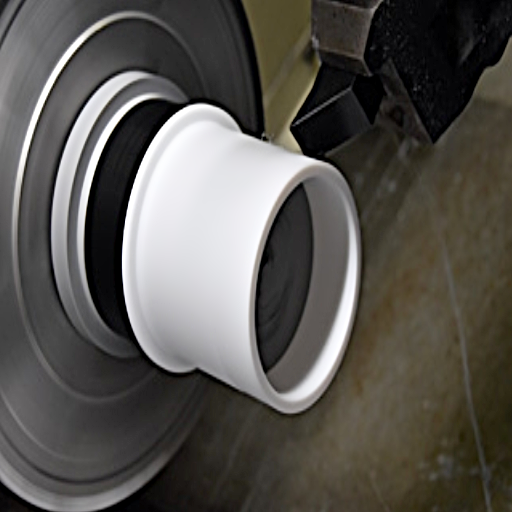
PTFE is a high-performance polymer known for its unique combination of properties. With chemical resistance, an extremely low coefficient of friction, and the ability to withstand temperatures from -328°F to 500°F (-200°C to 260°C), PE accomplishes extreme tasks. It is non-stick in character and so finds a wide variety of applications encompassing seals, gaskets, electrical insulation, etc. However, it presents problems in machining due to its softness, tendency to deform under pressure, and poor heat dissipation. Therefore, a good knowledge of these characteristics is vital to effectively working with PTFE and ensuring precision and durability in the finished product.
What is PTFE?
Polytetrafluoroethylene (PTFE), the synthetic fluoropolymer of tetrafluoroethylene, is commonly known as Teflon. It is considered to have many noble attributes: superb chemical resistance, low friction, non-reactivity, and a wide temperature range within which it operates. These properties have made PTFE the material of choice needed in the aerospace industry, electronics, chemical processing, and cookware manufacturing. PTFE was discovered in 1938 by Roy J. Plunkett and has revolutionized materials in a way that they are unmatched in durability and non-stick characteristics. Today, PTFE remains a key player in manufacturing products ranging from industrial seals to non-stick frying pans.
Material Properties of PTFE
Being famous for its extraordinary properties, PTFE must undoubtedly be one of the materials used in many engineering and manufacturing activities. Below are the material properties of PTFE with detailed data in support:
- Thermal Stability
PTFE has an incredible operating temperature range between -328°F (-200°C) and 500°F (260°C). Applications in extreme cold or heat will pollute this material, leading to its degradation or even loss of mechanical properties.
- Chemical Resistance
PTFE is famous for resisting almost all chemicals. Some of them are acids, bases, solvents, and the like. Corresponding to such inertness, PTFE does not react, corrode, or degrade even when highly reactive substances, such as sulfuric acid and hydrogen fluoride, are brought in contact with it.
- Very Low Friction Coefficient
PTFE has one of the lowest friction coefficients for any solid material, varying from about 0.05-0.10 depending on the load and conditions of sliding. This means it is a perfect option for bearings and seals and surfaces needing to wear little to no lubrication.
- Dielectric Properties
PTFE has one of the highest dielectric strength values, which stands between 60 and 120 kV/mm, making it the best insulator for high-performance electronic applications. Further, this polymer exhibits a very low dielectric constant of about 2.1 over a broad frequency range.
- Non-stick Surface
Low surface energy imparts to PTFE its non-stick property. Most substances find it hard to stick to. This property is especially significant in cooking and industrial applications where smooth, easy-to-clean surfaces are required.
- Water and Moisture Resistance
PTFE is hydrophobic in nature, meaning it repels water, and water absorption is almost nil, less than 0.01%. This property is utilized for outdoor usage or when used in humid and wet conditions.
- Tensile Strength and Flexibility
PTFE exhibits a tensile strength in the range of 2,000-4,000 psi, depending on how it was manufactured and processed. It remains flexible even at extremely low temperatures, an essential property in dynamic applications.
- Density
With a 2.2 g/cm³ density, PTFE is relatively lightweight for its robustness and performance.
Because of its unique features, PTFE has continued throughout history as the chosen material of industries specified for stability, durability, and reliability in extreme conditions. Recent advances in the processing and reinforcement of PTFE, however, are rendering it technically better and widening its commercial applications.
Comparison with Other Thermoplastics
Commonly called Teflon, some develop life-threatening behaviors if not considered in an application. PTFE, more widely known as thermoplastics for its unparalleled resistance to chemicals, frictional property, and high-temperature tolerance, has low mechanical strength and is economically highly priced compared to cheaper materials like HDPE, PEEK, and ETFE.
|
Parameter |
PTFE |
HDPE |
PEEK |
ETFE |
|---|---|---|---|---|
|
Temp. Resist. |
Up to 327°C |
Up to 140°C |
Up to 400°C |
High |
|
Chemical Resist. |
Excellent |
Good |
Very Good |
Excellent |
|
Friction |
Very Low |
Moderate |
Moderate |
Low |
|
Durability |
Moderate |
High |
Very High |
High |
|
Cost |
High |
Low |
Very High |
Moderate |
|
Processing |
Complex |
Easy |
Moderate |
Moderate |
|
Applications |
Seals, Bearings |
Pipes, Tanks |
Aerospace, Med |
Coatings, Films |
Challenges in Machining PTFE
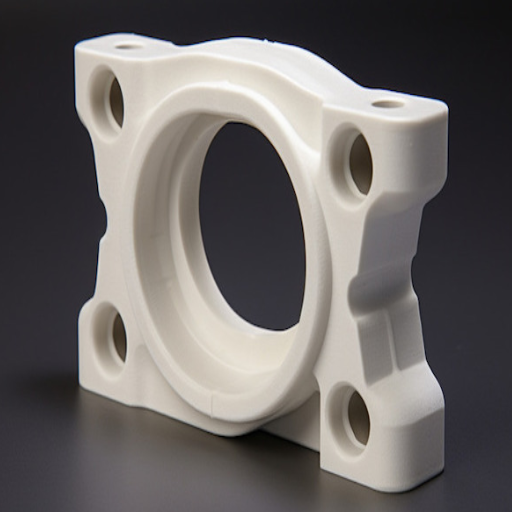
One must consider specific technical challenges unique to machining PTFE:
- Softness and Deformation: Since PTFE has the lowest hardness and malleability, it can easily form surface deformations. Such conditions are prevalent under high pressure or heat. Designers and operators must carefully control forces and speeds applied during cutting.
- Thermal Expansion: Due to heat generation, PTFE has a high coefficient of thermal expansion, which may cause changes in its dimensions during or after machining.
- Poor Heat Dissipation: This polymer tends to experience overheating due to its low thermal conductivity. Overheating may adversely affect surface characteristics or cause warping.
- Tool Wear: Despite being regarded as a good abrasive because it is soft, PTFE offers slipping of the tool and contributes to uneven wear on its edges.
- Dimensional Precision: PTFE tends to creep and exhibits elastic recovery from cutting, so maintaining tight tolerances is nearly impossible.
Addressing and overcoming these peculiar problems may require special tools and techniques and careful process optimization.
Why PTFE is Difficult to Machine
Choosing to machine this fluoropolymer will prove to be challenging due to the very nature of PTFE’s physical and chemical characteristics. The things contributing to its recognized non-stick property, low friction, clampage, and holding during machining become nearly impossible. In machining, the material has a high rate of thermal expansion. Minute increases in temperature during cutting can yield dimensional instability that detracts from precision. In addition, PTFE deforms by creep because it is readily deformable. Such deformation would prevent the achievement of exact tolerances or a clean cut edge on a machining process. With all this, the poor thermal conductivity of the material would prevent the dissipation of heat generated during machining. This could then aid to change its properties or cause a surface finish defect. Special tooling, low speeds, and advanced machining techniques must be used to overcome these challenges and still achieve the desired accuracy and finish.
Common Issues in PTFE Machining
One of the most common issues encountered while machining PTFE is dimensional stability. Since PTFE has a very high coefficient of thermal expansion, slight temperature fluctuations during machining can lead to greater dimensional changes, rendering parts out of specification. Additionally, its tendency to deform under mechanical stress makes tight tolerances difficult. Also, a clean, burr-free edge is often tricky because of its softness and low friction coefficients; the material can smear or tear rather than cut cleanly. Therefore, solutions may include adopting special tooling designs and cutting parameters under tight control to maximize precision and minimize surface blemishes during machining. Another excellent alternate approach could incorporate going all the way and implementing cryogenic machining to keep deformations away and advance machining.
Strategies to Overcome Machining Challenges
- Specialized Cutting Tools
Soft materials like PTFE need special care when cutting to ensure clean cuts and minimal burrs. The cutting tools generally have sharp edges with polished surfaces to avoid friction and dragging of the material.
- Cutting Parameters
In machining operations, feed rates, spindle speeds, and cut depths substantially affect the quality of machining. Low speeds with high feed rates are generally preferred to avoid overheating and deformation of the material.
- Use of Coolants
The application of correct coolants or lubricants during machining allows the dissipation of heat and friction to preserve the tool’s life and material integrity. Moreover, coolants also help wash off the chips from the surface to prevent damage.
- Cryogenic Machining
As an advanced technique, cryogenic machining involves using liquid nitrogen to cool the material. This increases cutting precision and reduces deformation by limiting thermal expansion and increasing rigidity.
- Tool-Path Optimization via CAM Software
CAM software helps prepare toolpaths that minimize useless moves and optimize material removal, maintaining noticeable uniformity in finish quality and the highest operational efficiency.
Applications and Industries Utilizing PTFE Machining

After considering extraordinary attributes such as superior chemical resistance, low-friction properties, and heat resistance, PTFE machining finds application in various industries. A few prime applications and industries include:
- Aerospace
PTFE is used in seals, gaskets, and insulation materials because it can withstand extreme temperatures and chemical exposure.
- Medical
PTFE instruments, implants, and tubing are chosen due to their biocompatibility and inert nature.
- Electronics
PTFE is an insulator in wires and cables because it possesses supreme dielectric strength capabilities and thermal resistance.
- Chemical Processing
Due to its ability to resist corrosion, PTFE serves best as an interior lining, sealing, and fitting material for corrosive chemical processing equipment.
- Food Processing
PTFE’s non-stick and food-safe features are applied in conveyor belts, baking molds, and food-grade seals.
Industries That Benefit from Machined PTFE
- Aerospace Industry
The aerospace domain has so much to exploit from machined PTFE with its high performance in demanding situations. PTFE is used in seals, gaskets, and insulators for systems involving space and air, which are affected by high temperatures and have low friction. Aero-PTFE market trends reflected that the segment is poised to grow at a CAGR of 5.8% during 2023-30, the impetus here being a rising demand for lightweight yet durable materials in aircraft manufacture.
- Medical Industry
PTFE finds applications in medicine due to its nontoxic nature, inertness, and sterilization ability. It is, therefore, widespread in catheters, tubing, implantable devices, and surgical instruments. The global PTFE medical market is expected to cross USD 900 million by 2028, and its adoption in minimally invasive surgical procedures will contribute to growth.
- Automotive Industry
Within the automotive sector, PTFE finds applications in fuel hoses, gaskets, brake systems, and corrosion-resistant linings. It does well for vehicles operating under high pressures and varying temperatures, which is a requirement of modern vehicle designs. Statistics indicate that PTFE automotive applications are expected to grow steadily at a CAGR of 4.2% through 2028 due to the industry’s focus on efficiency and sustainability.
- Electronics and Telecommunications Industry
Due to its high dielectric properties and heat-resistance capacity, PTFE is used for cable insulation, connectors, and high-frequency boards. The advent of 5G technology and advanced communication systems has further aided the demand for PTFE in this sector, with a market growth forecast of about 6% each year for the next five years.
- Renewable Energy Industry
The renewable energy industry, especially in wind and solar power systems, enjoys the benefits of PTFE’s corrosion-resistant and highly durable nature. PTFE is used in bearings, seals, and weatherproof coatings. This market segment is booming, bolstered by the worldwide push for sustainability, whose growth rate in renewable energy-associated PTFE applications surpasses 7% annually.
By incessantly innovating and tailoring to the specific needs of different industries, machined PTFE has firmly grasped its place as a versatile and indispensable material among high-demand sectors. Its endurance, chemical resistance, and capability for use in various ways will guarantee that it remains in the limelight for present and future markets.
Uses of Machined Teflon Parts
A wide range of industries use machined Teflon parts because of the extraordinary properties they possess. The automotive sector employs Teflon to seal parts like gaskets and bearings because of its resistance to high temperatures and chemical corrosion. Surgical tools, catheters, and implantable devices are another area of Teflon usage, where its biocompatibility is key. The food and beverage industry is another hub of application, wherein Teflon coatings and processing equipment are used owing to food-safe certifications and resistance to contamination. Also, from an electronics viewpoint, Teflon is a fabulous insulator for wires and cables, barring electrical conduction; it has exceptional dielectric properties. Machined Teflon remains a subject combining durability with versatility to answer many pressing needs of today’s industries.
Case Studies of PTFE in Action
Thanks to low frictional qualities, chemical resistance, and temperature tolerance, PTFE is widely applied in the aerospace, medical, food processing, and chemical industries.
| Industry | Application | Key Benefit | Outcome |
|---|---|---|---|
|
Aerospace |
High-temp seals |
Heat resistance |
Improved durability |
|
Medical |
Rotary seals |
Low friction |
Enhanced performance |
|
Food Processing |
Conveyor parts |
Non-stick, durability |
Reduced downtime |
|
Chemical |
Vessel linings |
Corrosion resistance |
Extended lifespan |
|
Semiconductor |
Waterproof seals |
Chemical resistance |
Reliable operations |
Achieving Optimal Results in PTFE Machining

Correct selection of machining operations and some consideration of material properties best accomplish the machining procedure for PTFE. Due to the softness of PTFE coupled with the low coefficient of friction, cutters with the correct geometry and sharp, crisp cutting edges have to be utilized so that the material’s deformation does not occur as impure cuts are produced. Proper speeds and feeds must be maintained to prevent overheating, as the melt temperature of PTFE is pretty low. Any time machining is carried out, it would be wise to keep the material supported as much as possible to reduce the chances of bending or lateral movement. Concentrating on these crucial aspects helps manufacturers develop excellent quality PTFE articles, exhibiting consistent precision and performance.
Tips for Machining Teflon® with Tight Tolerances
- Use Sharp Tools
The low coefficient of friction and the softness of Teflon® necessitate tools with sharp edges. Dull or exhausted tools may deform the material, create a bad finish, and diminish the dimensional accuracy.
- Optimum Cutting Speeds and Feeds
Maintaining proper cutting speeds and feed rates is very important to prevent overheating. Excessive heat can soften Teflon®, which has a low melting point, causing unwanted distortions.
- Material Support
Good support keeps the material from moving, warping, or vibrating during machining processes. It helps to achieve dimensional stability and is especially important when tight tolerances are required.
- Minimize Heat Generation
Applying coolant or compressed air is the best way to dissipate heat while machining and keep temperature-induced problems from setting in. Be sure to keep a keen eye on the temperature level.
- Chip Removal
The cold flow characteristic of Teflon® results in its tendency to produce long, stringy chips during machining operations. It should be machined with tools that can break the chips efficiently. Besides, vacuum systems can keep the chips away from the work area and avoid defects due to chip buildup.
Maintaining Dimensional Accuracy
Teflon® machining is best done with utmost process control and attention to detail. Employ proper cutting tools to reduce the material’s deformation and maintain dimensional uniformity. Uniform machining speed and feed rates are beneficial in avoiding the introduction of stresses in the material that would reduce its dimensional stability. Sometimes, it also helps the material to rest between machining passes, which may relieve some of the internal stresses so that the material can keep more accurate final dimensions. Measurement tools should be employed throughout the process for control and verification against design specifications.
Best Practices for Machining Filled PTFE
- Use Sharp Cutting Tools
Ensure that all the cutting tools are kept sharp. Dull tools can tear or chip the material, give a poor surface finish, and cause more material distortion during machining.
- Maintain Cutting Speeds and Feeds
Opt for mild cutting speeds and feeds. High speeds generate heat on the workpiece, causing its distortion, while slow speeds unnecessarily wear down the tools with inconsistent cuts.
- Use of Coolant
During the machining process, a coolant or liquid lubricant is always required to keep the temperature down. This ensures the parts are kept stable for dimension and prevents thermal expansion from influencing precision.
- Account for Material Creep
The material PTFE also creeps to a certain extent over time. Make allowances in design and machining to arrive at final product dimensions that remain accurate over a reasonable period of time.
- Use Precise Measurement Techniques
Continuously measure the stock during machining to ensure it is within tolerance limits. If possible, use high-precision and non-contact measuring instruments to avoid imposing unnecessary pressure or deformation while measuring.
Reference Sources
- Title: Automated Industrial PTFE Billet Sintering Temperature Profile Optimization for Residual Stress Reduction Publication Year: 2012 Summary: This paper discusses the optimization of the sintering temperature profile for PTFE billets in an industrial setting to reduce residual stresses. The authors used an automated approach to optimize the temperature profile, which reduced residual stresses in the PTFE parts.
- Title: Machine learning model for discrete, nonlinear datasets from machining operation: an industrial need to have high quality Publication Date: 2022-02-07 Summary: This paper presents the development of a machine learning model to predict the surface finish of components during the turning of PTFE material. The authors found that a kernel-based support vector regression model performed best in accuracy and performance for this nonlinear machining dataset.
- Top PTFE CNC Machining Parts Manufacturer And Supplier In China
Frequently Asked Questions (FAQs)
Can PTFE be machined using CNC machining methods?
Yes, PTFE can be effectively machined using CNC machining methods. This versatile material is easier to machine than other plastics, mainly due to its density and softness. However, achieving tight machining tolerances can be difficult because of PTFE’s high coefficient of expansion and stress creep properties. It’s essential to account for these factors, especially in applications where precision is critical. Using specialized tools and techniques can significantly enhance the quality of the machined PTFE parts.
What is the annealing process for PTFE, and why is it important?
The annealing process for PTFE involves heating the material to a specific temperature and cooling it slowly. This process relieves stresses occurring in the material, which can otherwise lead to surface cracks and internal stresses. By annealing PTFE, manufacturers can reduce stresses that contribute to issues during or after machining. This step is crucial when machining PTFE parts that undergo significant temperature changes or mechanical loads during application. Ultimately, the annealing process helps ensure the final product maintains its integrity and performance.
Are there specific machining techniques for Teflon machining?
Teflon machining requires specific techniques to achieve optimal results. HSS (high-speed steel) tools are standard as they perform well with PTFE’s unique properties. The deburring process is also critical to remove any imperfections left after machining. Employing air and spray mists can also help cool the material during machining, reducing the likelihood of surface cracks. It’s essential to remember PTFE’s inherent properties when selecting tools and speeds, as improper techniques can adversely affect the finished part.
How do the expansion and stress creep properties of PTFE affect machining?
The expansion and stress creep properties of PTFE significantly influence its machining process. PTFE has a high coefficient of expansion, which means it can change dimensions with temperature fluctuations. This can make it challenging to achieve tight machining tolerances, as the material may expand or contract unexpectedly during and after machining. Understanding these properties helps machinists select appropriate machining parameters and tools. By considering PTFE’s inherent properties in mind, one can minimize the risk of issues like surface cracks or internal stresses that can compromise the quality of the final product.


