


One should combine some of those skills with good workmanship to effectively and efficiently work on the pieces. For PTFE and Delrin, smooth finishing can sometimes be a seriously challenging aspect. Everything about those transparent engineering plastics, such as these, is perfectly under control and ideal for use in many industries. However, finishing one of these components is not as simple as it should be. This article concentrates on key processes, machinery, and other instruments, and also provides helpful machining advice regarding working with PTFE and Delrin surfaces. Whether focused on the overall performance improvement, improving the looks of their product, or merely making the production process easier and faster, this document provides a comprehensive concept of how to work with the above materials. Read on for perfecting the compound polish.
Understanding PTFE and Delrin

PTFE (Polytetrafluoroethylene) and Delrin (a brand name for polyoxymethylene or POM) are two widely used engineering polymers, each with its own characteristics. PTFE is a reputed material for being highly chemical resistant, having a low friction coefficient, and working at high temperatures, and is most suitable for producing gaskets, seals, and non-stick surfaces. In contrast, Delrin possesses excellent resistance to deformation under load, high strength, and low creep. Thus it is used for manufacturing such products as high-demand gears, bearings, and fitting components. Both materials are utilized almost equally; however, the decision is made based on the kind of mechanical, chemical, and thermal requirements related to the given construction.
What is PTFE?
In materials processing, PTFE which stands for Polytetrafluoroethylene is classified as a high performance polymer and is known for its excellent resistance to chemical reagents, Low surface tension, Chemical inertness, and low coefficient of friction as well as having good thermal stability which enables it to be used in temperatures as high as nearly 300°C without any significant changes in properties. This polymer was developed by DuPont, which also obtained the patent under the brand name Teflon®. PTFE has also gained considerable importance in various industries due to its exceptional features. On the other hand, PTFE consists of a fluoropolymer made by interconnecting tetrafluoroethylene monomolecular particles so that carbon-fluorine bonds are also present.
Key Properties of PTFE:
- PTFE exhibits excellent resistance to practically all chemicals due to its specialized construction. It hardly suffers any negative effect from the attack of weak and strong acids, alkalis, or organic reagents; hence, it is used where aggressive external effects on the materials are considered.
- PTFE is used in non-stick frying pans and other utensils because it has the lowest possible kinetic coefficient of sliding friction in solids.
- Furthermore, hubs offer a low risk of thermal expansion and extension in terms of maximum application range: –200°C to 260°C, linear a –328°F to 500°F.
- PTFE insulation is characterized by high volume resistivity, and even perfect plastic can become an insulator when its thickness is increased to the maximum. That is why PTFE is recommended for electronic systems with applications that demand high electrostatic voltage capabilities.
So it is unlikely to be attracted by any fluid or solid.
Characteristics of Delrin
- Delrin is superior to its weight and provides an impressive number of mechanical properties that are extremely important for structural parts with enhanced strength and stiffness demands.
- Slippery with Dry and Greasy Surface pattern without Surface Wear: When rough spinning, friction loss is minimal, and the component or part interacts in a way that wear is nearly non-existent.
- Good Manufacturing and Dimensional Stability: Delrin can retain its original shape and size within the shear stress thereafter, and relative shearing motion is present.
- It copes with various chemicals, such as fuel, solvent, and weak acid, typical of a harsh-conditions-surviving high-macrob alternative.
One of the main advantages of the material is the sustainability of its properties, since it is designed to change and replace the equipment or appliances that operate under the load.
Applications in Manufacturing
- Automobile Industries: Delrin is beneficial for manufacturing everything from toothed pulleys or gears to bolts and locks in the automotive industry. The material is reasonably durable and has relative resistance to wear and tear properties.
- Electronic/Electrical Components: Delrin is used to fabricate switchboards, regulate levers for contactors, capacitors, or reactor protection to avoid short-circuit, and insulation cabinets for power systems where it has ideal dielectric parameters.
- Consumer Electronics: This type of polymer is often used to produce everyday objects such as luggage locks, lipstick turrets, and other automotive packaging components.
- Heavy Industries: Companies rely on thermoplastics polya for industrial purposes such as die cutting, rubber molds, etc. Some applications need complex equipment bearing applications that require higher temperatures.
Biomedical Engineering: In the case of medical devices, Delrin ensures the durability of medical equipment, as it is inert and cannot react with chemicals.
Importance of Surface Finishing

One of the important goals of manufacturing is to maintain and improve product surface characteristics. Correct and proper finishing of the surface reduces the losses of energy, particularly the friction losses, and increases the efficiency of the transfer. Furthermore, it helps eliminate the risk of getting the components worn out. Corrosion protection is also achieved by surface finishing, thus increasing the allowable service life of the components. Finally, the surface treatment is beneficial in enhancing the sanitary conditions by creating surfaces that are less susceptible Ttooir. This is essential in certain areas, such as hospitals and the food industry.
Why Polish PTFE and Delrin?
In fact, to make them work perfectly in different industrial applications, it becomes necessary to grind PTFE (polytetrafluoroethylene) and Delrin (acetal resin). Both types of materials are highly appreciated for their unique characteristics, e.g., PTFE for its anti-adhesiveity, high corrosion resistance, and low resistance, and Delrin for its high strength, dimensional stability, and thermal stability. But it is even possible that these can be further enhanced by machining.
- Key Benefits of Polishing PTFE:
Higher-quality finishing is an essential aspect of rendering ptfe smooth surfaces. When polished, the latter have higher performances, such as lower friction and potentially less wear due to the reduction of the temperature at which the moving parts operate. The presence of moving elements puts stress on the surface; as a result, cleanliness is of utter importance. Therefore, it is crucial.
The availability of the advanced finish provides better aesthetic value and preservation of hyaline material in the following distressful situations in Arctic regions.
Scrubbing any stains or bacteria within the PTFE-based powder is more effective and easier because there are no surface imperfections to be targeted. Consequently, PTFE can be extensively applied in food processing equipment and medical components.
- Key Benefits of Polishing Delrin:
Prevent formation of sticky deposits: Delrin’s polished surface minimizes adhesion, helping to enhance the performance of elements like gears, bushings, and sliding components.
Promote long-term use of goods: Polished goods do not wear out as easily as unpolished goods, thereby making the same goods last longer in situations where materials are under repetitive stress.
Enhance Delrin and its images: The process of polishing the plastic makes it very neat and clear, making it suitable for high-definition or consumer Optical elements.
Manufacturers can apply refinements to the properties of such materials as PTFE and Delrin through polishing, which promotes improved product processing and performance quality and gives it a longer lifetime.
Benefits of a Flawless Finish
- Enhanced Longevity.
In terms of appearance, end materials are properly finished so that there are no cracks, chips, or scratches. Consequently, no cracks, creep, or abrasion occur, and there is an extended operating life in industrial and consumer products. As research shows, this longevity can sometimes increase up to 30% just because finished components are used.
- High Operating Efficiency.
Utilization of sleek surfaces reduces the wear on moving components. For example, finished gears and bearings can realize even 20 % less power due to frictional loss.
- High Level of Cleanness.
In the medical, dairy, and pharmaceutical industries, to name a few, polished items discourage material buildup. Therefore, dirt settles, and bacteria and other organisms accumulate. Research shows that polishing the surface of the materials can decrease the adhesion of bacteria by 50 percent.
- Beautiful Appearance.
Perfect finishing touches tend to improve the aesthetic appeal of any product, making it more coveted by consumers. This is especially eye-catching in the aviation consumer electronics smartphone sector, automobile parts, and luxury segment because the taste of beauty tends to affect consumers’ choices.
- Cost Effectiveness In the Long Term.
Although well-done finishing may lead to some extra costs upfront, the prevention of damages, economized asset extant costs, and improved asset productivity reap financial rewards in the long term. It is not uncommon for up to 25% of maintenance and repair costs to be reduced if the company uses the finished products.
Standard Techniques Used in Surface Finishing
Among the most popular jewelry-making methods are grinding, finishing, blasting, painting, anodizing, and laser tattooing.
| Technique | Purpose | Material | Key Benefit | Common Use |
|---|---|---|---|---|
| Grinding | Smooth surface | Metals | Precision | Aerospace, Tools |
| Polishing | Glossy finish | Metals, Plastics | Aesthetics | Jewelry, Electronics |
| Blasting | Clean/Texture | Metals, Concrete | Adhesion | Automotive, Construction |
| Coating | Protection | Metals, Plastics | Corrosion Resist. | Automotive, Aerospace |
| Anodizing | Oxide Layer | Aluminum | Durability | Electronics, Appliances |
| Laser Texturing | Pattern Creation | Metals | Adhesion | Automotive, Aerospace |
Polishing Techniques for PTFE

Polishing (PTFE) Tetrafluoroethylene emulsion typically requires special methods as it has a non-stick layer and minimum friction coefficients. The usual techniques to acquire it are by applying strategically fine abrasives and combining continuously rotating abrasive machining tools to finish it with a polished surface. In an ordinary sense, washing or using a lubricant is uncommon, as it avoids heating up and evens the surface. One should be aware of the unlawful over-application of polishing and pressure, PTFE being soft in structure and prone to dents. These practices are focused on as many areas as possible to improve appearance and operational attributes. Still, the majority of concern remains with the preservation of the core properties of the material.
Recommended Tools and Materials
When polishing PTFE, one must keep in mind that selecting the tools and materials that will be used is crucial to obtain the most victorious results. Therefore, please find below the finished list of the necessary tools and substances that should be used because of the degree in that profession and the latest data:
- Finishing Polishing Compounds
Use a stable finish, such that only the 1000-3000 range of abrasives is utilized to polish plastics. Such fine products hyper-surface without excessive ablation of the components. Some of the most common include silicon carbide and aluminum oxide.
- Rotary Polishing Tools
Polishing machines of high quality, direct drives, or electric eccentric polishers have a soft buffer but high absorption rates like thick velvet or felt. Adjustable speed mechanical devices improve precision, decreasing the chance of material degradation due to cell damage or overheating.
- Lubricants or Coolants
Water-based lubricants or coolants should also be utilized to prevent heating when polishing. Innovations in the presentation of suitable, benign, and environmentally friendly lubricants incorporate health and safety coverage elements.
- Protective Wear or Body Marked
The grinding, finishing, and lapping processes in polishing produce fine dust that fills the air and can settle not only on the polished surface but also on the person operating the system. Dust and fine particles, such as abrasive blasting machine residual particles, can even cause injuries, in addition to being a concern for health.
- Gages
Special tools, such as the contour tester and digital caliper, are needed to assess how smooth and uniform the surface of the PTFE will be after it is polished. Precise instruments assist in maintaining protective formation.
When selecting tools and materials for the treatment of PTFE, one should cater to the different needs while soaking the chemical with individual aesthetic qualities and functionality. The use of more expensive products also improves both the efficiency and permanence of the outcomes.
Common Mistakes to Avoid
- Fail to clean the surface properly before starting the procedure, and the finishing PTFE Problems.
Recommendation: Avoid preparing the PTFE finishing or working without thorough cleaning. If dirt is left on the surface, it will impede the operation or cause a patchy effect in the final finish.
- Making use of the wrong Polishing Equipment
Instead of achieving the desired Cleanliness of the PTFE, incorrect Polishing tools, Pads, or Abrasives may actually cause more harm to it. The Definition of Cleanliness objectives emphasize the use of the right wax coating and the right buffing pad overall for restoring surfaces such as stainless steel, removing rust from car and bicycle frames, and cleaning marble floors.
- Polishing too much
Another great negative factor of over-polishing is that it removes the fibers from extrusion-grade PTFE, which may fall apart if dealt with after it has been over-polished.
- Polishing a Pig
In extreme cases when the film is so bad that it cannot be corrected, there will be nothing you can do about it but start all over with a new film, as the room will withstand nothing if the film is to be polished. So it has to be the very best this time. This is not polishing a pig, as Werner Herzog would say. They are doing the very best they can, polishing a tomato.
- Not paying attention to the material being polished.
Not all PTFE materials are the same or even exact in composition, so even when subjected to the same processes, some may polish better than others, which can be indicated by scratching evaluation or the extent of shine repetition rate during polishing.
- Doing similar setups Equipment review
Many instruments have sensors that are susceptible to vibration. This may result in measurement errors, which may or may not be resolved by altering the sampling frequency. Profiling tests are helpful for further understanding of the composition in terms of just the material and not the surface condition.
Discussion in the Machinists Forum
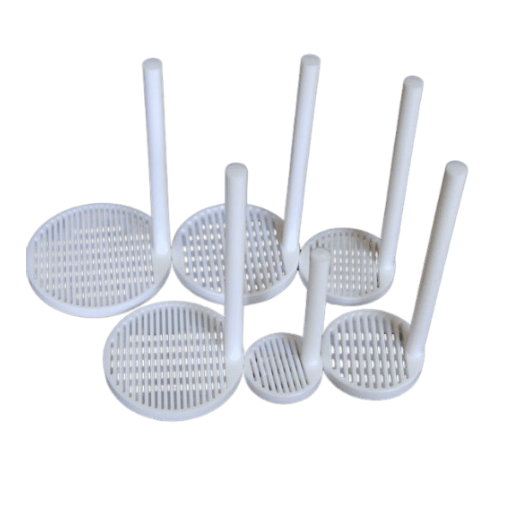
When it comes to processing PTFE, achieving the right level of smoothness and uniformity will call for using some particular techniques. To this end, check that you have sharper cutting tools and stay that way, well-cared for and aligned correctly to prevent defects from forming on the structure. Always remember to check the pre-installed equipment because it is where prominence is given to such devices as surface roughness tester,s and there is no room for errors. Also, it should be clear that machining PTFE too much and at high temperatures should be best avoided. For that purpose, cooling the melted material using proper techniques and at controlled speeds will assist in achieving adequate bonding strength without causing any deterioration in the material properties.
Sharing Experiences with PTFE and Delrin
PTFE (Polytetrafluoroethylene) and Delrin (Acetal) are two materials widely employed in industries due to their outstanding properties, each with its unique properties suitable for different applications. PTFE is well known for its low friction coefficient, remarkable chemical resistance, and high-temperature stability, and is usually applied in components like gaskets, seals, and non-stick parts. However, the mechanical strength of PTFE is relatively poor and exhibits very high ductility,y which might limit how it can carry loads. Another recent study on PTFE indicated that the friction coefficient ranged from about 0.05 to 0.10, thus offering an unequalled smooth slide for the parts.
On the other hand, Delrin is highly effective in mechanical rigidity, has the best moisture content absorption, and is most useful in applications involving acceptable tolerances, such as precision gears or bearings, and structural components. Investigations show that in the case of Delrin, the tensile strength is more than 9,500 psi, with grades and processing affecting the elongation at break ranging between 15 and 75 percent. Moreover, the material has resistance against wear zones and fatigue, resulting in effective service delivery in situations that are heavily cycle-based or in any application that is load-based.
When determining the choice between PTFE and DELRIN for an application, that level of detail is required to consider the working conditions in which the component would operate. If at such a condition that the temperature is very high and the operating media is also too aggressive, the quality of PTFE is also used in the design; while Delrin seems to be in operation, and this generation of synthetic polymers finds preference in applications which demand moderate mechanical strength and good dimensional stability. Such characteristics emphasise the importance of choosing the most appropriate material to the application performance and operating requirements.
Resources and Further Reading
To understand completely the characteristics of PTFE and acetal, the following review and some thorough details are appropriate:
The first resource, the Materials Properties Guide, is intended to improve understanding of the properties of Polytetrafluoroethylene (PTFE) and some other information about Delrin.
Polytetrafluoroethylene (PTFE): This material is primarily used in industries where resistance and chemical manipulation are claimed to be the guiding features. As such, it can withstand very high temperatures. Its coefficient of friction is low and has a high efficacy in resisting chemicals, making it suitable for applications where naturally highly corrosive actions are imminent, particularly with rotating surfaces that need to be free from stick and slip.
Acetal (Delrin): The given type of Delrin cannot resist corrosion. In conclusion, this material has higher strength properties when stretched and improved resistance to deformation than PTFE, making it a good choice in those particular applications that are to be made with precise tolerances and rigidity.
Comparison of applications of PTFE and Delrin
- PTFE:
PTFE is used particularly widely in the chemical, pharmaceutical, and food industries, as its resistance to chemicals and heat makes it find a niche as seals, gaskets, and anti-adhesion coatings. Antiskid perfluorocarbon is also frequently used across non-stick coatings on countertops. Besides brake lines and fusing operations, it is common in the electronics and aerospace sectors for dielectric (container) insulated powders.
- Delrin:
In most cases, Delrin types of materials with similar properties are used to design mechanical structures, such as gears, guided piston valves, pin bushings, and thrust washers. Like the structures themselves, this material has the appropriate mechanical properties, and as such, the writer would prefer the use of the material in this application to any other material that possesses the bearable properties. It is, however, rarely appropriate for use in this way.
Some of the Costs to Be Considered
It is important to note that the average cost of PTFE is usually higher than that of Delrin. For instance, the average cost of PTFE ranges from $15 to $30 per pound, compared to Delrin, which ranges from $5 to $15 per pound, depending on the venture, grade of the material, or type of supplier.
PTFE should be used where chemical or high-temperature resistance is needed, including in more expensive applications, such as a PTFE-bonded silicon sponge mix for ultimate waterproofing. Delrin would offer an alternative in some other cases, such as when there is a need for interpolation of movement in relative cost proper, in which blanking processes are dominant.
By effectively using relevant resources, such as the two mentioned resources, every effort will be made to satisfy all the specifications. The material setup will be based on the functionalities required by the system.
Reference Sources
- Author: Ewa Piatkowska
- Published In: Polish Maritime Research
- Publication Date: December 1, 2021
- Summary:
- This study investigates the wear process of PTFE bushes in water-lubricated bearings, particularly focusing on the effects of solid particle contamination.
- The research involved experimental testing to measure wear rates and surface roughness of PTFE and NBR (acrylonitrile-butadiene rubber) bushes under different contamination conditions.
- Key findings indicate that solid particle contamination significantly affects the wear characteristics of PTFE, suggesting that proper maintenance and cleaning methods are essential to prolong the life of PTFE components in marine applications.
- The methodology included geometric structure measurements and roughness profile assessments using contact profilometers and optical microscopes(Piatkowska, 2021, pp. 167–178).
2. Self-Lubricating PTFE-Based Composites with Black Phosphorus Nanosheets
- Authors: Yan Lv, Wei Wang, G. Xie, Jianbin Luo
- Published In: Tribology Letters
- Publication Date: March 22, 2018
- Summary:
- This paper discusses developing self-lubricating PTFE-based composites enhanced with black phosphorus nanosheets.
- The study focuses on these composites’ mechanical and tribological properties, which can influence their polishing and surface finishing characteristics.
- The findings suggest that incorporating black phosphorus nanosheets improves PTFE’s wear resistance and lubrication properties, which could be beneficial in applications where polishing is required to achieve a smooth surface finish.
- The methodology involved mechanical testing and tribological assessments to evaluate the performance of the composites under various conditions(Lv et al., 2018, pp. 1–11).
3. Top PTFE CNC Machining Parts Manufacturer And Supplier In China
Frequently Asked Questions (FAQs)
How do you polish Teflon to achieve a super smooth finish?
To polish Teflon and achieve a super smooth finish, thoroughly clean the surface to remove contamination. Use a neutral cleaner with a soft cloth to avoid scratching the material. Once clean, you can use a finer abrasive like diamond paste to gently rub the surface, ensuring you maintain the original geometry of the part. For best results, apply the paste lightly and use a buffing wheel at a low RPM to prevent overheating. This process will enhance the toughness and thermal conductivity of the Teflon, making it more suitable for various applications.
What is the best method to deep clean plastic parts made of PTFE?
Deep cleaning plastic parts made of PTFE requires a careful approach to avoid damaging the material. Begin by using compressed air to remove loose debris and dust. For stubborn stains, a solution of mild soap and water can be used; apply it with a soft cloth and gently scrub the surface. Avoid using sharp or abrasive tools that could create burrs or scratches. After cleaning, rinse the part thoroughly and dry it with a lint-free cloth to ensure no soap residues remain, maintaining the integrity and functionality of the PTFE.
How do you polish Teflon edges for aircraft applications?
Polishing Teflon edges for aircraft applications involves ensuring precision and safety. Start by inspecting the edges for any sharp burrs that may need to be smoothed out. Use a fine-grit sandpaper or a specialized Teflon cloth to carefully rub the edges, maintaining a consistent angle to preserve the edge’s geometry. After sanding, you can apply a premium Teflon polish to enhance the shine and provide additional protection against fumes and contamination. This improves the aesthetic and reinforces the durability of the parts in demanding environments.


