


Precision and reliability must be stressed as we conduct investigations into plastic and insulating materials with mechanical properties. ASTM D790, Standard Test Method for Flexural Properties of Plastics, is an accepted framework for measuring behavior under stress in these materials. This testing procedure conveys invaluable information about strength, flexibility, and resistance in a particular material, making it vital to the engineer, manufacturer, and researcher. Whether in product creation, in the control of quality, or the selection of materials, it is essential that one is familiar with ASTM D790; hence, it will allow one to confirm whether the materials would be fit for applications in the real world. In this article, we’ll review the ASTM D790 flexural test, its uses, mechanisms, and importance, equipping you for well-grounded choices concerning the performance of plastics and insulating materials.
What is ASTM D790?
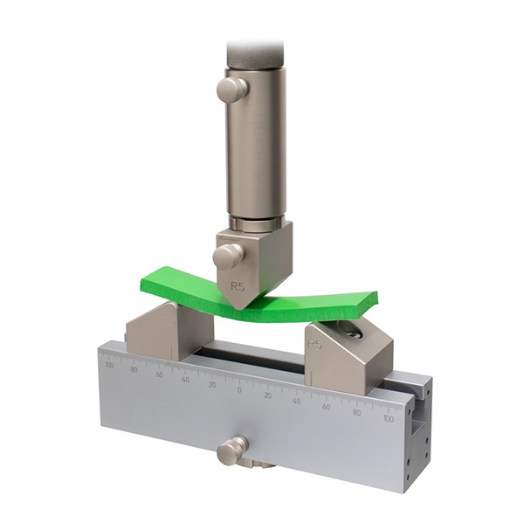
ASTM D790 refers to the standard test method used to determine the flexural properties of something, usually a plastic or insulating material. The purpose is to establish the bending resistance of the material against a load, an essential element in establishing strength, stiffness, and performance. A material sample is placed on two supports, and the force is applied at the centre based on bending or breaking in operation. This test result may be of value in confirming whether a material can handle particular mechanical stress at an actual-use level.
Definition and scope of ASTM D790.
The ASTM D790 Standard titled “Standard Test Methods for Flexural Properties of Unreinforced and Reinforced Plastics and Electrical Insulating Materials” elaborates on the different procedures to determine the flexural properties of a material under given conditions. This standard is for rigid and semi-rigid plastics, filled or unfilled, to allow the same testing procedure to be followed at all times by manufacturers in different industries. Data on flexural strength, flexural modulus, or flexural stress-strain response are obtained.
Therefore, the ASTM D790 test narrows down to evaluating how the material performs under bending forces, which is fundamental to construction, automotive, aerospace, and electronics applications. According to the method, resistance to deformation is measured by supporting the material on two points and applying force at the midpoint at a specified rate, with results in MPa for stress and GPa for modulus.
For instance, standard testing according to ASTM D790 could indicate that a given polypropylene sample exhibited an average flexural strength of 35 MPa and an average flexural modulus of 1.5 GPa. Such values would allow a manufacturer to ascertain whether the material opens structural possibilities in its intended application.
Therefore, ASTM D790 gives every material being tested an equal test protocol, enabling design engineers to compare materials adequately so that they can design components that are safe and perform adequately when under load.
The purpose of the standard is to evaluate the flexural properties of plastics.
The intention of ASTM D790 is to standardize a procedure for applying the bending test for plastics under controlled conditions. This test provides a reliable means to determine important properties such as flexural strength, modulus, and strain. These evaluate the capacity of a material to resist bending force until failure; the properties necessary for structural integrity are tested by this standard. Strict adherence to this standard method ensures the performance of materials that manufacturers and engineers qualify, thus aiding inthe selection of plastics used in industries such as automobile, construction, and consumer goods.
Types of materials tested under ASTM D790.
The ASTM D790 test is suitable for plastics without any reinforcement or reinforced plastics of high-modulus composites, thermoplastics, thermosets, and those designed for electrical insulation.
|
Material Type |
Examples |
Properties Tested |
|---|---|---|
|
Unreinforced Plastics |
General plastics |
Flexural strength |
|
Reinforced Plastics |
Fiber composites |
Modulus, stress |
|
Thermoplastics |
ABS, PVC |
Flexural modulus |
|
Thermosets |
Epoxy, Phenolic |
Stress at break |
|
High-Modulus Composites |
Carbon fiber |
Stiffness |
|
Electrical Insulation |
Laminates, sheets |
Insulation properties |
How is the ASTM D790 Test Performed?

The ASTM D790 test involves placing a rectangular plastic specimen on two supports and applying a load through the center span via a three-point bending fixture. The free end of the specimen is deflected at a given speed until failure or until a set strain occurs. Test parameters such as load and deflection are used to compute values of interest, including flexural strength, flexural modulus, and yield point. This method is well-established for achieving reproducible and reliable results regarding bending capacity.
Preparation of test specimens (shapes, dimensions, conditioning requirements).
Rectilinear specimens are generally prepared for flexural testing, but dimensions vary with test procedure and material. ASTM standards D790 and ISO 178 are the most common for testing plastics. A standard bar can be 3.2 mm thick by 12.7 mm wide by 125 mm long.
The primary requirement of conditioning is that the same elements are subject to consistent conditioning for any test to provide reliable and reproducible results across the tests. Test standards for conditioning under specific temperature and humidity conditions, such as 23°C and 50% relative humidity, shall be used. This avoids variation in results caused by moisture uptake or expansion due to heat, ensuring that the specimen testing value represents the property value of the specimen tested under stipulated conditions.
Overview of test apparatus and equipment.
Specialized testing apparatuses and equipment are needed to pursue specific and reproducible material testing. These include a universal testing machine for tension and compression and flexural testing, whereas impact testers, which may be Charpy or Izod, are another category. These may be environmental chambers slated to reproduce temperature or humidity conditions in the laboratory, allowing the study of the material’s performance vis-à-vis ecological parameters. Further instruments of measurement with very high precision, such as calipers or micrometers, are used to check the dimensions of specimens and to ensure their conformity to testing standards. Such setups under new ways of testing may incorporate systems for digital data acquisition, including real-time monitoring and in-depth analysis of the response given by the material. Together, these instruments ensure that testing is done in a trustworthy, consistent, and standardized manner.
What are the Common Applications of ASTM D790?

ASTM D790 is commonly used in industries hallmarked by the critical nature that lies in the flexural properties of materials. Indeed, the standard is used to evaluate plastics, composites, and polymers to determine their strength and stiffness when subjected to bending forces. These industries cater to automotive, aerospace, construction, and consumer goods, where the materials must be tested to mechanical stresses without undergoing failure. The outcome of applying ASTM D790 is instrumental in assessing materials to control the quality and developing products to ensure that the materials will fit for use in the required performance and safety standards.
It is used in the automotive, aerospace, and consumer industries.
ASTM D790 testing is prominent in ensuring the mechanical reliability of materials used in these industries. In automotive applications, materials testing for flexural strength and modulus helps manufacturers design light yet strong components, thereby improving fuel efficiency and safety. Similarly, the aerospace industry needs such tests to prove that the materials can withstand extreme conditions, thereby ensuring the performance and durability of aircraft structures. Consumer goods engineers use this standard to show that products such as sports gear, furniture, and appliances have structural integrity during everyday use. In addition, ASTM D790 data is incorporated into product development so that industries can provide a healthy trade-off between innovation, performance, and reliability.
Testing structural components and load-bearing plastics.
Testing is essential in structural components and load-bearing plastics to ensure that these materials can resist stresses and environmental conditions that may arise. These materials are typically subjected to tests such as flexural, tensile, and compressive testing to gauge factors such as strength, durability, and elasticity. With knowledge of recent advancements in material science and the industry standard ASTM D790, manufacturers can look at their products from a performance standpoint in real-world conditions. This not only assures safety and regulatory compliance but also pushes forward the development of better materials for varied applications that can perform more efficiently and are resilient.
Assessment of polymers and composites for product performance.
This form of assessment for polymers and composites ensures a comprehensive check on physical, chemical, and mechanical properties to ascertain product performance per its designated criteria for a particular application. Typical parameters are tensile strength, impact strength, thermal stability, and chemical compatibility. Advanced techniques for testing materials are Differential Scanning Calorimetry (DSC), Thermogravimetric Analysis (TGA), and Scanning Electron Microscopy (SEM). In this respect, SEM would give the crucial surface morphology of fiber-reinforced composites.
- Tensile Strength and Elasticity
Tensile strength is a fundamental factor in determining the breaking capacity of polymers and composites under force. Classical carbon fiber-reinforced composites typically show tensile strengths between 500 and 2500 MPa (ASTM D3039), depending upon their compositions and fabrication method. Elasticity, measured by modulus of elasticity testing, also helps understand how a material deforms under stress; in doing so, it affects the various industries in which it finds application, like aerospace and automotive manufacturing.
- Thermal Stability and Heat Resistance
Thermal stability plays an essential role in materials subject to high-temperature environments. PEEK, for example, enjoys excellent thermal resistance, with a melting point above 340°C, making it appropriate for demanding environments such as medical devices and aviation. Thermogravimetric Analysis, or TGA, is applied to prepare thermal degradation profiles and lifetime predictions under thermal stresses.
- Application-Based Data Insights
The term composites that undergo modifications corresponding to the application refers to the reinforcement and matrix materials. Research carried out on GFRP blades for wind turbines proves that these blades possess a fatigue life of nearly 10^8 cycles under controlled stresses, thus ensuring their performance duration. Likewise, hybrid composites of glass and carbon fibers for automotive components have reduced almost 20% of the weight, improving fuel efficiency.
How Does ASTM D790 Compare to Other Flexural Test Standards?

The ASTM D790 is a popular method for flexural testing of plastics and composites to specify a method for determining flexural strength, modulus, and strain. ASTM D790 stands alone in its versatility and refinement when assessing thermoplastics and thermosets compared to other flexural test standards. Other standards, such as ISO 178, might allow for similar tests. Still, ASTM D790 uniquely specifies how the tests will be carried out in detail, with testing speeds and specimen geometries varying depending on the material under test to conform to the needs of the American materials industry. Hence, technicians working within a specified application can rely on the data generated to compare materials and ensure quality.
Comparison with ISO 178 for flexural testing.
ASTM D790 and ISO 178 are methods for testing the flexural properties of plastics, but they differ in terms of specimen dimensions, testing speeds, modulus calculation modalities, etc.
|
Parameter |
ASTM D790 |
ISO 178 |
|---|---|---|
|
Specimen Size |
3.2mm thick |
4mm thick |
|
Test Speed |
Single speed |
Two speeds |
|
Modulus Calc. |
Optional |
Mandatory |
|
Focus |
Practicality |
Reproducibility |
|
Region |
North America |
Global |
|
Applications |
Plastics |
Plastics |
Key differences in methodology and applications.
Flexural testing of plastics meets with some differences between ASTM D790 and ISO 178. ASTM D790 primarily caters to testing requirements applicable in the North American market, with clear guidelines for specimen preparation, specimen dimensions, and testing speed to accommodate a wide range of thermoplastic and thermoset materials. ISO 178, on the other hand, finds wide acceptance in Europe with global standardization emphasis, albeit with slight changes in dimensions and test conditions.
When talking about applications, preferably, ASTM D790 is used whenever one goes into a more strict environment where one has to comply with either a U.S. regulatory standard or product standard to derive data for quality assurance purposes in automotive, aerospace, and consumer product industries. On the other hand, ISO 178 is used for materials in international trade compliance or multinational manufacturing environments so that reporting can be done consistently across borders. It follows from here that compiling data from both these standards may offset some of the deficiencies inherent in testing only one standard and produce a more comprehensive picture of flexural performance, depending on the actual testing environment and industrial application.
Why ASTM D790 might be chosen over other standards.
ASTM D790 is most often used to test the flexural properties of plastics and other composite materials, while its methodology ensures exact and reproducible results. This standard consists of precise protocols that measure flexural strength, flexural modulus, and flexural strain with instruments of control, thereby ensuring reproducibility of testing on different materials to facilitate various industrial applications. ASTM D790 can, therefore, be considered one of those standards that fit all purposes- it tests specimens of varying sizes and different material types, much required in industries like automotive, aerospace, and construction, where structures experience bending or flexural loads in real-life scenarios.
Recent statistics provide insight into increased use of ASTM D790 to test materials in the high-performance arena, especially where designing lightweight, yet sturdy, components is paramount. Industry reports reveal that ASTM D790 serves as a principal standard in about 70% of composite material testing activities in the automotive and aerospace industries because of its reliability in replicating bending conditions in the real world. Also, compared with other standards like ISO 178, ASTM D790 is most commonly preferred in North America due to its widespread acceptance and incorporation into region-specific manufacturing codes.
From another viewpoint, the test setup provides the possibility of adjusted speed. Speeds can be changed in ASTM D790 towards the simulation of various application conditions, thus very useful in R&D applications wherein it is required to know how the material behaves at different rates of stress. On top of that, the ASTM D790 test data stands compatible with advanced computational predictions such as finite element modeling (FEM), so the engineers and designers could make use of that data for design optimizations in some crucial aspects of material performance.
Ultimately, because ASTM D790 is versatile and allows one to obtain reliable key performance indices for materials under real-life application scenarios, it is a preferred choice for design and evaluation in many fields.
Reference Sources
- Title: Analysis of Eight Types of Floating Wind Turbines at Constant Wind Speed
Authors: Mohamed Maktabi, Eugen Rusu
Publication Date: May 23, 2025
Summary: This paper analyzes the response of eight floating wind turbines under constant wind conditions, comparing their flexural responses. Although it primarily focuses on wind turbines, the methodologies used for analyzing structural responses can be relevant for understanding flexural properties in materials tested under ASTM D790.
Methodology: The study employs an aero-hydro-servo-elastic method using Sima software for time-domain dynamic analysis, considering various forces acting on the turbines(Maktabi & Rusu, 2025). - Title: Response: Brain miliary enhancement
Authors: J. Bot et al.
Publication Date: March 25, 2020
Summary: This letter discusses the importance of diagnostic procedures in medical imaging, emphasizing the need for precise measurement techniques. While not directly related to ASTM D790, the principles of measurement accuracy can be applied to flexural testing methodologies.
Methodology: The authors stress the importance of using less invasive diagnostic procedures before considering more invasive options(Bot et al., 2020, p. 547). - Title: Response to Reviewer Comments
Authors: Xingang Liu
Publication Date: June 18, 2020
Summary: This paper addresses reviewer comments on nomenclature and methodology in a study related to sensory biology. The emphasis on methodology clarity can be paralleled with the need for clear standards in ASTM D790 testing.
Methodology: The author suggests clarifications in the methods section to ensure consistency and comparability with previous studies(Liu, 2020). - Top Acrylic Machining Parts Manufacturer And Supplier In China
Frequently Asked Questions (FAQs)
What is the significance of flexural strength in plastics according to ASTM D790?
Flexural strength is crucial when evaluating the performance of plastics and electrical insulating materials under load. It determines the flexural stress at break, which indicates the material’s ability to withstand bending without failure. The method provides insight into how materials behave in various applications, especially when subjected to real-world bending forces. Understanding flexural strength helps engineers select appropriate materials for specific applications, including high-modulus composites. Ultimately, this helps ensure the final product meets safety and performance standards.
How is a bend test conducted according to the requirements of ASTM D790?
As outlined in ASTM D790, the bend test involves a carefully defined test setup that includes test fixtures and testing equipment to ensure accuracy. The specimen depth and thickness are critical parameters that influence the results. A three-point or four-point bend test is performed, where the specimen is placed on supports and subjected to a load until it bends or breaks. The outer surface of the test specimen is monitored for any signs of failure, which helps determine the flexural strength and modulus. Following the proper testing procedures ensures compliance with the standard and delivers reliable results.
What types of testing equipment are used for the flexure test?
Testing equipment for the flexure test includes specialized machines capable of applying controlled loads to the specimen. These systems often incorporate testing software to monitor strain and load in real-time. Series test frames are commonly used, allowing for various specimen sizes and configurations. Additionally, test fixtures must be designed to accommodate different test setups, whether performing a three-point or four-point bend test. The choice of testing equipment can significantly affect the accuracy of the results, making it essential to select systems that comply with ASTM D790 requirements.
What factors influence the deflection observed during the bend test?
Deflection during the bend test is influenced by several factors, including the specimen thickness, the span defined as the specimen thickness, and the material’s inherent properties. Materials with higher flexural strength typically exhibit less deflection under equivalent loads. The testing speed according to ASTM D790 can also affect the results, as rapid loading may lead to different failure mechanisms compared to slower rates. It’s important to consider how these variables interact when analyzing results, especially for reinforced and unreinforced plastics, which may behave differently under stress.
How does ASTM D790 relate to other ASTM standards for testing plastics?
ASTM D790 is one of several standards for testing plastics, including ASTM D638, which focuses on tensile properties. While D790 specifically addresses flexural properties, ASTM D6272 also covers flexural testing, but under different conditions. Each standard has unique requirements and methodologies tailored for specific material characteristics, such as high modulus composites and electrical insulation materials. Understanding the distinctions between these standards is essential for accurate material characterization and selection in engineering applications.


