


The automotive industry thrives on precision, innovation, and efficiency, and CNC machining is the powerhouse on which these driving forces act. CNC machining has sculpted modern vehicles by manufacturing parts, from the intricate components of an engine to parts that must be lightweight without being flimsy. This article aims to discuss the importance of CNC machining in the automotive industry, touching upon its key applications and why it continues to remain a force behind improvements in automotive design, manufacturing, and performance. Whether you’re an industry professional or someone interested in how the technology that starts the movement of your car really works, this article will shed light on CNC machining and how it has changed the face of automotive production.
Understanding CNC Machining

CNC machining is a manufacturing process through which pre-programmed software dictates the Figure and Control machinery and tools. This technology gives CNC machining a window to cut, drill, shape into finer particles, and finally polish materials like metals, plastics, and composites such that the outputs are all highly accurate and consistent components. Being broadly used in the automotive, aerospace, electronics, and similar industries, CNC machining speeds up production processes by reducing a ton of errors, thereby allowing processes for creating very complicated designs to be carried out expeditiously. Automation is the key characteristic this modern technology must maintain to drive innovation and efficiency in manufacturing.
The Basics of CNC Machines
CNC or Numerical Control machines are automated manufacturing tools that operate under a pre-established set of instructions, most commonly known as G-code, to carry out operations that are very time-consuming and technically quite demanding when undertaken with supreme manual machining methods. Since these CNC machines deliver and perform with little or no human interaction or intervention, production efficiency is reached, thereby increasing production capacity and, in turn, reducing prices. These operations could include milling, turning, grinding, drilling, or even 3D printing.
The CNC technology behind this is based on the use of software to control the movement of the machine. Engineers and machinists design parts using CAD software, which are then converted into G-code that dictates the tools of the CNC machine. CNC machining can be operated on several axes, depending on the needs, with common configurations for 3-axis, 4-axis, or 5-axis for extremely complex manufacturing requirements.
The CNC machining industry is projected to cross a $150 billion market value globally by 2030, growing at a CAGR of 6% to 8%, according to various recent reports. Growth in the need for high accuracy and highly customizable parts from the aerospace, automotive, healthcare, and defense sectors is expected to be the driving factor behind the expansion.
They uniquely helped reduce wastes in manufacturing with their preciseness with regard to thinking about material usage optimization. Currently, CNC machining can meet very demanding tolerances of ±0.001 in. in aerospace, required for lightweight and reliable aircraft components. CNC machines, therefore, have evolved to become the backbone of innovation in smart manufacturing aided by multi-axis machining and technologies like real-time monitoring, thereby positioning themselves in Industry 4.0 environments.
In a manner both mass and custom production demand, CNC machines credit modernization in manufacturing with their ability and efficiency in satisfying the new demands placed by an ever-changing industrial landscape.
Types of CNC Machines Used in Automotive
The types of CNC machines used in automotive manufacturing include CNC milling machines, CNC lathes, CNC plasma cutters, CNC laser cutters, CNC grinders, and CNC electrical discharge machines (EDM).
| Type | Key Function | Key Benefit | Common Use |
|---|---|---|---|
| CNC Milling | Cutting | Precision | Engine parts |
| CNC Lathe | Turning | Efficiency | Shafts & hubs |
| CNC Plasma | Cutting | Speed | Sheet metals |
| CNC Laser | Cutting | Accuracy | Fine components |
| CNC Grinder | Grinding | Smoothness | Bearings, gears |
| CNC EDM | Shaping | Intricacy | Dies, molds |
An Explanation on Precision Machining
Precision machining is the procedure that takes away some material from a workpiece while maintaining extremely fine tolerances to produce highly accurate and intricate parts. This is done with the use of very high-tech CNC machines programmed to meet the exact requirements. Machines such as CNC millings, lathes, plasma cutters, and EDMs carry out precise shaping, cutting, or grinding of one or another kind of material under minimum human interference. Such precision is necessary in aerospace, automobile, and medical manufacturing fields where the smallest imprecision can be of a larger consequence.
CNC Machining and Its Various Applications in the Automotive Industry

By means of CNC machining, the automotive industry can manufacture extremely precise and reliable components. The machine is employed in the production of highly critical parts such as engine blocks, cylinder heads, transmission cases, and brake components. Machines emphasize consistency and accuracy, which are needed for vehicle performance and safety. CNC machining can also make prototypes so that manufacturers can work on and test new designs in an effective timeframe. Coupling compatibility with numerous types of materials gives it a wide application in automotive technology.
Automotive Parts Manufacturing Through CNC Machining
CNC machining occupies a strategic position within the automotive industry and facilitates our ability to achieve precise levels of repeatability and efficiency in manufacturing the highly complex and critical components of automotive parts. It, hence, finds unarguable importance in producing automotive parts for engine blocks, suspension parts, gearbox assembly, and brake systems. Often with tolerances requiring accuracies in the range of 0.001 inches, CNC machining is unmatched in ensuring that automotive parts meet the quality standards of modern automobiles.
With newer CNC technologies entering the fray, the increased capabilities of these technologies were enhanced. High-speed machining has dramatically shortened production turnaround time while enhancing surface finishes, which, in turn, greatly benefits the finishing of components for high-performance vehicles. Simultaneously, 5-axis CNC machining further helps reduce labor and material costs by manufacturing complex geometries in fewer setups.
Data shows that CNC machining is becoming more and more sought after in the automotive sector. According to a recent market report, the global CNC machine market size is expected to generate revenues worth $132.92 billion in 2030, growing at a CAGR of approximately 5.4% during 2023-2030. This growth is predominantly driven by the need for lightweight automotive components that CNC machining abducts very well, especially when it comes to advanced materials such as aluminum alloys and composites.
Further, the integration of automation processes in CNC machining through robotics as well as IoT connectivity has ensured higher productivity through 24/7 lights-out manufacturing of CNC machining components. This affords quick production cycles and nonstop supply of parts that fit into the industry’s motivation to scale greatly and reduce production costs.
The environmental aspect of CNC machining is another area of social advancement in sustainability: because of its capability to reduce waste from materials used in manufacturing through a very controlled, precise cut path, CNC machining reduces the consumption of resources that align well with the green manufacturing pathway of the industry. Hence, CNC machining is highly expected to remain a pioneer technology for innovation and progress in automotive parts manufacturing.
Common Materials for Automotive CNC Machining
For automotive CNC machining, the most common materials are:
- Aluminum- Lightweight, corrosion-resistant, used mostly for engine parts, and structural components.
- Steel- Strong and durable materials for gears, shafts, and other cutting-edge components.
- Plastics- Being flexible and light were used for non-structural components.
- Titanium- Exhibits a high strength-to-weight ratio and corrosion resistance. Used mostly in performance or aerospace-grade vehicles.
These materials are selected on the basis of performance characteristics and compatibility for certain automotive applications.
Innovative Applications of CNC Technology in Automotive Manufacturing
CNC (Computer Numerical Control) technology has marked a new era in automotive manufacturing by infusing precision and efficiency in the production of its components. It allows for making highly complex parts with utmost accuracy, such as custom-engine parts, lightweight designs, and intricately meshed gearworks. CNC machines are active even in the prototyping phase, thereby cutting down the time for development and aiding in better testing of the designs. To boost production speed and curtail human errors, these machines also encourage automation. This technology remains prime in the advancement of electric vehicle parts and aerodynamic designs, wherein modern automotive manufacturing demands nothing less than utter consistency and top-notch quality.
Benefits of CNC Machining Within Regards to Automotive Industry

CNC machining has many uses in the automotive industry: precision and application of programs. CNC machining uses programs that allow it to manufacture extremely complex and intricate parts all the while maintaining high quality standards required by modern vehicle design. The system can also considerably reduce testing time and make prototyping more feasible; CNC-speed testing movements minus the human factor. CNC machining allows for lightweight and strong parts that improve on power and energy efficiency of a vehicle. Keeping flexible and innovative within standards of manufacturers is thus upheld by CNC machinists.
Higher Precision and Quality
This is an extraordinary CNC machining level of precision in the automotive sector; manufacturers can probably only specify from ±0.001 inches tolerance limit, depending on the particular need of the modern vehicle. This very high level of accuracy is usually required in manufacturing parts that have to fit into very intricate vehicle systems. The global CNC machining market is expected to reach $134 billion by 2030 at a CAGR of 5.9 % as per the freshly released industry data, expanding on the back of demand emanating from electric vehicles and autonomous vehicles, where precision machining becomes a must for applications such as machining battery cases, motor housings, and sensors.
CNC machining, on the other hand, allows manufacturers to assure quality during mass productions and thus minimize defective products during production. Automation of CNC machining further reduces material waste, with optimized CNC programs estimating a 20% reduction in scrap amounts. This crafting of CNC machining ideas into automotive innovation hence guarantees their existence on economical and sustainable grounds.
Economic and Time Saver
The price of CNC machining manufacturing has always been less because of fast production through CNC machining and cheap manual labor costs. One of the biggest advantages is the ability to dramatically increase product throughput by cutting production time almost in half at times, according to recent statistics concerning product manufacturing through CNC techniques compared with calculator methods. Modern CNC machines are enabled for real-time monitoring and predictive maintenance; they reduce downtime on average by 30% according to studies.
Then comes another aspect of their material efficiency-in terms of raw materials, with optimization, CNC machining can save up to 15%, thereby generating large cost savings for manufacturers. The reach of high-speed machining has been stretched far and we can now get a whole lot of automotive and industrial components to be made to provided tolerances of +/- 0.001 inches to an even finer level of consistency between parts thereby reducing greatly the chances of assembly failures.
With the entry of very advanced concepts in the control layer software, the latest generation CNC machining is able to program and manufacture components with very complex geometries and with different materials. This flexibility, on the other hand, could save them more operational costs and nurture the spirit of innovation by providing manufacturers with an alternative to very expensive means of pursuing highly complex designs. With these capabilities, CNC machining is hence the common platform in which economic efficiency and supreme quality become achievable in any industrial setup.
Expansive Production Areas
This ability to be flexible is much coveted among CNC machine manufacturers since it allows manufacturers to evolve quickly with demands from the market and requirements of the industry. A quick search on Google will yield that from 2023 to 2030, the Global CNC machine market is expected to witness a CAGR of 7.6%, owing to rising demands for precision and automated manufacturing processes. The product development and prototype manufacturing processes have in fact been made even more efficient and fast to market inarguably about 30% when compared with the traditional machining methods, thanks to the increased CAD/CAM software integration. CNC machines also easily work with limited productions, thus suited for industries such as aerospace, automotive, and healthcare, where customization and precision are essential. CNC machining adaptation will be relied upon by any manufacturer if they wish to be competitive in a rapidly paced global market.
Case Studies and Examples
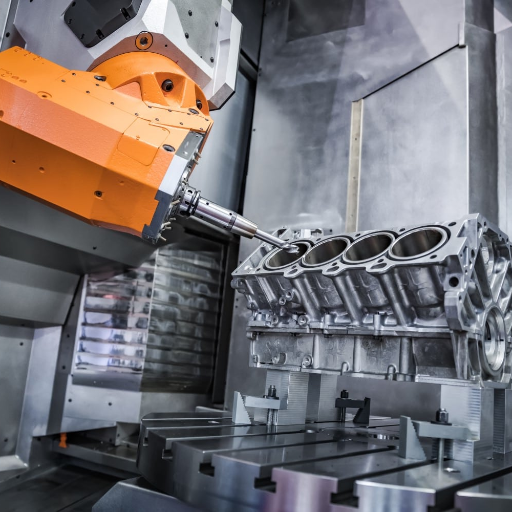
Perhaps the second most senior application of CNC machining is in aerospace manufacturing. While CNC machining has greatly reduced production time for Boeing part manufacturing, it has maintained very high safety standards. CNC machining is also just great in healthcare for producing prosthetics and surgical tools customized to exact specifications. The other CNC manufacturers in the automotive industry utilize CNC machines to produce prototype samples of highly complex engine parts while in comparative terms sustaining efficiency and precision of CNC machinery. This is a testament to the great versatility of CNC machining and to the more important fact that the innovative thrust of at least one or two industries rests on it.
Successful Implementation of CNC Machining
Based on my experience, successful CNC machining implementations depend upon a combination of setup skills, operator skills, and good machinery. I have successfully improved productivity and maintained accuracy in several operations by identifying production requirements and adjusting the process to suit those requirements. This, together with proper equipment maintenance and staying abreast with innovations in this field, allows me to keep my equipment operations at an optimum level and thus produce uniform results.
Innovative Automotive CNC Machining Projects
CNC machining is the technology that has tremendously advanced the automotive area by providing companies the means to produce topographically accurate and durable parts. Recent publications value the CNC machining market worldwide at $83.99 billion for the year 2022 and predict its growth at a 5.7% CAGR between 2023 and 2030, with the demand for precision engineering and cheap manufacturing from the automobile industry as the prime reason for this growth.
In one of the innovative projects, it was used in producing lightweight components for EVs. The utilization of CNC with advanced materials such as aluminum and carbon fiber has made a major contribution to lesser weight for the vehicle and, consequently, better energy efficiency and performance; for instance, CNC machining has enabled the highly intricate manufacturing of battery housings for EVs, which cater to safety and optimized thermal management simultaneously.
Developing custom prototypes and small batch-sized parts is another concern for which CNC machining is famous for short turnaround times and inherent accuracy. Complex geometries are accomplished with hardly any or no errors by utilization of modern 5-axis CNC machines, which improve aerodynamic and stringent automotive standards. With these abilities in hand, the CNC machining-based industry is venturing forwards and crossing newer frontiers of automotive sustainability and innovation.
Lessons Learned from CNC Machining in Automotive
The CNC machining evolution has helped transform the automotive industry through the production of highly precise and functional machining solutions for automotive components. The findings of recent research studies place the CNC machine market for 2023-2030 at growth figures of approximately 6.5% CAGR, fueled by developments in automated processes and increasing demand for EVs.
One such trend has been to use 5-axis CNC machines in the manufacturing of lightweight and highly efficient components for EVs, optimizing energy efficiency while maintaining durability. CNC machining allows, for example, the manufacture of complex aluminum and composite parts that reduce vehicle weight by 30%, thus directly reducing energy consumption.
This further evolution of CNC technologies underlines how it has become increasingly relevant in addressing issues faced by contemporary automotive manufacturing: from fast prototyping to scaled commercial precision machining.
Future Trends of CN Milling for the Automotive Industry
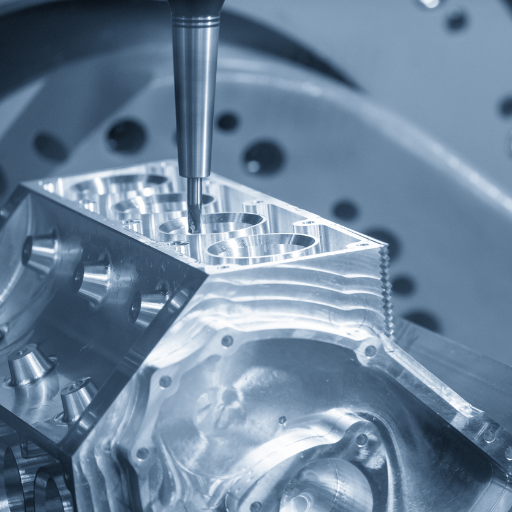
Complete with innovations in automation, AI, and sustainability, the future CNC machining for automotive processes would be quite comprehensive. Contemporary CNC improvements, such as AI-based predictive maintenance and machine learning algorithms, would optimize performance and reduce downtime. Hybrid manufacturing would commence from CNC and extend into additive techniques such as 3D printing-an option that gives more flexibility to manufacturers and helps minify raw material wastage. From the sustainability perspective, energy-efficient machines and machines that use resources wisely would pave the way in which CNC technology would suit a fast-paced environment in green industries while CNC machinery itself can keep pace with such dynamic industries.
Developments in CNC Machining Technology
Development in CNC machining technology means something in modern manufacturing. Enhancing the precision through the use of high-level software and real-time monitoring would bestow upon modern manufacturing much more accuracy and efficiency. AI-based process improvements and auto toolpath programming would allow for minimizing of human error and optimize production time. While smart sensors integrated within an IoT network allow predictive maintenance to minimize downtime and maximize machine life. With these exciting developments and the use of renewable energy, CNC machining makes the most excellent chance for the manufacturing industry’s markets.
The Effect of Automation and AI
Automation and artificial intelligence are being considered a major influence affecting the manufacturing landscape of CNC machining. According to the recent data, the global spending on industrial automation is expected to shoot up to $327 billion by 2027, exhibiting a CAGR of 9.2% from 2020 to 2027, indicating the fast acceptance of these technologies. AI-based algorithms analyze a machine’s performance in real-time recording production errors reduction of up to 50% within some plants. The automated systems use also increasingly machine learning developments to predict equipment failure with over 90% accuracy, resulting in the drop of unplanned downtime.
Generative AI reduces prototype development stages by about 30%, whereas, in another case, IoT-enabled machinery sustains further adoption of predictive maintenance measures. Therefore, automation and AI are considerably reshaping industry practices for efficiency and profitability across the broad spectrum.
Future Implementation of CNC in Automotive Manufacturing
Future implementation of CNC machining and new technologies like AI, 5G Connectivity, and IoT will thus further remodel automotive manufacturing. CNC precision machining majorly involves the manufacture of EV components such as battery casings and motor housings. In contrast, the existing report by MarketsandMarkets shows that the CNC machining market is estimated to touch $132.9 billion by 2028, growing at 7.1% CAGR.
Moreover, when associated with CNC machining techniques, advanced materials like carbon fibre and other light metals enable manufacturers to make vehicle parts that are stronger yet lighter and enhance fuel efficiency. According to McKinsey, weight reduction through lightweight material in automotive manufacturing can induce up to 15% vehicle weight reduction, which would have a significant influence on energy efficiency at a macro level.
Data analytics implementation with the CNC system constitutes another area of prime focus. The conductivity of 5G would make CNC machines smart, giving them the ability to optimize production line activity and apply predictive models to reduce downtime considerably. Following this, computing modeling stands to increase productivity by 25% and decrease manufacturing costs in the range of 15% to 20%, as quoted from a report by Deloitte, wherein CNC technologies are very much embedded in smart manufacturing.
These advancements speak of a good future for CNC machining in the automotive manufacturing arena, focusing more on sustainability, accuracy, and efficiency to meet the demands of a growing industry.
Reference sources
- “ANALYSIS OF THE EFFECT OF AICC PARAMETERS VARIATION ON CNC MILLING MACHINES ON MACHINING TIME AND WORKPIECE ACCURACY” (Sijabat & Dharmajati, 2024)
- Publication Date: 2024-10-07 (Within the last 5 years)
- Methodology: This research investigated the impact of altering the “R” value within the AICC (AI Contour Control) parameter on an OKK VP1200 CNC milling machine with a Fanuc 31i controller. Experiments were conducted on three different shapes (complex profile, circle, and square) using three test specimens and varying AICC parameters (R1 to R10). Machining time was recorded, and accuracy was measured using a Coordinate Measuring Machine (CMM). Data analysis involved creating data tables, scatter charts, and regression equations.
- Key Findings: A positive correlation was found between higher AICC parameter R values and longer machining times. Conversely, a negative correlation existed between higher R values and deviation (better workpiece accuracy). The study provides data and instructions for applying AICC parameters based on desired tolerances.
- “Experimental Optimization of High-precision Turning Parameters of AL6061 Materials for Automotive Industry Based on Grey Relational Analysis” (Puoza et al., 2023)
- Publication Date: 2023-12-26 (Within the last 5 years)
- Methodology: This study explored the relationship between machining parameters (cutting speed and feed rate) on a slant bed turning center CNC lathe and the surface microhardness, dimensional error, and surface roughness of AL6061 material. A central composite design (CCD) method with 13 experiments was used. Response surface methodology (RSM) was employed to develop prediction models for each characteristic, and grey relational analysis was used for a multi-objective prediction model.
- Key Findings: Optimal process parameters were identified for maximizing surface microhardness, minimizing dimensional error, and minimizing surface roughness. The multi-objective model showed an error range of 1.5% to 3.1%, with cutting speed having a stronger influence than feed rate.
- “Analysis of Cutting Parameters in CNC Turning of AISI 52100 Steel with Coated Cutting Tool” (Popat & Singh, 2022)
- Publication Date: 2022-06-24 (Within the last 5 years)
- Methodology: This research optimized surface roughness, material removal rate (MRR), and tool wear during CNC turning operations on AISI 52100 steel using coated cutting tools. The Taguchi method was used to build a surface roughness model, considering factors like feed rate, tool geometry, nose radius, and machining time. SolidWorks and ANSYS Workbench were used for CNC machine design and analysis.
- Key Findings: The study determined surface roughness values for different coated tool nose radiuses (0.4, 0.8, and 1.2 mm) and explored the influence of machining parameters on surface roughness. Static and modal analyses of the CNC machine design were performed.
Frequently Asked Questions (FAQs)
What are CNC machined parts in automotive CNC machining?
CNC-machined parts are of importance in automotive CNC machining since they are custom-made to conform with serviceability and tolerance requirements of a multitude of vehicles. These include gears, brackets, and engine mounts considered critical to automotive manufacture. Precision CNC machining processes enable automotive designers and engineers to make parts that fit into complex assemblies, unlike many other methods. In addition, it is important to note that CNC machining allows the processing of automotive parts, whether very small batch production or very large batch production. Such machined parts must be most reliable and durable with ensuring vehicle safety and performance, for which advanced CNC technologies assure.
In what ways does CNC machining assist automotive parts production?
CNC machining plays a very big role in automotive parts production since it organizes the machining process and assures the very high standards of precision. With the use of various types of CNC machines, manufacturers can achieve complex geometries often found in modern vehicles. CNC is used for manufacturing special automotive parts that satisfy the design needs of the automotive engineering field. Engineering design in the automotive field has evolved to include rapid prototyping using CNC machining to test the design prior to mass production. This has the advantage of lowering the overall cost of manufacture and producing better-quality products. In consequence, CNC machining helps to render the automotive manufacturing processes more efficient as well as more effective.
How does CNC machining intervene in automotive manufacturing?
That CNC machining has a definite and very specific role in automotive manufacturing is to make all the components and that it has to be done in good quality with rigorous tight tolerance. Being a subtractive machining process, CNC machining allows manufacturers to make components with shapes and designs so complicated that it is going to be difficult to make by conventional means. A very experienced CNC operator is paramount to ensure that CNC machines are programmed and operated to achieve the best output. Therefore, CNC machining methods are highly repeatable, which is very important for ensuring the quality required in mass production. As such, CNC machines give automotive manufacturers the opportunity to become more efficient and reduce waste while speeding up their production cycle.
What sort of CNC machines are selected for carrying out machining operations for production of automotive parts?
Various types of CNC machines are demanded by automotive manufacturing to accomplish the variety of machining operations encountered in production. The usually found machines are CNC lathes, milling machines, and routers, each fulfilling automotive production needs of a different kind. For instance, CNC lathes are generally used for producing cylindrical components while milling machines would be suitable for producing flat as well as complex shapes. CNC machining is an option in manufacturing that gives flexibility to the manufacturers to select any equipment of their choice depending upon the project requirements. Therefore, CNC machines that can machine different materials and geometries help automotive manufacturers fulfill practical requirements of various sorts.
How does CNC machining contribute to prototyping for automobile designers?
Prototyping allows automotive designers to identify and analyze the fast tracks of automotive parts production through CNC machining. It allows designers to build a prototype that resembles the end product almost to establish a better evaluation of the prototype, followed by any changes before the mass production trials. Using CNC machining, designers can also assess several design options and various materials, keeping the expenses low. Also, CNC machining for prototyping guarantees that implementing changes will continue to be easy within tightly timed, highly accurate CNC processes. Therefore, CNC machining for prototyping eventually helps automobile designers to refine significantly the whole workflow of their own product.


