


In accomplishing precision cutting in modern manufacturing, the choice of the method becomes extremely important. Laser cutting, waterjet cutting, and plasma cutting are three more popular names, and all three make some claim of uniqueness and have considered solutions for varied needs. But how does one decide which cut is best for a given task? This comprehensive guide will be your path through comparing the methods and exploring their strengths, limitations, and ideal applications. Whether you need ultimate precision, fast speed, or cheaper costs, in this article, you will be able to evaluate and pick one from all the options that will best suit your requirements in cutting. Stay with us as we go through all these important distinctions of cutting methods and try to determine which one fits best.
Introduction to Cutting Technologies

Cutting technologies serve industrial functions and material shaping with required accuracy and efficiency. Commonly applied methods include laser cutting, waterjet cutting, and plasma cutting, each possessing its distinct advantage. Laser cutting is suitable for detailing and very accurate applications; whereas waterjet cutting is versatile and good at handling heat-sensitive materials. Plasma cutting is considered the fastest and can cut thicker metals that are conductive. Knowing the pros and cons of each technique helps an individual select the best method for a given set of requirements for a project.
Overview of Cutting Methods
The cutting procedures vary based on application and strength. Laser cutting is good for fine precision and intricate designs. Waterjet cutting methods apply to special cases that involve heat-sensitive materials; it specifically does not use any thermal process. In contrast, plasma cutting is the fastest of the three and can cut thick and conductive metals. Choosing among plasma, waterjet, or laser mainly depends on the material, complexity of the project, and the results that have to be achieved.
Importance of Choosing the Right Cutter
The choice of cutting methodology is paramount, as it affects precision and efficiency of a particular cutting operation in industrial or inventive processes. The laser cutting methods are widely implemented and promote a projection that states that the global laser cutting machine market will reach $5.7 billion by the year 2030, having grown with a CAGR of around 7% from 2023. This is attributable to the fact they can cut materials of different types with great precision.
Waterjet cutting has gained attention for its versatility and environmentally friendly characteristics. Research has demonstrated that waterjet systems can cut through a wide range of materials to thicknesses as great as 12 inches with tolerances on the order of ±0.001 inches, making them favored for precision applications of fragile materials, including glass or food. Conversely, plasma cutting finds its appeal with heavy industries as it supports cutting of metals up to 6 inches thick at speeds of up to 200 inches per minute, thereby ensuring high productivity in fabrication shops.
According to these figures, it becomes important to consider parameters like the kind of material, its thickness, precision needed, and volume of production when deciding on the most appropriate cutter to be used for a job. Following through with the correct technology will improve efficiency while also cutting down waste and overall charges of the project.
Applications Across Industries
Advanced cutting technologies are pivotal in many industries, providing distinct operational requirements with both precision and speed. Industrial cutting technology employs laser cutting in aerospace for the fabrication of highly complex components made from lightweight materials such as titanium and aluminum. According to recent data, laser cutters can go so far in the accuracy of ±0.003 inches to guarantee an accurate fit of components in the manufacture of aircraft.
The automotive industry, meanwhile, embraces plasma cutting more due to its capacity to cut thicker metals at higher speeds. Plasma cutting systems can now achieve cutting speeds of 500 inches per minute for thinner materials, thus considerably reducing production times. These machines can be integrated with robots for automated operations in e.g., chassis and frame manufacturing.
In contrast, water jet cutting occupies a strategic advantage in construction and electronics disciplines because it is a cold-cutting process and does not affect material integrity. The recently evolved water jet systems provide pressures beyond 90,000 PSI to render suitable precision cutting, from materials being so delicate as glass or as tough as stone, with tolerances down to ±0.001 inches.
Such a wide range of adaptability makes cutting technologies one of the building blocks in modern manufacturing toward efficiency, accuracy, and creativity across industries.
Understanding Laser Cutting
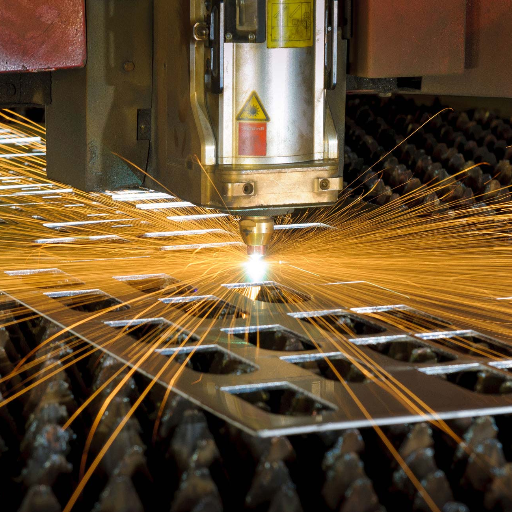
Laser cutting is a precise and efficient process whereby materials are cut using the beam of focused light. This works by working in tandem with a powerful laser to melt, burn, or vaporize the material in a definite manner so as to get a clean cut. So popular across industries, it can process a variety of materials, including metals, plastics, and wood, with the least amount of wastage and maximum reproducibility.
How Laser Cutting Works
The laser cutting system operates by focusing a powerful laser beam onto the material; intense heat is generated to pierce through or engrave the surface. It starts with a CAD file that directs the laser’s movement to cut or engrave; this ensures precision and reproducibility, even with difficult patterns or engravings. High-pressure gas, such as nitrogen or oxygen, is used in some cases for blowing out molten material, leaving a clean finish.
Recent laser advancements directly push efficiency and versatility of laser cutting systems. Fiber lasers, for example, are getting popular as they provide higher speeds with lower energy consumption than conventional CO2 lasers. As per a recent industry report, in 2023 more than 60% of the laser cutting market share was captured by fiber lasers, clearly establishing their adoption at a global level.
Another example of an innovation with potential for application is 5-axis laser cutting, which allows for greater freedom to manipulate and cut three-dimensional shapes, thereby broadening its cutting capabilities into the automotive, aerospace, and manufacturing domains. Production times have thereby been low greatly; some systems can achieve cutting speeds in excess of 400 inches per minute, naturally, dependent upon the kind of material and its thickness.
Considered a critical facility in the modern-day manufacturing, laser cutting provides manufacturing industries with unmatched precision, rate of operation, and reliability. Able to work with materials from as thin as 0.001 inches to as thick as a few inches, it is a must for industries that demand scaling and accuracy. This ongoing development made by conjunction between AI integration and automation in laser cutting machines will surely continue to revolutionize manufacturing all across the globe.
Advantages of Laser Cutting
Laser cutting offers precision, speed, versatility, minimal waste, and compatibility with diverse materials.
| Key Point | Description |
|---|---|
| Precision | High accuracy cuts |
| Speed | Fast processing time |
| Versatility | Cuts various materials |
| Minimal Waste | Reduces material loss |
| Automation | Supports AI and tech |
| Scalability | Handles all thickness |
| Clean Edges | No post-processing |
| Cost-Effective | Saves time and effort |
| Reliability | Consistent quality |
| Safety | Controlled operation |
Limitations of Laser Cutting
Despite the advantages laser cutting offers, some limitations have to be kept in mind. Its primary challenge is the high initial investment required in equipment. An industrial laser cutter could cost anything from nearly $8,000 for an entry-level model, to over $1,000,000 for a top-of-the-line industrial system. Such costs may be discouraging to small setups or even startups.
The second limitation is material thickness. Laser cutters are fantastic for thin and medium-thick materials, but have their powers greatly diminished when faced with extremely thick materials. For example, most CO2 laser cutters usually cut up to 20-25 mm (about 0.78-1 inch) in mild steel and even less in harder materials. After that thickness, other methods like plasma or waterjet cutting may work better.
Reflections from the material surface greatly affect the cutting process. Reflecting the laser beam is a problem with reflective materials like copper and aluminum; their efficiency is severely reduced. Special modifications or perhaps a different type of laser, such as a fiber laser, are thus considered to be effective for these materials.
There is also the high power consumption on the side of laser cutting, depending upon the machine type and laser intensity required for the cutting task. For example, when working in the full power range, a CO2 laser cutter may consume around 50 kWs of electricity per hour, which further adds to increased operational expenditure.
Another challenge comes with heat-affected zones, especially when precise measures are involved. On a comparative scale, these might have a minimum level of heat, but still, some laser cutting processes cause deformation of the material or an alteration in their properties. Proper cooling methods and some other innovations have minimized such instances, but have yet to completely remove such problems.
Last but not least, laser cutting requires capable people to work with. Despite the presence of AI and automation integrated into most systems today, wrong handling and lack of technical know-how may lead to errors, wastage, and perhaps compromised safety. Thus, any business investing in laser cutting technologies must set aside funds for training and retaining skilled human resources.
Exploring Waterjet Cutting
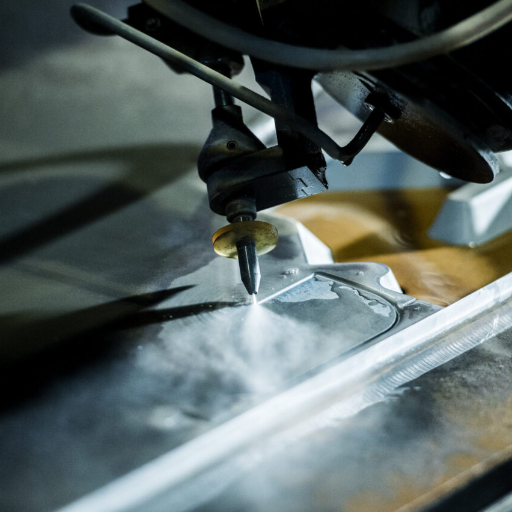
Waterjet cutting is a versatile process wherein a high-pressure jet of water piercing materials of varying hardness is used in production. This is because it cuts without heat, thus preserving the materials with regards to their structural integrity and preventing any warping or distortion. It is extremely precise, cutting through metals, glass, stone, and composite materials with the least amount of waste. More importantly, waterjet cutting is good for the environment as it produces very little or no hazardous wastes and relatively requires fewer units of energy than the energy-intensive cutting systems.
Working Principle of Waterjet Cutting
Waterjet cutting works by forcing high-pressure water through a very-small orifice to form a thin cutting jet capable of cutting through various materials. Abrasive materials like garnet may be mixed in the water jet to cut harder materials more effectively. Usually, the water pressure is around 40,000 psi to 60,000 psi or more depending on the quality of the pumps. Water at this pressure is directed through a nozzle with a very fine diameter of probably less than 0.015 inches to form a jet stream concentrated in a very small area. For comparison, this water pressure is approximately 30 times the pressure in an average car tire. With the high efficiency of the process in cutting with an accuracy nearing +/-0.001 inches, the water cutting method is far more useful and appropriate for intricate designs requiring high precision.
This cutting method is adaptable in various industries such as aerospace, automotive, and manufacturing. For instance, in aerospace, waterjets can cut titanium and other tough metals used for making aircraft components without altering their structures. Recent studies have shown that waterjet technology can reduce material wastage by up to 20% if compared to conventional methods, thus offering huge cost and environmental benefits. Moreover, with the development of software-controlled waterjet systems, the scope for automation and customization has greatly increased, making it even more suitable for industrial applications of today.
Advantages of Waterjet Cutting
Advantages of waterjet cutting include the ability to cut almost any material without generating heat, thereby retaining the materials’ structural integrity. Thus, it cuts metals, plastics, composites, glass, and even soft materials like foam and rubber. Industry data already report tolerances of up to ±0.001 inch waterjet cutting consequently, it is capable of very intricate designs that require great detail in finishing.
Moreover, recent research rates waterjet cutting as one of the best choices from a sustainability point of view. Having greater ability to optimize material use, it significantly reduces waste by up to 20% when compared to traditional cutting. In terms of energy efficiency, it consumes less power than any other high-tech cutting methods, with some of the more recent models capable of recycling 60% of the water used during the cutting process. Hence, the combination of proficiency and sustainability makes waterjet cutting a green solution to be implemented by industries towards the reduction of setups for environmental impact.
In addition to this, the modern advances for waterjet cutting systems have created more avenues for flexibility, adaptation, and automation. Present-day systems include an AI-controlled software system for automated production thus helping manufacturers process complex geometries at reduced setup times. Such developments have led to production efficiency improvements of around 30% in areas such as aerospace and automotive. Indubitably, these cutting-edge innovations attest to waterjet cutting being the most versatile and far-reaching tool for industrial manufacturing operations.
Disadvantages of Waterjet Cutting
The most prominent drawbacks of the waterjet cutting process-from its many advantages-include the initial purchase price and the hefty process costs associated with operating waterjet cutters. Operating waterjet cutters costs anywhere between $15 and $30 an hour, and it includes abrasive materials cost, maintenance, and energy consumption. Also, waterjet cutters consume large fills of fresh water that can create somewhat troublesome utility bills if water conservation programs are not put into place.
Another downside is the cutting speed. It simply cannot keep up with some alternatives such as laser cutting, especially when it comes down to cutting thinner materials. In research, it has been shown that when the material under cut is less than 0.5 inches thick, laser cutting can be five times faster. The elimination of maximin precision is another downside of water jet cutting where high-quality finishes are required: additional time has to be spent on secondary processes when precision is lost.
In addition, the volume and intricacy of a waterjet cutting system present a challenge to smaller workshops with limited space or resources. Because of the large set-up area and the need for an experienced operator, such a system is unattractive in a small business with constricted finances or workforce skills. However the downside can be mitigated if approached with the right planning consideration and investment, and eventually, the advantages of waterjet cutting technology far exceed the drawbacks.
Insights into Plasma Cutting

Plasma cutting involves having a jet of ionized gas, or plasma, which cuts through electrically conductive metals like steel, stainless steel, and aluminum. It is speedy and accurate—attributes that have breathed life into the manufacturing, automotive repair, and construction sectors that favor it. Plasma cutting systems are considered to be cheaper and more compact compared to waterjet systems, hence attractive for companies with lower budgets or those of limited space. They are good at cutting conductive metals and would not do well with materials that are non-metallic.
Basic Working
The plasma cutter basically shoots a very focused stream of plasma from the plasma torch. This plasma stream rapidly heats the workpiece to above the melting temperatures of the metals involved. A high-velocity jet of gas and molten metal simultaneously blows away the heated and melted metal, leaving behind a finished cut.
State-of-the-art CNC control plasma cutters operate with a precision tolerance of ±0.010 inches and allow highly accurate cutting of complex shapes and patterns. Materials of thickness from 0.03 inches (0.8 mm) to beyond 2 inches (50 mm) can be cut by a plasma cutter, depending upon the power of the plasma system.
To name an important consideration, these days, plasma cutting machines are highly efficient energy-wise. Over the last decade, inverter technology improvements have allowed manufacturers to reduce energy consumption of plasma cutting machines by 30% while maintaining or even improving cutting performance. As an added benefit, advanced machines provide dual-gas operation, enabling the user to easily switch between air, argon, nitrogen, or oxygen gases based on application requirements, giving flexibility of choice depending on material and cutting need.
New research has, however, revealed that plasma cutting is almost three times faster than oxy-fuel cutting when thin materials less than 1 inch (25mm) are used. For instance, plasma cutters would on 1/4-inch steel achieve cutting speeds of 200 inches per minute (IPM), greatly enhancing productivity in industrial settings.
Hence, plasma cutting is still a preferred choice as a technique in industries looking for efficiency, precision, and versatility.
Pros of Plasma Cutting
Plasma cutting offers high precision, speed, versatility, cost-effectiveness, and the ability to cut through a wide range of conductive metals efficiently.
| Key Point | Description |
|---|---|
| Precision | Clean, accurate cuts. |
| Speed | Faster than other methods. |
| Versatility | Cuts varied metals. |
| Cost | Reduces operational costs. |
| Thickness | Handles thin to thick materials. |
| Portability | Compact, easy to move. |
| Automation | Compatible with CNC setups. |
| Efficiency | Minimizes waste. |
| Maintenance | Simple and low-cost. |
| Safety | Improved operator safety. |
Cons of Plasma Cutting
Plasma cutting has drawbacks such as high noise levels, excessive heat production, potential warping of thin metals, limited precision compared to laser cutting, and higher initial equipment cost.
| Key Point | Description |
|---|---|
| Noise | Produces loud noise. |
| Heat | Generates excess heat. |
| Warping | May warp thin metals. |
| Precision | Less precise cut. |
| Cost | High initial expense. |
Comparative Analysis: Plasma vs. Waterjet vs. Laser

Plasma cutting is better at doing fast operations on thick metals, yet it does not have the precision of laser or waterjet cutting. Waterjet cutting has more precision and is useful in a multitude of applications as it cuts almost any material without heat distortion, though at a slower and higher price. Laser cutting lies between the two in speed and precision, with a focus on designing complex cuts in comparatively thin materials, but it is not great with thick metals and incurs higher running costs. Depending on the material, required precision, speed, and budget, each method can be adopted for a specific application.
Precision and Accuracy
Regarding precision and accuracy, depending on the requirements of the task, laser cutting and waterjet cutting have their pros and cons. Due to amplified light, laser cutting can cut with an accuracy of +/- 0.1 mm, cleanly. It would do great jobs with intricate design work and thin materials such as sheet metal, acrylic, or wood. When working with thicker material or a heat-sensitive material, however, it will tend to lose performance due to heat-affected zones (HAZ).
On the other hand, the abrasive-water jet is a great cutting tool for almost all materials. It cuts water-jet-abrasive-thin material and thicker material such as metal, stone, composite materials, etc., with remarkable precision within tolerances of +/- 0.1 mm or better in the case of more advanced machines. Waterjet cutting has the further advantage of eliminating heat distortion from the equation, thus making it suitable for applications that require the surface integrity of a material to remain uncompromized or those involving thicker materials above 1 inch.
Both processes have been substantiated and enhanced in recent times: fiber laser machines nowadays operate at speeds in excess of 20 m/min while sustaining their high accuracies on low-thickness metals, according to industry data; meanwhile, developments in waterjet technology with dynamic cutting heads have caused improvements in the reduction of taper and accuracy in complex parts.
Ultimately, which to use will depend on the material to be processed, the level of precision required, and other constraints of your particular project such as the budget or time. Selecting the right process by understanding such details and having that know-how along with advanced equipment should guarantee the best end result fit for your unique project demands.
Cost-Effectiveness
When considering cost-effectiveness, I evaluate factors such as material requirements, project complexity, and the overall budget. Waterjet cutting may be more economical for thick or diverse materials, while laser cutting often proves cost-effective for thinner metals and projects demanding high-speed production. By aligning the method with the project’s specific needs, I ensure an efficient use of resources without compromising quality.
Speed and Efficiency
In terms of speed and efficiency, both waterjet cutting and laser cutting have their particular pros and cons, depending on the application. Laser cutting, powered by advanced CO_2 or fiber laser technology, is typically faster than waterjet cutting for thin materials, especially metals less than 6 mm thick. For example, 1 mm-thick stainless steel can be cut with a modern fiber laser at speeds reaching 20 m/min. This makes laser cutting very efficient in industries requiring rapid turnarounds.
On the other hand, waterjet cutting is more versatile and precise. It can cut a wide variety of materials at various thickness levels, including plastics, glass, ceramics, and composites, which laser technologies cannot handle properly. While generally being slower compared to lasers with thin materials, waterjets are capable of cutting several inches thick without any thermal distortion, thus suited for thick materials such as 5-inch steel that require precision over high cutting speed. The average speed is about 1 to 2 inches in thickness per minute for thicker materials.
Recent industry data reveal that fiber laser systems have obtained a 10-20% rise in energy efficiency during the last five years, thereby decreasing their operational costs, while improvements in waterjet technology, such as refinements to pump designs and abrasion recycling systems, have ushered in up to 30% reductions in water usage. Businesses choosing to incorporate such innovations into their projects stand to benefit from optimal speed and efficiency while achieving environmental sustainability.
Material Compatibility
In terms of material compatibility of current cutting technologies, both fiber lasers and waterjets have different advantages to offer. Fiber lasers excel in cutting metals like steel, aluminum, and copper with precision and speed, particularly serving industries that require fine detailing. Recent data disclose that fiber laser systems can cut thin sheet metals up to 60% faster than traditional CO2 lasers, thus becoming an indispensable weapon for industries like automotive and aerospace.
Conversely, waterjet cutting has unrivaled versatility on its side. It can handle a wide array of materials: metals, glass, stone, composites, even foam. The latest industry developments report waterjet systems capable of cutting materials up to 12 inches thick without creating heat-affected zones, which is absolutely critical for applications demanding thermal integrity. It is this kind of flexibility that’s so often needed in construction and manufacturing industries having to deal with material compatibility on a diverse scale.
Emerging technologies have further increased the level of material compatibility across both systems. For instance, advances in nozzle design and microjet technology in waterjets now allow for finer and more precise cuts on fragile materials. Meanwhile, improvements in laser power sources, such as integrating higher wattage fiber lasers, allow for cutting reflective metals like copper and brass with increased efficiency. Matching these technological advances back to the needs of the project, the businesses maximize productivity at the same time addressing an extremely broad range of applications.
Reference sources
- Comparison Metal Water Jet Cutting with Laser and Plasma Cutting
- Authors: D. Krajcarz
- Journal: Procedia Engineering
- Publication Year: 2014
- Citation Token: (Krajcarz, 2014, pp. 838–843)
- Summary: This paper compares the effectiveness of metal cutting using water jet, laser, and plasma cutting technologies. It discusses the advantages and disadvantages of each method in terms of cutting speed, quality, and cost-effectiveness. The study highlights that while laser cutting offers precision, water jet cutting is advantageous for thicker materials, and plasma cutting is noted for its speed and efficiency in cutting metals.
- Methodology: The paper employs a comparative analysis of the three cutting methods, evaluating their performance based on various parameters such as material thickness, cutting speed, and operational costs.
- Investigation of cutting qualities of AISI304 stainless steel using plasma arc cutting method
- Authors: Şerafettin Hırtıslı, Oğuz Erdem
- Journal: European Mechanical Science
- Publication Date: 2024-12-04
- Citation Token: (Hırtıslı & Erdem, 2024)
- Summary: This study investigates the cutting qualities of AISI304 stainless steel using the plasma arc cutting (PAC) method. It examines the effects of different gas pressures and cutting speeds on kerf taper and surface roughness. The findings indicate that lower gas pressure and specific cutting speeds yield better cutting quality.
- Methodology: The research involves experimental setups with varying gas pressures (0.6, 0.7, and 0.8 MPa) and cutting speeds (151, 215, and 217 mm/min). The results are analyzed to determine the optimal conditions for achieving minimal kerf taper and surface roughness.
- The Effects of Machining Parameters on Circularity Tolerance in Plasma Arc Cutting Method
- Authors: Şerafettin Hırtıslı, Oğuz Erdem
- Journal: 2023 7th International Symposium on Multidisciplinary Studies and Innovative Technologies (ISMSIT)
- Publication Date: 2023-10-26
- Citation Token: (Hırtıslı & Erdem, 2023, pp. 1–6)
- Summary: This paper explores how different machining parameters affect the circularity tolerance of drilled holes in stainless steel sheets using the PAC method. It finds that increasing cutting speed at constant pressure leads to higher circularity tolerance, while increasing gas pressure at constant speed decreases tolerance.
- Methodology: The study involves drilling holes of 40 mm diameter in AISI 304 stainless steel sheets of varying thicknesses (4 mm and 8 mm) under different cutting speeds and gas pressures. Measurements of hole diameters and circularity tolerances are taken using precision instruments.
- Top Plasma Cutting Parts Manufacturer and Supplier in China
Frequently Asked Questions (FAQs)
How are plasma and laser cutting differently classified?
The primary difference between plasma and laser cutting lies in the actual process employed to slice through the material. In plasma cutting, the system uses an electrically-conductive gas to generate a plasma arc of high temperature that melts the material and blows it away. It is used to cut metals such as steel and aluminum. Laser cutting usually involves melting or vaporization of the material by focusing beams of light, thus producing a finer cut quality and enabling working with thinner sheets of materials. Plasma systems are cheaper for working with thicker material, whereas laser and water cutting is more suitable for precise jobs that require good edge quality. So, the choice depends on project specifications.
How does water jet cutter technology compare to its plasma and laser cousins?
Water jet cutter technology is put to special use when compared to plasma and laser cutting due to its mode of action. This method cuts a wide spectrum of materials, from metals to plastics and even wood, with a combination of pressured water and abrasive materials. While being hot processes, plasma and laser cutting methods cause some heat distortion; in contrast, waterjet cutting is cold, thereby eliminating thermal distortion. This makes it best suited for applications that require tight tolerances on cut quality and details. High maintenance and abrasives are costly factors that increase the operating cost of water jet cutters. Each of the methods has its advantages, and ultimately, the choice depends on the sort of work and materials involved.
What does the plasma cutting system cost to maintain?
Based on factors including material thickness and the particular method of plasma cutting, the operating costs of plasma cutting systems could vary greatly from one another. Mainly, plasma cutting consumes electricity and gases, mostly argon or nitrogen, contributing to the total operational costs. There is usually a significant initial outlay for purchase of CNC plasma tables, but high production rates and efficacy that comes with plasma cutting tend to have lesser costs per part compared to other systems. Another factor influencing the cost is the cleanup procedure after cutting since slag can sometimes need the extra handling. For metal fabrication shops, being acquainted with these costs is essential for budgeting and maintaining profitability.
What applications are those plasma cutting and waterjet cutting best suited for?
Plasma and waterjet cutting serve different applications based on their contrasting abilities. Plasma cutting is very suitable for fast speed works with thicker metals, making it favorable for the automotive industry and heavy machinery. Waterjet cutting stands for works that emphasize precision with the ability to cut through all substances with no heat-affected zones; racing, aerospace, and medical device manufacturing are just examples. Both techniques will be able to cut various materials, but when fine features and complex designs are involved, waterjet has the edge. Thus, it is a balance that comes down to the project requirements in terms of the type of materials to be used and the level of edge quality needed.
Which is better for cut quality: plasma, laser, or water cutting?
The quality of cuts between plasma, laser, and watercut varies greatly. Plasma cutting gives a wider kerf and may leave a little slag on the edges that have to be cleaned up. On the other hand, laser cutting has always been known for precision cut quality with hardly any kerf and clean edges and has been a method favored by applications requiring extreme precision. Water cutting gives good edge quality without any heat distortion, which is perfect for the details. Depending on the specific need of the project, one method might should be preferred over others to achieve good cut quality.


