


The world of forming and tooling changed when CNC machining came into the scene with precision, speed, and versatility that go beyond traditional manufacturing methods. CNC machining, which must be kept in a historic industry, helps an entrepreneur bringing a new idea to reality, or a senior engineer polishing and complicating design concepts, to turn ideas into realities. This blog explores the realms of CNC prototyping, the advantages these methods present, end-user examples, and how you can shorten your product development activities using online custom CNC machining services. Let’s unearth how the latest technology mutates into workmanship for flawless finishing touching every detail of your next project.
The Basics to CNC Machining

CNC machining is a manufacturing process where computer software is pre-programmed to control the movement of machinery and tools. By doing so, an automated machine cuts, shapes, and makes parts with immense accuracy from a variety of materials, be it metal, plastic, or wood. Because of its precision, consistency, and efficiency, CNC is commonly used for making prototypes or production parts in industries such as automotive, aerospace, or consumer electronics.
What is CNC Machining?
CNC machining is a subrate manufacturing process in which machines operate using a computer control system to cut or remove material from a solid and in doing so, form it into the desired shape and design. This digital system receives commands from CAD (computer-aided design) or CAM (computer-aided manufacture) software packages, which guides the tool and machinery with great precision. Today CNC machining can drill, mill, turn, and grind, providing the highest level of accuracy and repeatability in production.
Recent statistics prove the dominance of CNC machining in manufacturing, further positioning the global CNC machine market to hit $126.3 billion by 2030 and growing at a compound annual growth rate (CAGR) of 5.5% from 2022 to 2030. In turn, growth is further accelerated by industrial automation growth and the need for highly complex and precision-engineered components across industries such as automotive, aerospace, electronics, and healthcare.
Also, a great advantage with CNC machining is that it can work on many types of materials-from metals, say aluminum or titanium, to plastics, wood, and even composites. Another improvement in the industry is the advancement of 5-axis CNC machines, which allow the production of highly complex and very detailed parts with very little operator intervention. These levels of efficiency ensure productivity, and less waste further helps manufacturers in achieving cost-effectiveness and sustainability parameters.
The Process of CNC Machining
CNC machining is a highly automated process of transforming a raw stock material into a highly precise and complex shaped component. It all starts with preparation and very detailed designing of a model in a CAD system. This CAD model is then converted into a set of instructions understood by a CNC machine using CAM software. The instructions themselves direct the movement, cutting tool paths, and other operations of the CNC machine with a very high degree of accuracy.
More recent advances in CNC machining have led to greatly enhanced speed and precision. In most cases, tolerances around ±0.001-inch are now achieved by modern CNC machines and so make it the most acceptable machining technology for use in aerospace, automotive, and medical device industries. For example, a 5-axis CNC machine is capable of manufacturing components with complex geometries such as impellors and surgical implants quickly and accurately.
Data depicts the bright spotlight shone on CNC machining. The CNC machining market was valued at $87 billion in 2022 and should further grow to $135 billion by 2030, thanks to a stronger demand for automation and high-class manufacturing. Also, CNC machining’s versatility to work with materials from hardened steel to the most advanced composites makes it very relevant to fulfill today’s stringent demands of the industry.
Keeping it real-time and IoT-enabled are also CNC systems nowadays, allowing operators to predict potential downtimes by analyzing performance data. Such technology fusion enhances operational efficiency, reduces waste, and sets the whole process on track for sustainability.
Types of CNC Machines
CNC machines include milling machines, lathes, routers, grinders, laser cutters, waterjet cutters, plasma cutters, and electrical discharge machines (EDM).
| Type | Key Use | Material | Tool | Feature |
|---|---|---|---|---|
| Milling | Cutting/shaping | Metals | Rotary | Precision |
| Lathe | Turning/shaping | Metals | Stationary | Cylinderical |
| Router | Engraving/cut | Wood, Soft | Rotary | Flexibility |
| Grinder | Finishing | Metals | Abrasive | Smoothness |
| Laser Cutter | Precise cut | Metals/Non | Laser Beam | Speed |
| Waterjet Cutter | Cutting | Any Material | Water Jet | No Heat |
| Plasma Cutter | Cutting | Metals | Plasma Arc | High Temp |
| EDM | Shaping/cut | Conductive | Electric | Complex Cuts |
Custom CNC Machining Services

Custom CNC machining provides tailor-made solutions for the manufacture of highly complex and precise components from a variety of materials. The services offer high-precision cutting, shaping, and finishing requirements using lathes, mills, laser cutters, and EDM machines. CNC technologies provide high levels of accuracy, productivity, and repeatability, making them apt for aerospace, automotive, and medical manufacturing.
Advantages of Custom CNC
- Precision: Generates highly precise and consistent production so parts fulfill exact specifications.
- Efficiency: Ensures less production time through automated processes and hence higher output without compromising quality.
- Versatility: Handles a wide variety of materials–from metals to plastics, composites, and many others–allowing it to consider divergent requirements of projects.
- Cost-effectiveness: Results in machining methods that minimize material wastage and reduce labour time-per-cost.
- Scalability: Supports production at different scales, from smaller ones to mass production.
Choosing Custom CNC Machining
- Material Requirements: Confirm the machining service supports the materials your project requires.
- Precision & Tolerances: Examine that the service can handle the accuracy specifications for your design.
- Production Volume: Draw from the production scale your facility fits within-a service fit for your prototype or bulk orders.
- Lead Time: The turnaround period must fit the deadline of your project.
- Experience & Expertise: Select providers who have expertise with their own track record and other similar projects.
Custom CNC Machined Parts Applications
Custom CNC machining produces parts usable in a vast spectrum of industries due to their precision and versatility. The common applications are:
- Automotive: Engine components, transmission, and prototyping.
- Aerospace: Production of turbine blades and heavily technical airframe components.
- Medical: Production of surgical instruments, implants, diagnostic instruments.
- Electronics: Heat sinks, housings, and circuit boards.
- Industrial Equipment: Manufacture of rugged high precision machining parts.
They exist whenever and wherever there is engineering that requires accuracy, durability, and custom designs for performance.
CNC Machining Materials
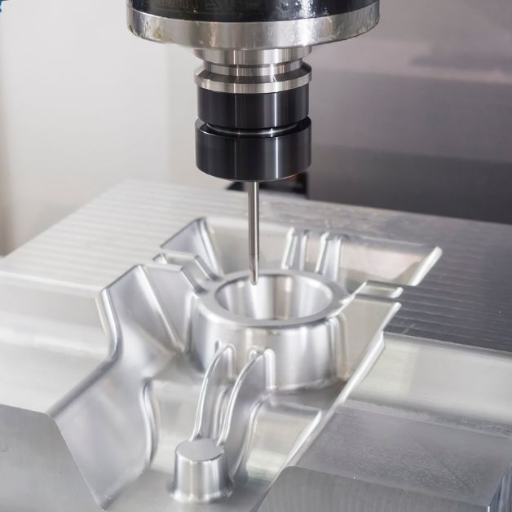
- Metals: Aluminum, steel, titanium, copper, and brass are widely used due to strength, conductivity, and durability.
- Plastics: ABS, polycarbonate, and nylon are materials used for those requiring lightweight and corrosion-resistant properties.
- Composites: For specialized uses, composites are selected based on strength enhancement and weight reduction.
- Wood and Glass: These may be picked for decorative or specialized applications.
Metal or Plastic for CNC Machined Parts
The choice of metal or plastic to be used for CNC machined parts is mostly the specific requirements of the application. Metals such as aluminum, steel, and titanium, are often chosen because of their great strength and great durability and thermal resistance. Metals are structurally superior to plastics, and hence applications that require structural integrity at high temperatures such as aerospace and automotive components would prefer metals.
Plastics like POM, PTFE, and nylon, on the other hand, are lightweight, corrosion-resistant, and often considered cheaper relative to metals. Plastics stand the test to insulate and resist wear well; hence, they are used mainly in the electronics, medical devices, and other industries where weight reduction is one of the primary concerns.
Other factors to also consider include environmental conditions, mechanical requirement, desired lifespan, and price. Metals stand tall in heavy-duty environments where weight matters, whilst plastics excel in being lightweight, non-conductive, and cost-effective. Looking at the contrasts between these two materials can allow for the selection of an option best suited to the needs of a given part or project.
Choosing the Right Material for Your Prototype
When choosing the right material for my prototype, I focus on the specific requirements of the project. If durability and strength are critical, I tend to go with metals simply because they can handle high-stress conditions. On the other hand, if I need something lighter or less costly, plastics will very often be the better option. I also consider things like the operational environment, whether the material conducts electricity, and what kind of budget I have set, all of which must align with my design and performance goals. In the end, understanding these parameters are what enable me to settle down on a decision.
CNC Machining Services and Pricing

Normally, CNC machining services deliver a highly accurate and reliable manufacturing technique in the fabrication of parts from metal or plastic. The prices vary with services depending upon the design’s complexity, the materials used, the quantity produced, and machining tolerances. Precision parts or complicated geometries tend to increase manufacturing costs. Just to keep expenses down while not compromising quality, choosing common materials and optimizing designs for manufacturability may be the way to go. Requesting a detailed quote from the CNC machining service will provide prices.
Factors Affecting CNC Machining Service Cost
Several factors influence the costs of CNC machining services:
- Material: Aluminum or steel alloys may differ accordingly, with rare materials and those cumbersome to machine taking on a higher price.
- Design Complexity: More complex design, tighter tolerance, and intricate geometry all require more time and manpower and thus increase the price.
- Production Volume: Higher quantities always reduce the per-unit price, while a lower amount of production may be expensive for each unit.
- Machining Time: Longer machining time for precise and intricate parts correlates positively with the price.
- Post-Processing: Further operations, such as polishing, painting, and heat treatment, can raise the price.
Thus, by carefully considering a material selection and simpler design concepts coupled with a well-thought volume, one may manage the CNC machining price without deteriorating the quality.
Check for Differences Among Online CNC Machining Services
While looking into online CNC machining services, one considers many aspects to choose the best service. Price stands out, as some providers may best serve bulk orders with competitive rates while others cater primarily to smaller custom batches. Lead times are also considered very important since some value sprinting through their orders while others don’t tinker around with speed at all. Depending on specific project requirements, the variety of materials and manufacturing capabilities should also be evaluated. Customer support, ease of ordering, and quality assurance aspects, including inspection services, should all be weighed accordingly. Considering such factors will make it easier to determine which service will best fulfill your demands and budget.
Factors Influencing Cost Estimates for Custom CNC Projects
Factors varying the price estimate for custom CNC projects include all but final design complexity, type of material, numeric quantities of parts needed, and refute present precision level. At that rate, CNC machining service may varyCNCL machining service may vary according to the region and between $40 and $150 per hour.
There are materials; aluminum and steel are metals commonly used: aluminum costing in the range of $3 to $6 per pound; stainless steel tending to stay anywhere from $10 to $20 per pound. Plastics are normally much cheaper, with prices fluctuating between $2 and $5 per pound for something like ABS or nylon. For special materials such as titanium and alloy grades, the price is highly increased, sometimes more than $30 a pound.
The cost of machining increases with the alteration of the CNC process; milling is usually less expensive than turning on the same design because of run time.
The more intricate and hence more detailed the drawing, the more time machining will take, which also weighs heavily on labor costs.
High-cost designs could be made low cost by constructing designs that consider manufacture: standard tolerances instead of very tight, less unnecessary features, and utilizing common materials will aid in simplifying production and reducing open costs. Orders in bulk usually benefit through economies of scale to minimize the cost per unit.
For quick estimates, most CNC service providers running online quotation tools allow online price calculating. The calculators can generate real-time price quoting wherein users input their work’s specification such as dimensions, material choice, surface finish, and several others. Using this tool will give a company a competitive idea about the possible expense and hence be able to adjust specifics to fit within the financial limits of desired projects.
Rapid Prototyping with CNC Machining

Fast prototyping by CNC machining provides very high accuracy, fast turnaround time, and large compatibility with materials. Designers are provided with the fast creation of functional prototypes that resemble the final product most, allowing a quick test and iteration.
What is Rapid Prototyping?
It defines the speeds at which physical models or functional parts are made by means of advanced manufacturing technologies such as CNC machining, 3D printing, or injection molding. Such an approach shortens the product development lifecycle to further enable engineers and designers to meet, test, and refine their ideas in real time. Many iterations can be realized with rapid prototyping; thus, the process further decreases the risks that exist in the traditional manufacturing process.
According to recent studies, the global market for rapid prototyping is projected to reach $3.9 billion by 2027, and it is growing at a CAGR of 16.5% between 2021 and 2027. The growth symbolizes the increasing need for faster and more efficient product development in industries such as automotive, aerospace, healthcare, and consumer electronics.
Unlike CNC machining, rapid prototyping produces a more precise product that has a wider selection of material candidates. CNC machining works with almost any kind of material except wood: metals, plastics, and composites. Thus, the CNC prototype simulates closer to the real mechanical properties of the final product, and real-world tests can be accurately performed, thereby saving a lot of time and money for design testing.
Advantages of Rapid Prototyping and Production
- Speed: Rapid prototyping allows designers to iterate and revise new product designs quickly and thus dramatically cuts down the time it takes to bring new products to market.
- Cost Efficiency: Rapid prototyping decreases the financial risks of errors in production by getting design faults fixed early on.
- Improved Testing: Prototypes in rapid prototyping with materials almost identical to the final product enable highly functional and performance-based testing.
- Flexibility: Immediate modifications make it highly conducive for adapting to new requirements and changes in design objectives.
- Better Collaboration: Physical prototypes foster better communication among designers, engineers, and other stakeholders, ensuring more precise feedback and more highly informed decisions.
Case studies: CNC Prototyping Success Stories
- Automotive Industry – Fast Part Development
A large automobile manufacturer used CNC prototyping to accelerate the design process of a new engine component. Through CNC, the development team was able to prototype in high-grade materials for real-world performance testing, thus greatly reducing the time taken to redesign the prototype and ensuring that the final part meets very stringent requirements for safety and efficiency, thereby saving time and cost.
- Medical Devices – Precision and Accuracy
A medical technology company developed a new surgical instrument via CNC prototyping. The process permitted very complex geometries to be made with extremely tight tolerances for the realization of a fully functional prototype, which was then put to clinical validation. This truly sped up the launch of the product while still conforming to strict regulatory requirements.
- Consumer Electronics – Testing Ground for Innovative Designs
An electronics company prototyped the casing for a new wearable device using CNC machining. CNC prototyping tested the design for structural integrity, ergonomics, and aesthetic value. Using this testing method, the company was able to push the refinement process of their product to its final stage before mass production, thereby guaranteeing its success in the market.
Reference sources
- Service-oriented invisible numerical control application: architecture, implementation, and test
- Authors: Lisi Liu, Yingxue Yao, Jianguang Li
- Published in: International Journal of Production Research
- Publication Date: March 12, 2021
- Citation: (Liu et al., 2021, pp. 2534–2552)
- Summary:
- This paper presents the development of a novel CNC prototype called Invisible Numerical Control (INC), which aims to address the limitations of traditional CNC systems that are vendor-proprietary and operate in a stand-alone manner.
- Methodology: The INC application is developed using a service-oriented architecture at three levels: as a software-as-a-service application, exposing CNC modules as services, and employing a microservices architecture. The authors defined four autonomous INC microservices and implemented them as RESTful services. A desktop client and API gateway were developed for testing the application.
- A cyber-physical prototype system in augmented reality using RGB-D camera for CNC machining simulation
- Authors: Pengyu Wang, Wen-An Yang, Youpeng You
- Published in: Journal of Intelligent Manufacturing
- Publication Date: September 30, 2022
- Citation: (Wang et al., 2022, pp. 3637–3658)
- Summary:
- This research confirms the feasibility of using computer vision methods to build a cyber-physical CNC simulation system based on an RGB-D camera, which can obtain simulation results from CNC machine tools and transfer machining results to the Internet of Things (IoT).
- Methodology: The study involved the development of a prototype system that integrates augmented reality with CNC machining simulation, utilizing RGB-D camera technology for real-time data acquisition and processing.
- Hierarchical design, dimensional synthesis, and prototype validation of a novel multi-spindle 5-axis machine tool for blisk machining
- Authors: S. Chen, Zhitong Chen, Chuanhui Cui, Chuanrui Si, Huan Ye
- Published in: The International Journal of Advanced Manufacturing Technology
- Publication Date: April 14, 2023
- Citation: (Chen et al., 2023, pp. 4213–4224)
- Summary:
- This paper discusses the design and validation of a multi-spindle 5-axis machine tool specifically for machining blisks, which are critical components in aerospace engines.
- Methodology: The authors employed a hierarchical design approach and dimensional synthesis to develop the machine tool, followed by prototype validation to assess its performance in machining applications.
Frequently Asked Questions (FAQs)
What is a custom part in CNC machining?
Any CNC machining custom part refers to a single component design and manufacturing step that is uniquely carried out to a specification given by a client. Custom parts can be made from various metals and plastics, often for use in prototypes and production parts. The precision machining process in service guarantees the tolerances and the final finish. CNC machining provides manufacturers with the ability to manufacture very complex designs that would otherwise be difficult to manufacture by manual machining if at all. If you are looking for a quote for custom CNC parts, many services will offer an instant quote online.
Is CNC machining suitable for my projects?
CNC machining suitability for your projects depends on situations compatible with your particular manufacturing needs such as the complexity of the design, materials required, and production volume. CNC machining is suitable for prototypes and production parts or the like precision and highly efficient machining of parts. Consider CNC machining tolerances, and materials you want to use such as metal CNC machining materials and plastics. Also, CNC machining applications like milling and turning will help you make informed decisions. Get a quote from a trusted CNC machining company to understand your options better.
What are CNC machining FAQs for beginners?
CNC machining FAQs for beginners cover the basics on how CNC machines work, what type of materials can be used, and how these differ from traditional processing. New users may ask how to produce parts, set up the system, and what precision entails when performing machine operations. A great many resources give you a guide on CNC machining and may include the steps and best practices to follow. Understanding terms such as 3-axis milling and 5-axis indexed milling processes might help. Networking with professionals will give you even more information and some help as you start with your first few projects.
What capabilities does CNC machining have in precision parts?
The CNC machining capabilities for precision parts are vast, gaining the highest precision in manufacturing components with extremely tight dimensions. Other capabilities include advanced milling and turning machining processes that help produce medium to complex designs and geometries. Precision machining is essential in industries such as aerospace and medical, where any minor variation could cause great harm. CNC machining services serve a wide range of materials, including metals and plastics, with options like CNC machined parts via the Internet. Businesses can, therefore, explore all these capabilities in order to fulfill their manufacturing requirements efficiently.
How much does CNC machined parts cost?
The costs of CNC machined parts depend on several factors, including choice of material, part complexity, and quantities. Metal parts tend to be generally more costly than plastic ones on account of the price of materials and machining parameters. Then, precision can be more desirable for custom parts, with more impact on the price. Most services provide online quote tools to give you a bid quickly. Plainly, you want to keep in mind the cost of quality, since precision machining yields added value and will, in the long run, produce better-performing and more lasting parts. Being familiar with these price factors upfront will guarantee proper planning for your project.
How do I get a quote on CNC machining services?
Once you submit your project specifications to a machining service provider, you may find a CNC machining quote for your services. Many service providers have a convenient online quoting system wherein you can upload design files and get a quote right away. Make sure to tell them about the materials, dimensions, and tolerances for CNC machining. All this information is what will help the manufacturers to give you a precise quote. Alternatively, when teaming up with a company representative, some additional possibilities could be identified that would help cut down more on cost and time for efficiency, especially when looking to make both prototype and production parts.


