


In the hearts of men, gold has always been cherished for its visual appeal, rarity, and resistance to corrosion. But how does it manage to keep its shine all its life? The question of whether gold rusts is often asked, particularly in the context of the jewelry industry, electronics, and finance. This article aims to examine gold under the scientific lens, analyzing its unique and extraordinary properties in detail, including why it does not tarnish and how it differs from metals that undergo oxidation and degradation. Understanding the differences between rust, tarnish, and the peculiar chemical behavior of gold will reveal many perspectives for the reader, including thoughts on one of the great enduring metals. This guide will help unravel the mysteries behind gold’s resistance to times and elements if you are curious about the molecular structure of gold or just want some practical tips on keeping it in pristine condition.
Scientific Properties of Gold

Gold symbolized by Au with an atomic number 79, represents a chemical element with unique physical and chemical properties. Being highly malleable and ductile, gold can be manipulated into any shape by stretching without breaking. It serves a lot of uses accepting electric current readily from the pathway. It also barely tarnishes or corrodes for it is hardly reactive. It has a density of approximately 19.32 g/cm³, which can make it cumbersome. It melts at 1,064 °C (1,947°F) and does not melt under normal temperatures; hence, it is highly stable under normal conditions. This sets gold apart in electronics, medicine, and as a trustworthy store of value in investment markets.
Definition of Rust
Rust is the commonly accepted term for the corrosion process that occurs in iron and its alloys, such as steel. It is a redox reaction, wherein oxygen reacts with iron in the presence of water or moisture to form the iron oxides. The chemical process can be simplified as 4Fe + 3O₂ + 6H₂O → 4Fe(OH)₃, and then dehydrated to Fe₂O₃ ⋅ nH₂O, which is the reddish-brown, flaky substance familiar to all as rust. Rust weakens the strength of iron-bearing materials, which causes them to degrade over time.
Recent search data have ascertained that rust could develop under certain environmental conditions, such as very high humidity, exposure to salt water, or an acidic environment. Preventing rust either entails coating the object, using stainless steel alloys,/or the use of catalysts and inhibitors that break the oxidation process. The knowledge of rust thus becomes very critical in all industries especially for the purpose of longevity and safety in construction, transportation, and manufacturing.
Inert Nature of Gold
Chemically stable under standard ambient conditions due to resistance to oxidation and corrosion, gold is regarded as inert. This noble metal owes its stability to its electron configuration giving it lesser reactivity towards the environmental elements like air, water, and most acids. Unlike the rest of the metals which rust or become tarnished with age, gold does not: therefore, it is prized for its beauty as well as its practical uses in industries involving electronics and aerospace wherein durability and reliability are of paramount importance. This inertness dictates that it be classified as a precious metal with values in both practical and aesthetic aspects.
Resistance to Rust and Oxidation
The resistance of gold to rust and oxidation stems from its unique atomic structure and very high electronegativity. This noble metal remains chemically stable under adverse conditions, as it is resistant to reacting with oxygen or even water. Unlike reactive metals that lose their luster by forming oxides over time or corrosion, gold remains forever shiny due to its very low affinity to oxygen. In addition, acids like hydrochloric acid or sulfuric acid will not corrode gold; however, it will dissolve in a mixture of nitric acid and hydrochloric acid, known as aqua regia. These corrosion-resistant properties make it well-suited for use in devices, medical technology, and long-term coatings.
Why Gold Does Not Rust

Being a noble metal, gold does not rust due to its chemical inertness and resistance to oxidation and corrosion. Contrary to base metals, gold cannot react with oxygen in the atmosphere or oxygen and moisture present in its environment. It possesses an electron configuration that provides excellent stability, preventing it from forming oxides that rust. The gold atom is relatively stable chemically due to this filled d-electron orbital, indicating fewer tendencies to undergo chemical reactions. Hence, it retains its finish and properties over a long period, regardless of any environmental exposure.
Oxidation Process Explained
Oxidation is the chemical process by which an atom, molecule, or ion loses an electron, often altering its chemical composition. This reaction occurs when something interacts with oxygen, thus forming oxides. For a metal, it is generally damaging, e.g., rust in iron, where some iron combines with oxygen and some moisture to form iron oxide. Factors like humidity, temperature, or presence of salts or pollutants may either slow or speed up the oxidation process.
Unlike reactive metals, noble metals such as gold and platinum exhibit high oxidation resistance. Gold, when trying to explain its behavior in simple terms, possesses complete d-orbitals in its electronic configuration, which gives it an inert character towards oxygen under standard conditions. Other metals, such as iron or copper, on the other hand, are more susceptible due to their higher reactivity and incomplete valence electron shells. The study of oxidation provides insight into material degradation. Still, it also has other applications, including corrosion prevention, energy storage systems, and chemical syntheses, where controlled oxidation is crucial.
Gold’s Atomic Structure and Its Effects
In the uniqueness of gold’s behavior, one finds that its atomic structure, besides relativistic effects, contributes to this. Gold’s nuclear electron configuration ([Xe] 4f¹⁴ 5d¹⁰ 6s¹) actually suggests that the 5d orbital is filled, while an s electron alone is present in the outermost 6s orbital. One unusual feature that is one of the highlights of atomic peculiarities in gold comes from relativistic effects wherein the huge positive charge of gold’s nucleus exerts a strong influence on its electron cloud. Relativistic contraction occurs at the 6s orbital, allowing the electron in that orbital to become more stable. This is the reason behind gold’s non-reactive nature and why it resists oxidation under ordinary conditions.
Recent findings using cutting-edge quantum computational methods highlight these properties, whereby relativistic effects enhance the ionization energy of gold while reducing its electron affinity compared to other transition metals. Therefore, copper and silver present outstanding electrical conductivity, yet gold proves to be superior in terms of stability and corrosion resistance due to its fine atomic structure. Additionally, gold tends to form strong covalent interactions upon complexation—a fact exploited in catalysis and nanotechnology.
The empirical evidence suggests that gold plays a crucial role in specific valuable applications. The higher conductivity and inertness of gold make it suitable for use in electronics, as it is required for connectors, switches, and PCBs. Due to its biocompatible nature, gold nanoparticles have found a niche in the realm of medicine, where they are utilized in targeted drug delivery and diagnostic assays. These are real-world applications stemming from the atomic structure of gold and illustrate some of the reasons behind its continued reliance within various industries.
Distinction Between Rust and Tarnish
Rust and tarnish differ in their composition, causative agents, affected materials, and visual appearances.
Exceptions: When Gold May Tarnish

Gold, being inert and non-reactive, seldom tarnishes when in its purest state. However, some rare instances do exist where gold can lose its shine and beauty:
- ⚠️
Gold Alloys: When gold is alloyed with reactive metals like copper or silver in lower-karat grades, it tends to tarnish when exposed to damp air or sulfur-containing compounds. - 🏭
Environment: When left for a long time in polluted atmospheres containing high sulphur content, such as industrial or urban areas, gold alloys can turn black. - 🧪
Chemicals: Exposure to chemicals like chlorine or cleaning agents can discolor and down-tarn surface coloration upon prolonged exposure. - 👤
Contact with Skin: Oils, sweat, and various cosmetic products from human skin can sometimes contribute to mild tarnishing, especially on lower-karat gold.
Knowing about the exceptions also paves the way for storing gold in a suitable environment, regular cleaning, and limiting exposure to substances that tend to react with gold, thereby maintaining its sparkle.
Conditions Leading to Gold Tarnish
- Elevated Humidity: If an environment has excessive humidity, tarnish formation will be accelerated when moist air comes into contact with alloys in low-karat gold.
- Sulfur Compounds: Contact with sulfur-containing substances, such as certain foods (eggs or onions) or industrial environments, can cause tarnishing at an accelerated rate due to chemical reactivity.
- Chlorine: Chlorine present in pools, detergents, or tap water can react with gold alloys, causing discoloration or corrosion of the surface.
- Air Pollutants: Sustained interference by air pollutants such as hydrogen sulfide or industrial emissions will cause the development of gold tarnish by producing corrosive compounds.
- Improper Storage: Storing gold in unlined containers or in direct contact with non-acid-free materials can trigger chemical reactions that lead to the development of tarnish.
Alloying Gold with Other Metals
Commonly, gold is alloyed with miscellaneous metals to achieve strength, durability, or color, given that pure gold, i.e., 24K, is soft and malleable. The metals commonly alloyed for gold are silver, copper, nickel, and zinc. Each metal offers its own unique attributes; for example, silver and copper are used in conjunction with gold to provide greater strength while still maintaining a high level of ductility. Copper imparts a reddish tint to the gold, hence the name rose gold. Nickel and palladium are used for the pale and silvery look of white gold. Zinc, when added, helps improve the casting process and gives better wear resistance. Such combinations of metals make gold suitable for various applications, ranging from fine jewelry to industrial use, without compromising either its beauty or its essential qualities.
Red Spots on Gold: Causes and Solutions
Causes of Red Spots on Gold
Typically, red spots on gold jewelry are caused by the oxidation or corrosion of base metals, such as copper or iron, that are often used as alloys in gold. These alloys react with moisture, oxygen, or chemicals such as chlorine, resulting in a red discoloration on the surface of the base metal. Low quality alloys and poor manufacturing methods only compound the problem, with the potential of developing more spots over time. Exposure to skin oils, sweat, and other environmental agents tends to increase the corrosion rate in high-humidity conditions or if the piece is worn regularly.
Red Spots Solutions
Professional polishing and cleaning can help remove the corroded layer and restore the original luster; sometimes, a jeweler may be the only thing that stands between the spots and their removal. If they remain stubborn, the next alternatives would be ultrasonic cleaning or mild chemical treatments. If anything, try to store your gold jewelry in a dry, airtight container and avoid contamination with harsh chemicals. A regular wipe-down with a non-abrasive cloth also helps a lot. The design in higher-purity gold, or at least better fine alloys, would reduce the possibilities of corrosion and spotting with time.
Maintaining Gold Jewelry and Items
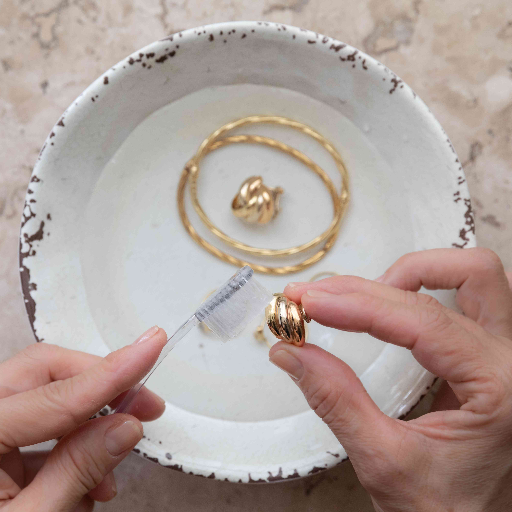
Gold ornaments require regular cleaning with a soft, lint-free cloth to remove oil and dirt. Chlorinated water, household cleaners, or any abrasive material should never be used to clean gold, as they can corrode it. Proper storage will keep gold free from scratches and tarnishing; hence, it should be kept in a dry, airtight container or a soft pouch. Depending on the frequency of use, polishing and ultrasonic cleaning might become necessary. These treatments are essential to preserve the brilliance of your cherished creations.
Proper Cleaning Techniques for Gold
-
1
Mild Soap and Warm Water
Add a few drops of mild dish soap to warm water. Submerge the gold piece for a few minutes, and then gently brush away dirt and residue using a soft-bristled toothbrush. -
2
Rub with a Soft Polishing Cloth
An exclusive jewelry polishing cloth can be used to enhance the shine of the gold without scratching it. Avoid any coarse fabric or paper towels. -
3
Ultrasonic Cleaner Use
Be sure to use only an ultrasonic cleaner for jewelry when doing deeper cleaning treatments. However, caution should be exercised because some kinds of gold pieces with very delicate settings or gemstones may not lend themselves well to this method. -
4
Ammonia Solution for Tough Stains
Use a dilute mixture of ammonia solution, one part ammonia to six parts water, for brushing off hard stains. Should be employed only occasionally; ensure thorough rinsing with water after use to prevent possible damage. -
5
Commercial Jewelry Cleaning Solutions
Choose fine and effective cleaning products specifically designed for gold, which can be easily found on the market. Strictly adhere to the instructions printed by the manufacturer for safe and effective cleaning.
Storage Advice to Prevent Damage
Proper storage is essential for ensuring the integrity and shine of gold jewelry. Always keep gold separate from other jewelry to avoid scratches since gold being a soft metal. Store things in individual soft cloth pouches or, preferably, in a cloth-lined jewelry box with separate compartments. Extreme moisture and temperature can cause quicker tarnishing or structural changes; therefore, both should be avoided at all costs when storing gold items. Keep your jewelry away from chemicals and direct sunlight to maintain its appearance and durability. Check the storage premises periodically to keep them clean and free from dust or any residue that could otherwise be transferred to the gold.
Avoiding Harsh Chemicals
Gold ornaments should never come into contact with any abrasive or corrosive substances. Chemicals like bleach, ammonia, or chlorine can damage the metal structure and finish. Dangerous cleaning supplies, wherever they may exist at home, or acids can cause discoloration or even surface damage if exposed for a prolonged period. So keep your gold jewelry out of harm’s way by removing it before any such workings and merely wash the items with a mild soap solution and then dry off using a soft cloth.
The Value of Gold’s Resistance to Rust

The rust resistance that gold possesses is attributed to its chemical nature. It is not a reactive metal like many others; therefore, gold will not develop any oxide when it comes in contact with the oxygen present in the air and moisture. This rust resistance arises because gold has a very low tendency to form compounds, being classified as a noble metal with high corrosion resistance. This characteristic ensures that gold retains its beauty logos forever, lending it desirability in applications ranging from jewelry to electronics and industrial uses. Furthermore, less maintenance is required due to the durability of gold, making it more valuable and practical.
Gold in the Jewelry Sector
Due to its beauty, workability, and durability, gold is a precious metal that holds an eminent position in the jewel trade. The elegance of forms conceived by the craftsman is made possible by malleability, whilst the resistance to tarnish has kept many good gold pieces shining bright even after several years. In addition, a major attraction of gold is that it is hypoallergenic, and hence can be worn by people with sensitive skins. With gold available in various levels of purity such as 24k, 18k, and 14k, the options in gold jewelry range among aesthetic appeal, strength, and price, as satisfying the moving requirements of gold consumers across the globe.
Application in Technology and Electronics
In industries such as technology and electronics, gold plays a crucial role as an essential agent, excelling in the conduction of electricity, resisting corrosion, and ensuring that connections are mechanically secure. That being said, such properties make gold an ideal material for applications in components where the connectors, switches, and wiring of an electronic device, such as a smartphone or computer, are highly critical. The contacts on circuit boards and semiconductor components are thinly plated with gold to ensure durability and uninterrupted functioning. Gold, being highly malleable, facilitates micro-fabrication of miniature components required in modern miniaturized technology. For gold is high-grade equipment with advanced production technology and, likewise, high-grade systems that guarantee high-performance applications and reliability. These include ground-breaking technologies such as aerospace equipment and medical devices where failure is not an option.
Gold as a Stable Investment Option
Historically, gold was known to be an investment and has due to its intrinsic worth, a stable investment option. The metal serves as a hedge against inflation and fluctuations in currency value, remaining worthful even in times of market decline. Being of limited supply and universally demanded, their very existence contributes to its capacity to sustain wealth over the long run. Apart from being a store of wealth, it offers liquidity to investors, allowing them to convert their cash into this metal when needed quickly. I believe that, with global economies currently in fair doubt and discourse, a trusted medium of portfolio diversification to mitigate unforeseen threats and hedge against more volatile assets is gold.
Reference Sources
-
Bullion By Post – Explains why pure gold does not rust or tarnish due to its noble metal properties.
-
Physical Gold – Discusses the chemical stability of pure gold and the tarnishing potential of gold alloys.
-
Al Romaizan Blog – Highlights gold’s resistance to rust as a result of its inert chemical makeup.
-
Blue Nile Blog – Covers the tarnishing of gold jewelry, especially in lower-purity gold alloys.
-
Vi Jewelance Blog – Provides insights into the causes of gold tarnishing, along with prevention and cleaning tips.


