Does Galvanized Steel Rust? Understanding the Corrosion Resistance of Galvanized Steel
Quick Answer: Galvanized steel, coated with zinc for corrosion resistance, will not rust unless under very unfavorable conditions. Here is a complete overview of when, why, and how does galvanized steel rusts, and what can be done to prevent rust of the material.
What is Galvanized Steel?

The term “galvanized steel” refers to a form of steel that has been coated with zinc to avert the problem of rust and extend the life of the steel. This layer allows separation of steel from those environmental components that attack it and result in its rusting.
Steel is also covered with a layer of zinc after it has been coated with a layer of chrome in order to protect it because it is very easy to charm such steel and this galvanizing increases the usefulness of the steel in much longer periods. In this galvanization, the procedure simply is dipping or sink coating of the steel into a hot molten zinc bath in which a crustal coating of the zinc is formed on the surface of such steel so as to lock out moisture and other corrosive agents onto tender metal.
Definition and Composition of Galvanized Steel
The zinc coating on galvanized steel consists of standard steel covered with an alloy composed of 99.8% zinc and 0.2% aluminum, specifically designed to provide superior corrosion resistance.
Key Properties of Galvanized Steel
| Key Property | Description |
|---|---|
| Corrosion Resistance | Protects against rust and oxidation |
| Durability | Long-lasting, up to 50+ years |
| Abrasion Resistance | Resists surface wear effectively |
| Formability | Easy to shape and bend |
| Recyclability | Fully recyclable material |
| Surface Appearance | Bright, smooth, and aesthetic |
| Weldability | Can be welded with proper care |
| Paintability | Supports paint adhesion if needed |
| Heat Resistance | Stable up to 200°C |
| Cost-Effectiveness | Low maintenance and long lifespan |
How Does Galvanization Work?
Hot-Dip Galvanizing: An Overview
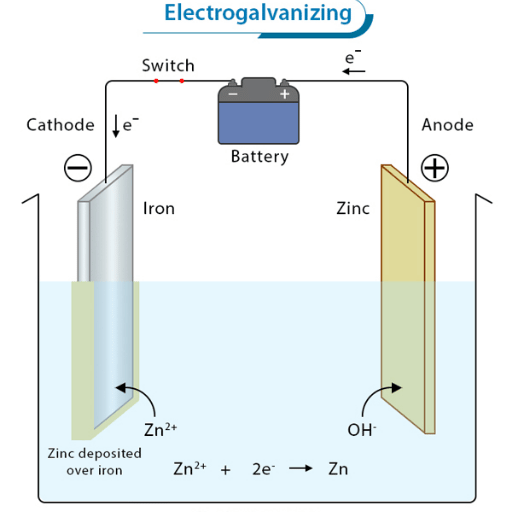
To keep the steel and iron hardware protected from rusting, it is important to coat them with zinc, and this is efficiently done through hot-dip galvanization. The said component has to be dipped into the melted zinc at about 450°C or 842°F. In this way, steel is not left with only a single coating but various layers of metal that protect the steel.
Steel Preparation Process
Surface preparation is very important as it directly impacts the quality and longevity of the galvanized coatings obtained. There are three main stages in the preparation process:
- Degreasing: This involves the use of alkaline or solvent-based cleaning agents aimed at removing oil, grease, or any other contaminants from the surface of the items. This is necessary since if degreasing is not done properly, it may lead to permissible failures of the coating owing to its oily surface.
- Pickling: Hydrochloric acid (HCl), or sulfuric acid (H2SO4) is used to eliminate rust, scale, and oxide particles,s ensuring that the surface is clear for zinc as an overlay.
- Fluxing: Zinc ammonium chloride is used to coat the surface, preventing it from oxidizing when immersed in the zin,c and it is further used to aid the degree of adherence on the part of the coating, enabling the full coverage of the surface at hand.
Development of Zinc-Iron Alloy Layers
Steel is dipped into the molten hot zinc, which causes zinc to react chemically with the iron found in steel. This results in several distinctive layers due to zinc-iron alloys formed on the surface of steel before a full zinc layer finally encloses the surface for added protection from the elements. Steel is basically dipped into the molten hot zinc, which causes zinc to react chemically with the iron found in steel. This results in several distinctive layers due to zinc-iron alloys formed on the surface of steel before a full zinc layer finally encloses does galvanized steel rust the surface for added protection from the elements.
Does Galvanized Steel Rust?

Important Understanding
Does galvanized steel rust? In short, although highly resistant to corrosion, it is not completely rustproof. The zinc coat offers superior protection against corrosion, but the certain environmental conditions will result in the corrosion of the steel.
How Zinc Protection Works
Galvanized steel resists rust through two protection mechanisms:
- Barrier Protection: The zinc coating creates a physical barrier, preventing moisture and oxygen from reaching the steel surface
- Galvanic Protection: Even when scratched, zinc corrodes preferentially to steel, sacrificing itself to protect the underlying metal
Conditions That Promote Galvanized Steel Corrosion
In the scenarios below, it is possible for a material such as galvanized steel to rust:
- Extended periods of humidity/moisture
- Acid pH less than six refers to environments of low pH values
- Alkaline conditions (pH> 12) in which
- Any contact with metal of a different nature, for example, copper or brass,
- Environments with high salt content,s such as those near the coast or in
- As well as chemical industries does galvanized steel rusts
Factors Affecting Corrosion Resistance

Thickness and Type of Zinc Coating
| Coating Type | Thickness | Application | Key Features |
|---|---|---|---|
| Hot-dip galvanizing | 35-100 µm | Structural steel, rebar | Uniform, durable |
| Electroplating | 5-25 µm | Small parts, fasteners | Thin, economical |
| Zinc spraying | 75-250 µm | Large structures, on-site | Thick, field application |
| Mechanical plating | 50-110 µm | Fasteners, hardware | Ductile, peened coating |
| Zinc-rich paint | 75-150 µm | Field repairs, large items | Flexible, aesthetic |
Environmental Influences on Corrosion
- Moisture Contents: Increased moisture content speeds up the rusting process because it completes the electrolytic cell necessary for the electrochemical reaction
- Temperature Variations: High temperatures increase the rate of chemical reactions and at higher temperatures, cause thermal stress within the material
- Air Pollution: Sulphur oxides, carbon, chlorine, and even fluorides form corrosive products
- Sea Side: With a high concentration of chlorides, seawater corrodes zinc coatings mechanically.
- Acidic or Alkaline pH: It was noted that the protective oxide layer was attacked by these levels of acidic or alkaline corrosive chemical media.
- Ventilation System: When ventilation is poor, the air does not escape, hence the moisture and corrosion factors remain in the system.
- Contact Period: There is corrosion on the metal surfaces as water, rain, or dew moistening builds up for a long period of time.
- Living Organisms: Corrosion-facilitating chemicals can be produced in bacteria, fungi, and even algae.
- A popular question that many people ask is this: Does galvanized steel rust or corrode enough to merit a reprimand?
Common Applications of Galvanized Steel
🏗️ Construction Industry
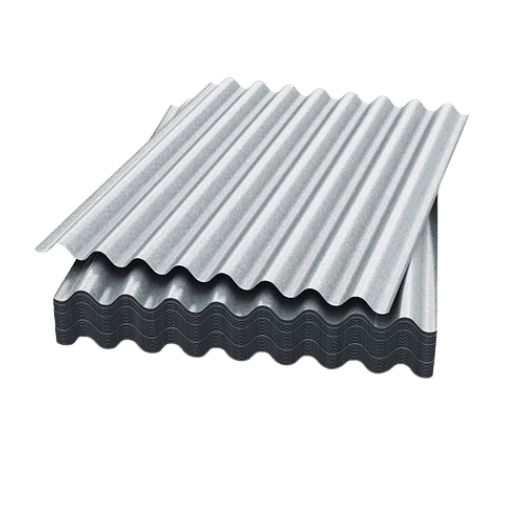
Galvanized steels are those that find their application in construction issues, namely beams, columns, and roofing. Because of its anti-corrosion properties, any bridge, building, or infrastructural work demanding long-term durability is granted a treatment of galvanization.
🚗 Automotive Industry
Another big user of galvanized steel is the vehicle manufacturing industry, for car bodies, chassis, and structural reinforcement. It is also able to preserve structural integrity and resale value by protecting the vehicle from road salt corrosion and hostile weather through the zinc coating.
🌾 Agricultural Applications
Farm machinery will rely on galvanized steel for its durability in an outdoor environment. Irrigation pipes, silos, fences, livestock pens, and tanks to store water or chemicals are some of the common uses specified herein.
🏠 Household Items
Household appliances, outdoor furniture, hardware and tools, and building materials are some of the common uses. Galvanized steel gives strength and corrosion resistance to objects that face moisture and varying weather conditions.
Maintenance Tips for Prolonging Lifespan
🔧 Essential Maintenance Practices
Regular Inspection Protocol
- Conducting visual inspections every 6-12 months
- Pay more attention to those areas exposed to moisture and harsh weather
- Look for scratches or rust stains, with or without coating damage
- Pay special attention to joints, welds, and other points of connection
- Take note of their findings, dating records, and observe the changes over time.
💡 Correct Cleaning Methods
- Water is clean and the best choice to clean with any dirty cloth or sponge
- Applying mild detergent solutions will make it easier to clean stubborn stains
- Do not use abrasion that may damage the zinc coating
- Rinse well and dry afterwards
- Never use strong acids or harsh chemicals
Recoating and Touch-Up Methods
- Zinc-Rich Paint: Best for minor scratches and damage; very good corrosion protection
- Zinc Spray (Cold Galvanizing): Easy application for small repairs; mimics hot-dip properties
- Hot-Dip Re-Galvanizing: Complete recoating for severely damaged items
- Zinc Alloy Soldering: Very effective for repairing small areas and protecting welded joints
Frequently Asked Questions
Q: Is rust a problem for galvanized metals? More importantly, for example, does galvanized steel rust?
A: It is almost as if the deposition of zinc on steel leaves no thoroughfare for rusting, since it is a rust preventive treatment. However, some factors, such as salt or offensive conditions,s degrade all coatings; this means the steel beneath the zinc will begin to rust. Galvanized coatings are very efficient against rust, but they are not corrosion-proof.
Q: What causes galvanized iron and steel to corrode?
A: Galvanized iron rusts when its zinc layer is either destroyed or removed due to mechanical action, continuous exposure to water, or aggressive environments containing chlorides. Once this layer of zinc is depleted, then this steel is susceptible to rust, which is caused by oxygen and water.
Q: How is steel prevented from rusting employing zinc coating?
A: Zinc protection works in two ways these are barrier protection (acting as a cover from agents like moisture and oxygen) and galvanic protection (this is where the zinc preferentially corrodes in place of the steel). Thus, in this type of protection, any scratches on the surface are irrelevant because the zinc remains in place.
Q: Is it possible to make aluminum adjacent to galvanized steel to rust?
A: The direct contact of aluminum with galvanized steel causes galvanic corrosion, which enhances the degradation of the zinc layer. However, separation methods like isolating with sleeves or coats are available.
Q: How does the rust resistance of galvanized steel contrast with stainless steel?
A: On one hand, you have galvanized steel that depends on a coating of zinc for the purpose, while on the other, you have stainless steel, which has chromium in it that creates an oxide film, which says that it can repair itself. While both exhibit resistance to doing so in normal conditions, under severe atmospheric conditions, stainless steel is likely to last longer with regard to corrosion. Stainless steel prevailed in the long-term issue of corrosion, whereas galvanised steel failed, especially in terms of structures above water. Still, normal conditions ensue; does galvanized steel rust? It does so under unfavourable conditions deep in seawater.
🎯 Key Takeaways
Galvanized steel does not rust easily due to its protective zinc coating, but it can eventually corrode under extreme conditions. Understanding the factors that affect corrosion resistance and implementing proper maintenance practices can significantly extend the lifespan of galvanized steel components.
Regular inspection, proper cleaning, and timely repairs ensure that galvanized steel continues to provide excellent protection for decades, making it a valuable choice for construction, automotive, agricultural, and household applications.
📚 Reference Sources
- 1. Rust2. Study On the Rust Distribution Rate and Corroded Surface Characteristics of Galvanized Steel Wires
- Authors: K. Miyachi, Atsuto Kajita
- Published in: IABSE Congress, Ghent 2021
- Year of Publication: 2021
Key Results:
- The paper examined the relationship between the rust distribution rate of cartographies and the characteristics of corroded galvanized steel surfaces.
- To measure the percentage of red rust and white rust ratios (i.e., coagulation of zinc and iron corrosion products), a digital image color analyzer was employed.
- The results showed that as the amount of white rust declines, the rate of loss from corrosion and the depth of pits formed is higher, which means that, after all, galvanized steel does rust, and this type of rust is measurable(Miyachi & Kajita, 2021).
3. Effects of NH4+ ion, Na+ ion, and Mg2+ ion concentration on deterioration of galvanized steel within wet maconditioning
Document prepared by S. Neupane and others.
- Published on: Materials and Corrosion
- Date published: 2021
Main points:
- The paper investigated the impact of a range of cations (NH4+, Na+, and Mg2+) on the corrosion behaviour of zinc-coated steel in a cycle of wet and dry.
- From the results, it was observed that all ions change the corrosion rate at significant levels, and the ions which slow down the corrosion most are Mg2+ ions.
- It was inferred that zinc of this type is prone to fouling, particularly in moisture presence and specific ions (Neupane et al., 2021, pp. 1388–1395).