


Machining titanium requires accuracy, skill, and the correct methodology. Titanium is strong, corrosion-resistant, and lightweight. And because of these very characteristics, the job of machining becomes complex. Consider this your dictionary: with the information, methods, and tips to take you beyond the roadblocks of titanium machining. Whether you’re a skilled machinist looking to improve techniques or a beginner seeking straightforward wisdom, this blog will fill you with the knowledge to work with titanium more efficiently, reduce tool wear, and achieve great results.
Understanding Titanium and Its Alloys
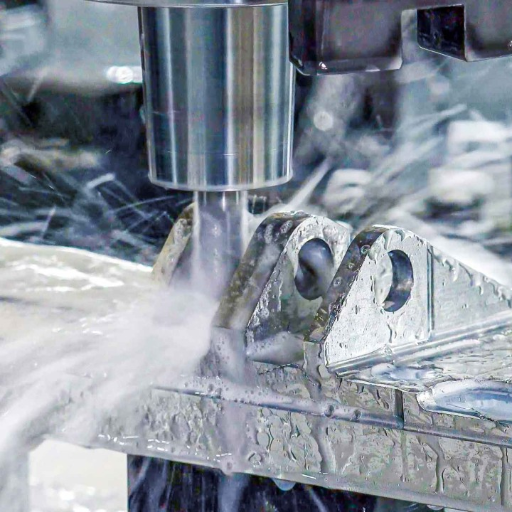
A corrosion-resistant metal, titanium combines lightness with strength and finds use in aerospace, medicine, and all other industries. Because of its specific properties like high strength-to-weight ratio and biocompatibility, it is considered the ideal metal for extreme environments. Titanium is normally supplied in several alloys, with different alloys for different applications. An example is Grade 5 (Ti-6Al-4V), which is the most widely used alloy, being selected for applications requiring high strength, corrosion, and heat resistance, whilst the pure titanium is used when corrosion resistance and ductility are paramount. Understanding the properties of titanium and its alloys would be greatly helpful in choosing the appropriate material for your machining needs.
Types of Titanium and Titanium Alloys
Titanium and its alloys are generally divided into four main types according to their metallurgical structure: commercial pure titanium, alpha alloys, beta alloys, and alpha-beta alloys. Commercially pure titanium has excellent corrosion resistance and is used in chemical processing and biomedical applications. Alpha alloys are characterized by the fact that they are not heat treatable; hence, they possess good weldability and resistance to oxidation, therefore making them suitable for high-temperature environments. Beta alloys, being heat treatable and very strong, would be very suitable for aerospace and automotive parts in view of their light weight. Alpha-beta alloys, including the Grade 5 (Ti-6Al-4V), possess the best combination of strength, toughness, and corrosion resistance, and are therefore used in a wide range of industries.
Titanium Grade and Its Importance
Titanium grades have been classified on the basis of composition and properties, each constructed to fulfill special industrial requirements. Commercially pure titanium is further divided into Grades 1 to 4, with strength increasing and corrosion resistance decreasing with increasing grade numbers. Grade 1 is the softest and most ductile, very resistant to corrosion, and is therefore perfect for applications in the chemical processing industry. In contrast, Grade 4 has the highest strength amongst the pure grades and finds application in heat exchangers in power plants and desalination systems.
Grade 5 (Ti-6Al-4V) is the best-selling alloy due to its balanced characteristics of high strength, corrosion resistance, and light weight. It is used in aerospace, medical implants, and marine industries, making up approximately 50% of the global titanium consumption. It is extensively used in aerospace applications where its excellent strength and durability resist extreme environmental stress and simultaneously contribute to the overall decreased weight. It has a tensile strength of nearly 120,000 psi and a density of 4.43 g/cm³, which makes it fit for aircraft component uses such as turbine blades and wing structures.
Specialty grades, such as Grades 7 and 12, broaden titanium applications further. Grade 7 with traces of palladium for improved corrosion resistance, finds chlorine-laden environments applications, such as those in chemical and petrochemical plants. Grade 12, with gains in nickel and molybdenum, shows superior resistance to crevice corrosion and is generally ever the best choice for applications with heavy temperature and severe thermal-variant conditions, especially energy generation systems.
Worldwide, the titanium market is expected to see substantial growth on account of increasing demands from aerospace, healthcare, and power industries. According to recent reports, the titanium market size was valued at nearly USD 25 billion in 2022, with forecasted projections of standing at a 4.2% compound annual growth rate (CAGR) from 2023 to 2030. This growth lays bare the rising prominence of titanium grades in various sectors, from giving tough competition to products for intricate industrial challenges.
Titanium vs Aluminum: A Comparison
Titanium and aluminum differ in strength, weight, corrosion resistance, cost, heat tolerance, and applications.
| Parameter | Titanium | Aluminum |
|---|---|---|
| Strength | Higher | Moderate |
| Weight | Heavier | Lighter |
| Corrosion Resist | Excellent | Good |
| Cost | Expensive | Affordable |
| Heat Tolerance | Superior | Moderate |
| Applications | Aerospace | Automotive |
Basic Fluids in Titanium-Machining Process

- Tool Selection: Choose sharp and wear-resistant tools meant for high-performance metals. Carbide tools are most frequently used to machine titanium.
- Cutting Speed and Feed Rate: Lower cutting speeds combined with moderate feed rates should be used to prevent heat creation.
- Coolant Application: Offer good coolant application to maintain the temperatures and avoid thermal damage to both the tool and the workpiece.
- Chip Disposal: Proper chip removal alone produces no clogging so as to halt the machining operations.
- Machine Stability: Needs to be rigid and free from vibrations to ensure steadiness and consistency in machining.
Titanium Machining- An Overview
In machining titanium, its special nature poses particular challenges for machining, insofar as high strength, low thermal conductivity, and work hardening are involved. From effective machining strategies include the choice of cutting tools with suitable tool coating materials, consideration of machining parameters to reduce heat build-up, and application of coolant in an adequate manner. Machine setups must be rigid to resist vibrations so as to maintain precision, whereas chip evacuation should be effective to preserve tool life during titanium machining.
The Difficulties: Why Has Machining Titanium Been Lost
Titanium carries a number of hurdles during machining, which demand the special-making of strategies and expert possession. One of the difficulties arises from the fact that titanium cannot conduct heat very well. That means most of the heat generated along the cutting edge remains at the top of the tool itself instead of spreading out into the material or chips. This causes rapid wear of the tools, sometimes even premature failure of the tool. Researches showed that titanium had a thermal conductivity of around 7 W/m·K, significantly less than that of steel or aluminum, which creates heat-related problems.
In another case, high strength, and work-hardening are strengthening properties of titanium. As it boasts tensile strength exceeding even 1400 MPa in some alloys, machining forces drastically increase and, in return, cause greater strain to cutting tools. Besides, in many occasions, titanium in the presence of cutting tool materials, bonding happens, causing the formation of Built-up Edges (BUE) at elevated temperatures and pressures. It decreases the accuracy while simultaneously decreasing tool life.
One more difficulty is titanium elasticity. This relatively low modulus of elasticity means deflection or vibration under cutting forces, especially with thin-walled components, causes chatter and dimensional inaccuracies. Some studies also indicate that chip evacuation is difficult since titanium tends to generate long, stringy chips clogging the cutting zone.
Combined together, these factors render titanium machining onerous and time-consuming, requiring advanced tools, coatings, and machines. Data highlights that machining cost for titanium may go up ten times or twenty times that of aluminum, which evidences its complexity and highlights the significance of proper machining technique.
Tools for Machining Titanium
Machining titanium requires the use of special tools that can deal with its peculiarities. High-performance cutting tools made of carbide or polycrystalline diamond (PCD) should be used, since only these tools offer durability and precision. The tools should be coated with titanium aluminum nitride (TiAlN) or some other coating that protects them at high temperatures and against wear. First-rate hydraulic coolant systems are needed to assist in evacuating chips and maintaining temperature in the cutting zone. Plus, rigid and vibration-proof assembly of these machines will guarantee accurate performance that will not be affected by chatter. Thus, by employing these tools and methods, one can effectively minimize much of the difficulty encountered in titanium machining.
CNC Machining Titanium: Techniques and Tips

CNC machining titanium calls for a careful choice of tools, coatings, and operating conditions. Use sharp carbide tools with today’s toughest coatings, such as TiAlN, to withstand the working temperature while minimizing tool wear. Chip evacuation should be aided by temps high-pressure coolant-here the control of heat and moisture can improve cutting performance. Ensure a highly rigid and vibration-damp setup to avoid geometry inaccuracies and chatter. Balancing good feed rates and speeds will help with tool life and give good results for machining titanium.
Setup of Your Machine for Titanium
Machine setup for machining titanium would require utmost attention to precision and stability. Begin by making sure the machine bed and fixture are secure and rigid to minimize vibration that could promote tool wear or surface finish quality. Employ a coolant system with high-pressure capabilities to support chip evacuation and temperature control during cutting processes. Cutting tools with sharp and durable geometries suited explicitly for titanium should be chosen, preferably carbide coated with advanced coatings such as TiAlN to resist heat. Finally, check specific grades of titanium for which speed and feed can be preset for an optimum level of performance without compromising tool life or work quality.
Feed and Speed Recommendations
The feed and speed play an important role in machining titanium to optimize efficiency and precision. Usually, a lower spindle speed and higher feed rates are preferred to lessen heat build-up and reduce tool wear. As a rule of thumb, keep cutting speeds ranging from 30 to 100 surface feet per minute (SFM) depending on the grade of titanium and type of tool selected. Feed rates should be set according to tool diameter, bearing in mind lighter cuts are generally preferred over heavier ones in order to avoid putting excessive pressure on the tool. Check the manufacturer’s instructions for the tool, and consider using high-pressure coolant systems to assist with temperature control and chip evacuation.
Tool-Wear and Coolants Usage
Titanium tool wear is a great challenge for engineers due to its strength, low thermal conductivity, and chemical reactivity. The studies show that titanium will hastily promote edge chipping and crater wear of cutting tools if improper machining parameter is set. Recent research suggests extending tool life by applying coatings such as titanium aluminum nitride (TiAlN) on carbide tools to confer improved resistance to heat and wear.
Coolant usage plays a bigger role in reducing tool wear and achieving the required precision. Using high-pressure coolant systems, typically with pressures between 1000 and 2000 psi, serves to minimize heat and assist chip evacuation. Advanced water-based emulsions with titanium machining-specific additives can bring down tool wear by 30%, according to some modern research. Using a fine-tuned coolant regime can surely reduce tool wear, improve surface finish, and enhance manufacturing process efficiency.
Milling Titanium: Best Practices

Milling titanium requires optimal cutting tools, coolant systems, and machining parameters. Use sharp high-quality carbide tools made especially for titanium to reduce heat generation and tool wear. Use a high-pressure coolant system and water-mixed emulsion with additives that improve performance to cool the cutting zone and evacuate chips. Work with slower cutting speeds and moderate feed rates, making sure there are no interruptions in tool engagement to prevent overheating and tool damage. This way, all of the considered practices will help increase efficiency, tool life, and surface finish.
Choosing the Right Cutting Tool
When I select the right cutting tool, I look for high-quality carbide tools made specifically for machining titanium. These tools minimize heat buildup during operation and reduce the amount of wear. I also look for tool geometry that is optimized for both the material and the application, which is a very significant factor in precision and lasting power. By giving priority to these factors, I maximize machining efficiency and get better overall results.
Strategies for Effective Milling of Titanium
To tackle the difficulties caused by the properties of the material, such as strength and low thermal conductivity, titanium must be milled strategically. One such strategy involves appropriate cooling techniques, such as high-pressure coolant systems or Minimum Quantity Lubrication (MQL), to prevent tool wear due to overheating. Other ways to maintain the useful life of cutting tools are to keep cutting speeds lower but feed rates on the higher side, which put down vehement chatter. This also makes sure that tools are sharp, tough, and well-coated with something like titanium aluminum nitride (TiAlN), which guards against wear. Lastly, good workholding systems mean the job does not vibrate and thus, acquires fascinating surface finish and machining accuracy.
Mistakes Usually Made And How To Avoid Them
One mistake that usually occurs is setting inappropriate cutting parameters, which can result in surface finish degradation and shorten tool life. To avoid potential hazards, always refer to the recommended speed and feed parameters given by the tool manufacturer for the given material. Another common cause of failure is choosing the wrong tool. The cutting tool should be appropriate for both the material being machined and the type of milling operation undertaken. The last one is improper clamping of the workpiece, inciting vibrations and, as a result, the loss of precision. Always be sure to secure the workpiece before commencing any operation.
Applications and Parts Made from Titanium

The peculiar properties of titanium enable it to be used in the aerospace, medical, and industrial applications, the peculiar property being the high strength-to-weight ratio with corrosion resistance and biocompatibility. The familiar parts produced from titanium are aircraft components, medical implants such as joint replacements, and equipment used in chemical processing industries. These processes require titanium for working in harsh environments or on precision applications.
Innovative Uses of Titanium and Its Alloys
Titanium and its alloys are revolutionizing industries with their applications at the avant-garde, with technology pushing the frontier of titanium applications. Some of the most advanced uses demonstrating the superlative capabilities titanium has to offer are mentioned below:
- Aerospace and Space Exploration: Titanium with its fantastic strength-to-weight ratio and resistance to extreme environments finds unlimited uses in the aerospace field. Present-day engine design, fuselage components, and space craft are of titanium and its alloys. SpaceX Starship program and NASA’s Mars rovers utilize titanium to greatly increase durability and efficiency in space missions.
- Medical Advancements: In the area of custom surgical reconstruction, beyond conventional orthopedics and prosthetics, titanium is now commonly used in custom 3D printed implants fabricated specifically for individual patients. Instances of titanium dental implants have been reported to have had a 95% success rate for over 10 years. Titanium’s biocompatibility has also facilitated the development of innovative neurosurgical instruments.
- Additive Manufacturing (3D Printing): Titanium alloys such as Ti-6Al-4V are suitable for 3D printing due to their ductility and strength after freezing. Titanium powder is considered for additive manufacturing in industries like aerospace and healthcare, as it reduces waste and manufacturing costs, besides having the ability to build complex geometries so far unavailable through conventional fabrication methods.
- Energy Sector: Titanium is much sought after in renewable energy applications. For example, geothermal power plants employ titanium where heat exchangers require materials that resist corrosion due to high temperatures and saline environments. Thin-film coatings of titanium dioxide (TiO2) are additionally utilized in solar panels for improving efficiency and life.
- Consumer Technology: Recently titanium has become a choice of the consumer technology industries with the trendy titanium cases for smartphones, smartwatches, and laptops. The lightweight nature of titanium also affords the perfect balance of aesthetics and functionality.
Data Supporting Titanium’s Use
According to a recent MarketsandMarkets report, the global titanium market is projected to reach $6.1 billion by 2027, growing at a CAGR of 4.2% from 2022. Such growth is due to increasing demands from the aerospace and medical industries.
Titanium Alloys, mainly Ti-6Al-4V, account for more than 50% of titanium production because of their countless applications, both structural & additive manufacturing.
Grand View Research further states that 15% of all titanium consumption comes from energy and technology applications, and is anticipated to steadily grow in the next decade, up to 2030.
The emergence of such novel avenues continues to augment titanium’s usefulness, firmly entrenching it as a core material in every established and emerging industry.
Future of Titanium Machining
Valuable transformations will be bestowed on titanium machining as the world increasingly demands high-performance materials. With further innovations in hybrid manufacturing techniques and AI-assisted machining processes, the machining of titanium can be accomplished with extreme precision and at lower cost and minimal waste generation considerations. The MarketsandMarkets report projects the global titanium machining market to grow at a CAGR of 6.5% from 2023 to 2030, enhanced by the adoption of titanium across the aerospace, medical, and energy sectors.
Aerospace Industry continues to pay the highest dividend with titanium findings. Its low weight and corrosion-resistant properties are imperative for titanium applications in aircraft such as Boeing 787 and Airbus A350. On the other hand, the demand for custom titanium implants is anticipated to rise in the medical field. The development of additive manufacturing (3D printing) will thus promote this demand. Moreover, emerging technologies such as cryogenic machining are gaining acceptance due to the improvement of tool life and surface finishing in the machining of titanium.
On another front, the world will push sustainability in the production and use of titanium. Recycling and upcycling of titanium and titanium alloys will continue to grow, thereby sustaining minimum adverse effects on the environment. These new innovations and market trends situate machining as both an ever-evolving field and as a prominent factor for future industrial development.
Reference sources
- Micromoles drilling in Ti-6Al-4V titanium alloy by laser and electrochemical machining
- Authors: Chenyu Sun et al.
- Publication Date: October 16, 2023
- Citation: (Sun et al., 2023, pp. 127921F-127921F – 8)
- Summary:
- This study introduces a novel machining technique called Laser and Shaped Tube Electrochemical Machining (Laser-STEM) for creating microholes in Ti-6Al-4V titanium alloy, which is critical for aerospace and precision instruments.
- The research highlights the challenges of machining titanium alloys due to their poor thermal conductivity and high friction coefficient.
- Key Findings:
- The combination of laser and electrochemical machining improves machining accuracy.
- Experiments showed that increasing laser power led to a 34.74% increase in machining gap and a 24.13% decrease in side gap.
- A deep hole of 1.5 mm in diameter and 50 mm in depth was successfully achieved under specific conditions (20 V processing voltage, 5 W laser power, and 1.2 mm/min feed rate).
- Methodology:
- The study involved experimental trials using a liquid-core fiber-optic tube electrode with a sodium nitrate electrolyte solution.
- The effects of various parameters such as pulse voltage, laser power, and feeding rate on machining accuracy were systematically analyzed.
- Efficient and low-damage machining of Ti6Al4V: laser-assisted CBN belt grinding
- Authors: G. Xiao et al.
- Publication Date: March 15, 2023
- Citation: (Xiao et al., 2023, pp. 110–122)
- Summary:
- This paper presents a method for machining Ti6Al4V titanium alloy using laser-assisted CBN (Cubic Boron Nitride) belt grinding, focusing on reducing damage while improving efficiency.
- Key Findings:
- Increasing laser power significantly enhances processing efficiency and surface quality.
- The study reported a 63.5% reduction in tangential grinding force and a 72.6% reduction in normal grinding force at maximum laser power.
- The presence of Ti and N compounds on the ground surface was noted, indicating chemical interactions during the grinding process.
- Methodology:
- The research involved experimental setups to analyze the impact of laser power and grinding depth on machining behavior.
- Elemental distribution and chemical states of the ground surfaces were examined to understand the removal mechanisms.
- Experimental Study on Deep Hole Drilling of TC18 Titanium Alloy Based on BTA
- Authors: Z. Liu et al.
- Publication Date: December 6, 2019
- Citation: (Liu et al., 2019)
- Summary:
- This study investigates the challenges associated with deep hole drilling in TC18 titanium alloy, focusing on issues like chip removal and tool wear.
- Key Findings:
- The study found that chip shape changes with spindle speed and feed amount, affecting tool wear and hole axis deflection.
- Recommendations for process parameters were provided to minimize tool wear and improve hole quality.
- Methodology:
- The research conducted BTA (Boring and Trepanning Association) deep hole drilling tests and analyzed the effects of various parameters on machining performance.
Frequently Asked Questions (FAQs)
Common Problems When Machining Titanium
The machining operations with titanium pose several challenges because of the inherent properties of the material, thus making it a difficult material to work with. One of the common problems is the low relative machinability of titanium when compared with other metals like aluminum or even stainless steel. Tool wear and heat generation are issues associated with poor machinability, the quality of the product being adversely affected. For such reasons, the use of sharp cutting tools and careful machining practices is highly recommended. Heat management while machining with coolant at high pressure is another method to extend tool life. Knowing the hardness of titanium and proper selection of cutting parameters is a step toward avoiding these common troubles.
What Alloys of Titanium Are Used for Machining?
There are several types of titanium alloys that are commonly employed in machining operations. Grade 5 titanium is the most prevalent alloy owing to its excellent strength-to-weight ratio; it consists of 90% titanium, 6% aluminum, and 4% vanadium. Others include Grade 2 titanium that exhibits good corrosion resistance and machinability. Moreover, there are harder titanium alloys, which, however, are more difficult for machining. Each alloy presents unique characteristics that affect machinability, thus placing utmost importance on selecting the appropriate type for the intended application. Learning how titanium is used in different industries will also provide guidance in the selection process.
What Are Some Tips for Machining Titanium to Improve the Process?
Some effective tips that can enhance machining and the efficiency of the outcome when machining titanium are as follows: First, ensure a cutting edge is used that is suited for titanium, such as aluminum titanium nitride-coated or titanium carbo-nitride-coated tools for better result. Climb milling is often preferred as it helps to reduce tool wear and improve surface finish. Using plenty of coolant is also important for keeping heat generation under control. Increasing coolant concentration could further improve the machinability of titanium facilitating a smoother cut. Lastly, it is essential that your tools remain sharp at all times to reduce friction and avoid damaging the workpiece.
How Does Titanium Stand against Metals Like Aluminum in Machining?
Comparing titanium to metals like aluminum, titanium is widely recognized as one of the difficult materials to machine. Aluminum is considered to have excellent machinability; however, titanium shows less relative machinability owing to the hardness and strength characteristics of the material. Machining of titanium requires more power and produces heat which can diminish tool life if not properly managed. But nothing can top the usefulness of titanium for certain applications given its high strength-to-weight ratio and corrosion resistance. Therefore, to successfully machine titanium, machinists must modify their techniques and tools accordingly.


