Understanding the Melting Point of Beeswax: Applications and Insights
Used for a myriad of things, beeswax is well-loved for its potential in creating lotions, candles, as well as for large-scale industrial uses. Its unique characteristics that cannot be overlooked are traced back to the beads and their melting point, which has simple yet mighty implications for beeswax. Familiarizing oneself with the beeswax melting point can help in the intricate details of beeswax use, opening up a whole new set of opportunities.
The Chemical Composition of Beeswax
Beeswax’s pliability at different staves (degrees) is largely influenced by its compound composition. This composition includes esters, fatty acids, and hydrocarbons. The large knowledge of wax composition aids in understanding.
Key Components:
- Esters (70-80%): Result from condensation reactions between higher alcohols and long-chain fatty acids
- Fatty Acids (15%): Including palmitic acid and hydroxy palmitic acid, responsible for structural integrity
- Hydrocarbons: Primarily alkanes that contribute to bulk and rigidity
Factors Determining Beeswax Melting Point
Critical Temperature Range
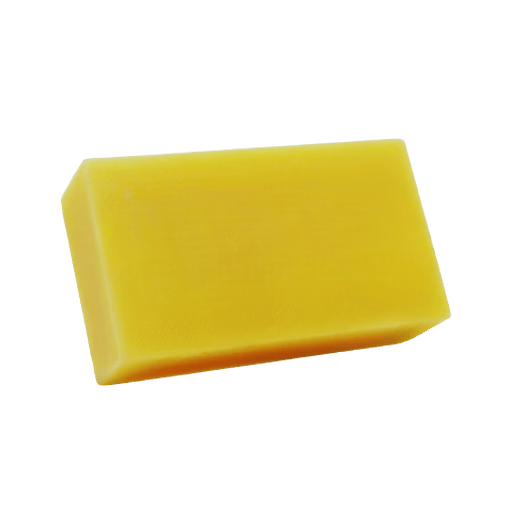
Pure beeswax melts between 62°C to 65°C (144°F to 149°F)
The characteristics of the melting temperature of the beeswax mainly lie in its composition, for it is primarily esters, fatty acids, and hydrocarbons. The 62 to 65 centigrade range is reserved for the stable fatty acids part. The other characteristics can exist in the interacted domain too. Palmitic melt can reduce the picture at this temperature, whereas if one takes into account the short-chained melt, the behavior is bound to go upwards.
Factors Affecting Melting Point
Purity and Its Importance
Unfortunately, when beeswax is mixed with other organic debris, such as honey, small pieces of pollen, and other contaminants, it loses its valuable properties and makes it difficult to work with.
- Depress the melting point
- Broaden the melting range
- Disrupt the chemical structure
- Alter thermal conduction properties
Processing Methods and Their Influence
Processing techniques, including thermal control and filtration, play crucial roles in maintaining consistent melting characteristics. Proper filtration removes impurities that could otherwise affect the beeswax melting point, ensuring material suitability for various industrial applications.
Environmental Conditions and Effects
Environmental Factors:
Practical Applications Based on Melting Properties
Candle Making Applications
Burning Characteristics
- ✓ Longer burn time than other waxes
- ✓ Soot and smoke-free burning
- ✓ Natural honey-like fragrance
Additional Benefits
- ✓ Air purification through negative ions
- ✓ Drip-resistant properties
- ✓ Environmentally responsible choice
Cosmetic Applications
Primary Functions
- Skin moisture retention
- Emulsion stabilization
- Viscosity enhancement
Additional Properties
- Natural antiseptic effects
- Scent fixative capabilities
- Hypoallergenic for sensitive skin
Industrial Applications
- Surface Treatment:
Polishing and finishing for wood and leather products - Lubrication:
Tool and screw treatment for reduced friction - Food Preservation:
Fruit coating to prevent moisture evaporation - Adhesives and Sealants:
Water-resistant binding properties
Wax Comparison Analysis
Safety Guidelines for Melting Beeswax
⚠️ Essential Safety Precautions
🔥 Heat Management
- Always use a double boiler system
- Never exceed 200°F (93°C)
- Avoid open flames entirely
- Use electric heat sources only
🛡️ Personal Protection
- Wear heat-resistant gloves
- Use safety glasses
- Ensure adequate ventilation
- Keep a fire extinguisher nearby
Temperature Control Best Practices
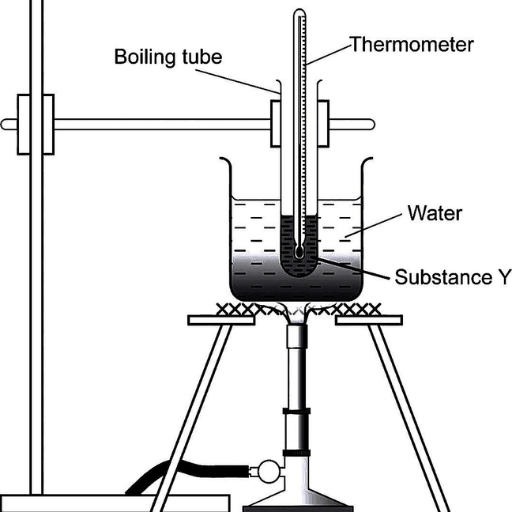
- Observe the thermostat: Use a reliable thermometer to ensure wax is maintained at a temperature that is within the best melting range(145°F-149°F).
- Use Wax Melter: Use water baths with no more than 1°C per minute of heating volume.
- Do Not Use High Heat: Wax should never be melted at more than 85°C to avoid releasing harmful fumes.
- Do Not Heat Quickly: Add small amounts at a time to a good effect.
Recommended Equipment Checklist
Essential Tools:
- Crock pot or wax warmer
- Digital thermometer
- Heat-resistant gloves
- Stainless steel utensils
Safety Equipment:
- Protective work surface
- Parchment paper
- Class B fire extinguisher
- First aid supplies
Frequently Asked Questions
Q: At what temperature does beeswax melt?
A: Beeswax melting point normally ranges between 62 degrees Celsius and 65 degrees Celsius (144 to 149 degrees Fahrenheit). This gives it a rather low melting point, which makes it easy to mold beeswax for use in multiple different things, like candles and other cosmetics.
Q: What is the Best Way of Melting Beeswax?
A: Melting beeswax is safest when using a double boiler, which is the method of placing a pot with beeswax in it on top of a previously heated or boiling water. This allows for slow and even heat, preventing any instance of burning the beeswax. Other people, on the other hand, choose to melt it in a microwave but do it in a limited time interval, in fear of cooking.
Q: In what top three things should one use beeswax?
A: Beeswax made from scented surface can be used in making beeswax candles, creating lip balms, and folding beeswax wraps for food storage, among other things. It can be improved further for cosmetic use, as a manufacturing moisturizer, or on woodworks to finish or provide protection from anything foreign.
Q: When comparing the melting points of beeswax and paraffin wax, which one has a higher melting point?
A: The melting point of beeswax is higher than that of paraffin wax, which melts at temperatures around 46 to 68 degrees Celsius (115 to 154 degrees Fahrenheit). Thus, beeswax can withstand heat better and is used when a harder wax material is needed.
Q: What is beeswax’s flash point?
A: The flash point for this wax tends to be somewhere close to 204 degrees Celsius (399 degrees Fahrenheit). Such a temperature allows for the possibility of fire hazard from the vapors released, thus caution needs to be taken by the user when warming up beeswax, as well as when products are formulated using it.
Q: Can you purify beeswax by filtration?
A: Yes, honey wax is often cleansed to remove both solid and liquid foreign contaminants, such as particles. This is particularly simple due to the porous structure of the substance, and the impurities shall be removed by mesh filters or some cheesecloth, inside the pot where the mixture is being melted. In that way, the final product will be usable for similar items in addition to commodities, such as cosmetics or candles.
Q: What do bees do with beeswax in the nest?
A: Hexagonal cells made using beeswax enable efficient space utility when storing honey and rearing brood. Little does one realize the importance of beeswax in a bee’s life. The reason is that the worker bees excrete the wax from their axillary glands and fashion hexagonal cells out of it as a strong and effective base for their comb.
Q: Elaborate on the definition of solar wax and explain its working mechanism.
A: The solar wax is beeswax that is liquefied by the energy from the sun, usually within a solar wax melter. This process is eco-friendly and energy efficient as it removes the use of power in melting, therefore perfect for individuals who prefer more eco-conscious approaches to wax melting. For beekeepers who need to process beeswax, it is a totally another story as this method is simply inapplicable.
Q: What is the beeswax melting point?
A: The beeswax melting point is on average between 62⁰C and 165⁰C (or 144⁰F and 149⁰F). Variations around this range may exist due to several reasons, like impurity content in the beeswax, among others.
🎯 Key Takeaways
The temperature range at which beeswax melts (62°C-65°C) is of the essence for good performance in various sectors—ranging from crafting candles with outstanding burn times to the production of good quality makeup. The characteristics of melting and thermal conduction in this natural substance, along with safety considerations, make it an important raw material for long-lasting and high-end products.
📚 Scientific References
1. Oil-Water-Oil Complex Emulsion Study
- Authors: Chunxiang Zhang et all
- Publication: Journal of Food Hydrocolloids
- Publication date: 2022-10-01 00:00:00.0
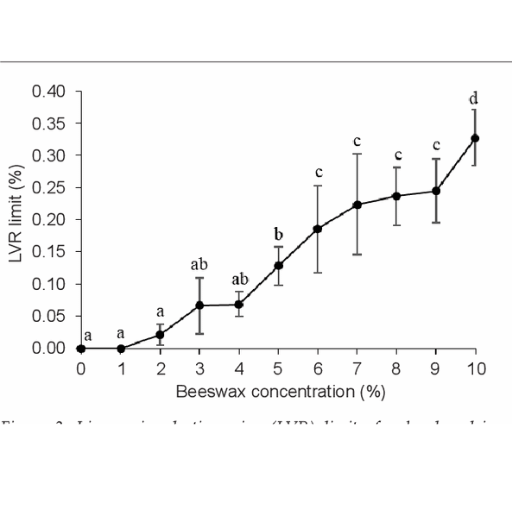
- Abstract: The paper presents the results of a study conducted for the generation of oil-in-water-in-oil (O/W/O) multiple emulsions using beeswax. It has been indicated that beeswax is effective for controlling the change of the melting point of the oil phase, with great implications for the stability and elastographic behavior of emulsifiers. They performed several experiments to find out the concentration level of beeswax that would give the desired melting point and stability and put this theory to practice, proving that the use of beeswax as an antiemulsion agent in the food industry is promising (Zhang et. al, 2022).
2. Thermal Energy Storage Enhancement
- Sirine Ben Belgacem et al.
- Environmental Science and Pollution Research International
- Publication Date: August 8, 2024
- Abstract: The paper presents findings on how phase change materials (PCMs) can be designed to exhibit better thermal energy storage by including the use of beeswax in these blends. In particular, the research paper examines beeswax’s role regarding the melting point and the thermal stability of these mixtures. The authors carried out thermal analysis to study the melting and solidification behavior of the mixtures, with the conclusions then reached; concluding that the incorporation of beeswax offers a significant enhancement of the thermal properties of these PCMs to the extent of making them even more suitable for energy storage uses (Belgacem et al., 2024).
3. Oleogel Formation Analysis
- Author: Annisa Noor Rachmawati
- Published in Journal of Oil Palm Research
- Date of Publication: January 26, 2024
- Abstract: The described research aimed to investigate beeswax for its suitability to be applied as an oleogelator in constructing red palm olein oleogels. Throughout the work, the focus was on the physicochemical, rheological, and melting point characteristics of the oleogels. It was found that the melting point of theoleogels could be tuned by the amount of beeswax due to the direct effect on the gel structure and stability of the said systems. Finally, beeswax is recommended in modulating the food-grade oleogels’ properties (Rachmawati, 2024).
🌱 Environmental Impact
Selecting beeswax in favor of synthetic choices gives sustainable, environmental, and conservationist payoffs. Its habit of renewing growth and ease of disposal provide the best in environmentally conservative ethics for all industries to implement.