


Polyetheretherketone (PEEK) is a well-known group of high-performance engineering thermoplastics and has been favored by industries from aerospace to medical devices, which demand high-performance materials. However, machining PEEK is not an ordinary operation; it requires particular attention. The intricacies of machining PEEK, elevated temperature resistance, and exceptional mechanical properties would defeat even seasoned machinists! Here we explore the tricks and tips for CNC machining a polymer to the highest level, from tool selection to machining condition optimization—all you need to know to earn spotless finishes with this adaptable material.
Introduction to PEEK Material

PEEK or Polyetheretherketone is a high-performance thermoplastic having strength and durability, coupled with resistance to corrosive chemicals and those requiring high temperature treatment with a duration of hours, and making it the material of choice when an application has a very rigorous environment in the aerospace, medical, and automotive industries due to it being extremely lightweight and having excellent mechanical properties. PEEK is also biocompatible and may be used in advanced stages of medical implants and medical devices. Due to its ability to remain stable in a severe environment, it is considered one of the most versatile materials in advanced manufacturing.
What is PEEK?
Polyetheretherketone (PEEK) is a premier thermoplastic with extraordinary mechanical strength and chemical resistance under conditions like extreme treatment. Because of its molecular structure, PEEK imparts a rare blend of temperature resistance, strength, and lightweight properties. This trade-off finds itself in industries like aerospace, medical, automotive, and electronics. PEEK melts at about 343°C (649°F) and can sustain a continuous operating temperature of around 260°C (500°F), maintaining stability in varying environments.
Low density, at around 1.32 g/cm³, is another attribute of PEEK that favors weight reduction in an application where lightweight components are crucial. Being resistant to hydrolysis and chemical corrosion also puts it against the elements in a chemically aggressive or wet environment. Recent technical literature discloses that tensile strength is generally over 90-100 MPa, depending on the grade. It constitutes naturally wear-resistant service for long life under friction and load applications.
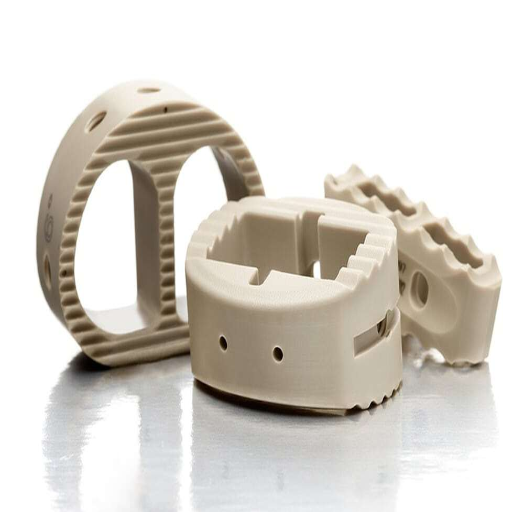
The biocompatible nature of PEEK gained emphasis in medicine. PEEK is used mainly for spinal implants, dental devices, and orthopedic components because of its ability to stay with the body, reducing the chances of rejection. This ability of PEEK to withstand radiation sterilization stresses also opens a variety of opportunities for medical devices.
With the recent trends in additive manufacturing across the globe, the chances of PEEK being sidelined have become almost bleak. In 3D printing, it finds increased use in producing high-precision parts that conventional materials cannot satisfy in gobbledegook demanding requirements. Thus, manufacturers are exploiting PEEK for those demanding applications wherein superior thermal stability and dimensional accuracy are mandatory.
In conclusion, PEEK, the material that brought the possibility of superior mechanical strength in one hand while offering the benefits of chemical inertness and versatility on the other, stands tall as one of the key drivers of recent innovation, transforming industries with demanding specifications.
Properties of Polyether Ether Ketone
Polyether Ether Ketone (PEEK) is a polymeric material well-known for its special features and is used as one of the selection materials in aerospace, medical, and automotive fields. Some of the excellent properties of this material are listed below with detailed analysis and data:
- Thermal Stability
A PEEK polymer grade is relatively resistant to high temperatures, with a maximum continuous-use temperature of 260°C (500°F). This makes it stable in environments exposed to extreme heat, such as in engines or aerospace parts.
- Mechanical Strength
With a tensile strength of about 90-100 MPa and an elasticity modulus of 3.6 GPa, it displays rigidity and toughness. Thus, it is suited to making parts needing high strength and toughness under load.
- Chemical Resistance
PEEK is resistant to several chemicals, including acids, bases, and organic solvents. Because of its chemical inertness, degradation is scarce even in harsh environmental conditions, making it the material of choice in chemical processing and medical implants.
- Low Moisture Absorption
With less than 0.1% moisture absorption, one can consider it very negligible. This property gives dimensional stability while exposed to humid or wet conditions, which is crucial in precision operations.
- Wear and Abrasion Resistance
It is an excellent tribological material and thus has wear, friction, and abrasion-resistant characteristics; hence, it is used for sliding or rotating components like bearings and seals.
- Biocompatibility
PEEK is FDA-approved for medical implant use, which makes it biocompatible and fluid-resistant. It is used for spinal cages, dental implants, and orthopedic devices.
- Lightweight
Having a density of around 1.3 g/cm³, PEEK is much lighter than metals. Weight reduction is a key priority in the aerospace and automotive fields; thus, this concept helps conserve energy.
- Electrical Insulation
PEEK has a high dielectric strength and exceptionally good insulation characteristics, making it useful in electronics for connectors and insulating components, especially at elevated temperatures.
These properties, combined with PEEK’s machinability, moldability, and 3D-printability, make it a versatile material much in demand for various advanced applications.
Why Use PEEK in Machining?
PEEK provides an ideal range of properties for machining, exhibiting an excellent balance of mechanical, thermal, and chemical attributes. The material is lightweight yet rigid enough to make parts that must bear loads without being too heavy. PEEK sustains its high-temperature structural performance to as high as 260°C (500°F), preventing any degradation in its mechanical properties in harsh environments. Besides its chemical resistance to detrimental attack from most aggressive solvents, acids, and bases, this also guarantees an application life of satisfactory yield and long-term applicability.
PEEK machining on a precision basis gives manufacturers the freedom to make complex parts for aerospace, medical, and automotive industries. Its low friction coefficient and self-lubricating property make it a must-have for load-bearing, wear-intensive applications. With the machining of PEEK now well advanced, it can achieve extremely stringent tolerances and complex geometries, providing perfect functionality and very little waste. With those properties at its disposal, PEEK continues to be among the most valued materials demanded by industries that look for high-performing materials that satisfy their stringent requirements.
Tips for Machining PEEK
- Keep the Tools Sharp
Poorly sharpened tools can make erratic cuts into PEEK, thus deforming or damaging the material.
- Control the Cutting Speeds
Keep the cutting speeds at moderate levels to avoid overheating. PEEK will soften if excessive heat is produced during cutting.
- Ensure Adequate Cooling
Coolant or air cooling will ensure heat dissipation and maintain dimensional accuracy during machining.
- Minimize Vibration
Good setups that ensure the material is held tightly will minimize vibration and hence produce better finishes.
- Thermal Expansion Should Be Considered
Expanding in PEEK will allow for precision in parts requiring tight tolerances.
Following these guidelines makes machining PEEK a fast and efficient job, without compromising the integrity and performance of the material.
Essential CNC Machining Techniques
The CNC machinery has been realized to have changed the manufacturing industry by providing highly accurate and repeatable processes. To better optimize CNC machining, the following techniques and points should be considered in machining advanced materials such as PEEK and metals:
- Tool Operation and Maintenance
Tool selection is a very important step for correct machining. Carbide or PCD are appropriate cutting tool materials in the machining of materials considered hard because of their wear resistance and accuracies. Maintaining cutting tools and replacing them can prevent wear and improve surface finish. For instance, research shows that dull tools may lead to tolerance deviations as high as 25 percent.
- Correct Speeds and Feeds
Correct speeds and feeds will lead to efficient cutting action and longer tool life. For instance, the machining of PEEK requires that cutting speeds of around 400–600 m/min and feed rates of 0.1–0.5 mm/rev be used, depending on whether the part is simple or complex. For metals such as aluminum or steel, speeds and feeds vary broadly and should be carefully computed regarding material properties.
- Thermal Control
Heat generated from the machining operations causes plastic deformation or thermal stresses in the workpiece. A coolant strategy, such as minimum quantity lubrication (MQL) or high-pressure coolant, dissipates the heat very well. Research findings indicate that MQL reduces tool wear by up to 30%, making it very useful, inexpensive, and environmentally friendly.
- Error Compensation
Such CNC machines use software that compensates for thermal drifts, vibrations, or tool deflections in real time. An adaptive control system reduces material waste while improving part accuracy.
- Surface Finish and Post-Machining
For many parts needing surface finishing and refining, polishing and/or grinding will be the final step. For hand polishing, surface roughness values (Ra) lower than 0.8 microns must be achieved to fulfill the requirements demanded by the aerospace or medical sector.
By employing these fundamental CNC machining techniques, manufacturers can ensure that high-quality components with good precision are produced to meet several applications. Future developments for CNC software and tool technologies should still increase efficiency and accuracy.
Choosing the Right Tools for PEEK
Selecting the complete range of tooling for the machine PEEK (polyetheretherketone) should be done with precision to achieve accuracy and prevent material damage. PEEK is a high-performance thermoplastic that is tough, chemically resistant, and thermally stable, thus suited for severe applications in aerospace, medical, and automotive industries. When considering efficient machining of PEEK,t he following considerations must be kept in mind:
- Tooling Material: Carbide or diamond-coated tooling should be preferred as PEEK abrades any regular tooling.
- Speeds and Feeds: Use medium cutting speeds and low feeds to decrease tool wear and avoid heating the workpiece.
- Coolant: Air or water-based coolants prevent excessive heat generation at exact operations that may degrade the material.
- Tool Geometry: Choose sharp-edged and suitably designed tool geometry for polymer machining so that cuts transfer cleanly and with minimum burrs.
Observing these can help a manufacturer precisely machine parts from PEEK with the utmost finish in different critical applications, thus enhancing productivity.
Best Practices for CNC Programming
Effective CNC programming helps achieve accuracy, efficiency, and consistency in manufacturing processes. Outputs can be significantly improved with the best contemporary methodologies and techniques. Here are some best practices in CNC programming:
- Toolpath Optimization: Designing an efficient toolpath helps reduce machining time and tool wear by avoiding unneeded movements. New developments in software now allow adaptive toolpaths that, according to recent literature, can increase productivity by up to 30%.
- Choose Suitable Cutting Parameters: Feed rate, cutting speed, and depth of cut must be duly considered. Industry experts in 2023 report that proper selection of cutting parameters can improve machining efficiency by 20-40%, primarily concerning aluminum or titanium.
- Simulation Software: CNC simulation software to simulate and verify the operation before machining automatically detects errors or collision accidents. Nowadays, simulators like VeriCut or NC Simul can reduce real-time errors and save 25% in production costs.
- G-Code Optimization: Optimizing the G-code can allow the CNC program to be executed faster and smoother. Depending on the machine, this specific optimization can reduce cycle time by about 15% to 20%, yielding further productivity enhancement.
- Activate Advanced Features: Most CNCs nowadays include advanced features, such as dynamic movement control, high-speed machining mode, or AI-driven algorithms for real-time adaptation. These features improve precision and reduce the wear of very expensive cutter tools.
- Keep Machines in Shape: Setting an effective preventive maintenance program helps keep CNC machines accurate and curtails downtime. Studies have shown that equipment, when properly maintained, will perform at its peak efficiency level, anywhere between 10% and 20% higher throughout its life.
With the implementation of these best practices, the latest technological advancements, and a data-driven approach, manufacturers can better compound the speed, accuracy, and cost-effectiveness of their machining operations to stay ahead of the increasingly fast-paced industry.
Advantages of Machining PEEK

- High Strength-to-Weight Ratio: PEEK is highly strong and durable yet remains highly lightweight, making it suitable for demanding applications.
- Chemical Resistance: PEEK can withstand a wide variety of chemicals, including acids, bases, and organic solvents, provided it performs well over time.
- Thermal Stability: This plastic can perform efficiently at elevated temperatures without losing its mechanical properties.
- Wear Resistance: It has a high level of wear and abrasive resistance, making it well-suited for continuous movement and friction-based applications.
- Biocompatibility: PEEK is sometimes used in the medical and dental industries because it is biocompatible.
Ease of Machining: PEEK can be precision machined with tight tolerances for manufacturing highly complicated and intricate components.
High-Performance Characteristics
Due to its high-performance characteristics, PEEK is requested in numerous industries. It offers excellent thermal stability and maintains properties in extreme temperatures, making it necessary for aerospace and automotive applications. It also provides resistance to chemicals and hydrolysis, hence it lasts well in hostile environments, especially those involving attack by aggressive chemicals or high moisture. With the continuous development of material science and insights into modern engines, PEEK becomes the engineering solution whenever reliability, precision, and long-term performance are the basis of consideration.
Cost-Effectiveness in Production
Being considered advanced in property perfection is not the only quality that makes PEEK a rarity, since it is considered cost-effective in production processes. While the initial material cost for PEEK may appear high relative to traditional polymers, its outstanding durability and resistance reduce the possibilities of maintenance and replacement costs in the long run. Moreover, recent processing techniques, enabled by additive manufacturing and precision molding, include shortening lead times in production processes and minimizing material waste. Following available data from Google’s trend analysis, industrial sectors are expected to seriously consider PEEK as an investment substance because it will perform well under extreme conditions and will thereby ensure overall higher cost savings.
Comparison: PEEK Versus Other Materials
From whatever data we have, PEEK is compared to metals, plastics, and ceramics with respect to strength, weight, thermal resistance, chemical resistance, machinability, cost, and biocompatibility.
|
Parameter |
PEEK |
Metals |
Plastics |
Ceramics |
|---|---|---|---|---|
|
Strength |
High |
Very High |
Moderate |
High |
|
Weight |
Lightweight |
Heavy |
Lightweight |
Moderate |
|
Thermal Res. |
Excellent |
High |
Low |
Excellent |
|
Chem. Res. |
Excellent |
Moderate |
Low |
High |
|
Machinability |
Easy |
Moderate |
Easy |
Difficult |
|
Cost |
High |
Moderate |
Low |
High |
|
Biocompatible |
Yes |
No |
No |
Yes |
Applications of PEEK

This offers broad applications due to a unique set of properties. Some of its key applications include:
- Aerospace: Components requiring lightweight materials with high thermal and chemical resistance, such as bushings and cable insulation.
- Medical: Implants, surgical instruments, and dental devices, thanks to their biocompatibility and sterilization ability.
- Automotive: High-performance parts like gears, seals, and bearings that demand strength and durability under extreme conditions.
- Electronics: Insulators and components in demanding electrical and heat-resistant environments.
- Oil and Gas: These materials have applications in harsh environments, including seals and valves, due to their resistance to chemicals and high temperatures.
PEEK, beyond question, finds new application areas in critical, high-performance engineering applications.
Common Industries Utilizing PEEK
Due to its various properties, such as high chemical resistance, mechanical strength, and thermal stability, PEEK is used in supporting industries. Some of the PEEK-relying industries include:
- Aerospace: Due to its ability to withstand extreme temperatures and its lightweight nature, PEEK is preferred for high-performance components such as bushings, clamps, and brackets used in aircraft.
- Medical: It is used extensively for surgical implants, including spinal implants. PEEK is also used in some dental applications, as it is biocompatible and sterilizable.
- Automotive: PEEK replaces metal in many critical applications such as engine components and transmission parts due to its excellent resistance to wear and heat, improving efficiency and durability.
- Industrial Manufacturing: PEEK’s main benefit in LMP applications is its ability to form high-performance components such as pump components, seals, and wear-resistant machinery used in aggressive manufacturing environments.
In these fields, the unique combination of performance and versatility continues to allow PEEK to be applied in novel ways. Examines Machined PEEK Parts
Innovative Uses of PEEK in Technology
PEEK is opening a broad spectrum of modern applications toward technological progress. In the electronics industry, for example, PEEK is used to mold miniature components such as connectors, insulators, and circuit boards because of its dielectric properties and relation to thermal resistance. Moreover, with properties like chemical resistance and durability, it is the preferred polymer for semiconductor processes in wafer handling and precision part production. In 3D technologies, PEEK makes lightweight and high-strength components for the aerospace and automotive sectors, which drive fuel efficiency and sustainability improvements. These novel technological applications are prime examples of leveraging PEEK for technological advancement in several areas.
Frequently Asked Questions about PEEK Machining

- What is PEEK machining?
PEEK machining is an engineering operation that fabricates PEEK components. PEEK is a high-performance thermoplastic known for strength, durability, and resistance to chemical and heat agents. CNC machining is most often employed in this process to provide accurate machining without affecting the characteristics of the thermoplastic, making it suitable for aerospace, medical, and electronics industries.
- Why is PEEK hard to machine?
Because PEEK is tough and melts at a high temperature, cutting speeds, the type of tool material, and the application of cooling methods must all be considered carefully while machining. Improper machining techniques will cause surface damage to the parts or dimensional errors in the machining process. Therefore, an experienced machinist and the right machine tools must be considered for machining PEEK.
- What are the main benefits of using PEEK for machined components?
The benefits include superior mechanical properties compared to most other engineering plastics, such as a high strength-to-weight ratio, excellent resistance to temperature and chemical environments, and biocompatibility. These properties allow them to be utilized for very demanding applications, such as medical implants, aerospace components, and electronic insulators.
- Can PEEK be machined in complex shapes?
Yes, PEEK can be machined in complex shapes provided advanced CNC machines and the right machining techniques are available. Machining offers another opportunity to convert PEEK into a manufactured product with design customization and precision, helping industries satisfy their component requirements for further design and functional specifications.
What are the Limitations of PEEK?
While PEEK is known and valued for its extraordinary set of properties, it has a few considerations to remember:
- High Cost: PEEK costs way more than other thermoplastics like Nylon or Polypropylene. Thus, the very cost consideration may become paramount when scale and budget are the pharmacy of concern, especially for industries that use large volumes of material.
- Processing Difficulties: Owing to a high melting point of 343 °C (649 °F), PEEK requires special processing equipment and stringent control of processing conditions. This makes production more time-consuming and expensive, and it is unlikely to be produced in a facility without such capabilities.
- Weakness to Strong Acids: Although PEEK generally shows very good resistance to chemical attack, it is attacked by concentrated sulfuric acid and quite a few strong acids, albeit slowly.
- Brittleness Under Extremes: PEEK becomes brittle under very low temperatures, thus restraining its usages in cryogenic or extreme cold conditions.
- Radiation Sensitivity: PEEK would not be ideal in high radiation environments, as molecular degradation due to gamma radiation could occur for extended periods and affect its mechanical properties over time.
How to Maintain PEEK Components?
Maintenance of PEEK parts has a direct bearing on their longevity and performance. Therefore, consider the following guidelines.
- Regular Inspection: Inspect PEEK components occasionally to check the progress of wear, or for scratches or surface damage. Early detection of problems may allow their timely intervention and prevent worsening.
- Proper Cleaning: Wash using mild detergents and avoid harsh chemicals or abrasive cleaners that will adversely affect the surface integrity of the material. It is best to clean with warm water and a mild solution.
- Temperature Regulation: Ensure the components work within the recommended temperature range, as exposure outside causes thermal degradation or brittleness.
- Avoid Prolonged Radiation Exposure: Limit high radiation conditions for the components to avoid molecular disintegration.
- Use Compatible Lubricants: Any lubrication required should be done with lubricants compatible with the chemical nature of PEEK.
- Prevent Mechanical Stress: Avoid setting stress levels or loads on PEEK beyond what it can tolerate to maintain its structural integrity.
These practices allow the PEEK components to consistently perform and earn a long service life, even in harsh working environments.
Reference Sources
- Enhancing PEEK surface bioactivity: Investigating the effects of combining sulfonation with sub-millimeter laser machining (Chayanun et al., 2023) (2023): This study explores surface modification of PEEK to enhance bioactivity for orthopedic applications. It combines sulfonation (a chemical treatment) with sub-millimeter laser machining. The key finding is that this combination enhances early osteogenic markers, suggesting potential for improved bone integration in implants. The methodology involves laser machining and subsequent chemical sulfonation, followed by biological assays to assess bioactivity.
- Process optimization of high machining efficiency and low surface defects for HSD milling UD-CF/PEEK with limited thermal effect (Liu et al., 2022) (2022): This research focuses on optimizing high-speed machining (HSD) of unidirectional carbon fiber-reinforced PEEK (UD-CF/PEEK) to minimize thermal effects and surface defects. The key finding is the identification of optimal machining parameters to achieve high efficiency and low surface defects. The methodology involves experimental design and optimization techniques to determine the best combination of cutting parameters.
- Comparative study on machining performance of conventional and ultrasonic-assisted drilling of carbon fiber-reinforced polyetheretherketone composite (Du et al., 2023 2023): This study compares conventional and ultrasonic-assisted drilling of carbon fiber-reinforced PEEK. The key finding is that ultrasonic-assisted drilling improves machining performance compared to conventional drilling. The methodology involves experimental comparison of both drilling methods, analyzing parameters like cutting forces, surface roughness, and hole quality.
-
Top PEEK CNC Machining Parts Manufacturer And Supplier In China
Frequently Asked Questions (FAQs)
Q: What makes PEEK suitable for machining?
A: PEEK, a high-performance polymer, is suitable for machining due to its outstanding mechanical properties and excellent chemical resistance. This material can withstand extreme temperatures and harsh environments, making it ideal for applications in industries like aerospace and medical. Additionally, PEEK has a lower elongation than other plastics, enhancing its dimensional stability during machining. By utilizing optimal machining parameters, manufacturers can achieve precise dimensions and high-quality finishes on components made from PEEK. The versatility of PEEK makes it a preferred choice for CNC machining in various sectors.
Q: What are some essential PEEK machining tips?
A: When machining PEEK, selecting the right tools and settings is crucial to achieve the best results. Due to PEEK’s hardness, using carbide tools is recommended. Maintaining a coolant during machining can also prevent overheating and prolong tool life. It is also essential to consider the feed rate and cutting speed, as these parameters can significantly impact the quality of the machined PEEK parts. Lastly, conducting thorough testing and adjusting machining parameters will ensure successful PEEK machining, yielding components that meet stringent requirements.
Q: What are the applications of machining PEEK?
A: Machining PEEK offers a wide range of applications across various industries. Due to its biocompatibility, this versatile material is commonly used in medical applications, such as implants and surgical instruments. In aerospace, PEEK components are valued for their lightweight yet strong characteristics. Additionally, PEEK is utilized in electronic applications, automotive parts, and industrial machinery components. Its unique combination of properties allows it to be incorporated into designs where other materials may fail, making it a go-to choice for demanding applications.
Q: What are the benefits of PEEK in machining?
A: PEEK offers several advantages when used in machining processes. Its high thermal stability allows it to perform well in elevated temperature applications. Furthermore, PEEK’s excellent chemical properties make it resistant to solvents and harsh chemicals, extending the lifespan of machined parts. The material’s outstanding mechanical strength ensures durability and reliability in critical applications. Manufacturers can create components that maintain their integrity under challenging conditions by choosing PEEK for CNC machining, resulting in lower maintenance costs and increased efficiency.
Q: How do I choose PEEK for my machining needs?
A: When choosing PEEK for machining, consider the specific requirements of your application, including mechanical properties, thermal resistance, and chemical compatibility. It is essential to evaluate the operating environment and potential stress factors that the components will face. Additionally, consulting with a provider of PEEK machining services can help you understand the best grade of PEEK for your needs, whether it be medical-grade PEEK or another variant. Conducting thorough research and collaborating with experienced machinists will ensure that your selection of PEEK aligns with the demands of your project.


