


An accurate measurement of a melting point is one of the first steps taken in scientific research and industrial procedures. The melting point apparatus stands as a vital tool in assessing the purity and identification of chemical compounds within industries such as pharmaceuticals, chemistry, and materials science. In this article, melt point instruments that fall under the umbrella of analytical instrumentation are thoroughly examined, including their operation, importance in quality control and research, and technological advancements that have further enhanced their accuracy and efficiency. For researchers seeking to upgrade their analysis methods or professionals requiring reliable characterization tools, this guide provides a comprehensive understanding of the instruments and their diverse applications.
Introduction to Melting Point Apparatus

A melting point apparatus measures the melting or solidification temperature of a substance. This temperature is used as a reference to test the purity and identity of the substance. The apparatus heats the sample slowly and records the temperature at which melting occurs. Typically, modern melting point instruments feature digital displays, programmable settings, and automated melting point detection to enhance accuracy and convenience. These are found in industries such as pharmaceuticals, chemicals, and materials testing, where precise thermal analysis is necessary.
Definition of Melting Point and Its Importance
At a given pressure, the melting point is the temperature at which a substance enters from a solid to a liquid phase. This is an essential physical property considered when identifying and characterizing materials, as it is unique to any pure substance and varies predictably when mixtures are involved. The melting point, therefore, plays a crucial role in many scientific and industrial domains since it helps evaluate the purity of substances. Because impurities affect either the lowering of the melting point or the broadening of the melting point range, information about the identity and quality of a material can be ascertained.
With advancements in modeling, computation, and instrumental techniques, the importance of determining melting points has increased. For instance, melting points are measured in the pharmaceutical industries for quality control and in formulation procedures to ensure the stability and efficacy of drugs. In materials science, melting points are also helpful in the production of alloys or polymers, as they influence their properties and applications. Thus, with the combination of high-precision instruments and software analytics, melting point measurements have achieved a higher level of accuracy and efficiency, therefore serving as an indispensable tool in research and manufacturing today.
Overview of Melting Point Instruments
Melting point apparatuses are precise tools designed to find the temperature at which a substance changes from solid into liquid. These tools are used in industries such as pharmaceuticals, materials science, and chemistry for quality control and maintaining specific standards. Some of the commonly used instruments include a capillary melting point apparatus, where temperature is recorded with the substance sealed in capillary tubes; integrated digital melting point systems, which give fast and automated readings with very high accuracy; and differential scanning calorimetry (DSC), which provides an extra detailed thermal analysis of a compound. Modern melting point instruments are characterized by software integration, which enables more comprehensive data capture and analysis, as well as compliance with regulatory guidelines such as GLP (Good Laboratory Practice).
Types of Melting Point Apparatus
The primary types of melting point apparatus include capillary tube, automatic digital, hot-stage microscopy, and differential scanning calorimetry (DSC).
| Type | Principle | Accuracy | Automation | Common Use |
|---|---|---|---|---|
| Capillary Tube | Visual heating | Moderate | Low | Basic lab use |
| Digital | Automated heat | High | High | Routine testing |
| Hot-Stage Mic. | Microscopy & heat | High | Moderate | Advanced analysis |
| DSC | Thermal analysis | Very High | High | Research-focused |
Melting Point Determination Techniques

For melting point determination techniques, primary considerations include, for example, the accuracy requirements, degree of automation required, and its application.
- Accuracy Requirements: Differential scanning calorimetry (DSC), because of its extremely high accuracy and thermodynamic analysis capabilities, is the method of choice when utmost precision is required. A digital system and hot-stage microscopy provide a very accurate method for the majority of laboratory, industrial, and advanced analyses.
- Automation Needs: Automation is desirable when working in a high-throughput laboratory or when trying to avoid human interaction. Thus, digital instruments and DSC operate almost fully automatically, requiring very little human intervention. On the other hand, the capillary tube method is by far a more manual technique, relying on the user’s observations.
- Application Context: The technique of choice should align with the complexity of the analysis. Capillary tubes are appropriate for simple laboratory applications, while advanced research and material characterizations demand more detailed analysis frameworks, such as hot-stage microscopy or DSC.
Examining these against your specific project requirements, you can ascertain which melting point determination technique will provide the most outstanding performance and reliability.
Capillary Method
Being a more straightforward method, the capillary approach, one of the most popular, is used for melting point determination. This involves filling a minute quantity of the substance, contained in a thin glass tube or capillary, and exposing it to a controlled environment of slowly rising temperature—the temperature at which the sample changes from solid to liquid is recorded as the melting point. According to modern data reflecting search trends, an increasing number of people are pursuing the optimization of the capillary method beyond the refinements permitted by digital thermometers and automated systems that enhance accuracy and reproducibility. The enhancements in this regard should alleviate some of the drawbacks associated with manual observation, such as human error, while also ensuring uniformity in heating rates. For laboratories requiring dependable and cost-effective thermal analysis, the capillary method, combined with some of today’s instrumentation, will always be a popular solution.
Digital Melting Point Apparatus
Digital melting point apparatuses are advanced instruments that precisely and accurately determine the melting points of substances. These instruments employ automatic heaters and built-in mercury thermometer to prevent human-induced variability. They can be programmed, and some even feature digital displays that transmit and analyze data in real-time. Consistent in their heating rates, these devices are reproducible and therefore excellent for quality control work and research in pharmaceutical, chemical, and academic laboratories. The digital melting point apparatus represents an ideal marriage of speed and rigorous performance for thermal characterizations.
Thiele Tube Method
The Thiele tube method is a classic, traditional method for determining melting points. In this technique, a special, tubelike vessel of thin glass walls, shaped like a very long loop, is filled with oil to act as its heat-transfer medium. The sample-bearing capillary tube is fastened, using a rubber band or clamp to an end of the Thiele tube in such a way as to keep the sample immersed in the oil and not in any direct contact with the glass. Heating is gently and uniformly applied to the sidearm of the tube using a microburner.
By observing the substance in the capillary tube through a magnifying glass during the heating process, an experimenter can witness the temperature at which it changes from solid to liquid and thus determine its melting point. Most accurate, yet one such limitation is that it depends significantly on the ability and concentration of the researcher and so must lack the automated precision of digital equipment. Despite state-of-the-art digital apparatuses, the Thiele tube method remains valuable in situations where costs are to be kept low or when fast, approximate measurements are sufficient.
Features of Melting Point Devices
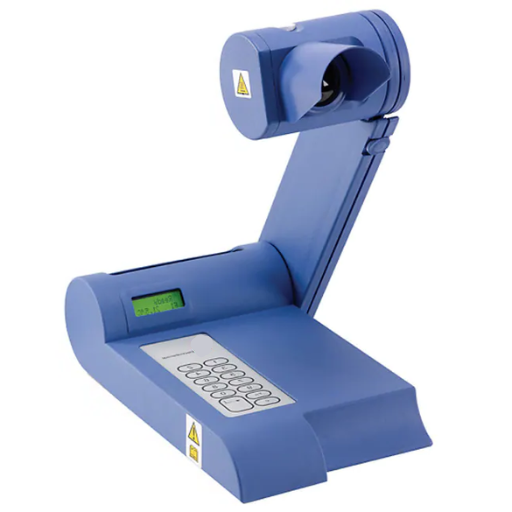
Instruments’ melting points were an accurate temperature-measuring method applied to materials that were presumed to melt at the determined temperature; it connotes the expected features of such instruments. They feature digital temperature control for enhanced temperature accuracy, automated detection of phase transitions, and other simplification features. Many modern devices have programmable settings, allowing researchers to adjust the heating rate or set specific melting profiles. On the high-tech level, one can plan cameras into the instrument to record the melting of substances, providing reproducibility and detailed analysis. These features ajoute value to the melting point device, which finds applications in research, quality control, and pharmaceutical fields.
Precision and Accuracy in Measurement
Repeatability and accuracy are critical considerations for the reliability of melting point determinations. The repeatability of an observed melting point range under exact experimental conditions indicates the precision measured. At the same time, accuracy is an evaluation of how close the observed melting value is to an existing accepted actual or reference value in the range of 2 to 4°C or ±1°C. For higher precision and accuracy, several parameters, such as sample purity, calibration, and heating rate, should be carefully scrutinized. These days, further advances have been made possible by automatic temperature sensors and digital data processing, enabling higher precision. Thus, all these measures ensure that the melting point obtained for a particular substance is reproducible, along with its correct characteristic properties, which is very much needed in pharmaceutical quality control as well as material characterization.
Temperature Range of Melting Point Apparatus
The temperature range of a melting point apparatus varies drastically with its design and the material it is intended for. A standard laboratory-grade instrument is generally designed to cover a temperature range of about room temperature (20°C) to 300°C; this is sufficient in most cases where organic materials are involved. However, specially designed instruments for testing materials allow an extension of this temperature range, often down to -10°C and up to 400°C or more. In particular cases, such as analyzing refractory materials or some special polymers, these high-performance apparatuses are capable of reaching temperatures above 1,000°C. Such wide-ranging specifications are engineered through a precise process, utilizing high-quality heating elements and cooling systems to ensure a uniform temperature gradient, thereby guaranteeing accurate results.
The melting apparatus used nowadays features a digitally controlled temperature measurement to ensure accuracy and reliability in calibration, while minimizing human errors. Such developments have enhanced even more the already axiomatically accepted importance of these instruments in pharmaceutical and materials sciences where the exact measurement of melting points is essential to assure and construct products.
Automation Capabilities in Modern Instruments
Modern melting point apparatuses offer superior automation options, enhancing precision and efficiency. These instruments also feature fully automated sample handling capabilities, easy-to-use software interfaces, and real-time digital data recording, minimizing the need for manual intervention. Automated temperature ramping, combined with detection algorithms, ensures that heating rates are consistently maintained, thereby maintaining precise endpoint determinations. Many of these systems also allow for data export via USB or the Internet (cloud-mediation) for storage and sharing purposes. Thanks to these modern trends, working in a laboratory environment is a smooth process; reproducibility is higher, and fewer errors are likely to occur. In other words, these systems are crucial in industries where stringent quality control and regulatory compliance are mandatory.
Applications of Melting Point Apparatus
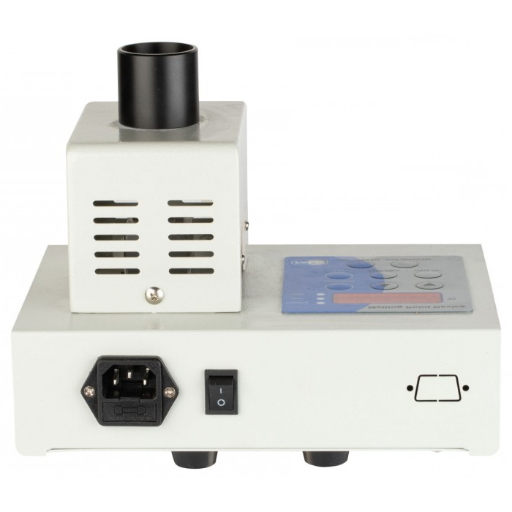
The melting point apparatus has applications in various areas and fields of research due to its accuracy and reliability. In the pharmaceutical industry, determining the purity of the active pharmaceutical ingredient was crucial, as impurities could alter the melting point. Likewise, it was utilized in the chemical industry and material science for the identification and standardization of some compounds. It is also used in educational laboratories as a teaching tool for fundamental concepts in thermal analysis and compound characterization. Lastly, it assists in food and cosmetics quality control processes, enabling products to meet regulatory and safety standards. This, therefore, signifies the versatility and necessity of application of the instrument in analytical and industrial fields.
Use in Pharmaceuticals and Drug Development
The melting point apparatus is a crucial tool in pharmaceutical and drug development, used to determine the purity of active pharmaceutical ingredients (APIs) and excipients. Impurities typically affect the melting points; therefore, thermal analysis is a crucial step in purifying compounds. Another relevant aspect of the melting point apparatus is that it enables the screening of polymorphs, which are the various crystalline forms of a substance that can affect its solubility, stability, and bioavailability. This melting point apparatus, therefore, ensures the consistency of drug formulations, guaranteeing compliance with regulations and therapeutic efficacy.
Role in Chemical Research and Quality Control
The melting point apparatus serves as a mini-laboratory, combining research and quality control activities, which allows for the accurate determination of a compound’s purity and identity. A deviation from the melting point may indicate impurities, and thus, the instrument serves as a valuable means of assessing the quality of raw materials and final products in pharmaceutical, chemical, and polymer manufacturing processes. It is also needed in polymorphism studies for the identification of one polymorph against another, which is essential for stability, solubility, and efficacy in drug development. In quality control, it is vital to ensure consistency in routine melting point measurements to verify the adherence of a batch to regulatory standard specifications, such as USP and EP. Its ease of operation, fused with digital advances in the instrument’s automation, makes it one of the very essential instruments in present-day laboratories, where research accuracy and industrial production integrity are bridged.
Educational Applications in Laboratory Settings
The melting point apparatus, from an educational perspective, is a crucial aid in teaching fundamental concepts of physical chemistry, such as phase transitions and intermolecular forces. It allows students to characterize substances, giving theory a practical touch. By determining the melting points of compounds, students can assess purity, work with unknown substances, and investigate the impact of impurities on a physical property. Since the procedure is immensely straightforward to perform and relatively straightforward to reproduce, the newer digital interfaces to these devices help carry the students through every step efficiently and correctly, with the best version of the experiment possible, in close alignment with scientific practice in the ‘real world’.
Choosing the Right Melting Point Instrument

Several factors are to be considered when choosing a melting point apparatus for best performance and accuracy. First, the temperature range and resolution should be evaluated according to the experiment to be performed, and be compatible with the type of substances to be analyzed. As follows, features such as a digital readout or display, adjustable temperature ranges, or temperature programs, together with automated melting point determination, may be chosen for higher accuracy and ease of use. In the case of high sample throughput, instruments with options for multi-sample testing are more preferable. Then, instrument ruggedness, calibration options, and standard protocol compatibility must be considered for long-term reliability. Lastly, budget constraints and the availability of technical support would influence the final selection.
Factors to Consider: Budget and Intended Use
Budget Considerations
Another factor in establishing one’s budget is to first balance cost with functionality to ensure the instrument fulfils both present and future needs. Entry-level instruments can be sufficient for routine applications; however, for special assignments, a more sophisticated instrument with extra features, such as custom settings, enhanced sensitivity, or multi-sample processing, may be justified to make an additional investment. Analyze the total cost of ownership, including maintenance, consumables, and potential upgrades.
Purpose of Instrument
About your intended application, proper instrument selection must begin with a precisely defined intended-use requirement. Will it be an instrument for qualitative analysis or quantitative analysis? Is the instrument to be employed in a high-throughput operation or subjected to regulatory standards, industrial standards, or any other standards? How well the instrument matches the end application will ensure the accuracy and efficiency of whatever operation being undertaken while ensuring that the costs do not become irrelevant. Selecting a model that will allow scalability makes the laboratory even more flexible for future considerations.
Technical Needs and Specifications
To satisfactorily cater to a technical requirement, necessary specifications in areas such as sensitivity, resolution, and throughput, among others, must be determined according to the scope of the application. Analytical instruments should have both analytical precision and accuracy, while attention must be given to the compatibility issues that arise between the instrument’s features and the operational requirements of the environment, such as temperature. Moreover, maintenance, calibration, and ease of operation are to be considered. Compliance with relevant statutory certifications is required by the pharmaceutical, biotechnological, and food testing industries, in which it is paramount to adhere to their respective GMP, FDA, or ISO standards.
Comparison of Digital and Manual Melting Point Devices
Digital and manual melting point devices differ in terms of accuracy, speed, user effort, data recording, cost, and suitability for regulatory environments.
| Key Point | Digital | Manual |
|---|---|---|
| Accuracy | High | Moderate |
| Speed | Fast | Slow |
| User Effort | Low | High |
| Data Recording | Automated | Manual |
| Cost | Higher | Lower |
| Regulatory Use | Suitable | Limited |
Reference Sources
-
Melting Point Analysis on LibreTexts – A detailed explanation of melting point analysis and its applications in identifying pure samples.
-
Discussion on Reliable Methods for Melting Point Determination – A community discussion highlighting tools like Reaxys, SciFinder, PubChem, and NIST for melting point data.
-
Melting Point Apparatus by Stanford Research Systems – Information on advanced melting point apparatus with features like digital thermometers and mercury-free designs.
-
What is a Melting Point Device? – A comprehensive overview of melting point devices and their functionality.
-
Efficient and Convenient Digital Melting Point Apparatus – Insights into the use of digital melting point apparatus in pharmaceutical labs, quality control, and academia.


