


Metal prototyping is a vital step in bridging the conceptual details of ideas into final production. Be it for improving design or testing fit, feel, and function, or even to improve manufacturability, the prototype clinches demand to bring ideas to perfect muster with efficiency. This blog will explore the intricacies in the metal prototyping process and launch you into the realm of rapid prototyping techniques. Learn how the innovation process is supported by prototypes and the tools and methods that fast-track its delivery with greater certainty, providing you with insights to actualize your vision. Stay with us as we shred away the essentials and show why metal prototyping is what sets industries on the path beyond.
Introduction to Metal Prototyping Services

Metal prototyping services provide initial models or samples in metal, allowing them to be explored conceptually and mechanically, or tested for manufacturability, before full production. The services enable companies to develop their products further, identify weaknesses, and make efficient adjustments. By utilizing advanced technologies such as CNC machining, 3D printing, and casting processes, metal prototype solutions produce accurate models of finished products with minimal risk, thereby speeding up the development process. Such solutions are often necessary when innovation firms require precision and reliability.
Definition of Metal Prototyping
Metal prototyping refers to the construction of a preliminary design or sample using metal, followed by the analysis of several factors, such as design, applications, and performance, before proceeding to mass production. Here, CNC machining, 3D printing, and metal casting are considered some of the modern manufacturing technologies that fabricate accurate prototypes tailored to specific needs. This prototype will enable them to identify potential flaws in the design that can subsequently be improved; thus, it encompasses strategies that ensure the feasibility of producing the product at an acceptable cost and within a reasonable development time. A fusion of traditional and new technologies has hence made metal prototyping an absolutely critical activity in contemporary industrial and product innovation methods.
Importance of Prototyping in Product Development
Prototyping stands as a crucial part of the product promotion life cycle, as it bridges the gap between an idea and its realization. By making prototypes, product companies can see, test, and validate their ideas before committing to the full-scale manufacture of any product. The earlier one can detect a design flaw, the more likely it is to modify the working form of ideas to suit functional needs and fit user requirements better. Innovations can be fueled by continuous prototyping and improvements based on feedback, which in turn reduces risks and shortens the time-to-market. It ensures that a finished product meets established quality standards and provides an enhanced user experience, which is crucial in today’s market.
Overview of Rapid Prototyping Services
The rapid prototyping industry ensures the swift and cost-effective selection of tangible items from ideas. These services enable the rapid production of prototypes for testing and validation, typically through 3D printing, CNC machining, and injection molding. Industries from automotive to healthcare use the opportunity to evaluate their products for design, functionality, and manufacturability before putting them into full production. Furthermore, rapid prototype-building supports successive improvements and customization, which makes it a widely used tool in developing cycle processes today.
Benefits of Metal Prototyping
- Durability and Strength: Metal prototypes are strong and durable enough to withstand testing and use under harsh conditions.
- High Precision: The dimensions and strict tolerances required for complex designs are ensured in metal prototyping.
- Material Versatility: A variety of metals, including aluminum, steel, and titanium, can be utilized depending on the project’s requirements.
- Real-World Performance Testing: The metal prototype replicates the performance of the final product, allowing for accurate testing of functionality and reliability.
- Scale-Up for Production: It is possible to scale from a metal prototype to production without interruption in lead time or manufacturing costs.
Cost Efficiency in Prototyping
Prototyping with metal offers cost-effectiveness because it is durable and allows for reuse. Such a metal prototype can undergo repeated testing and further modifications without compromising its structural integrity, thus minimizing the number of iterations required. Other manufacturing advances (CNC machining and 3D printing) have helped diminish both waste in materials and the time needed for manufacturing, thereby combining and resulting in top cost savings. In this regard, metal prototyping has become a cost-effective option for various industries.
Speed and Efficiency of Rapid Prototyping
In any design work, the faster one progresses through the design and development phases, the faster one enters production; hence, rapid prototyping has introduced new dynamics to product development. By the time digital concepts are conceived, designers and engineers can fabricate a model in the form of a prototype within days or hours, depending on the design’s complexity, with the help of modern technologies such as 3D printing and CNC machining. Speed now governs the priority of faster and more iterations, immediate testing, feedback, and decision making. First, the technique enables the recognition of faults in design at early stages of development, which would otherwise lead to significant and cumbersome delays and revisions further down the production line. By fast-tracking the overall development stages, rapid prototyping enables industries to expedite the marketing of novel products while maintaining due standards of quality and performance.
Quality and Integrity of Metal Prototypes
The quality and integrity of metallic prototypes are key determinants of their reliability and performance in real-world applications. Typically, high-precision metal prototypes are subjected to advanced manufacturing technologies, such as CNC machining, metal 3D printing, or precision casting, to achieve tighter tolerances and reproducible results. Several of these prototypes undergo testing to confirm their mechanical properties, including tensile strength, hardness, and corrosion resistance. Integrity also entails selecting the appropriate metal or alloy, depending on the intended use, as different materials offer varying advantages in terms of durability and resilience. With utmost importance placed on craftsmanship and testing, application industries provide metallurgical prototypes to meet the stringent requirements of final use, paving the way for a successful product.
Different Methods of Metal Prototyping

Metal prototyping needs different approaches, each suited for specific applications and requirements. Common methods are:
Machining
This subtractive process involves using specific tools, including CNC machines, to cut or shape metal surfaces with precision. It is generally preferred when prototyping requires detail and durability.
Casting
The metal is melted and poured into molds to cast prototypes, which are then used primarily for checking the form and fit of complex designs.
Sheet Metal Prototyping
Cutting, bending, and assembling sheet metal into functional prototypes for structural applications.
3D Metal Printing
With additive manufacturing methods like selective laser melting (SLM), prototypes can be built layer by layer, enabling the rapid realization of complex geometries.
Metal Stamping
A quick way to prototype, particularly to test the parts that require repetitive shapes or patterns.
By relating these various fabrication technologies to actual project requirements, industries can determine the most practical options that yield sound metal prototypes.
3D Printing for Metal Prototypes
Through the process of 3D printing, also known as additive manufacturing, metal prototyping has undergone a significant transformation, offering greater design freedom and rapid production options. Here, layers of metal powder or filament are deposited and fused to create a geometry that was previously either difficult or impossible to obtain using conventional manufacturing tools. Techniques have become quite mature with respect to the technologies used, especially SLM and EBM, allowing industries to produce components that are highly engineered with high strength and low weight. Because one of the applications of 3D printing is rapid design change for prototyping, it works very well for small production. It does so by addressing design inefficiencies and waste, making 3D printing a disruptive technology in metal prototype manufacturing.
Laser Cutting Techniques
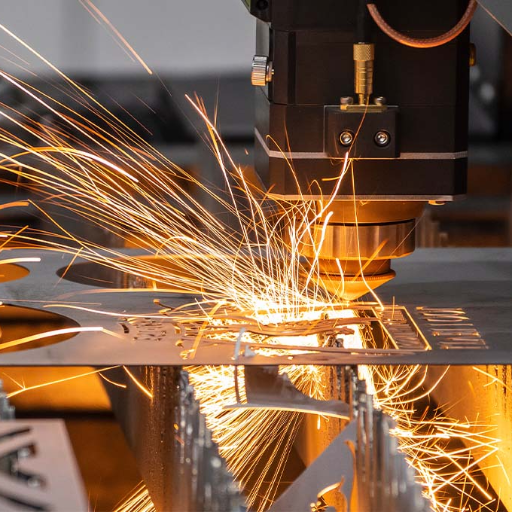
In metal prototyping, several laser cutting methods exist, varying in precision and speed by numerous degrees. The high-powered laser beam is directed toward metals sheets for cutting or engraving into a specific shape. This method offers incredible precision, allowing for clean edges to be formed and intricate designs to be elaborated. CO2 laser cutting is generally used for thin metal sheets, while the fiber laser is better for robust metals like stainless steel and aluminum. Laser cutting results in less material wastage, enables high-speed production, and ensures consistency of output, making it a crucial tool in metal prototyping.
Traditional vs. Digital Manufacturing Methods
Applications of Metal Prototyping Across Industries

- Automotive Industry: Metal prototyping is used to construct and test automotive grade parts like engine parts, gears, and structural elements before they are produced in bulk.
- Aerospace Industry: Prototyping is essential for creating ultra-lightweight, durable components, such as turbine blades and airframes, that can ensure protection and optimal performance under extreme conditions.
- Medical Sector: It helps in creating surgical instruments, prosthetics, and implants tailored to individual patient needs.
- Consumer Electronics: Metal prototyping enables the production of precision parts for consumer products, including smartphones, laptops, and wearable technology.
- Industrial Equipment: These prototyping methods are used for the invention and improvement of tools, machine parts, and industrial robots with higher efficiency and reliability.
Common Uses in Automotive and Aerospace
- Design Validation: Metal prototyping has wide applications in testing and validating new designs for components such as engine parts, structural frames, or aerodynamic elements. It ensures functionality and safety before the mass establishment.
- Lightweight Components: Prototyping enables the development of metal parts that are lightweight and capable of reducing the overall weight of vehicles and aircraft, thereby providing better fuel efficiency and performance.
- Custom Tooling: Prototypes provide custom tools and fixtures needed during the manufacturing and assembly processes in both industries.
- Performance Testing: Creating accurate prototypes that serve as a basis for testing performance under various conditions, such as temperature extremes, pressures, or vibrations.
- Rapid Iteration: Metal prototyping enables fast iteration, allowing manufacturers to quickly refine and optimize their designs to meet safety and efficiency standards.
Innovative Applications in Medical Devices
As the advancement of medical devices demands highly accurate, robust, and biocompatible components, metal prototyping is employed to meet these requirements. It enables manufacturers to produce surgical instruments, prostheses, and implants with such precise conformity to specifications that they can meet the individual needs of patients. Rapid prototyping drives innovation in medical technology by enabling rapid testing and design iteration, resulting in enhanced functionality and improved safety. The strong and reliable nature of metal prototypes is crucial for devices that must withstand rigorous use, such as orthopedic implants or specific types of dental instruments. These areas collectively demonstrate that metal prototyping remains crucial in medical applications.
Complex Metal Prototyping in Electronics
Complex metal prototyping plays a highly sophisticated role in enhancing advanced electronic devices. Modern electronics often require intricate components that have high precision and durability, thus making metal prototypes at times indispensable during early design stages. Using CNC machining, metal 3D printing, and electroforming techniques, the manufacturer fabricates robust prototypes that stand to perform well as the final components. These prototypes have critical applications in microchips, circuit boards, and electromagnetic shielding, where precision and material integrity are vital. Hence, complex metal prototyping, through testing and refinement, works towards rendering electronic solutions that are resolved and efficient, while keeping pace with technological demands.
Choosing the Right Metal Prototyping Service Provider
When selecting a suitable metal prototyping services provider, your primary considerations should be their areas of expertise, technologies, and materials capabilities, according to your project requirements. Track their record, delivery timelines, and ability to deal with complex designs. Additionally, they should provide transparent pricing and offer excellent customer support, along with options for customization.
Key Considerations for Selecting a Service Provider
Technical Expertise and Experience
For best results, go with a provider that has experience and knowledge in metal prototyping.
Advanced Technology and Equipment
Ensure the service provider has state-of-the-art technologies and equipment to handle intricate designs with precise specifications.
Material Variety and Capabilities
Verify that they offer a diverse range of materials and possess the necessary expertise to work with your specific materials for the project.
Timely Delivery and Reliability
It is always crucial to assess their ability to meet deadlines consistently while handling quality standards, including aspects such as urgently requested orders.
Customization and Scalability
Give preference to service providers who customize their services to meet your design requirements and also allow for scalability as your project grows.
Evaluating Quality Assurance and Production Capabilities
Determining a quality assurance and production capability level involves verifying the provider’s accreditations, processes, and records. One must seek ISO certifications or similar to ensure that the provider operates with robust quality systems. Production facilities, production machinery, and technological capabilities must be considered to ensure they can undertake the project work with utmost precision. The provider should have documented quality control policies that include regular inspections and testing procedures, which limit errors from occurring. Finally, consider whether the company can handle production volumes adequately, ensuring quality is not compromised, as this consideration is more pertinent to project timelines and results.
Understanding Digital Manufacturing Options
The decision to adopt digital manufacturing options for a metal prototyping service provider must consider the key technologies on offer and their suitability for a given project. Standard options include 3D printing for rapid prototyping, CNC machining for precision and complex designs, and sheet metal fabrication for custom parts. Each method has its own strengths, related to speed, accuracy, and compatibility with various materials. Ensure that the provider can utilize advanced design software and state-of-the-art equipment to achieve high-grade results. Additionally, inquire about which metals are most suitable for their working processes, such as aluminum, stainless steel, or titanium, depending on the project’s specific requirements. Understanding these options will enable you to weigh your choices more effectively and select a service provider that is both efficient and quality-oriented.
Reference Sources
-
Metal Prototyping: How to Choose a Material and Technology – Protolabs – A detailed guide on the metal prototyping process, from CAD models to physical prototypes.
-
The Basics of Making a Metal Prototype – First Mold – Covers the initial steps and considerations for creating metal prototypes.
-
Metal Prototyping: Complete Guide to Techniques & Benefits – Rally Precision – Explains techniques like cutting, bending, and welding for creating metal prototypes.
- Top custom stainless steel parts Manufacturer and Supplier in China


