


There is an inherent need for precision, reliability, and durability in the manufacturing industry; hence, stainless steel has become one of the most popular materials in modern machining. For CNC machining services, stainless steel brings with it a complex set of challenges that are exceeded only by the opportunities to provide parts of the highest quality that meet the most rigorous industry standards. This article examines the details involved in machining stainless steel, highlighting the modern techniques, tools, and expertise required to fabricate these components. Thus, be they engineers, procurement agents, or anybody engaged in the industry, gaining insight into how precision and experience matter in managing such an adaptable yet demanding material will surely help. Let’s get on board as we explore how modern CNC machining services are changing the landscape of manufacturing stainless steel parts for different industries.
Understanding Stainless Steel and Its Alloys
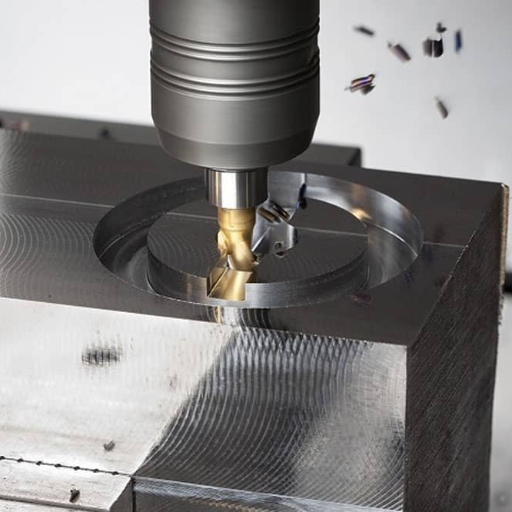
Stainless steel is an iron-based alloy family famous for its corrosion resistance, mechanical strength, and flexibility. Its primary component, iron, is alloyed with chromium, most often in excess of 10.5%, which then forms an oxide film on the alloy’s surface to prevent grime and deterioration. Depending on the situation, stainless steel may contain other elements, such as nickel, molybdenum, and manganese, which impart desired properties to the alloy, including improved corrosion resistance, heat resistance, or better weldability. These alloys are primarily classified into major types such as austenitic, ferritic, martensitic, and duplex, each one being a candidate for an industrial or commercial application. Thus, stainless steel is the primary working material, ranging from construction to aerospace, due to its adaptability and reliability.
Overview of Stainless Steel Alloys
Stainless steel alloys are classified according to their microstructure, as it directly affects their mechanical and chemical properties. The main types are:
Austenitic Alloys
By far the largest group, these alloys have excellent corrosion resistance, are non-magnetic, and highly ductile. They typically contain chromium and nickel and are primarily used in the processing of food, chemicals, and architectural applications.
Ferritic Alloys
Exhibiting magnetism, these alloys have moderate corrosion resistance and good thermal conductivity. They are used in applications ranging from vehicle parts and industrial equipment to decorative purposes.
Martensitic Alloys
Distinguished by their strength and hardness, these alloys offer moderate corrosion resistance. Typical uses include cutlery, surgical instruments, and wear-resistant tools.
Duplex Alloys
With features from both austenitic and ferritic structures, duplex stainless steels offer enhanced corrosion resistance and strength. Hence, they find application in marine, chemical, oil, and gas industries.
Each category is optimized for certain performance specifications, which account for the implementation of stainless steel in different areas.
Common Types of Stainless Steel: 304, 316, 303, and 17-4
Stainless steel types 304, 316, 303, and 17-4 cover a broad spectrum of applications due to their distinct compositions and properties.
Advantages of Corrosion Resistance in Machined Parts
- Longer Service Life: Corrosion-resistant materials extend the service life of machined parts by preventing damage from oxidation, chemical attacks, or exposure to harsh environments.
- Reduced Maintenance Costs: In fact, corrosion-resistant components require less maintenance and repair, ensuring cost savings throughout the product’s life for the end-user.
- Better Performance in Harsh Atmospheres: Corrosion-resistant materials tend to preserve their integrity and function effectively in harsh atmospheres, such as those found in marine, chemical, or industrial applications.
- Safety: Corrosion degradation of parts is minimized to limit failures, ensuring positive and safe functioning in critical applications.
- Maintains aesthetic and functional integrity: These materials resist surface deterioration, such as pitting, staining, or discoloration, and retain their aesthetic appeal and operational performance over time.
The Role of CNC Machines in Stainless Steel Machining
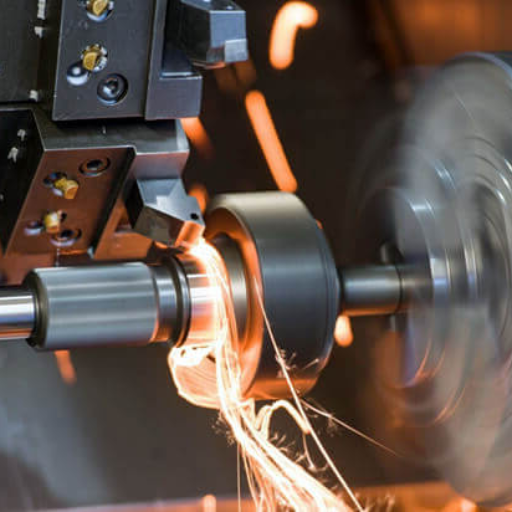
Due to their precision, efficiency, and ability to work with challenging, complex, and wear-resistant materials like stainless steel, CNC machines are of utmost importance in the machining of stainless steel. Stainless steel, being more difficult and wear-resistant, requires precise cutting, which is facilitated by CNC machines that provide consistent tooling. These enable CNC machines to shape complex geometries within tight tolerances and produce good surface finishes while minimizing machining time and material waste. The CNC also enables automation in the industrial arena, ensuring repeatable accuracy and scalability. CNC machining, thus, sets its bearings into those industries that rely on stainless steel components.
How CNC Machines Enhance Precision in Machining Services
Enhancement of precision with machining services, underpinned by CNC machines produced through advanced computer-controlled processes, automates manufacturing operations. In CNC machining, robots within cutting tools are guided via pre-programmed software and algorithms to the utmost extreme precision, ensuring dimensional tolerances of a few microns or less. CNC machines can handle complex geometry and intricate designs with precision because multi-axis machining operations are integrated into CNC machining. At the same time, a modern CNC system is primarily equipped with real-time feedback and adaptive control to track tool positions and optimize performance. The unity of automation, real-time adjustment, and sophisticated tooling ensures the utmost precision that CNC machines can offer, regardless of whether it is for prototyping or mass production.
Comparing CNC Machining Services to Traditional Machining Techniques
CNC machining offers superior precision, consistency, automation, and speed compared to traditional machining, which relies more heavily on manual control and flexibility.
Custom CNC Solutions for Stainless Steel Parts
Custom CNC machining for stainless steel parts utilizes advanced CAD software and precision tools to achieve ultra-high accuracy for components tailored to a specific application. Stainless steel offers durability with corrosion-resistant properties and is aesthetically pleasing, well-accepted in the aerospace, medical, and automotive manufacturing industries. CNC machines are adept at handling the complexity of stainless steel, as the automated process produces outputs of consistent quality and dimensions even in very complicated designs.
The latest CNC systems can handle nearly every grade of stainless steel, whether austenitic, martensitic, or duplex, each selected for specific mechanical and chemical properties that affect the application at hand. High-speed machining combined with a set of cutting equipment, such as carbide or coated inserts, reduces wear and maintains efficiency on this hard-to-machine material. Optimizing cutting parameters, including speeds and feed rates, as well as coolant flow, ensures that distortion is minimized and surface finishes are enhanced, making CNC machining the most cost-effective solution for demanding applications.
It is that very precision and flexibility that make CNC machining essential for manufacturers seeking reliable stainless steel parts that meet stringent functional and aesthetic criteria.
Machining Services and Capabilities for Stainless Steel Parts

1. Precision CNC Milling
Precision CNC milling is the product and core of stainless steel parts manufacturing. These machining operations can allow intricate designs and tight tolerances to manufacture complex components with very high accuracy. CNC milling works where an application needs some trustworthy functional details, along with some strict detailing.
2. CNC Turning
CNC turning is used to manufacture cylindrical or round stainless steel parts. This means it is capable of producing efficiently while maintaining maximum dimensional tolerances. It complements shafts, bushings, and other rotating components.
3. Surface Finishing
Other finishing services include surface finishing processes like polishing or passivation to increase the corrosion resistance and meet the spec for styles or key application needs. All of these operations make sure the final product meets visual and performance criteria.
4. Prototyping and Customization
Machining services also give support to rapid prototyping and customized solutions. These capabilities enable the manufacturers to fulfill contract-based project needs and rapidly develop stainless steel components for multiple industries.
Overview of Available Machining Options
CNC Machining
CNC machining bestows a balance of precision and artistry upon the fabrication of complex stainless steel components. It targets tools that are being centrally programmed via computers to attain uniform results within tight tolerances.
Milling
The milling operation involves using rotary cutters to remove material from the workpiece. Ideal for creating parts with detailed geometrical configurations, including slots, pockets, and contours.
Turning
Turning is a machining procedure in which the workpiece is rotated while a cutting tool is fed against it to form the desired shape. This method is ideally suited for producing cylindrical workpieces with greater accuracy.
Drilling
Drilling helps make the holes of specified diameter and depth in stainless steel. This is one of the machine methods for accurately positioning parts with holes for assembly or other purposes.
Grinding
The surface finish is smooth, and the dimensional tolerance is excellent, achieved by grinding the material using an abrasive wheel to refine the surface. This process is mainly done for high-precision finish work.
Laser Cutting
Laser cutting cuts through stainless steel with very high power and a very narrow top hat profile, resulting in significantly less material distortion. This process is suitable for realizing very complex shapes and achieving clean edges, which are often required by many projects.
Each of these machining processes plays a vital role in producing high-quality stainless steel parts custom-made to meet specific industrial requirements.
Benefits of Professional Stainless Steel Machining Services
1
Precision and Accuracy
Fine machining services offer the highest caliber of blanking and heat treatment operations, enabling the achievement of tight tolerances and precise dimensions to deliver components that meet exacting specifications.
2
Efficiency and Speed
Production times are slashed through automated and optimized execution, allowing projects to be completed at speed without compromising quality.
3
Material Quality Improvements
Through expert machining, defects such as warping and surface irregularities are minimized, ensuring top-grade stainless steel components retain their integrity and strength.
4
Customization Capabilities
Complex designs and requirements are handled by professionals who adapt to industry-specific standards and propose solutions tailored to the specific circumstances.
5
Cost-Effectiveness
By reducing waste, minimizing errors, and optimizing the lifetimes of various components, these professional services ultimately lead to a significant reduction in industrial costs over time.
Understanding Machining Capabilities and Their Impact on Quality
Machining is a crucial aid in achieving the highest quality and performance of stainless steel components in industrial applications. Advanced machining techniques, such as CNC machining, ensure the dimensional accuracy and surface finishes of utmost precision, which are essential for components subjected to extreme pressures and temperatures. The selection of tooling, the use of coolant, and the cutting parameters chosen, such as cutting speed and feed rate, directly affect the integrity of stainless steel. If these parameters are poorly chosen, they can produce surface work hardening or thermal distortion.
Additionally, this type of machining enables the development of highly complex geometries using multi-axis approaches, allowing parts to be accurately specified while maintaining their structural integrity. Material considerations, including chromium content and hardness level, should be taken into account when designing machining processes to prevent issues such as edge chipping or tool wear. By combining the capabilities mentioned above with a rigorous quality control mechanism, manufacturers can utilize high-performance components that meet or exceed industry standards for reliability and longevity in demanding environments.
Current Trends and Advancements in Stainless Steel Machining
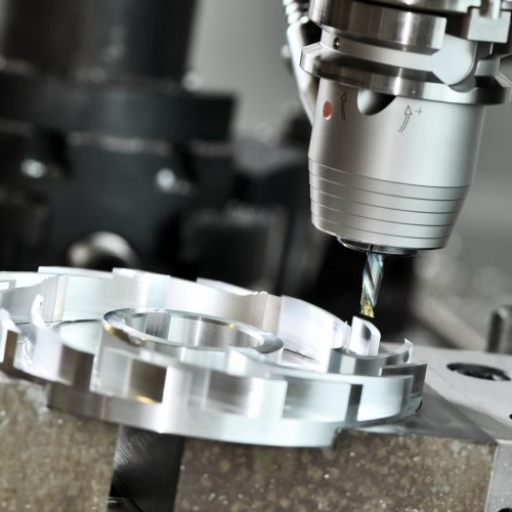
The recent stainless steel work has focused on fine-tuning tool performance and accuracy by applying new materials and advanced technologies. The HSM technologies, along with sophisticated coatings such as TiAlN, have now become well known for enhancing tool life and minimizing wear during high-temperature operations. Other manufacturing factors to consider are CNC-based methods, which provide greater degrees of accuracy and repeatability, as well as hybrid manufacturing methods such as additive and subtractive manufacturing, which offer a level of design freedom unmatched by any other approach. Cooling and lubrication methodologies—such as MQL and cryogenic cooling—are also being proposed as viable solutions to dissipate heat and maintain surface integrity. These developments, taken together, ensure greater efficiency and high-quality output in present-day stainless steel machining.
Emerging Technologies in CNC Machining for Stainless Steel
The continual evolution of CNC machining for stainless steel has integrated cutting-edge technologies, favoring the utmost precision, speed, and sustainability of the process. The adaptation of AI-based machining algorithms is considered a significant improvement; these algorithms work towards manufacturing with optimized tool paths, prediction of tool wear, or avoidance of process errors in real-time. These algorithms utilize machine learning to analyze massive datasets, enabling predictive maintenance and improvements in overall operational efficiency.
From another perspective, the installation of multi-axis CNC machinery, predominantly 5-axis machining, has significantly opened up new possibilities for producing complex parts. They exhibit simultaneous movements along multiple axes, minimizing the need for repositioning parts and consequently improving geometric accuracy. Simulation software further complements this process by providing engineers with a virtual platform to test and optimize engineering projects before embarking on actual machining.
Following this are hybrid machining systems, which combine additive manufacturing methods, such as Directional-Energy-Deposition (DED), with their traditional subtractive counterparts. These systems work wonders in minimizing material wastage, while also expediting rapid prototyping and facilitating complex repair operations, particularly for stainless steel tooling and components.
The implementation of the Industrial Internet of Things (IIoT) has turned out to be a blessing in disguise for process monitoring in CNC machining. Smart sensors residing within these machines provide real-time data on temperature, vibration, and tool conditions, enabling operators to make informed decisions based on the data. Together, these technologies spiral the stainless steel machining toward the very essence of precision, sustainability, and efficiency.
Industry Innovations and Their Benefits
- HSM: Advances in high-speed machining technology allow greater rates of material removal without compromising on tolerances. Therefore, machining lately reduces the time of production and the effectiveness level.
- Cryogenic Cooling Systems: The use of liquid nitrogen or carbon dioxide in cryogenic machining reduces the thermal stresses on the cutting tool, thus extending tool life and improving surface finish on stainless steel parts.
- Advanced Cutting Tool Coatings: New and innovative coatings such as TiAlN and DLC provide superior wear resistance and heat dissipation, which are very much important in machining stainless steel, which normally tends to create high cutting temperatures.
- Hybrid Manufacturing Techniques: Employing machining in conjunction with additive manufacturing enables the design of highly complex components and materials, justifies their use, and reduces waste. This technology is increasingly applied to industries requiring intricate stainless components.
- Machine Learning and AI-Driven Process Optimization: Technologies related to AI are used in analyzing machining data, predicting tool wear, optimizing cutting parameters, and increasing production accuracy; therefore, these are potential in reducing downtime and improving stainless steel machining productivity.
Future Directions for Stainless Steel Machining Services
Examining the mechanics of stainless steel machining services reveals that these developments will encompass a range of advancements, including automation, sustainability, and materials. Increasing automation will bring productivity gains through the application of robotics and CNC technology, which are capable of producing at a very high rate with minimal human intervention. Sustainability will become an increasingly important consideration as more energy-efficient machinery and processes are introduced to reduce material waste during machining. In addition, advancements in stainless steel alloying will further enhance the capabilities of machining, durability, and performance, meeting the needs of emerging industries such as renewable energy and aerospace. These trends, when combined, will drive enhancements in productivity, cost reduction, and the diversification of stainless steel machining applications in ever-increasing domains.
Selecting the Right Company for Machining Stainless Steel Parts

Always consider knowledge of and practical experience with stainless steel materials when selecting a company that makes machined stainless steel parts. Before choosing any company, it is essential to verify the machining capabilities, including precision machining, the latest equipment, and a stringent tolerance range. Quality assurance should also be examined. Besides checking standards and certifications, such as ISO 9001, it should also be verified whether the company can adhere to industry-specific standards. A firm can be trusted if it keeps its promise regarding timely delivery, can scale in production, and provides good customer support.
Key Factors to Consider When Choosing a Machining Partner
- Material Expertise and Knowledge: The machining partner should possess sufficient experience and technical knowledge of stainless steel, including its various grades and their unique properties. This is crucial to achieving the best results without compromising the integrity of the materials.
- Precision and Tolerance Capabilities: They must be able to offer tight tolerance levels to the precise specifications demanded by your stainless steel parts. The CNC machinery must be at an advanced level, and operators must be well-experienced to maintain that accuracy and consistency.
- Quality Assurance and Certification: Look for a machining partner with a comprehensive quality control process that includes relevant certifications, such as ISO 9001. A robust quality assurance system ensures that all parts meet your performance criteria and comply with relevant regulatory standards.
- Machining Technology and Equipment: Check if they’re equipped with cutting-edge equipment to handle stainless steel efficiently. Advanced tooling enables shorter machining times, improved finishes, and lower production costs.
- Production Scalability and Lead Times: Partner with companies that can scale production to meet your required volumes. Then, depending on the nature or urgency of your projects, ensure on-time delivery while keeping consistent quality.
Evaluating Experience and Expertise in Stainless Steel Machining
When appraising a manufacturer’s differential experience and specialty, some critical factors must be taken into consideration. Beginning with establishing an understanding of whether the contractor has previous experience working with stainless steel in a variety of applications, look for projects successfully carried out for the aerospace, medical, or automotive industries, which might denote a more profound appreciation of typical material-related problems such as thermal conductivity, work-hardening, and corrosion resistance.
Thereafter, look into the certifications and standards to which such manufacturers adhere or conform. An ISO 9001, AS9100, or, indeed, any medical device-related certification or standard (such as ISO 13485) speaks for the credibility of the manufacturer to adhere to a set of stringent quality and procedural codes that ensure optimized processes for effectiveness and accuracy, particularly while working with stainless steel, which is a critical and demanding material.
Lastly, consider the experience of the technical team and the technology they utilize. Advanced CNC machinery and multi-axis functionalities, when integrated with in-house quality assurance for dimensional accuracy, should be a common practice. Modern tooling techniques, performance metrics, and process simulation will enable an enterprise to deal with the challenges that stainless-steel machining presents. Trusting the provider who exudes such exemplary understanding will yield the best outcome for your projects.
Ensuring Compliance with Industry Standards and Requirements
Compliance with industry standards for machining stainless steel parts, such as ISO, ASTM, and ASME specifications, must be adhered to. These standards establish acceptable tolerances, surface finish quality, and material properties, enabling consistent quality and reliability. Manufacturers must, therefore, implement a stringent quality control program, which entails inspections, material traceability, and testing. Routine audits and certifications should be undertaken to verify compliance; ISO 9001 is one example. When these practices are followed, machining activities comply with regulatory standards, ensuring parts are acceptable in terms of functionality and safety.
Reference Sources
- The Ultimate Guide to Stainless Steel Machining
This guide discusses different grades of stainless steel, machining methods, and tips for machining stainless steel effectively. - Stainless Steels for Machining (Nickel Institute)
A comprehensive booklet explaining the differences between stainless steels and other metals, along with machining techniques. - Stainless Steel Machining – MSP Industries
A trusted source for precision-machined stainless steel parts, specializing in high-volume manufacturing. - CNC Precision Machining Services – Macfab Manufacturing
A leading company in precision machining, offering expertise in fabricating metals, alloys, and plastics. - Where to Get Stainless Steel Parts Machined Quickly (Reddit Discussion)
A community discussion providing insights into quick lead-time machining services like Protolabs and Xometry.
Frequently Asked Questions (FAQs)
Ready to Get Started?
Contact us today to discuss your stainless steel machining requirements and discover how our precision CNC services can meet your project needs.


