Introduction to Precision CNC Milling

CNC milling is a precision manufacturing technique where materials such as metal, plastic, and wood are machined and formed to the desired shape with computer-aided precision using CNC-controlled cutting tools. It simplifies the machining process, and as a result, repeatability and efficiency can be maintained on an ongoing basis. Due to the use of pre-written codes and efficient machines, CNC milling eliminates the need for extensive use of hands in producing the desired configurations, therefore minimizing inaccuracies and maximizing the pace of work. Given the wide range of its capabilities, it is an inevitable tool in industries such as aerospace, vehicle manufacturing, electric equipment, etc.
What is Precision CNC Milling?
Precision cutting aids consist of efficient ways of producing most components, i.e., CNC (computer numerically controlled) milling. These are specialized devices that have emboweled cutting tools to etch delicate patterns without tolerances, employing appropriate software. Such precision is backed by modern technologies such as high resolution sensors, CAD/CAM systems, or multi-axis milling equipment, giving tremendous flexibility in controlling every aspect of the production. The stringency of the requirements of such industries as aerospace, medicine, or electronics requires abatement or tolerance, reproduction of good quality devices manufactured by means of precision coordinate machining. Moreover, such a solution is not easy to produce a technology that enables the use of almost every material possible, from plastic, aluminum, to steel, including combinations of various materials. This technology, however, is difficult to replace in the age of industrial production.
Importance of CNC Precision in Manufacturing
The accuracy required in precision CNC milling is very high since this is the task that many industries rely on to produce high-standard and reliable parts. Working within narrow limits, CNC manufacturing reduces resource utilization, rectifies defects, and optimizes the production process. The reason is that the dimensional precision is very high, and this influences the performance and lifespan of the products; therefore, precision is usually paramount in the modern sense of manufacturing.
Target Audience and Their Needs
Different industries, namely, aerospace, automobile, medical, and electronics, are the core consumers for whom precision CNC milling is aimed. Equipment and machine component manufacturers and service providers in these fields face the same market challenges: delivering quality at lower costs without compromising on the technical specifications. It is a well-known fact that clients require:
- Precise machining solutions that allow assembling the parts without gaps.
- Zero defects over mass production.
- Materials of different types, such as metals, plastics, and composites, are easily machinable.
- Reduced cycle times and in-print volumes are also appreciated.
Understanding CNC Machines and Their Functionality
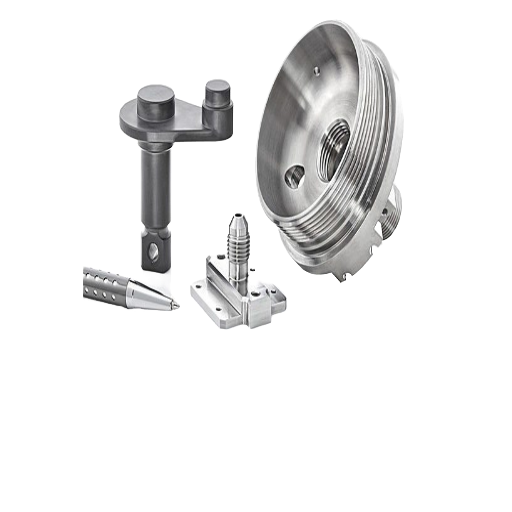
Types of CNC Milling Machines
| Type | Key Features | Usage | Cost Range |
|---|---|---|---|
| Vertical | Vertical spindle | Grooves, slots, and other features can be efficiently produced using CNC-machined parts | $6K – $500K |
| Horizontal | Horizontal spindle | Heavy-duty tasks | $15K – $200K |
| Universal | Horizontal & vertical | Versatile machining | $10K – $130K |
| Vertical Knee | Rotary cutting tools | Drilling, milling | $13.5K – $27K |
| Bed Type | Fixed bed, 3-axis | Heavy workpieces | Varies |
| CNC | Computer-controlled | Precision, production | $15K – $500K |
| Tracer Controlled | Stylus-guided | Pattern replication | Few hundred $ |
| Column | Vertical column | General machining | Varies |
| Duplex | Dual spindles | Simultaneous machining | Varies |
| Rotary Table | Rotating attachment | Round shapes | $100 – $1.5K |
Role of CNC in Modern Manufacturing
CNC (Computer Numerical Control), over the last four decades since its advent, has come to transform the overall outlook and functionality of modern manufacturing, attributed to the high level of fifty percent precision, effectiveness, and repeatability of processes. Machining processes are now executed with the help of computer instructions, minimizing any form of human error witnessed previously, and drastic improvements in the turnaround time of manufacturing. Precision CNC milling systems are dynamic in nature, considering the type of material as well as the nature of the work, thus enhancing their relevance in the manufacture of such products as aircraft, automobiles, and medical equipment. Finally, they assist in maintaining quality and volume even during the image of contemporary mass production, focusing to a large extent on precision and detail.
How CNC Machines Enhance Precision
Precision CNC milling machines provide better accuracy in cutting and shaping materials since they have the pre-loaded capacity to follow instructions with precision and in a repetitive manner. Their high level of programming removes human fluctuations to the extent that each article is constructed to the specific dimensions provided. Moreover, the ability to reproduce complex shapes in numerous parts conveys standardization, which proves crucial in industries whose non-uniformities may lead to fatal consequences, such as the aerospace and medical devices industries.
The Precision Machining Process
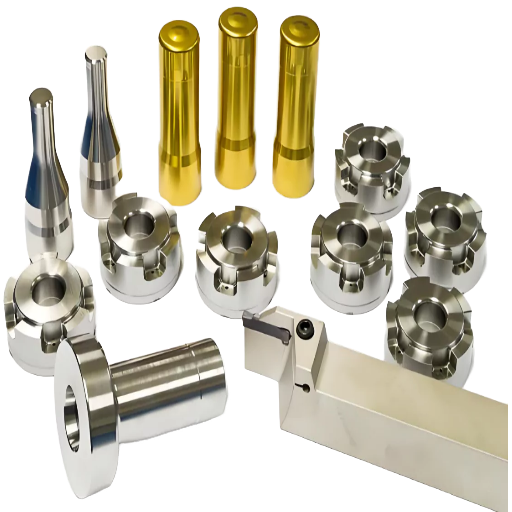
Overview of the CNC Precision Machining Process
CNC (Computer Numerical Control) precision machining uses computer programs and automated machines in making detailed parts, usually starting from a raw material and subtracting a particular area. This history applies to the relevant steps, ergonomically or together, and is easily usable. Firstly, a digital design is constructed, particularly relying on CAD (Computer-Aided Design) to create an accurate blueprint of the part in question. Such a digital model, in turn, is converted into machine code through CAM (Computer-Aided Manufacturing).
Steps Involved in CNC Milling
- Design Preparation: To create a 3D model of a part and store it in CAD, a digital design must be made first. This will be the starting point of the entire manufacturing process.
- Toolpath Generation: The developed design in CAD format is translated to code (G-code or M-code). CAM manufactures CNC machines capable of performing operations cribbing the code.
- Workpiece Preparation: The most appropriate raw stock is chosen, metal or plastic,c or wood, and made for the CNC machine and the workpiece in fixtures or temporary workholding to prevent distortions as manufacturing is in process.
- CNC Equipment Adjustment: The CNC equipment is adjusted to achieve the desired precision. This involves zeroing the tool or determining the alignment issues and fixing them.
- Appropriating and Mounting the Tools: Many types of cutting tools, such as endmill cutters and drills, are selected and mounted into the machine depending on the operation and material.
- Execution of the machining process: The CNC machine completes the operations by cutting, sculpting, and drilling the programmed design onto the blank material to form the desired product within the allowable deviations.
- Verification of item: Completion of the milling operation necessitates checking whether the manufactured configuration meets the requirements and allowances of a technical drawing and is allowed by tolerances.
- Post-processing, if necessary: Such processes may also include electrical discharge machining, as this process allows for increased precision. Further, in case of CNC-machined components, additional operations like finishing, cleaning, or deburring the cube are carried out for the final preparation of the desired product quality.
- Delivery of the end product: The end part is made ready for insertion or is wrapped up such that it can be used as a part for its desirable purpose.
Common Materials Used in CNC Milling
| Material | Key Properties | Applications | Machinability | Cost |
|---|---|---|---|---|
| Aluminum | Lightweight, corrosion-resistant | Aerospace, automotive | Excellent | Moderate |
| Steel | Strong, durable | Structural, industrial | Good | Low |
| Stainless Steel | Corrosion-resistant, strong | Medical, food processing | Moderate | High |
| Brass | Conductive, aesthetic | Plumbing, electrical | Excellent | High |
| Copper | High conductivity | Electrical, thermal | Moderate | High |
| Titanium | Lightweight, strong | Aerospace, medical | Difficult | Very High |
| Plastics | Lightweight, versatile | Prototypes, medical | Excellent | Low to Moderate |
| Carbon Steel | Affordable, strong | Gears, shafts | Good | Low |
Benefits of Precision CNC Machining Services
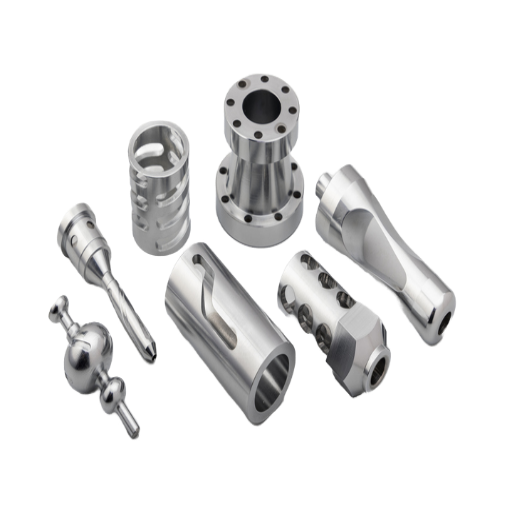
High Precision and Accuracy in Machined Parts
Using precision CNC milling techniques, components with complex features and intricate designs can be manufactured at extreme precision with a tolerance of within ± 0.0001 inches inclusive. Such designs allow for the different elements to be joined together without an error, which is a waste of material, or of importance in high-precision machining. This uses a very sophisticated play of commands and mechanics, and can even afford mass production without variations. Such industries as those of the aerospace, medical, and automotive industries find the need for this kind of accuracy in the manufacture of parts, and there can be no such thing as a little slack in the performance or safety.
Cost Efficiency and Time Savings
Cost reduction and improvement of saving time are inherent to CNC machining due to the advanced technologies that these machines possess. There is a significant reduction in the sequence of steps in production, and the demand for labor has dropped since the operation by the machines is independent of human interference. Also, with clean cutting processes, less waste is produced, thereby contributing to the reduction of material costs. This line of manufacture is consistent with precision CNC milling, and efforts are minimized due to fewer reworks and stoppages. All these aspects make the technology dependable in increasing production within the allowable limits of time and costs.
Customization and Flexibility in Production
Manufacturers appreciate the flexibility of computer numerical control or CNC machining, a technology that allows for high customizability of parts for manufacturing. Following instructions provided to the machine, any number of shapes can be developed with great ease due to the absence of constant retooling for every new design. Such processes entail the making of both prototypes and production runs as efficiently as possible. This configuration favours the avoidance of outages at the same time as allowing for redesigning at such short notice, further proving the activeness necessary for, and in such occupation possibilities, precision CNC milling.
Applications of Precision CNC Milling
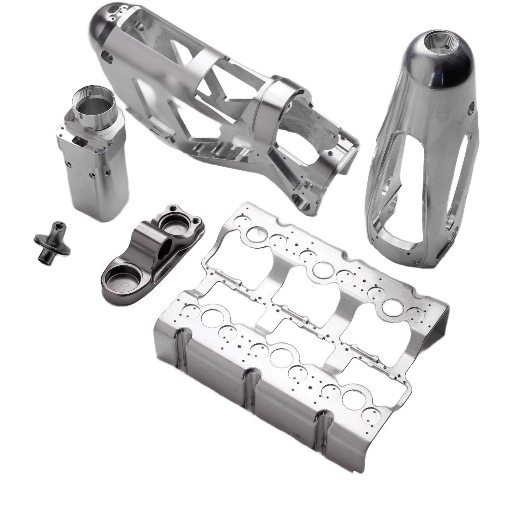
Industries Utilizing CNC Machining Services
Different kinds of fields make use of CNC machining services, such as:
- Aerospace
- Automotive
- Medical
- Electronics
- Military
- Renewable energy
- Building
- Farming
- precision cnc milling
Complex Parts Produced Through Precision CNC
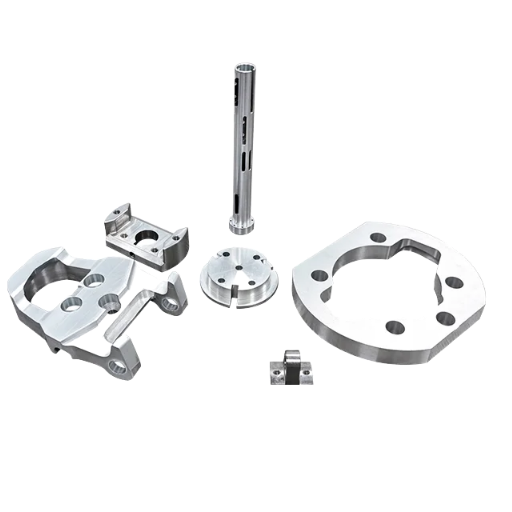
Precision CNC milling provides an excellent option when designing parts that have complex geometries and strict dimension control requirements. This makes it possible to manufacture parts such as turbines and engine components, medical implants, handles, boxes for electronics, and specialized tooling. In addition, the manufacturing process is reproducible with narrow precision limits, making it useful for parts of this nature; that is why sectors such as the aerospace, healthcare, and automotive can be oriented in the direction of more demanding standards where these parts are supplied to these industries.
Case Studies: Successful Implementations
There has been a successful implementation of CNC machining in numerous industries to enhance precision, efficiency as well as quality in the processes of manufacturing.
| Industry | Key Use | Outcome | Key Benefit |
|---|---|---|---|
| Aerospace | Turbine Blades | Precise Profiles | Performance |
| Medical | Custom Implants | Perfect Fit | Patient Health |
| Automotive | Gears | High Precision | Reliability |
| Electronics | Enclosures | Rapid Prototyping | Aesthetic |
| Tooling & Mold | Custom Tools | Detailed Design | Streamlined Manufacturing |
Comparing Precision CNC Milling to Other Manufacturing Processes
Advantages Over Traditional Machining Methods
- Enhanced efficiency and effectiveness: Precision CNC milling allows for repeated production with even higher levels of production processes with little deviations in meeting the intended dimensions of all the parts.
- Capability in the Handling of Light and Complex Shapes: A CNC milling machine is the solution for machining extended patterns and forms, which would otherwise complicate the usage of other machine tools.
- Sameness: The advanced scripting techniques include the possibility of dynamically creating fixed objects and removing the tolerance for mistakes.
- Importance of Shorter Lead Times: Automated surfaces, together with rapid machining characteristics,s replace the frequency of mishandling with working hours to an extent hard to achieve with manual processes.
- Movable Material: CNC milling works on different types of materials, which include metals, plastics, and materials made solely from composite thus enabling this technology for wider use than previous systems.
- Cutting of Material Wastage: The advantageous cutting processes produce less scrap, resulting in lower material costs and describing the solution from an ecological point of view.
- Increased Safety Levels: Where there are automated machines, fewer people are required in the machining process, thus lowering the level of risk.
- Better Surface Finish: One of the benefits of CNC milling is that it provides a better surface finish, which in most cases needs no excessive post-milling finishing.
- Compatible with New Technologies: Precision Computer Numerical Control (CNC) milling is possible when these systems are combined with the use of computer-aided drafting and manufacturing software, as well as some very sophisticated outlined tools.
When to Choose CNC Over Other Manufacturing Techniques
When one is required to be precise, consistent, and productive, CNC machining is the method to go. This is because it is effective when it comes to the formation of complicated parts, which have very high levels of tolerances and uniformity requirements. It is tailor-made for applications where mass production is necessary, where the cost is lowered through machines instead of human beings. More so, CNC machining is particularly suited for producing intricately woven patterns that cannot be fabricated manually or with rudimentary equipment.
Future Trends in CNC and Precision Manufacturing
The expected developments within the CNC and precision machining sector will revolve around:
- Greater emphasis on automation
- Fine-tuning of the use of robots
- Intelligent factories backed by artificial intelligence
- Improved and smarter materials
- Manufacturing everything as needed
Frequently Asked Questions (FAQs)
Q: What is precision CNC machining?
A: The precision CNC machining process entails computer numerical control machining with very high accuracy and repeatability. The process can involve a wide variety of machining operations such as milling, turning, or drilling, enabling manufacturers to bring into existence precision parts with very fine tolerances. With the usage of advanced CNC machinery, companies can rapidly and consistently manufacture parts of complex design.
Q: How does the CNC milling machine enhance precision?
A: The CNC milling machine enhances precision with the use of computerized programming to control the movements of a cutter in the machine during the operation. This affords complicated design and precise cuts so that the output matches the specifications. 3-axis milling and 4-axis milling capabilities allow, in a way, for very precise and relatively complex components.
Q: What are the benefits of using CNC precision machining manufacturing services?
A: Using services for CNC precision machining has many benefits, including greater efficiency, lesser production time, and making top-quality, precisely machined parts. CNC allows producing parts in an automated manner that reduces human error, thus yielding higher consistency in the production of metal parts. According to manufacturing requirements, such services usually provide various machining tools and techniques.
Q: What types of CNC milling operations are there?
A: There are several different CNC milling operations, including face milling, slab milling, and angular milling. Each of these types of operations serves different purposes, including creating a flat surface or creating a shape. The milling operation will be based on the requirements of the specific project and how it wants the finish for the machined part.
Q: What role does CNC play in making precision parts?
A: The CNC plays a very crucial role in making precision parts, as it supports the machining of components requiring very tight tolerances, particularly in high precision CNC environments. CNC machines can also carry out processes automatically, making it less likely that there will be human error, thus providing automation to guarantee consistency of different parts. It is a technology used in machining for high-performance and accurate metal machining.
Q: How do CNC machines render manufacturing a high degree of precision?
A: CNC machines provide manufacturing with high precision by advanced CNC controllers that control the machining tool movement with great accuracy. By entering a particular set of parameters into the CNC operating system, manufacturers are able to produce parts to exact specifications and at a high-quality finish. Such a manufacturing technique is quite useful while manufacturing parts that have tight tolerances or intricate designs.
Q: What is the difference between CNC machining and manual machining?
A: The CNC machining differs from manual machining mainly on the measure of automation and precision. CNC machining utilizes computer-controlled machines to execute machining operations with high precision and repeatability, whereas manual machining is dependent on the human skill of execution control. CNC Machining is preferably used in the production of complicated parts and fairly high volumes of accurate parts due to its efficiency and consistency.
Q: How does precision CNC milling help in making complex parts?
A: Precision CNC milling helps manufacture complex parts by accurately shaping and cutting materials into very intricate designs. Using advanced milling tools and multi-axis CNC machines, manufacturers can produce their products with high levels of refinement and accuracy. This is very much needed in fields such as aerospace and automotive, where the parts require complex geometries and tight tolerances.
Reference Sources
1. High-precision CNC milling of complex threads was carried out by a specialized CAD/CAM module. Authors: Sotiris L. Omirou et al.
- Publication Date: August 30, 2025 (Note: Though outside the 5-year range, but taken here for completeness.)
- Journal: The International Journal of Advanced Manufacturing Technology
- Summary: This paper describes the development of a CAD/CAM module devoted to CNC milling of the highest precision, especially for complex thread geometries. It also stresses the requirement for integrated software solutions that can uplift machining accuracy and efficiency.
- Methodology: The study likely involves testing during the development phase of the software, although any specific experimental methodology is elusive in the given context(Omirou et al., 2025)
2. Improving Surface Finish of Product Produced in a High-Precision CNC-Milling Center by Varying Machine Parameters Through the Taguchi Approach
- Authors: Niraj Vangani and Komal Motwani
- Publication Date: February 28, 2022
- Journal: International Journal for Applied Research in Science and Engineering Technology
- Summary: This study aims to improve the surface finish of the product being processed through high-precision CNC milling by varying machine parameters such as the speed of the spindle, feed, and depth of cut. The Taguchi method is used to find out the best combination of these parameters for the best surface finish.
Experimental Design: The authors tried various combinations of parameters by employing the Taguchi orthogonal array and analyzed the surface roughness, Ra, for each combination (Vangani & Motwani, 2022).
3. Top custom stainless steel parts Manufacturer and Supplier in China