


Metal like stainless steel, is known for its versatile features such as strength, resistance to corrosion, and modern look; hence these beauties find their applicability in numerous sectors. But that comes with a cost. Therefore, there is a necessity to use precision, efficiency, and above all, professional science and technology that is provided in the laser cutting process. This guide is all about fiber laser cutting which is an advanced technology guaranteeing precision and clean cuts in almost every field.
Introduction to Laser Cutting Stainless Steel

The use of lasers to cut into stainless steel is popular because it is an extremely precise and efficient technique. The cutting is clean and accurate without excessive scrap or significant healed areas. It has found applications for a lot of industries because it bears the capacity of cutting different thicknesses and complex shapes with similar precision. Such characteristics and stability of fiber laser cutting machines have made them a common choice when it comes to producing quality items swiftly.
What is Laser Cutting?
Laser cutting is another mechanical engineering process in which a laser beam is used to cut material in a precise manner. The laser beam melts, burns, or pressurizes the material, thus making the perfect fine cuts into the stainless steel sheet metal. It is a very flexible method and is applicable to many different kinds of materials, from metals and plastics to woods and composites, and it is very important in many industrial fields, such as aeronautics and automobiles, among others. In practice, Laser cutting is appreciated for this advantage because it saves time, makes the processes more reliable and accurate, allows the production of fine structures by minimum use of materials, and facilitates the production of aligned micro-channels in surfaces.
✓ Benefits of Laser Cutting Stainless Steel
- ✓
High Accuracy and Precision: The cutting tool is also used for cutting the most detailed shapes in stainless steel and other materials, due to its high accuracy and precision.
- ✓
Smooth Edges: A few burrs that are produced during cutting and no more irregularities are present, reducing cost since no more finishing techniques are needed to be done. - ✓
Reduced Material Waste: The process of laser cutting utilizes materials more efficiently than any other cutting technique, all thanks to using the fun technology and thin walls, which have been applied to cutting. - ✓
Reduced Cutting Time: There is a great reduction in the time taken for cutting since this technique doesn’t employ the use of conventional methods of turning, and so increased turn-around time and productivity are observed. - ✓
Thickness Variation Adaptability: It is possible to use laser cutting of SS on a different range of thicknesses, making the application practical in various fields.
Common Applications for Laser-Cut Stainless Steel
🚗 Automotive Manufacturing
Used for precisely cutting such parts as exhaust systems, brackets, and interior trim parts.
✈️ Aerospace Industry
According to the Aerospace Industry, it is used for delicate and lightweight parts like turbine parts and structural supports.
🏗️ Construction and Architecture
Incongruent expressions are applied to decorative panels, structural elements, and custom fittings in buildings and infrastructure.
⚕️ Medical Equipment
Manufacturing surgical instruments, implants, and diagnostic equipment of high precision.
📱 Consumer Electronics
Types of Stainless Steel Used in Laser Cutting
304 Stainless Steel
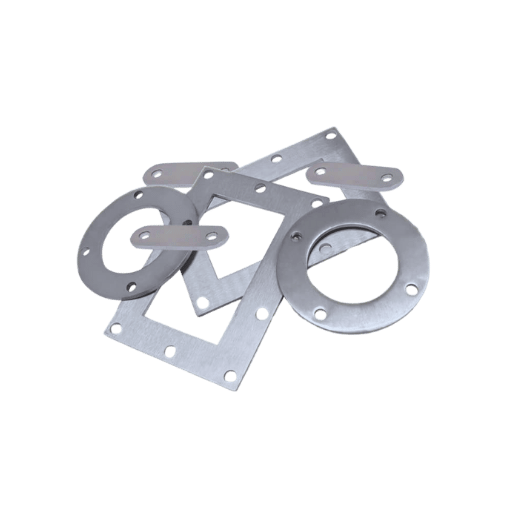
Laser cutting ss utilizes multiple materials, 304 stainless steel is among the most common one employed, the reason being the ease of use, flexibility, and desirable qualities of this steel. Especially, this steel alloy is very resistant to rust, very tough and easy to work with. Hence, it is used to manufacture many products such as food equipment, chemical vessels, and building structures. It contains chromium and nickel, which are responsible for its anti-corrosion and anti-staining properties, which enhance the durability of the steel, especially in aggressive conditions. And what’s more, laser cutting of 304 stainless steel allows one to achieve fine detail and vertical accuracy, with a smooth surface – thanks to the consistent cutting conditions.
316 Stainless Steel
316 Stainless Steel belongs to the group of austenitic alloys, which are appreciated for their higher resistance to corrosion, particularly to corrosion in services containing salts and aggressive chemicals. It is an alloy containing molybdenum, which ensures superior protection of the alloy from pitting and crevice attacks, unlike wholly 304 stainless steel. The other areas where the 316 remains attractive are the marine environment, pharmaceutical processes, and equipment, and of course in chemical processing plants. Just as 304, it is also resistant to wear and tear, tough, and results in a nice-looking surface, which is a good thing for a system where toughness should also marry cleanliness.
💡 Choosing the Right Type of Stainless Steel for Your Project
There are things to take into account when selecting the particular type of stainless steel for the solution in order to achieve optimal performance and service life:
🔹 Corrosion Resistance
Consider whether moisture, chemicals, or salt water would be present in the setup. For further corrosion resistance, grades added with elements such as molybdenum might be considered, e.g., 316 stainless steel.
🔹 Mechanical Properties
Assess the strength and flexibility. For structural uses, select grades of higher tensile strength, like 304 or 410 stainless steels, to meet their mechanical requirements.
🔹 Temperature Conditions
The material will face a range of temperatures will be well known. Usually, high-temperature applications require an excellent grade, such as 310 or 430 stainless steel.
🔹 Aesthetic Requirements
In terms of finishing on exposed surfaces, stainless steel finish should be given thought and should preferably be clean, polished, or brushed finish, for example, grade 304 or 316, to foster an attractive aesthetic while not compromising function.
🔹 Cost and Budget
Understanding Laser Cutting Technology
Types of Laser Cutters
CO2 Laser Cutters
Most common lasers utilized by industries for cutting and engraving materials such as wood, acrylic, glass, and fabric are in gas form. Mainly, carbon dioxide is considered to be the prevalent constituent in the gas mixture so created to achieve utmost precision and efficiency.
Fiber Laser Cutters
Fiber lasers do make for speedy and wonderful cutters of metals ranging from stainless steel, aluminum to brass. They use fiber-optic cables in amplifying the laser beam, thus making the entire procedure of cutting more energy efficient and durable, unlike CO2 laser.
Crystal Laser Cutters
Crystal lasers, commonly Nd:YAG (Neodymium-doped Yttrium Aluminum Garnet) and Nd:YVO4 (Neodymium-doped Yttrium Orthovanadate), are preferred tools for cutting both metals and non-metals. Owing to their requirement for high power and precision in steel cutting, they tend to have a shorter life since the cutting mechanisms are delicate.
Diode Laser Cutters
Diode lasers are made good for delicate jobs; with their compact feature they are used largely for engraving and small-scale cutting of materials like plastics and thin wood. They are a very good pick for hobbyist and entry-level applications because of their affordability and ease of operation.
Each kind of laser cutter has its own special strengths and thus can be used for specific applications depending on the nature of the material to be cut, cutting needs, and budget.
How a Laser Cutting Machine Works
Laser cutting systems employ high-energy lasers directed at materials, making them melt, burn, or vaporize. The initial step is the generation of intense light by the laser machine, directed through mirrors and lenses to magnify to a focal point. Such a principle of energy application enables cutting different materials like metal, wood, plastic, glass, and many others with utmost precision and efficiency. In this concept, a laser beam is manipulated by a computer system, which controls the movement of the laser as per the programmed vector. This cutting method does not come in contact with the material, so not much of it is wasted, and it produces a smooth finish on the cut edges.
Advancements in Laser Technology
The advancement of laser’ technology has enhanced the level of precision, effectiveness, and adaptability in a wide range of sectors. Over the years, fibre lasers, as well as ultrafast pulse lasers, have opened up industrial sectors such as the manufacturing, health, and communication sectors. These advancements make it possible to attain greater levels of output power, low cost of operation, and high precision, which makes the use of laser cutting SS systems inevitable for both industrial and scientific purposes.
Cost Implications of Laser Cutting Stainless Steel
Factors Affecting the Cost of Laser Cutting
- Material Thickness– The greater the thickness, the greater the energy and time required for cutting. Hence, cutting thicker stainless steel tables costs more. Basically, the thickness and pricing in laser cutting depend not only on the material but also on types of stainless steel since the density and composition vary for each.
- Cutting Speed and Accuracy- The higher the precision and slow cutting speed may increase the working time, hence, increasing the cost especially in intricate designs or fine details.
- Type of Laser Used- The initial cost and operational cost of the lasers differ from one another. For example, fiber lasers are more energy-efficient when it comes to cutting stainless steel parts; however, they also probably have greater system costs upfront.
- Power Consumption- The power consumed by laser operation varies according to the power rating and the efficiency of the laser. This leads to increased electricity expenses that form into the price.
- Setup and programming requirements- Extra cost may arise out of CAD programming, tooling adjustment, or alignment process to meet a particular design requirement for custom projects.
Comparative Analysis: Laser Cutting vs. Other Methods
As different cutting procedures need different requirements, laser cutting has the greatest deal of accuracy, speed, and automated options, while waterjet and plasma cutting offer flexibility and various costs and can be adjusted to particular usages of choice.
💰 Cost-Effective Practices in Stainless Steel Laser Cutting
By following these tips, one could save money in laser cutting stainless steel:
- Maximize Utilization of the Material – Plan for a layout that wastes the least material by maximizing the number of parts cut out from each stainless steel sheet. Nesting software can improve this efficiency.
- Selecting Power Settings – Aim for power that prevents delays, ensuring precision but does not consume too much energy. Such usuage reduces maintenance costs and electricity bills.
- General Maintenance – Operate lasers and associated machines in the right manner to align their performance to peak standards and avoid periods of costly downtimes and incarcerations.
- Batch Processing – Mix cutting projects into big batches to set up less and to reduce labor costs.
- Work With Efficient providers-Working with competitive laser cutting service providers will scale down material usage and project intervals, courtesy of their advanced technology and efficient workflow.
By practicing the above-mentioned, businesses can achieve high-quality results while managing their expenses.
Material Considerations for Laser Cutting

Stainless Steel Size and Thickness Options
When choosing stainless steel to be laser cut, usual industry options put forth sheets in sizes such as 48 x 96 inches (4 x 8 feet) or 60 x 120 inches (5 x 10 feet). Thickness would be anywhere between 0.018 inches (26 gauge) and 0.75 inches, depending on the project’s requirements, especially with regard to stainless steel sheet metal. Thicker materials may require the use of higher-power lasers for the best precision, whereas thin sheets could be used for very fine designs. Availability and compatibility should be checked with the cutting provider first before plundering into the process.
📋 Material Preparation for Optimal Laser Cutting
- Clean the Material Surface: Make any surface absolutely free from dust, oily residues, or other contaminants; perhaps those contaminants may interfere with the laser, or those contaminants may burn along with it.
- Remove Protective Coatings (if applicable): In case the material consists of metals and plastics with a protective film, removal may be necessary, depending on the type of cutting, particularly plasma cutting.
- Ensure Flatness: Making sure the material is flat enough to avoid warping and misalignments further down while cutting.
- Select Appropriate Thickness: The thickness of the material shall be appropriate relative to the power rating of the laser for proper cutting.
- Mark Reference Points (if needed): Mark reference points clearly, particularly for those detailed designs or layered cuts, in order to increase the accuracy.
Post-Processing Techniques for Laser-Cut Stainless Steel
🔧 Deburring
Use deburring tools or machines for sharp edges and burrs left after cutting to obtain a smooth and safe finish.
🧼 Cleaning
The cleaner to be used should be non-abrasive, and all residues, discolorations, or heat stains caused by the laser should be removed with it.
✨ Polishing
Undergo mechanical or chemical polishing processes to provide a surface finish ranging from matte to mirror shine.
🛡️ Passivation
Applying the passivation treatment removes surface contaminants and thereby enhances the corrosion resistance of stainless steel.
🔍 Inspection
Conduct an inspection, being sure to look for accuracy in cutting and surface finish and correcting any defects prior to onward application.
The company is thus guaranteed of a final product worthy of quality standards for functional or aesthetic uses.
Safety Protocols in Laser Cutting
⚠️ Essential Safety Measures When Using a Laser Cutter
👓 Wear Appropriate Personal Protective Equipment (PPE)
Please always put on laser-protective eyewear along with heat-resistant gloves and clothing in case of a burn or radiation arrival.
💨 Ensure Proper Ventilation
Maintain appropriate air supply within the workspace to extract these fumes, smoke, and toxic particulate matter generated from cutting.
🔧 Regularly Inspect Equipment
Regularly check all parts of the laser cutter for any possible concern such as damaged bits or faulty wiring, and immediately fix any problem to avoid malfunctioning.
🚨 Get the Emergency Shutdown Procedures Implemented
Put operators through familiarization with emergency stop features so that they can hit the button and stop the machinery immediately if any situation would arise where it would be appropriate to do so.
🧹 Keep Work Area Clear
Keep the working station free from combustible materials and allow only authorized personnel around the laser cutting station to lessen the chances of an accident.
Common Hazards in Laser Cutting Operations
- 🔥 Fire Risks: Laser heat, being very intense, may set ablaze nearby flammable materials or debris, which thereby makes it a potential fire hazard.
- 👁️ Eye and Skin Exposure: Direct exposure to laser beams or toxic reflection can result in grievous injury to the eye and skin unless proper protection is adopted.
- 💨 Fume and Gas Exposure: Cutting one material may release toxic fumes or gases. This includes carbon steel, fumes, and gas exposure hazards, which may cause respiratory ailments if ventilation is not proficient.
- ⚡ Electrical Hazards: Faulty wiring can be used to shock people; a violation will prevent fixing the equipment.
- 🔪 Mechanical Injuries: Injuries may result from physical contact with the moving parts of the machinery or the sharp edges of the material being processed.
Regulatory Compliance for Laser Cutting Services
Ensuring safety, quality, and environmental responsibility is a basic requirement in complying with laws within laser cutting services. Businesses should provide OSHA standard controls to hazards faced in the workplace, such as ventilation and personal protection equipment. Local fire codes should be observed in conjunction with the NFPA guidelines to mitigate possible fire hazards. In environmental considerations, there exists EPA authority on emissions of materials that produce harmful fumes or particulates in the cutting processes. For continuous compliance purposes, regular maintenance of equipment, training of employees, and proper documentation on safety are necessary.
Frequently Asked Questions (FAQs)
❓ How would you describe laser cutting of stainless steel?
Precision cutting of stainless steel sheets or components in laser cutting of stainless steel involves the application of an intense laser beam. This is good in that it results in less or no dust on the edges and enables a design to be finished with more precision and detail.
❓ What are the types of stainless steel that are laser cut?
A number of stainless steels, such as so-called austenitic and ferritic steels, and even duplex stainless steels, are suitable for laser cutting stainless steel very easily. It depends on the application and the combination of properties required.
❓ How does laser cutting on stainless steel compare to other methods?
Laser cutting on stainless steel usually improves upon waterjet and plasma cutting insofar as speed and edge quality and precision are concerned. They are particularly good at cutting complex shapes and intricate designs through fiber laser cutting machines.
❓ What stainless steel gauge can Content be cut with a laser?
First and foremost thing to understand is that the gauge of the steel to be cut is determined by the power of the laser and the laser cutting machine in use. Generally, more sophisticated laser cutting machines enable thicker ss plates to be cut.
❓ Why is laser cutting advantageous with respect to SS?
❓ What does a laser head do in cutting?
A laser head focuses a laser beam on a stainless steel sheet cut. The laser head controls a cut’s accuracy and quality and the speed of the laser cutting process.
❓ How do I select the correct laser cutting machine for stainless steel?
With so many aspects to consider, the nature of the stainless steel to be cut and its thickness, the velocity and precision—a particular application requirement-go into a correct laser cutting machine choice. Researching the various types of laser cutters helps in making an informed choice.
❓ What usability purpose do stainless steel components serve?
Several grades of stainless steel are available on the market, ranging from 304 to 316, with 304 and 316 being the two most commonly used grades for stainless steel parts. They do not easily wear out or corrod,e and therefore find use in more applications in industries.
📚 Reference Sources
- 1. Study and experimental comparison of laser cutting of 1.2 mm thick austenitic stainless-steel sheet using CW Nd: YAG laser
- Wichita State University SOAR
- This article considers the Nd: YAG laser cutting of stainless steel from a simulation and experimental setup.
2. Laser cutting applications in product design
- MIT DSpace
- The expansion of laser cutting applications in product design is discussed in the context of the Mechanical Engineering community at MIT.
3. Optimization of sheet metal cutting parameters of laser beam machining
- Academia.edu
- The study examines the impact of laser beam machining parameters on surface roughness during the cutting of stainless steel (SS 304).
Top custom stainless steel parts Manufacturer and Supplier in China


