


The melting points are just one of the properties that reveal the amazing changes brought about by heat in the elements, but there is one substance that is the winner in this regard among all the substances known so far. Tungsten, the wonderful material to be specific, is the one with the highest melting point among all the elements that occur naturally. But what is it that makes this metal so special and what is the reason for its importance? This article takes a closer look at the melting points, the unique properties of tungsten, and its critical applications across various industries.
Introduction to Melting Points

Melting points define the temperature at which a solid changes to a liquid phase under normal atmospheric pressure. Melting points are among the most important characteristics of materials, as they provide the first indication of a material’s bonding and structural stability. Materials with high melting points are generally associated with stronger atomic or molecular forces acting over them. Materials scientists, manufacturers, and engineers must have a good understanding of melting points, as this helps evaluate a material’s suitability for specific applications.
Definition of Melting Points
The melting point of a substance is the temperature at which a solid changes to a liquid under normal atmospheric pressure. It is a fundamental physical property that varies from one material to another, depending on the strength of its atomic or molecular bonds. For instance, tungsten and other high-melting-point elements melt at up to 3422°C (6192°F) owing to their strong metallic bonds. Hence, they are used in high-temperature applications such as aerospace and electrical components. On the contrary, water in its solid form (ice) has a melting point of 0°C or 32°F because of the relatively weak hydrogen bonding.
Key Insight: Recently, the integration of new technologies and advanced data aggregation capabilities has simplified access to vast melting-point databases for thousands of materials. Increasing the availability of this information enables scientists, engineers, and manufacturers to conduct material comparisons more thoroughly, with specific environments in mind, across design aspects such as durability, safety, and functionality.
Importance of Melting Points in Materials Science
Melting points are critical in materials science because they are one of the criteria for selecting materials for specific applications. Knowledge of a material’s melting point is a great help in determining its thermal stability and thus predicting its behavior during temperature changes.
Practical Applications by Melting Point:
- High-Melting-Point Metals: Tungsten is used for applications requiring resistance to heat, such as in the aerospace and industrial machinery sectors
- Low-Melting-Point Metals: Find application in processes that involve casting and molding
- Alloy Development: A melting-point map of starting materials is a prerequisite in developing alloys and composites since melting must be carefully controlled to obtain good properties
The pharmaceutical, electronic, and manufacturing industries are among those that can hardly do without this information, as it plays a crucial role in ensuring the quality and safety of final products, from drug development to semiconductor fabrication.
Overview of the Periodic Table and Melting Points
By their atomic structure and properties, the periodic table arranges elements, which in turn affect their melting points. Understanding these trends helps predict and effectively utilize materials across scientific and industrial applications.
Left Side (Alkali Metals)
Lower melting points resulting from weaker atomic bonding
Middle (Transition Metals)
Higher melting points due to strong metallic bonds
Right Side (Nonmetals)
Different melting points depending on molecular structures
The Element with the Highest Melting Point: Tungsten

Physical and Chemical Properties of Tungsten
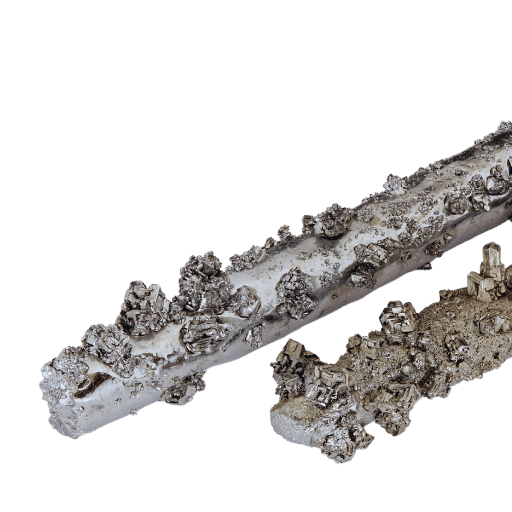
Tungsten, represented by the chemical symbol W and atomic number 74 in the periodic table, is well known for its remarkable physical and chemical properties. This substance holds the record for the highest melting point among the elements, at 3422°C (6192°F), and is used across various fields, including the manufacture of filaments and aerospace engineering, as its primary application area.
Key Properties of Tungsten:
- Density: 19.25 g/cm³ (almost the same as that of gold)
- Hardness: Tough material
- Chemical Reactivity: Virtually unreactive even in a corrosion-resistant environment
- Dissolution: Can only be dissolved by acid under extreme conditions, or through heating
- Alloy Formation: The Ability to create stable alloys contributes to its versatility
Such exceptional properties have made tungsten an indispensable resource in both scientific research and industrial development, ranking it among the primary materials used in the production of tools, electronics, and even medical devices.
Why Tungsten Has the Highest Melting Point
Tungsten has the highest melting point of all metals, at 3,422°C (6,192°F), due to the strong atomic bonds and special crystal structure it possesses. The strong metallic bonds between tungsten atoms are the reason the melting point is so high, as they require a great deal of energy to be overcome.
Factors Contributing to Tungsten’s High Melting Point:
- Strong Metallic Bonds: Tremendous atomic bonds between tungsten atoms require great energy to overcome
- Crystal Structure: Body-centered cubic (bcc) crystal structure plays a part in its high-temperature stability
- Valence Electrons: High number of valence electrons contributes to the strength of the bonds, making it less susceptible to melting
This property of withstanding incredibly high temperatures has made tungsten a must-have in the production of high-temperature furnaces, electrical filaments, and aerospace components, among others.
Comparison with Other High-Melting-Point Metals
Tungsten, molybdenum, tantalum, rhenium, and osmium are key metals with high melting points, each offering unique properties that suit specific industrial applications.
This table highlights essential comparative parameters, helping users quickly grasp the strengths and specialized uses of each high-melting-point metal.
Industrial and Scientific Applications of Tungsten

Tungsten in Aerospace and Defense
Tungsten is an essential metal in the aerospace and defense industries due to its exceptional properties, including a very high melting point, high density, and strong resistance to wear and deformation.
Aerospace Applications
- Rocket nozzles
- Engine parts
- Counterweights
Components must endure extreme conditions of heat and mechanical stress
Defense Applications
- Armor-piercing bullets
- Kinetic energy penetrators
- Protective armor plating
High density and capacity to endure powerful impacts
These characteristics make tungsten an essential metal for technological advancement and national defense.
Role of Tungsten in Electronics and Technology
The exceptional physical properties of tungsten make it an indispensable element in electronics and technology. Its use is extensive and spans multiple critical applications in modern technological infrastructure.
Primary Electronics Applications:
- Incandescent Light Bulbs: Warmth and high melting point are the main advantages
- Semiconductor Industry: A Major contributor to microchips and integrated circuits
- Electrical Components: Electrodes, heating elements, and contact points due to strength and electrical conductivity
Hence, tungsten’s role in advancing high-performance, reliable technologies is indispensable.
Tungsten in Manufacturing and Engineering
The massive, still-evolving application of tungsten in manufacturing and engineering spans the technology itself. Tungsten is one of the most essential metals thanks to its remarkable melting point, strength, and conductivity; its main fields of use are in the advanced machinery and tooling industry.
Manufacturing & Engineering Applications:
- High-Speed Steel: Major component for making cutting tools enabling longer service life and higher accuracy in machining processes
- Aerospace Sector: Indispensable for turbine blades and rocket nozzles exposed to very high temperatures
- Automotive & Heavy Machinery: Main material for parts that can withstand wear and tear, prolonging equipment life and cutting down maintenance costs
- 3D Printing & Additive Manufacturing: Paving the way for new applications in production, making complex and precise designs achievable
The progress mentioned above is a clear indication of tungsten’s ability to meet the demands of modern manufacturing and engineering sectors; thus, its continued reliance and use will be the norm.
Extraction and Refining of Tungsten
Overview of Tungsten Mining Processes
The process of tungsten mining starts with identifying and exploring areas where tungsten minerals such as wolframite and scheelite are present. After a deposit is found, the choice of mining methods is made between open-pit or underground based on how deep the ore is and where it is situated.
Mining Process Steps:
- 1
Exploration: Finding areas with tungsten minerals (wolframite and scheelite) - 2
Mining Method Selection: Open-pit for shallow deposits or underground for deeper ones - 3
Ore Processing: Breaking down into smaller pieces - 4
Separation: Using gravity separation, flotation, and magnetic separation techniques
The efficiency and sustainability of these processes are key factors in the effective use of tungsten resources.
Refining Techniques for High Purity Tungsten
Tungsten refining to attain high purity has reached some of the highest levels, utilizing sophisticated methods that ensure the removal of impurities for industrial and scientific uses.
Primary Refining Methods:
1. Ammonium Paratungstate (APT) Method
- Tungsten ores or concentrates undergo alkaline or acid leaching treatments
- Crude tungsten solution is decontaminated to remove impurities (molybdenum, copper, arsenic)
- Crystallized into ammonium paratungstate
- APT is reduced thermally in a hydrogen atmosphere to obtain tungsten powder
2. Zone Refining
A tungsten rod is uniformly heated, and the movement of impurities along the length of the rod is allowed with the concentration at one end where it can be taken off.
3. Electron Beam Melting
Uses an electron beam in a vacuum chamber to melt and purify tungsten, completely eradicating very fine impurities.
The medical and electronic industries among others, which require high-quality tungsten, constantly make use of these modernized methods that keep evolving with the technology breakthroughs, in which the strict purity requirements of the industries mentioned above are met as well.
Challenges in Tungsten Extraction
The extraction of tungsten is a complex process and involves several difficulties, mainly due to the metal’s distinctive properties and the intricate nature of its ores.
Key Challenges:
- Low Concentrations: Tungsten is usually present in very low concentrations, which necessitates a lot of mining and processing just to get a small amount suitable for sale
- Separation Complexity: Separation from closely associated elements like molybdenum and arsenic can be especially challenging, requiring very sophisticated methods to get the required purity levels
- High Energy Consumption: The energy-consuming nature of tungsten extraction methods, like reduction at high temperature,s contributes to high production costs
- Environmental Concerns: Management of waste and risk of chemical contamination makes the process more difficult, necessitating sustainable and efficient extraction methods
Other Elements with High Melting Points

Tantalum: A Close Contender
Tantalum is the other element with an exceptionally high melting point, 3,017°C (5,463°F). Besides, it is regarded as one of the most essential materials due to its resistance to oxidizing agents and strength at high temperatures. Therefore, it is a mainstay in the electronics industry, especially in capacitors and high-performance alloys.
Tantalum Applications:
Electronics
Capacitors and circuits
Aerospace
High-performance alloys
Medical
Implants and devices
Energy
Power generation systems
Important Note: Tantalum is still scarce and its mining process has to be environmentally friendly and ethically sound, mainly because of the issue of conflict minerals.
Hafnium and Its Properties
Hafnium is a shiny, silvery-gray metal with extraordinary properties, making it a primary requirement in many high-tech sectors. Having a melting point of around 2233°C (4051°F), hafnium is very much impenetrable to corrosion and thermal stress.
Hafnium Characteristics:
- Melting Point: Approximately 2233°C (4051°F)
- Corrosion Resistance: Very much impenetrable to corrosion and thermal stress
- Nuclear Properties: Thermal neutron absorption property is critical for safe and economical atomic reactor operation
- Ductility: Good ductility makes it easily fabricated for specialized usage in aerospace and electronics
- Primary Application: Nuclear reactor control rods construction
Hafnium, however, is a scarce element with its occurrence usually linked to that of zirconium. Its limited supply, coupled with the complexity of the extraction process, makes it, among other things, a very costly yet indispensable resource in cutting-edge technologies.
Comparative Analysis: Molybdenum and Rhenium
Molybdenum and Rhenium differ in properties such as melting point, corrosion resistance, ductility, electrical conductivity, and primary applications in modern industries.
Reference Sources
- 📄
The melting-point of tungsten – A detailed study on the melting point of tungsten, including experimental data and analysis - 📄
Thermodynamic properties of tungsten – This paper explores the thermodynamic properties of tungsten, including its melting point and related phenomena - 📄
Mass transport and thermal properties of liquid tungsten – A molecular dynamics simulation study focusing on the melting and boiling points of tungsten, along with its thermal properties
Frequently Asked Questions (FAQs)
Summary
Tungsten stands as the champion among naturally occurring elements with the highest melting point of 3,422°C (6,192°F). Its exceptional properties, including strong metallic bonds, a body-centered cubic crystal structure, and a high valence-electron count, make it indispensable across the aerospace, defense, electronics, manufacturing, and engineering sectors. While other elements like tantalum, rhenium, and hafnium also possess impressive heat resistance, and certain compounds like tantalum hafnium carbide exceed tungsten’s melting point, tungsten remains the king of the periodic table for pure elemental thermal stability.


