


CNC machining always requires a careful choice of the correct material: everything hinges on this alone. Among various options, brass remains a fairly versatile and in-demand choice due to excellent machinability, decent strength, and superior thermal and electrical conductivity. This blog post covers brass machining and discusses why it is excellently suited for CNC machining in general. Whether designing precision components or working for efficiency in production, we will discuss the examples, advantages, and constraints of working with brass. At the end of this blog post, you will know everything about how brass can take your CNC machine projects from good to great.
What is Brass Machining?

Brass machining is the process of shaping and forming brass into precision components by using instruments like CNC (Computer Numerical Control) machines. Brass is a valuable mixture of copper and zinc because of its durability, corrosion resistance, and ease of machining. Excellent machinability of brass makes it easy to produce complex and very precise parts, hence making it popular in the automotive, plumbing, and electronics industries.
Understanding Properties of Brass in Machining
Brass has a unique combination of properties that make it usable for machining applications. It possesses good machinability because of a low melting temperature as well as good thermal conductivity, so cutting can be done quite fast and with precision, yet the tools used do not get excessively worn out. It has a high level of corrosion resistance, especially against water and many corrosive environments, thus making it perfect for plumbing and marine applications.
On the other hand, its main components—copper and zinc—give brass its strength and ductility and enable it to be easily formed into complex shapes. By virtue of having small amounts of lead, some brass alloys such as free-machining brass (like C36000) implement the lead as a lubricant to enhance machinability. The industry data suggest that machining brass actually reduces tool wear by as much as 50% versus machining other metals like steel, offering huge savings when machining on a large scale.
According to statistics, brass has a machinability rating of 100 (that is, the machinability standard), an indication of its superiority over many other materials. This also translates to higher speed of processing, less energy consumption, and precise results. These properties, together with an attractive finish and the ability to resist tarnish, make brass extremely important in applications ranging from electronics connectors to intricate decorative arts.
The Role of Brass Alloys in Machining
Brass alloys play a vital role in machining due to their high machinability, corrosion resistance, electrical conductivity, and aesthetic appeal.
| Key Point | Description |
|---|---|
| Machinability | Easily processed |
| Corrosion Resist | Withstands decay |
| Conductivity | Efficient current |
| Aesthetic Use | Attractive finish |
| Versatility | Multiple uses |
Why CNC Machining Brass?
Brass material has been CNC machined for over some factor of centuries because of the advantageous combination of properties and the price advantage it offers. Among many reasons, excellent machinability is the foremost feature that fosters a machining window. For example, brass alloys show low coefficient of friction and contrary to normal cutting tools, they require much lower forces; as a consequence, higher production rates and longer tool life are attained. Industry standards specify a machinability rating of up to 100% in case of brass, with free-cutting brass taken as the standard, implying brass is one of the easiest materials to machine precisely.
They’re also highly resistant to corrosion. Parts made of brass can stand up quite perfectly to moisture- and weather-induced corrosion. This is to say – it is the best candidate for installing plumbing, marine, or electrical systems. Another excellent property is thermal and electrical conductivity. For instance, it is said that brass has a conductivity equal to 28% of pure copper conducts, yet it is highly efficient. Its use is important in making terminals and fittings in electrical and electronic industries.
Brass is sustainable in CNC machining. It highly favors recycling, with almost 90% of brass products being made from recycled material today, thereby cutting down the environmental impact drastically. Moreover, the content of Pb in some brass alloys enhances chip-breaking properties in machining, further improving the cost-efficiency.
In sum, with an unbeaten combination of machinability, corrosion resistance, conductivity, and sustainability, brass stands out in aerospace, automotive, electrical, and medical-manufacturing sectors in CNC machining. Its versatility and performance have sustained its popularity as expedited raw material for both precision components and jumbo production.
How Does Brass Work in CNC Machining?
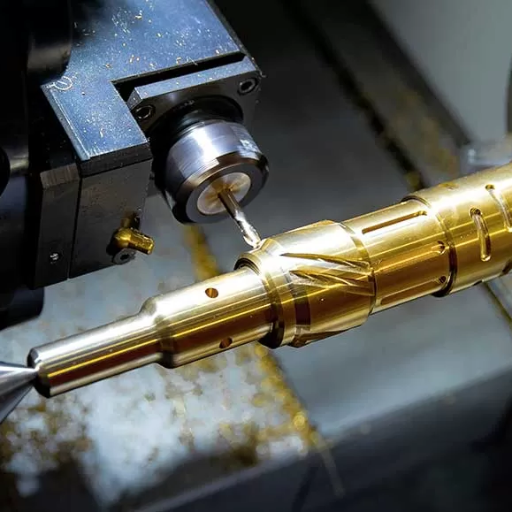
In CNC machining, brass is processed to develop highly precise components by utilizing the advantages of some of its properties, such as good machinability and durability. The CNC machine, which is controlled by a computer, will use its cutting, drilling, and shaping tools to shape the brass into the desired form. Being a soft material with low friction, it can be cut quickly, minimizing the wear and tear on the tools. Hence, they are able to produce high-quality parts with a fine finish, which are useful for many applications.
The Processing of Brass Components through CNC Machining
The CNC machining process for brass components involves some steps to provide accuracy and quality: First comes the design in CAD software with exact specifications of the part. Later, this design is converted into instructions readable by the machine using CAM software. The CNC machine will follow these instructions to perform all operations cutting, drilling, and shaping into finished forms of the brass. Throughout the process, the microscopic accuracy of automated execution on the machine ensures every time the results of brass components are consistent.
Brass Grades in CNC Machining
Brass is one of the materials used in CNC machining due to its susceptibility to a wide range of mechanical properties, corrosion resistance, and machinability. Different grades of brass are suitable for different applications depending on their composition and performance characteristics. Understanding the properties of those grades offers a better option to optimize the machining process for quality and function.
One of the commonly used grades is C360 (Free-Cutting Brass), with high machinability with a 100% machinability index. This grade contains about 61.5% copper, 35.5% zinc, and traces of lead, which reduce tool wear and allow for precise cuts. It is suitable for more intricate parts such as gears, valves, and connectors, where a high degree of precision is required. Industry statistics show that C360 brass can increase production speed by as much as 30% over other alloys.
Another popular grade is C464 (Naval Brass), with marine corrosion resistance. It contains roughly 60% copper, 39% zinc, and small amounts of tin. It is used where the environment presents significant exposure hazards. Due to its durability and thermal conductivity, it is used in heat exchangers, marine hardware, and water tanks.
C230 (Red Brass) is preferred when tensile strength is of utmost importance. It contains between 84-86% copper and 0.05% to 0.20% lead. It has a distinct reddish tint and is revered for its beauty and structural qualities. Red Brass is widely used in decorative fittings or plumbing equipment.
The chosen grade of brass depends on the machined complexity, environmental factors, and specified mechanical properties. Incorporation of more modern CNC applications further increases the quality and dimension of brass components, furnishing them for use in today’s high-performance applications.
Key Considerations When Using Brass in CNC Machining
- Material: Choose the appropriate brass alloy for the application, taking into consideration corrosion resistance, strength, and machinability.
- Tooling: Use cutting tools that are sharp and wear-resistant to achieve clean and accurate cuts.
- Feed Rate and Speed: Machine can be set for maximum effect and smooth operation by varying the feed rate and spindle speed to prevent overheating.
- Coolant: Proper cooling prevents heat build-up to maintain the surface quality of the material.
- Tolerance: Check and meet the magnitudes of tolerance to fulfill the project requirements and avoid discrepancies in the end product.
The Most Commonly Used Brass Grades for CNC Machining

- C360 (Free-Cutting Brass): The easiest to machine amongst brasses and usually used for precision components such as fittings and connectors.
- C385 (Architectural Bronze): It has good corrosion resistance and is usually deployed for decorative or structural purposes.
- C464 (Naval Brass): Naval brass is well known for its strength and for resisting seawater corrosion; thus, great for marine applications.
Exploring Different Grades of Brass for CNC Machining
Brass is extensively utilized in CNC machining because of its superior machinability, corrosion resistance, and attractive finish. We will review some other common grades of brass below, highlighting their distinctive properties and applications:
- C272 (Yellow Brass): Contains around 63% copper and 37% zinc. It is highly corrosion-resistant and has good ductility. Applications of C272 typically involve cold forming, such as tubing, radiators, and musical instruments.
- C230 (Red Brass): Also called Cartridge Brass, the alloy contains 85% copper and 15% zinc and yields excellent corrosion resistance; it also has a rich reddish tone. It is used mostly whenever a high-grade look for plumbing supplies is desired, in jewelry, or for other industrial purposes.
- C863 (Manganese Bronze): This is technically a bronze alloy that contains copper, zinc, and added manganese. Very strong and with high wear resistance, it is suitable in applications involving high loads, such as gears, bearings, and hydraulic fittings.
- C280 (Muntz Metal): Containing about 60% copper and 40% zinc, Muntz Metal is known for toughness and resistance to seawater corrosion. Typical applications place these brass types in the marine environment, architectural features, and cladding.
All the different grades of brass have specific properties that best-position them for several industries, from marine to decorative and industrial. Understanding the particularities of those grades allows manufacturers to choose the material best suited for precision machining to achieve superior results.
Benefits of Free-Machining Brass
Free-machining brass, having excellent machinability and versatility, offers several benefits to industrial and commercial applications. This type of brass is designed with a specific composition that allows for precise and fast machining, shrinking manufacturing periods and costs. The addition of lead into the alloy serves as the boost of machinability that can be exploited for speedier machining and less wear on tools.
One other important advantage of free-machining brass is its compatibility with automation, a plus in mass-production facilities. Data from the recent past shows that compared to standard alloys, machining speeds can be increased by as much as 30% using free-machining brass in the mass-production of components like fittings, valves, and fasteners. It goes easy on the tools and produces fine chips: factors that favor better surface finishes and a lesser need for finishing treatments.
Aside from this, it also enjoys great corrosion resistance, which helps in longer life expectancy in environments where it gets exposed to moisture, in either liquid or gaseous form, and chemicals, among others. Coupled with good heat and electrical conductivity, this brass finds application in making electrical and plumbing components.
Along with this, in 2023 machining standards, free-machining brass is certified as recyclable. About 90 percent of all brass used in industrial sectors is recycled, thus promoting the concept of sustainable manufacturing. With its support for a better environment paired with very good practical performance, free-machining brass could remain a cheap and green alternative for all kinds of industries.
It is an alloy with copper, zinc, and a little tin- just about 1%. Tin strengthens the corrosion resistance, particularly in saltwater corrosion, which makes naval brass suitable for marine and industrial applications. It is due to the unusual combination of strength, good durability, and the ability to withstand corrosion, thus setting the naval brass as a trustworthy choice in tough environments.
The other major use of naval brass is in shipbuilding where it is cast for propellers, shafts, valve stems, and other components adversely affected by seawater. Industry studies have most recently found naval brass to develop corrosion in the order of 0.05 mm/year in saltwater, which is far better than ordinary alloys of brass. Another major use to a degree covers condenser tubes and heat exchangers where the thermal conductivity can facilitate energy transfer more efficiently under both industrial and marine systems.
Furthermore, naval brass enjoys preference for decorative use owing to its high polishability and golden appearance. Apart from functional and decorative use, naval brass is also highly sustainable. Like other alloys of brass, it enjoys an outstanding degree of recyclability, with close to 90% of naval brass being recycled, at least in practice, thus contributing hugely to reducing environmental impact and resource optimization.
Why Is Brass a Preferred Choice for CNC Machining?
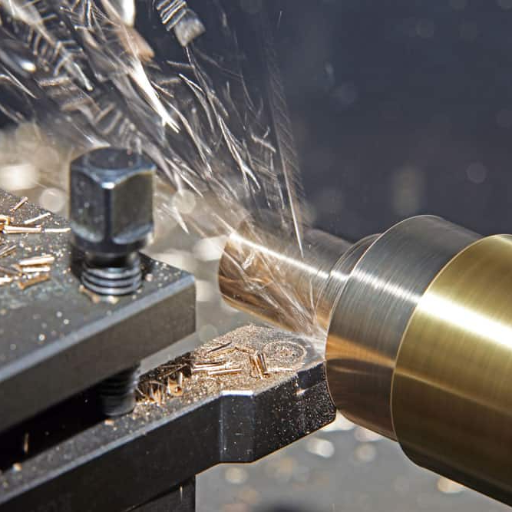
Brass is CNC machining projects’ perfect option due to the fact it is easy to machine, boasts excellent strength, and withstands corrosion. Its durability and workability allow it to be used in the creation of exact, high-quality components. The versatility of brass comes from being thermally and electrically conductive with a smooth finish; thus, it serves in several applications, such as electrical products, plumbing products, and decoration.
Machinability of Brass
The machining of brass makes it a nice one for CNC machining. The metal with its relatively low melting point and excellent ductility has far reduced resistance to cutting and shaping than most other metals. According to the Copper Development Association (CDA), brass alloy 360, usually referred to as “free-machining brass,” ranks 100% with respect to machinability. Hence the best rating against which the machinability of other metals is compared, stressing that brass is one of the easiest metals to machine via automated machine tools.
Relatively higher content of zinc in brass reduces tool wear thereby prolonging tool life in the machining operations. Also, during cutting, the chips formed tend to be comparatively small and easier to remove, thus ensuring smooth operations and preventing machine stoppage. CNC machinists appreciate the use of brass as it achieves tight tolerances and polishing finishes without requiring much after-machining.
Recent data also indicate considerable cost savings could be realized by employing brass in production. Reduced machining time increases efficiency; at the same time, it reduces costs on energy use and human labor. Brass is also fully recyclable and thus supports sustainable manufacturing processes. All these factors combined have made brass the ideal choice for production from electronics, plumbing, automotive, and aerospace manufacturing industries.
Advantages of CNC Brass Machining
CNC brass machining indeed carries a great number of advantages that make it favorable with manufacturers across diverse industries. Brass is very ductile and easily machinable and hence suits the production of precision parts with complicated designs. The CNC technology just further this by providing for endless accuracy and repeatability with almost no stated margin of error.
The manufacturing time of CNC brass machining capacity is one of the biggest benefits. The production duration is extremely short because of brass’s extraordinary machinability. For instance, the latest estimates showed CNC machining brass can be 30% faster than machining stainless steel and other metals, which eventually translates to improve operating efficiency and lower lead times.
Another paramount merit of CNC machining for brass production is the surface finish attained by the brass components. Thanks to the joint attributes of brass and precision tooling, most brass CNC machining do not usually require huge post-processing. This ensures that parts are functional, and in certain industries such as electronics and luxury goods, the appearance status is really important.
The basic parameters for cost-effectiveness form the fundament for the promotion of CNC brass machining. Less machining time means less energy recharge and less energy for human labor. Besides that, brass is fully recyclable – A modifier which means material waste is that much less and manufacturing costs related to raw material procurement could be significantly reduced. On a corporate scale, the end adopters of CNC brass machining have seen an overall scale of between 15 to 20% cost reduction in their production.
Additionally, brass alloys possess the best heat and electrical conductivity, making it ideal for manufacturing electronic industries’ components-two connectors, switches, and terminals. Plus, its superior corrosion resistance also guarantees it functions and lasts well in plumbing and marine environments.
Recent developments in CNC machining center for precision multiaxis milling and automated quality control greatly increase the dependability and versatility of brass machining. Such capabilities made it possible for aerospace and automotive industries to produce high-performance components within fine tolerances meeting the most demanding specifications.
Customization of Brass Parts to Fit Specific Requirements
Production of customized brass parts is discussed in the context of increasing demand for highly precise and application-specific solutions in various industries. Brass, viewed as a highly malleable and therefore durable alloy, is the best choice for intricate designs and high production efficiency.
The industry realizes the customization through Computer Numerical Control (CNC) machining advancements. For example, precision multi-axis CNC milling enhances the manufacturers’ ability to produce complex geometries for parts needed in aerospace, electronics, and medical device industries. According to a recent survey, CNC machining accuracy can produce tolerances of ±0.005 inches, thereby allowing extremely precise component manufacturing.
Surface treatments like plating, anodizing, and coating, can help in making brass parts that fulfill given aesthetic or functional criteria. For instance, chrome plating gives good wear resistance, and nickel plating offers corrosion resistance, which will increase the life span of components in corrosive environments.
The other key custom aspect depends on brass grades. Different industries use specific brass alloys according to their needs. An example is C360 (free machining brass), which is extensively used for the production of components requiring fine threading and smooth detail. At the same time, C464 (naval brass) is favored for marine applications requesting extreme corrosion resistance.
Even more, advanced quality assurance methods such as automated dimensional inspections and real-time process monitoring can ensure each part rigidly adheres to industry standards. This capability allows the reduction of scrap material, lowers production costs, and boosts efficiency during the manufacturing process-another big step in solidifying brass as an exquisite versatile solution to today’s engineering challenges.
This blend of innovation and technique will then make it possible for companies to configure their products to the precise working requirements themselves, with performance, durability, and functionality enhanced in almost all its applications.
What Features Do Brass Possess That Make It Ideal for Machining?
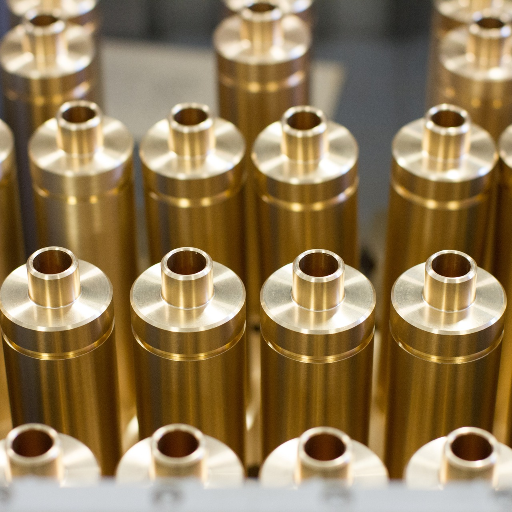
The machining of brass is ideal since it has material properties that are very favorable. It allows for almost infinite operations to cut, form, and mold, thus saving machining or working time and tool wear. Another eerie property that ensures the durability of components produced is the strength and corrosion resistance. Its low melting point coupled with ductility helps in precision manufacturing that meets the demands of particular applications.
The Ease of Machining Brass
Brass is one of the most machinable metals, and thus it finds so much favor among industries requiring precision components. Recent studies and machining data have put brass alloys near the top of the list in terms of machinability, with some alloys, such as C36000, rated about 100% machinability. This implies that the brass can be machined with high-speed tools, which consume less energy and also take a short time in production, compared to other metals.
The composition of brass is possibly among the reasons why machining can be so easy; it is typically a combination of copper and zinc, with various elements added to the so-called free-machining brass grades of which lead is very common. The lead application makes for chips that break cleanly during cutting so that tool surfaces are kept clean of material buildup and machining runs more smoothly. There is also excellent thermal conductivity, keeping the heat generated in the machining to a minimum, which extends tool life.
Other data show that brass machining also wears down tools less, with industrial cutting speeds of over 1,000 SFM (surface feet per minute) quite common. Thus, the production process speeds up while also being economical. Low friction coefficient allows for better machining accuracy so that the final product has fairly tight tolerances.
It is this efficiency in machining, coupled with its recyclability and comparatively cheap material cost, that goes some way in explaining why the metal is top on the list of materials for industries such as automotive, plumbing, and electronics. Whether for making small complicated gears or heavy-duty fittings, brass continues to enjoy widespread usage in many industries due to its machineability.
Combining Copper and Zinc for Best Properties
Brass is an alloy of copper and zinc and is distinguished by an entirely versatile range of properties it inherits from its constituent metals. The copper-zinc composition of brass can be adjusted pretty widely to achieve characteristically different behaviors most appropriate for a given application. Usually, brass alloys comprise anywhere from 60% to 70% copper, the balance being zinc, although a few other elements like lead or tin are sometimes added to improve the machinability or corrosion resistance.
Compared to pure copper, zinc increases strength and hardness while maintaining a good degree of ductility and workability. For instance, higher zinc-containing alloys, such as Muntz metal (approximately 60% copper and 40% zinc), find wide use where they have to be durable under mechanical stresses, such as ship building and architectural frameworks. Conversely, brasses with lower zinc content, such as red brass (85% copper and 15% zinc), are corrosion-resistant and are commonly used for plumbing and water systems.
Metallurgical data provide for a tensile strength range of about 200 MPa through over 570 MPa, depending on the alloy constitution. Its strength-retaining capability at elevated temperatures and wear resistance make it suitable for industrial hardware such as valves, bushings, and bearings. Modern advancements in alloying techniques are aiding brand enhancement of brass products, especially methods like hot extrusion and precision annealing.
In general, though, copper and zinc combine to give an achieved balance of mechanical properties, corrosion resistance, and visual appeal. With this kind of targeted versatility, it is no wonder that brass remains a vital material in various industries, ranging from engineering and architecture to the decorative arts.
The Right Machining Services to Consider for Brass Projects
While looking for machining services for brass projects, I consider aspects such as precision, expertise, and high-quality equipment used. Brass requires accurate handling for retaining its favorable properties. Thus, I make sure that they specialize in brass machining. Then, I look toward those with CNC technology and custom fabrication to meet specific needs of my projects. Being able to communicate with the service providers and having a proven track record of delivering projects on time also weighs heavily in my decisions.
Reference sources
- Multi-objective Optimization of Ms58 Brass Machining Operation by Multi-axis CNC Lathe (Seçgin, 2020, pp. 2133–2145)
- Key Findings:
- The study aimed to optimize the machining parameters of Ms58 brass alloy using a multi-axis CNC lathe to minimize surface roughness and maximize material removal rate.
- The optimal machining parameters were identified using the Taguchi optimization method.
- Methodology:
- Experiments were conducted by varying cutting speed, feed rate, and depth of cut as input parameters.
- Surface roughness and material removal rate were measured as the output responses.
- The Taguchi L9 orthogonal array was used to design the experiments, and analysis of variance (ANOVA) was performed to determine the significance of the input parameters.
- Key Findings:
- Effect of standoff distance and traverse speed on the cutting quality during the abrasive water jet machining (AWJM) of brass (Abouzaid et al., 2024, pp. 392–414)
- Key Findings:
- The study investigated the impact of standoff distance (SOD) and traverse speed (TS) on the kerf width, cutting quality, and surface roughness during abrasive water jet machining of 0.8 mm thick brass sheets.
- Reducing the SOD and increasing the TS resulted in better cutting quality by minimizing the kerf width.
- Higher TS and surface roughness led to decreased cutting quality.
- Methodology:
- Abrasive water jet machining was used to cut the brass sheets, and the SOD and TS were varied.
- Kerf width, cutting quality, and surface roughness were measured as the output responses.
- Key Findings:
- The Influence of Abrasive Paste on the Effects of Vibratory Machining of Brass (Bańkowski & Spadło, 2023)
- Key Findings:
- The study investigated the effects of adding abrasive paste during vibratory machining of M63 Z4 brass alloy.
- The addition of abrasive paste resulted in larger mass losses and faster surface smoothing effects compared to vibratory machining without the paste.
- Methodology:
- Brass samples were subjected to two-stage vibratory machining: deburring and then polishing.
- The impact of workpiece mass, machining time, and machining type on mass loss and surface roughness changes were analyzed.
- Surface roughness was measured using an optical profiler.
- Key Findings:
- Top Brass CNC Machining Parts Manufacturer and Supplier in China
Frequently Asked Questions (FAQs)
Q: What is brass machining?
A: Brass machining is the process of cutting, shaping, or modifying the brass to get it into a desired shape or design. CNC machines are typically utilized to fabricate custom brass parts efficiently and with accuracy.
Q: Why is brass easy to machine?
A: Brass is easy to machine because it has good machinability qualities that allow it to be shaped and cut easily without wearing down the tools too much. This property makes it an even better machining material when precision is needed.
Q: What types of brass are employed in machining?
A: Various grades of brass used for machining include c220 brass, commonly known as naval brass, and free cutting brass, also referred to as free-machining brass. They are applied according to the properties that fit specific machining needs.
Q: What makes brass a good candidate for machining?
A: Some qualities that make brass such an ideal choice among metals for machining are: it is corrosion-resistant, good strength-to-weight ratio, and capable of being machined at high speeds. These attributes attract industries toward brass.
Q: What factors are to be taken into consideration while selecting brass for machining?
A: The choice of brass for machining places factors under consideration such as machinability, desirability of certain properties required for the application, and overall cost-effectiveness of the material. Various types of brass should be assessed concerning these factors in order to obtain the best results.
Q: How does brass CNC machining work?
A: CNC Brass Machining refers to a process of creating machined parts using computer-controlled machines that make accurate-shaping and cutting into brass. Hence, it provides a very high level of accuracy and easy-to-produce complex and detailed custom brass parts.
Q: What is the final use that machined brass parts are put to?
A: Machined brass parts are used in a number of industries, such as electronics, plumbing, and automotive. Their uses vary from custom fittings and connectors to decorative hardware to precision components.
Q: Why is free-cutting brass used in machining more often?
A: Free cutting brass or free-machining brass is extensively used in machining because machining processes are easier, resulting in less wear of cutting tools; therefore, the machining becomes more cost-efficient. The greatest option for extensive production is hence free cutting brass.
Q: What are the advantages offered by CNC-machined brass parts?
A: CNC-machined brass parts provide several advantages, including the ability to ensure high precision and repeatability while enabling complex geometry production. This makes CNC machining more desirable for brass component production.
Q: How can the surface finish of custom brass parts affect their performance?
A: Custom brass parts have their surface affecting performance, especially in applications requiring precision and good aesthetics. A good finish can therefore lead to better durability and functionality of the parts.


