


Regarding engineering and manufacturing, carbon fiber is one of the key materials that provide the highest strength-to-weight ratios. It is commonly understood that almost every product made of carbon fiber has a high potency and consumes less energy. Managing the carbon fiber considers the properties of the fiber itself and its binding or mixture with other livable materials, such as rubber, because of its adverse tensile properties. Standard modulus and high modulus carbon fiber are these. It provides different types of stiffness, strength, or flexibility to other sections, and therefore, there is no one size fits all for all applications. No understanding of the differences in materials, as they help design things like high-speed race cars, is a disadvantage. This text will explain the differences between standard type and super high modulus carbon fiber, with some implementation examples.
What is Standard Modulus Carbon Fiber?
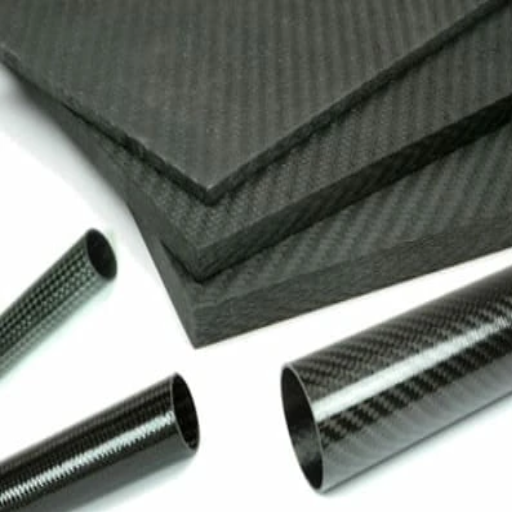
The most common type of carbon fibres is the standard modulus carbon fibers, which mostly prevail because of their well-balanced strength, elastic strain, and cost. The tensile strength of these fibers ranges from 33 to 34 msi, which is strong and speculated to be used in many delicate applications. This kind of carbon fiber is optimum for the materials subjected to high strains and loads. However, remaining overly stiff fibers is not necessary. They are best suited for sporting goods, aerospace parts, and cross-industrial-type applications. The possible variations of the standard modulus carbon fiber and the affordability allowed by its fabrication make it suitable for various types of applications.
Definition of Standard Modulus Carbon Fiber
Standard modulus carbon fiber is one of the most versatile grades of carbon fibers if strength, cost, and suppleness should all be achieved without any miss. Unlike most of the other varieties of carbon fibers, it is the most common type of all and has a tensile modulus in the range of 33-34 GPa. Its high tensile strength and relatively low modulus figure make it an ideal candidate for applications where stretching and stress are expected, but achy hinges should not be introduced. Aerospace, automotive, sports, and construction sectors conveniently avail of all the standard modulus carbon properties to develop components that stand or function under load, yet mass produce them cheaply and weightlessly. Such applications include the automotive industry’s additional fuel tank structures, marine wear-resistant solutions, which are currently required. This specific carbon grade enjoys industrial acceptance as it has proven to be readily available and performs consistently, making it a critical material for advancement in engineering and production.
Applications of Standard Modulus Carbon Fiber
- Aerospace
For instance, standard modulus carbon fiber is used extensively within the aerospace sector to manufacture aircraft body parts, including handles, wings, etc. This is because, with its low weight, the fiber is capable of reducing fuel usage while the structures maintain stability under extreme load.
- Automotive
Autoparts include materials like standard modulus carbon fiber to form a lightweight body or contain for bare chassis, even high-performance sports cars. Besides, enhancing fuel reliability also increased our speed and safety.
- Sport
Furthermore, Light quality allows using standard modulus carbon fiber in sporting products such as, tennis rackets, golf sticks, and bicycle frames. Its versatility in terms of touch, rigidity, and density provides encouragement for people involved in sports and those professionally engaged in this industry, the sports industry.
- Constructability
The material characteristics allow for strengthening concrete structures or generating design elements with extremely high strength. Carbon fiber is applied in the construction of such structures, strengthening bridges and other critical components of the edifice.
- Marine
Boat decking and other marine structures also benefit abundantly from the use of standard modulus carbon fiber for hulls and masts. Its usability is unquestionable in the maritime field because it does not corrode easily, making it resistant to salt and water.
Comparing Standard Modulus and High Modulus Carbon Fiber
Standard carbon fibre is characterised by relatively low stiffness and strength, high flexibility, and incredible versatility. High modulus fibre composites, though stiff, are, on average, strong if their cost is not considered.
|
Parameter |
Standard Modulus |
High Modulus |
|---|---|---|
|
Stiffness |
Moderate (33-36 MSI) |
High (57+ MSI) |
|
Strength |
High (500-700 KSI) |
Moderate (640 KSI) |
|
Cost |
Low |
High |
|
Applications |
General-purpose |
Aerospace, precision |
|
Weight |
Lightweight |
Lightweight |
|
Durability |
High |
Moderate |
What are the Key Properties of Standard Modulus Carbon Fiber?

The standard modulus carbon fibre is renowned for its well-balanced strength, stiffness, and cost effectiveness, all heightening its preference for users. It has a tensile modulus of about 33-36 million pounds per square inch (PSI), making it the best choice of material for use and application in any structural area. Being lightweight allows easy manipulation without interfering with the quality of the performance. Standard modulus carbon fibre presents impressive resistance to effects like corrosion or fatigue from the external environment; therefore, it is widely used in various industries: automotive, aerospace, and sports gear manufacture, among others.
Understanding Tensile Strength and Elastic Modulus
Tensile strength is a material’s maximum stress level while being stretched or pulled until it fails. This property is of critical importance, especially in the use of materials in structures, since the survival of the structure and its proper maintenance are of primary concern. Young’s modulus is used to assess material hardness or its ability to recover its shape, Mishra stresses. It measures the relationship of stress (as force per unit area) to strain (deformation) at the elastic deformation region of a material. These two properties, in conjunction, are required to evaluate the ability of a material to withstand different types of mechanical loading, hence helping the engineers and designers in material selection for a specific application.
Mechanical Properties of Standard Modulus Carbon Fiber
Apart from this, the high tensile strength of the fiber (for example, 33 Msi or 230 GPa) yields a margin of safety under mechanical purview due to stress deformation, which is logical, especially at loads under mechanical load tension link. It is due to the belief that about 68, 95, or 99% of the loading action acts on the central part of the piece. Besides, both standard modulus and intermediate modulus carbon fibers have quite adequate performance depending on the tensile modulus and density, as either lower modulus or higher density materials would not be able to resist the same pressure despite the high voids of fiberous materials. Nevertheless, further information will tell you how to project and use this basic mathematical shape for solving different types of stress deformation, together with the basic shape.
How Standard Modulus Affects Composite Materials
Using standard modulus carbon fiber significantly affects the performance and characteristics of composites. With its tensile modulus ranging from 33-35 Million Pounds per Square Inch (PSI), it serves as a significant enhancement. The rigid type is expected to be very rigid, but still addresses the issues of using light metals and manufacturable materials.
Another level to be considered when standard modulus carbon fibers are employed is fatigue resistance, when enhancing the service lifetime of composites. As an illustration, the application of such fibers in the structure of airplane components resulted in a reduction of their structural weight by almost 20-50% compared to the traditional aluminum components without interfering with the strength requirements. Similarly, in the car industry, using composites filled with standard modulus carbon fibres reduces the vehicle’s mass, contributing to more economical fuel consumption.
A variety of test data suggests that the use of standard modulus fibers assists in limiting the thermal and dimensional changes of the compounded products during complex processes. Such compounds can be operational within a temperature range of 500°F (approx. 260°C) with little reduction in their strength properties, making them applicable for both high- and low-temperature environments.
Additionally, the materials have been configured so that the resin’s chemical composition is adequately compatible with standard modulus fibers that suit thin-wall molding requirements. This helps users like the medical FRP brace, as it minimizes warping under active displacement conditions and enhances the materials’ serviceability without being adversely affected by temperature.
These characteristics and the latest processes similar to AFP (automated fiber placement) and RTM (resin transfer molding) technologies, alongside tensile standard modulus carbon fiber, helped optimize many applications. Be it in manufacturing leisure goods, which need to be light, or in advanced engineered structures and architecture, the role of stand-mod composites in these applications cannot be understated. Visualization is significant.
How Does Standard Modulus Carbon Fiber Compare to Other Grades?

Standard modulus carbon fibre is the most popular type of carbon fibre owing to its moderate combination of strength, stiffness, and costs, with regards to this tensile modulus of approximately 33- 36 GPa. That is more suitable for several applications requiring performance and resilience, provided that minimal cost is involved. Closed-loop systems must be employed for such sophistication and design notion, considering the often associated problems with the dependence on the activated processes for overall system performance. The moderate modulus is widespread since it requires less cost, and its use and application are widespread. Intermediate grade fibers (5-10 million Psi) are less common due to their higher cost and less widespread use than the examples. Higher grade fibers have a high modulus of elasticity and, therefore, a higher tensile strength. However, unlike flexible materials, they become brittle on impact and shatter easily. Conversely, lower modulus grade fibers are more common in the manufacturing industry as they are much easier to manage. They are also much easier to use than commercially available fibers like high modulus carbon fibers. Therefore, standard modulus carbon fiber can be used in most construction projects for its efficacy and strength in highly tensile conditions and its reliability because of its acrylic additives.
Differences Between Intermediate and Standard Modulus Carbon Fiber
Carbon fiber in the intermediate modulus range is considerably stronger and more resistant to deformation than carbon fiber in the standard modulus range. However, this enhancement as mentioned earlier does come with a price increase, and advanced applications surpassing ordinary expectations are utilized with this range of carbon fiber.
|
Parameter |
Standard Modulus |
Intermediate Modulus |
|---|---|---|
|
Stiffness |
Moderate (33-36 MSI) |
Higher (43-47 MSI) |
|
Strength |
High (500-700 KSI) |
Higher (800-1000 KSI) |
|
Cost |
Low |
Moderate |
|
Applications |
General-purpose |
Aerospace, industrial |
|
Weight |
Lightweight |
Lightweight |
|
Durability |
High |
High |
What is Intermediate Modulus Carbon Fiber?
Intermediate modulus carbon fiber is a type of carbon fiber that merges the strength and stiffness in the best possible way. The value of the tensile modulus is generally close to 42-49 msi, which is higher than that of standard modulus one, so it is stiffer. Nevertheless, it also boasts the advantageous properties of the standard carbon fibers in terms of strength and toughness. It is therefore suitable for use in the kinds of fabrications that require rigid but weightless materials, such as applications in the aerospace industry, high-end sports, and touristic equipment, as well as the accessories of high-performance cars. Not like standard modulus grades, the relatively higher priced intermediate modulus fibers, and even being more expensive, are preferred consumables for the niche industries as they are likely to exceed the core strength of the materials in the product design or competence performance, which can be referred to as high performance.
What are the Manufacturing Processes for Standard Modulus Carbon Fiber?
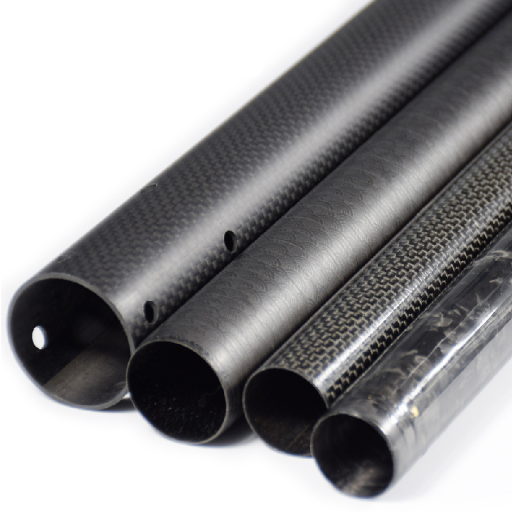
Typically, standard modulus carbon fiber is produced in a method that generally covers three essential stages as described below:
- Step 1—Preparation of Raw Materials: The starting point is preparing the raw material that will be used. Usually, this material includes polyacrylonitrile or pitch as its main content. The precursor is transformed in a controlled manner because poor quality will negatively affect the final product, i.e., the properties of the carbon fibers.
- Step 2—Stabilization argues that the Source is subjected to an oxygen-free atmosphere at an elevated temperature, usually between 1,000°C and 3,000°C. This eradicates any non-carbon content and perfectly aligns the carbon atoms to produce fibers with high strength and rigidity.
- Step 3 – Surface Treatment & Sizing: Once the carbon fibers are carbonized, they need to undergo a surface treatment process to increase the bonding performance with the resins. In this case, some form of overcoat is put on, known as sizing. Why the need to apply this coating is not necessarily for aesthetic purposes but to make it less prone to related damages will be discussed in the coming paragraphs in some detail concerning composite materials compatibility.
Raw Materials Used in Carbon Fiber Manufacturing
The production process associated with carbon fibres uses a few basic raw elements to achieve exceptionally high-quality fibers. The raw materials, therefore, are very critical given the nature of the process. The most common and effective precursor material for carbon fiber production is polyacrylonitrile, which has a higher calorific value and is stable for carbonization. Other precursors are petrochemical or extracted from coal products, pitch, and rayon, which can be less commonly used. Other substances are required to ensure adequate bonding of the fibres with resins and composite matrices, such as sizing compounds and surface treatment agents. The presence of such materials and their application by employing advanced processes results in the consequent excellent features of carbon fibres, which enable these materials to be used in various applications ranging from aeronautics to automobiles \ automotive.
The Role of Filament and Tow Sizes
The region is used in a tightly packed bi-dimensional position in the centre of the lower half of the quad lent, which is both a dialogue between and a boundary that divides the hummingbird and monarch butterfly range. Sizes and counts of tow and its elements are crucial in obtaining the properties and meeting the requirements of carbon fibers. When using this term about carbon fibers, a filament represents a single fiber, while a tow is an accumulation of fiber bundles. Depending on the filaments contained in a tow, the size of which is commonly expressed as say ???K (e.g., 3K, 12K, 24K), it affects the mechanical properties, mass, and cost of the final composite material. Small-sized tools like 3K or 6K are often employed in precision and smooth surface finished components, such as aerospace or sports equipment. Conversely, big-size tows like 24K or 50K are suitable for more economical and large undertakings such as motor vehicle components or wind energy eagles, where strength and volume are likewise emphasized, as well as paint finish. The wrong selection of a filament and tow size and their proportion prevents performance optimization while still keeping the cost and materials efficient.
Comparison of Pan-Based vs. Pitch-Based Carbon Fibers
When it comes to carbon fibers, PAN-derived fibers are strong and versatile. In contrast, pitch-derived carbon fibers are less intense and less affordable but boast higher stiffness and thermal energy dissipation properties.
| Parameter | PAN-Based | Pitch-Based |
|---|---|---|
| Strength | High | Moderate |
| Stiffness | Moderate | High |
| Thermal Cond. | Moderate | High |
| Cost | Lower | Higher |
| Applications | General-purpose | Aerospace, precision |
| Structure | Granular | Sheet-like |
Reference Sources
- Fatigue resistance of ultra-high-modulus pitch-based carbon fiber/epoxy composites under tensile loading
- Authors: M. Waller, C. Bakis, K. Koudela
- Publication Date: November 7, 2021
- Journal: Journal of Composite Materials
- Key Findings:
- The study compared the fatigue behaviors of ultra-high-modulus pitch-based carbon fiber and standard-modulus polyacrylonitrile (PAN)-based carbon fiber in woven quasi-isotropic epoxy matrix composites under uniaxial tension.
- It was found that the pitch fiber composite exhibited higher normalized tensile fatigue strength and a less steep stress-life (S-N) curve, indicating better fatigue resistance, especially in higher cycle regimes (N > 10^7).
- The pitch fiber composite showed minimal matrix damage during cyclic loading, while the PAN fiber composites experienced widespread matrix cracking and delamination.
- Methodology:
- The research involved experimental testing of composite samples under controlled tensile loading conditions to assess fatigue performance and damage mechanisms(Waller et al., 2021, pp. 167–179).
- Effect of Fiber Sizing Levels on the Mechanical Properties of Carbon Fiber-Reinforced Thermoset Composites
- Authors: A. A. Jaber, Sara A. Abbas, Abdiaziz A. Farah, et al.
- Publication Date: December 1, 2023
- Journal: Polymers
- Key Findings:
- The study investigated how different fiber sizing levels affect the mechanical properties of standard modulus carbon fibers in thermoset composites.
- It was found that fiber sizing significantly influences the ultimate tensile strength and interfacial shear strength of the composites, with optimal sizing levels recording an increase in fiber performance.
- Methodology:
- The research utilized single-fiber tensile testing and pull-out testing, along with interfacial elemental analysis, to evaluate the effects of fiber sizing on mechanical properties(Jaber et al., 2023).
- Sources of Variability in Small-Scale Tensile Testing of Carbon Fiber Reinforced Resins
- Authors: Britannia Vondrasek, Jeff Kessler, Michael Czabaj
- Publication Date: September 18, 2023
- Journal: American Society for Composites 2023
- Key Findings:
- The paper discusses the challenges and variability in tensile testing of small-scale carbon fiber reinforced resin specimens, emphasizing the impact of specimen dimensions and testing variables on measured tensile properties.
- It was noted that the testing method developed was not sensitive to specimen dimensions, but uncertainties in cross-sectional area measurements could lead to significant deviations in tensile strength values.
- Methodology:
- The study involved tensile testing of small fiber-reinforced composite specimens, analyzing the effects of various dimensions and testing conditions on the results(Vondrasek et al., 2023).
- Top carbon fiber cnc machining Parts Manufacturer and Supplier in China
Frequently Asked Questions (FAQs)
Q: What is the difference between intermediate and high modulus carbon fiber grades?
A: Intermediate modulus carbon fibers typically have a modulus of elasticity around 33 million pounds per square inch (psi), while high modulus carbon fibers have a significantly higher modulus. High modulus fibers are designed for applications requiring greater stiffness and strength, making them ideal for aerospace applications.
Q: How does the modulus of carbon fiber affect its performance?
A: Carbon fiber’s modulus, often called fiber modulus, directly influences its stiffness and strength. Higher modulus fibers offer enhanced mechanical properties, crucial for applications requiring superior structural performance.
Q: What are some common types of carbon fiber used in industry?
A: Common types of carbon fiber include T300, which is widely used for various applications, and ultra-high modulus carbon fibers designed for specialized uses. These fibers vary in their performance characteristics, including tensile and compressive strengths.
Q: What role does Toray play in the carbon fiber market?
A: Toray Industries is a leading manufacturer of carbon fiber materials, producing a range of grades, including intermediate and high modulus fibers. Due to their high mechanical properties, their products are widely used in aerospace and industrial applications.
Q: How does the coefficient of thermal expansion impact carbon fiber applications?
A: The coefficient of thermal expansion is critical in applications where carbon fiber composites are exposed to high temperatures. Carbon fibers typically have a low coefficient, which means they do not expand or contract significantly with temperature changes, maintaining structural integrity.
Q: What is the significance of carbon fiber tow in manufacturing?
A: A carbon fiber tow refers to a bundle of carbon fibers that can be woven or used in composite materials. Its properties, including strength and modulus, are essential for creating high-performance laminates used in various industries, including aerospace and automotive.
Q: Can you explain the term “high-modulus fibers” in relation to carbon fiber grades?
A: High-modulus fibers are specific carbon fibers engineered to provide superior stiffness and strength compared to standard grades. They are often used in applications where weight savings and high performance are critical, such as in spacecraft and advanced sporting equipment.
Q: What factors influence the cost of carbon fiber materials?
A: The cost of carbon fiber materials is influenced by several factors, including the type of fiber used, manufacturing processes, and the grade of carbon fiber. High-modulus and ultra-high-modulus carbon fibers are more expensive due to their advanced properties and specialized applications.
Q: How does the nature of carbon affect the properties of carbon fiber?
A: The nature of carbon, particularly its atomic structure, contributes to the unique properties of carbon fibers, such as their high tensile strength and stiffness. These properties make carbon fiber attractive for high-performance applications across various industries.
Q: What are the benefits of using epoxy with carbon fiber composites?
A: Epoxy resins are commonly used with carbon fiber materials to create strong, lightweight composites. Combining epoxy with carbon fiber enhances the overall mechanical properties, providing high stiffness, strength, and resistance to environmental factors, making it suitable for demanding applications.


