


Precision manufacture and cutting really changed with the advent of CNC machinery. Yet not all CNC machines are built equal-and if you buy the wrong type, you stand to lose much in terms of output. The other soon-to-be-generations among the most popular CNC machines are milling machines and CNC routers, both designed with unique strengths and capabilities. But how would you know which one suits your needs best? In this guide, we will go deeper into the key differences between CNC mills and CNC routers, looking at their functions, applications, and merits. This is all to equip you on how to choose, whether you are a hobbyist, a working machinist, or an industry professional, so that your projects are done in time and with precision.
What is a CNC Mill and How Does it Work?
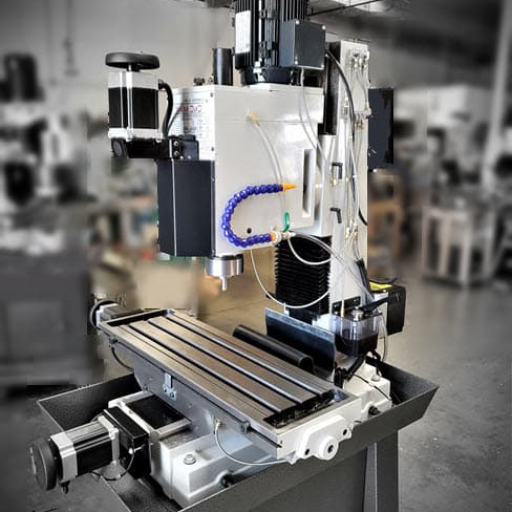
CNC Milling operates with the milling cutter in line with the capabilities afforded by the working principle of cutting. Because of the high-speed turning capability of the cutter in CNC-milling, it is possible to cut, drill, bore, shape, design, carve, engrave, or mill a workpiece depending on the requirements. CNC mills are used for prototyping new product designs and in working on complex parts and intricate designs. Formal parametric machining of metals and plastics or forms in wood is possible to be charming in CNC milling operations. This offering is an accuracy, flexibility, and craft creation better appreciated than in any other domain.
Knowing the Structure of CNC Mill
CNC mill structure consists of many components in cooperation to attain their precision and operation efficiency. At the heart is the machine frame that gives its stability to the structure of all other components. The spindle is the heart of the CNC milling machine in that it holds and rotates the cutters at multiple speeds to cut or carve the material. The worktable positions the workpiece very accurately with provided clamps or setups.
Other components include the linear guides and ball screws of the CNC mill mechanism to carefully guide and allow free movement along the machine axes, X, Y, and Z. The CNC controller is directed by the instructions programmed (G-code). Other utility parts include a coolant system for temperature regulation during operation and an enclosure for safety, containing debris and machining fluids. Thus, all these components make up a big system for precision and adaptability.
Precision Machining Uses of cnc mill
The various fields that must have CNC milling with extreme precision and efficiency in their manufacturing processes. They are very important to the aerospace, automotive, medical, and electronics industries, where highly precise and very fine components are needed. CNC milling, for instance, in aeronautics, produces complex parts such as turbine blades and structural components to tight tolerances of ±0.001 inches. Also, in medical applications, the CNC mill manufactures prosthetic devices, surgical instruments, and dental implant systems to a high-level specification, assuring their safety and efficacy.
According to recent data, the global CNC machine market size was valued at around USD 83.99 billion in 2022 and is expected to register a CAGR of 6.1% during 2023-2030. The rising demand for high-precision parts and preference for automation in the manufacturing to enhance both quality and productivity is driving the growth. With the introduction of 5-axis CNC milling and CNC machines linked with CAD/CAM software, manufacturers may now fabricate sophisticated geometries in much less time, further enriching their capabilities.
This change brings forth the ever-growing prominence of CNC mills in precision machining along with the future automated mode.
Role of Cutting Tools in CNC Milling
Cutting tools are essential in CNC milling since they greatly affect the process quality, efficiency, and accuracy. The cutting tool selected depends on the material being machined, the tolerances required, the finish requirements, and the kind of geometry involved.
Recent cutting tool technology advancements are those-carbide tools, HSS, and PCD tools-all designed for specific applications. For instance, carbide tools are considered very hard and resistant to wear, making them suitable for high-speed machining and materials such as titanium and stainless steel. With respect to recent data, carbide cutting tools made up more than 50% of the worldwide cutting tool market share, supported by an expansive application in aerospace and automotive production.
Also, the emergence of coatings for cutting tools such as TiN and TiAlN has had a profound impact on tool performance, reducing wear and enhancing heat resistance. Studies have indicated an increase in tool life of up to 300% through the use of these coatings, thereby also decreasing downtime and operational costs.
Also, CNC milling processes are witnessing an adoption of tools embedded with smart technology, such as sensors to measure tool wear and cutting forces in real-time. This guarantees the maintenance of machining quality and avoids sudden tool failures, achieved additional 30% in overall machining productivity in automated environments according to recent advancements.
These developments in cutting tool technology will not only enhance machining accuracy but will also tie in with the broader agenda of sustainability and cost efficacy in modern manufacturing.
What Is a CNC Router and Where Does It Find Application?
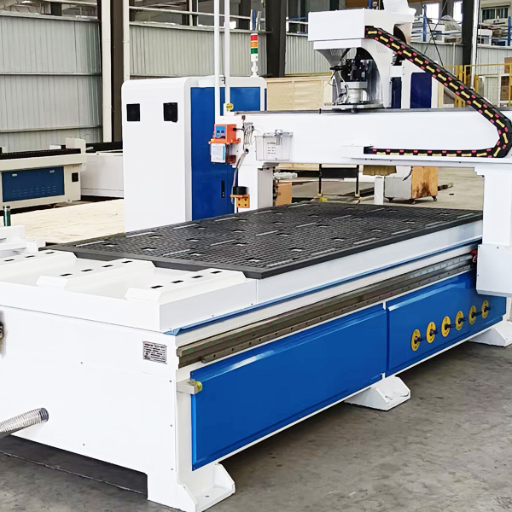
A CNC router is a computer-operated cutting tool that intricately carves, cuts, and shapes different materials like wood, metal, plastic, or composite materials. A pre-programmed design drives the cutting process, allowing automation with precision and repeatability. It finds its place in furniture making, signage production, prototyping, and custom part manufacturing, to name a few. The CNC router is indeed a versatile and efficient tool in industries like woodworking, aerospace, and automotive.
An Analytical Discussion on CNC Router Design
Any CNC router design is an amalgamation of precision engineering and modern robotics for delivering the highest possible level of functional performance. In general, the CNC router contains five major parts: the frame, spindle, drive system, control panel, and the cutting bed. The frame usually made of steel or aluminum, gives the overall structural stability and also helps to minimize vibration during operation. The spindle is the cutting head which rotates at very high-speed (above 24,000 RPM in certain cases) and gives precision in shaping and cutting materials very fast.
Today CNC routers have high-performance drive systems. Usually, they consist of ball screws or rack and pinion mechanisms combined with stepper or servo motors. These modern systems ensure that the movements in the X, Y, and Z axes are well controlled and smooth; this makes even the most intricate designs accurately crafted. The control panel or the CNC controller is the part where the operator inputs the G-code, which is the programming language that guides the router as to which path it should follow. Most machines today have interfaces that include touchscreens and wireless connectivity that ensures ease of access.
Data from recent industry research reveal the increasing efficiency of CNC routers. These machines have further tightened cutting tolerances down to ±0.001 inches, very important for projects that aim at a very exceptional level of detail. With software improvements now facilitating rapid processing of CAD files, production time is greatly reduced. Cutting beds are now built in varying sizes from small 2×2 feet for home users to huge industrial 10×50 feet levels, guaranteeing the scalability of CNC routers from small workshops to large manufacturers.
Moreover, new trends like smart sensor-based and IoT-supported CNC routers keep enhancing the performance. Real-time condition monitoring gives feedback to operators, thereby reducing downtime and increasing the service life of the equipment. All these innovations combined with rugged construction have seen CNC routers becoming the must-have equipment in traditional as well as advanced manufacturing setups.
Uses of CNC Routing in Various Industries
Industries use CNC routing for its precision and versatility:
- Woodworking: CNC routers achieve higher accuracy in making intricate designs, furniture parts, and cabinet work.
- Metal working: Cutting, engraving, and shaping metals for application in automotive, aerospace, and industrial fields.It is utilized.
- Plastics and composites: CNC routers are employed to process materials that are used for packaging, signage, and product prototyping.
- Arts and crafts: Artists perform CNC routing for custom designs, sculptures, and decorative works.
These applications truly exhibit CNC routing’s flexibility in several fields.
Differences in workpiece Materials for CNC Routers
CNC routers can work with a variety of materials including wood, metals, plastics, composites, and foams, with each material offering different properties and requirements.
| Material | Strength | Hardness | Weight | Cost | Uses |
|---|---|---|---|---|---|
| Wood | Moderate | Soft | Light | Low | Construction, Furniture |
| Metals | High | Hard | Heavy | High | Automotive, Aerospace |
| Plastics | Low | Soft | Light | Low | Prototyping, Packaging |
| Composites | Variable | Variable | Moderate | Variable | Signage, Products |
| Foams | Low | Soft | Very light | Low | Molds, Prototypes |
What Are the Key Differences between CNC Machines?

The major variations in CNC machinery are versatility, precision, and application. The most typical ones are CNC mills, lathes, routers, and plasma cutters. CNC milling machines are versatile and can perform fine detailed cuts, whereas lathes work best in creating symmetrical, cylindrical objects. To put it simply: CNC router cuts works better on softer materials such as wood and plastics. Plasma cutters, meanwhile, operate best in cutting metals with the aid of the plasma torch. These machines vary in speed, accuracy, and material compatibility, so the right choice depends upon the exact specifications of the project.
Rigidity and Stability: CNC Mill vs. CNC Router
Between CNC Mill and CNC Router, rigidity and stability are some of the key things to consider when defining and comparing their performances and applications. CNC milling machines are often constructed with a heavy, rigid frame that resists the forces encountered during machining. This allows these machines to work with tougher materials, including metals, and at a great level of accuracy without sacrificing stability. Considering tighter tolerance levels and susceptibility to vibration-a CNC mill is the definite choice for industries that require precision and durability, namely aerospace, automotive, and toolmaking.
Conversely, CNC routers, whilst standing on top in their field, are lightweight in construction. Their lighter design is meant for high-speed machining of lighter materials such as wood, plastics, and composites. Though the lightweight construction of a router allows it to move rapidly and work efficiently, it can also increase vibrations, especially if it is forced to work on harder materials. This performance limitation greatly diminishes its ability to deliver super precision work or to work with very dense materials.
Industry surveys report that CNC mills achieve positional accuracy within ±0.005mm, making them the best machine tool for highly detailed and intricate designs. CNC routers, on the contrary, provide accuracies of ±0.1mm to ±0.5mm, which is adequate for bigger projects or those where tight tolerances are not required. It is this tradeoff between speed, materials compatibility, and structural rigidity that puts into consideration whichever the project requirements dictate: CNC mills for durability and accuracy, CNC routers for speed and flexibility.
Comparing spindle Speed and Power
Spindle speed refers to how fast the spindle rotates, measured in RPM, while spindle power denotes the energy delivered by the spindle for cutting, typically measured in horsepower or kilowatts.
| Key Point | CNC Mill | CNC Router |
|---|---|---|
| Speed (RPM) | 4,000-15,000 | 20,000-30,000 |
| Power (HP) | Higher | Moderate |
| Material Type | Hard metals | Soft woods |
| Application | Precision | Speed-focused |
| Durability | Long-term | Moderate |
| Flexibility | Limited | High |
Understanding the Axes Movement in CNC Machines
The movement of axes in CNC machines is one of the major factors that define the capacity of the machine to maneuver and shape materials. Most CNC machines function with the three main axes, X, Y, and Z. The X-axis refers to a horizontal movement (side-to-side), the Y-axis refers to vertical movement (front-to-back), and the Z-axis allows for depth movement (up-and-down). More enhanced CNC machines can contain in their vocabulary additional axes such as the A, B, or C-axis, hence permitting rotational or other more complex kinds of movement.
The movements, very precisely controlled by computer programming, can help in the formation of the most delicate of designs and shapes. The addition of multi-axis movement has always offered greater flexibility and hence an efficiency factor into the CNC machines, which make CNC machines all the more suitable for the application ranging from simple cuttings to highly complex part manufacturing for aerospace and medical industries. Truly knowing the axis movement is very important for the very essence of CNC programming and optimizing CNC operation.
How Do Differing CNC Machines Compare?
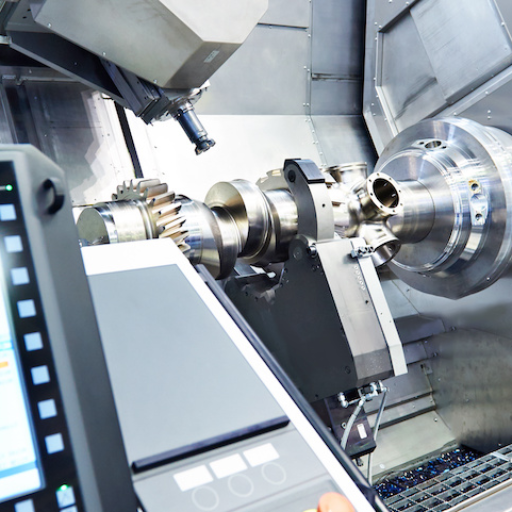
- 3-Axis Machines: Perfect for relatively simple applications such as drilling, milling, and cutting on a flat surface. They are user-friendly and suitable for jobs that do not require peculiar or intricate geometries.
- 4-Axis Machines: The extra axis of rotation allows for more intricate machining operations such as engraving and working on cylindrical objects. Good capability with medium-complex tasks.
- 5-Axis Machine: Adds two additional rotational axes to achieve maximum precision and versatility for the most complex operations, commonly employed in aerospace, and medical device manufacturing.
Exploring Different Types of CNC Lathe, Mill, and Router
CNC machines come in various forms, each designed for particular tasks and with various levels of complexity. Understanding the differences between CNC lathes, mills, and routers can provide more options to choose from for your project:
- CNC Lathes: They work best for rotational symmetry and can be used in shaping cylindrical objects such as shafts, screws, or rings. By rotating the workpiece on its axis, lathes perform very precise cuts with smooth finishes that can be used for many purposes, including automotive parts or more complicated decorative designs.
- CNC Mills: Extremely versatile and an amazing performer for numerous other operations such as drilling, cutting, and slotting. They work on either flat or contoured surfaces and are in high demand in engineering, metalworking, and jewelry-making industries. Their versatility makes them one of the choices for complicated designs requiring high degree of precision.
- CNC Routers: Work best on soft materials like wood, plastic, or foam. CNC routers are quite fast, and hence can offer brilliant ways to produce very intricate designs. They are extensively used in woodworking, sign-making, and furniture-making industries—which often require detailed engraving and quick removal of materials.
This differentiation grants each type of CNC machine certain working capabilities, and it is selected depending on the material, design complexity, and timescale required for manufacturing a project. Appreciating these distinctions assures better output and performance for any manufacturing undertaking.
Applications and Industries for Various Machine Types
CNC routers find heavy use in industries such as woodworking, sign-making, and furniture production, where precise cutting and engraving are of a high priority. CNC lathes dominate in metalworking industries, chiefly in the automotive, aerospace, and machinery manufacturing domains, for applications involving the production of cylindrical-typed parts such as shafts and bushings. CNC mills, on the other hand, are multipurpose and find favor in industries involved in producing intricately shaped parts such as medical equipment manufacturing and prototyping. These machines serve methods across several industries in realizing precision and efficiency in their manufacturing.
The Role of CAM Software in CNC Operations
Computer-Aided Manufacturing, or simply CAM software, is important in CNC operations, serving as a bridge between the design and production stages. CAM software converts 3D CAD models into toolpaths with high precision that CNC machines use to make parts. The software eliminates the drudgery of manual programming, enhancing both efficiency and accuracy through a CNC manufacturing workflow.
One of the primary advantages of a CAM system is to optimize the toolpaths that result in less machining time and greater material utilization. For instance, industries that have applied some form of advanced CAM system have recorded a reduction in the production times of between 20% and 30%. This advantage makes lead-time reduction and precision the order of the day in aerospace, automotive, and medical equipment manufacturing.
Yet, another major strength that putting this software in use would provide is simulation. Rendering into a simulation environment the complete machining process from start to finish even before the first cut is made allows operators to verify their setup as well as the machining sequences, eliminating the possibility of errors from the start. This saves a lot of time and resources while ensuring the highest quality in output. According to a recent survey carried out by CIMdata, an independent PLM research firm, companies adopting CAM systems effectively have reduced the number of errors in CNC operations by as much as 40%.
Modern CAM software has benefited from the contributions of artificial intelligence and cloud computing, which enable it to deal with complex designs and encourage collaboration between manufacturing teams dispersed across the globe. This paradigm shift opened the door to an array of CNC companies uniquely capable of supporting custom production processes for increasingly stringent tolerances and complex geometries.
Therefore, CAM software stands to significantly bridge the gap of efficiency and precision in the CNC manufacturing process, along with reduced materials wastage, lesser time of production, and higher efficiency of operation, thereby offering her technologies a competitive edge in the fast-changing industrial world.
What are the Key Differences Between CNC Milling and Routing?

While CNC milling and routing operations look similar, these jobs are very dissimilar in applications and the materials handled. CNC milling is primarily for cutting and shaping metals and other large, heavy materials that require great precision and durability. By employing multi-point tools, CNC machines perform complex operations such as contouring and drilling. CNC routing, meanwhile, is designed to work with softer materials like wood, plastics, and foams. Running at higher speeds, it is best suited for lighter, more complicated designs. Something that sets the two apart is the tooling, the purpose, and the material compatibility.
Differences in Gantry and Movement Systems
The gantry system usually refers to an overhead structure in CNC machines that supports and moves the cutting tool in X, Y, and sometimes Z directions. The gantry systems differ in size and design, thus affecting the stability and performance of the machine. Movement systems describe mechanisms (linear rails, ball screws, or belts) that facilitate the precision motion of the tool or workpiece. The main difference between gantries and movement systems lies in what they do: the gantry allows movement in a supported direction, whereas the movement system controls this movement with high accuracy. Combined, they define the machine’s performance.
Effect of Z-Axes Capabilities
Z-axis capability, otherwise known as the vertical axis, determines how capable and complex an operation may be. It allows the tool or workpiece to travel upward and downward. Increased capability allows 3D carving, the perfect engraving of multi-layer machining, and a diverse range of applications. Z-axis travels and capabilities allow higher versatility while processing thick materials or designing intricate tasks.
Recent reports state that CNC-machined parts made by modern advanced Z-level systems can set positioning accuracy within 0.001 inches, thus significantly improving quality and reducing error margins. It lends great importance to the specific fabrication in aerospace, medical device manufacturing, and automotive engineering. Besides, equipped with a dynamic Z-axis controlling system-including adaptive depth adjustments-the machine will further enhance productivity while cutting speed and minimizing wastage of material.
The Z-axis capability has since been enhanced through the introduction of Mozart motors and advanced lead screws. The hybrid servo drive mechanism systems were claimed to increase efficiency by 20% over conventional stepper motor systems according to TechMachinery Insights in 2023. The importance of investing time in machines with good Z-axis capabilities cannot be overstressed because they directly affect the overall efficiency of the workflow, accuracy, and productivity.
Choosing Projects Between CNC Milling and CNC Routing
My focus for determining milling and routing for a project rests on the material and the required precision. CNC milling is for harder materials, like metals, and can achieve finer details and tighter tolerances. CNC routing is best for softer materials like wood or plastic and is much faster for larger cuts that are less complicated. I base the choice on the project-accurate type of material, the level of accuracy wanted, and production speed.
Reference sources
- Thermal Characteristics Analysis of Mill Head of Five-Axis CNC Mill Machine Based on Finite Element Method (Yong-Sun et al., 2013, pp. 509–512)
- Published in 2013
- This study analyzed the thermal characteristics of the mill head of a five-axis CNC mill machine using the finite element method. The authors investigated the thermal deformation and temperature distribution of the mill head under different operating conditions.
- Key Findings:
- The thermal deformation and temperature distribution of the mill head were analyzed, providing insights into the thermal characteristics of the CNC mill machine.
- The study can help improve the design and performance of five-axis CNC mill machines.
- Surface roughness of thermally treated wood cut with different parameters in CNC router machine (Pelit et al., 2021)
- Published in 2021
- This study examined the effects of different machining parameters on the surface roughness of thermally treated pine, beech, and linden woods cut in a CNC router machine.
- Key Findings:
- The end mill type, feed rate, and spindle speed significantly affected the roughness values of the untreated and thermally treated wood specimens.
- Lower roughness values were found in the specimens (especially pine) machined with the straight end mill compared to those machined with the spiral end mill.
- Roughness generally decreased in the thermally treated specimens, but thermal treatment temperature did not have a notable effect on roughness.
- Machine-learning for automatic prediction of flatness deviation considering the wear of the face mill teeth (Bustillo et al., 2020, pp. 895–912)
- Published in 2020
- This study utilized machine learning techniques, such as Random Forest ensembles and Synthetic Minority Over-sampling Technique (SMOTE), to predict the flatness deviation of machined surfaces considering the wear of the face mill teeth.
- Key Findings:
- Random Forest ensembles combined with SMOTE showed the highest performance in predicting flatness deviation when the flatness levels are discretized taking into account industrial requirements.
- The SMOTE balancing technique was a useful strategy to address the limitations of small experiment datasets in the accuracy of machine learning models.
- Top Aluminum CNC Machining Parts Manufacturer and Supplier in China
Frequently Asked Questions (FAQs)
Q: What is a CNC milling machine?
A: A CNC milling machine is a sort of machine tool in which the computer numerical control system is employed for subtractive manufacturing with material being removed from the workpiece. Usually, it works with a rotating cutting tool, such as an end mill, to cut and finish the material.
Q: What is the main difference between a CNC machine and a CNC mill?
A: Whereas CNC machine relates to a large generic class constituting various machining equipment controlled by computer systems, a CNC mill is specific to machines that remove material from a stationary workpiece by means of rotary cutting tools.
Q: How do CNC routers differ from CNC mills in their operation?
A: CNC routers and CNC mills differ by their primary activities and materials they handle. CNC routers usually operate on softer materials such as wood, plastics, and soft metals by means of router bits, whereas CNC mills treat harder metals such as aluminum in more exacting and heavy-duty operations.
Q: What are the discrepancies between CNC turning and milling?
A: Turning and milling in CNC are different with respect to the methods applied and the materials for which these methods are appropriate. In CNC turning, the workpiece rotates, and the cutting tool is stationary; this is generally good for working on cylindrical parts. CNC milling methods when the workpiece is fixed, and a cutting tool rotates to shape that material.
Q: How do work areas differ when operatively compared between CNC mills and CNC routers?
A: CNC mills generally have a smaller work area than CNC routers, enabling them to concentrate on precision and detail. A CNC router, meanwhile, has a bigger work area suited to bigger production runs and accommodates bigger workpieces.
Q: What is the importance of a control system in CNC machines?
A: Control systems in CNC machines are responsible for monitoring the movement and behavior of the machine tool. This allows for guarantees regarding the precision and accuracy with which the shape of the workpiece conforms to the CAD and CAM software designs.
Q: Can CNC milling machines be used in rapid prototyping?
A: Yes, CNC milling machines can be used for the purpose of rapid prototyping. CNC mills allow for the quick creation of parts or prototypes by rapidly and accurately removing material from the workpiece, thus testing designs and making iterations.
Q: What are some of the most important differences between a router and a CNC mill?
A: The important differences that make a router different from a CNC mill include the materials they work on and their levels of precision. Generally, routers are used for softer materials with larger work surfaces, while CNC mills work on harder materials with smaller work surfaces focused on precision and detailing.
Q: What role do Endmills play in the CNC milling machine?
A: The Endmills act as a primary cutting tool for the CNC milling machine. They are available in various shapes and sizes to enable maximum flexibility in cutting, shaping, and finishing workpieces into different contours and surface finishes.
Q: How much of an improvement to CNC milling is achieved by 5-axis milling?
A: 5-axis milling improves the CNC milling with the simultaneous movement of the cutting tool or the workpiece along the five different axes, which programs give maximum freedom to make slightly more complicated and complex parts with very few setups and excellent accuracy.


