


Rapid prototyping has changed the process of bringing ideas into reality, in doing so moving the abstract with regard to concept into a tangible model in flash speed. Whether entrepreneurs are testing a product, designers refining concepts, or developers testing innovative ideas, rapid prototyping fosters creativity and efficiency-a really new paradigm for creativity and efficiencies. In this blog post, we explore the types of rapid prototyping, the tools behind the process, and some wonderful real-life examples to show them at work. You will walk away knowing how rapid prototyping cuts development cycles, lowers costs, and takes visions from concept to reality faster than anyone.
Understanding Rapid Prototyping

Rapid prototyping is a technique in development wherein teams can quickly manufacture and test a physical or conceptual model to see how it works, how it looks, and if it is really viable. By moving through more iterations of the prototype at a faster pace, the approach diminishes risks and allows possible problems to be spotted early on. It creates a collaborative environment and promotes efficient workflow. Thereby guaranteeing a much faster time-to-market when compared to competing methods, saving not only time but money as well with consistent high standards of innovation.
Definition of Rapid Prototyping
Rapid prototyping is a cluster of fabrication processes that achieve the fast creation of a scaled model or a working prototype of an actual object with the use of three-dimensional computer-aided design (CAD) data generation. The most common ones utilize some form of additive manufacturing or 3D printing technologies, although other processes such as CNC machining or casting can be used, depending on the material or other constraints of the project. Using rapid prototyping, designers and engineers develop ideas fast enough to gather responses from users and make incremental design changes, thereby helping reduce time to market considerably.
According to recent statistics, the global rapid prototyping market is projected to reach the revenue value of $6.6 billion by the year 2027, with a CAGR (compound annual growth rate) of 15.1% from 2020 to 2027, owing to massive demand placed upon it from disciplines like materials for automobile, healthcare-related variables, and consumer electronics. Moreover, technological advancements in 3D printing have made the entire process of rapid prototyping far more accessible and efficient. Industry reports further suggest that 3D printing could slash prototyping costs by about 90% and reduce turnaround times by 40%.
In particular, these are the ones that lead innovation, which supports an Agile Development process and cradles the creative realization of ideas by giving them life so that design flaws are resolvable at a very early stage.
Significance of Prototypes in Product Development
Prototyping is one of the main activities that help product development by their creation into a physical or digital model of a concept being designed. These models enable the assessment of a certain concept’s functionality, usability, and design results, while also pinpointing operational areas differing from the original needs for improvement in their early stages. Research suggests that companies involved in product development that use prototyping for product implementation cut overall development costs by as much as 50 percent, as fixes for errors discovered in prototyping are far less expensive than those shown in the manufacturing phase.
One of the advantages of prototyping is to diminish barriers to communication among members of the team and between the team and the client. It enhances collaboration as well as aligns expectations and supports decision-making by giving a representation of the end product to work with. Consequently, new technologies such as 3D-printing and CAD software have fastened and cheapened the process of prototyping. For example, according to a 2023 report published by Grand View Research, the global 3D printing market, which is central to modern prototyping, is expected to witness a compound annual growth rate (CAGR) of 23.3% up till 2030.
Prototyping also helps user-centered design as it allows for user testing and gathering reactions before products are finalized. Studies indicate that 85% of successful product launches undergo iterative prototyping, highlighting its role in delivering market-ready solutions. Across automotive, healthcare, and technology industries, prototypes remain instrumental in bridging theoretical ideas to practical applications to drive innovation and reduce time-to-market.
Overview of the Rapid Prototyping Process
Generally, there are three stages of rapid prototyping: design, construction, and testing. In the first stage, product designers use elaborate systems software to develop 3D models embodying their product idea and specification. Upon completing the design, the ensuing step is the actual fabrication of a prototype with processes such as 3D printing, CNC machining, or other typical or additive manufacturing paradigms as required by the project. Following that, keeping with one of the prototyping paradigms, the prototype is subjected to numerous tests to measure the degree of its functionality with respect to perfect design and user experience. Thus, early identification of issues in the iteration saves refinement and gives it a market-ready touch.
Types of Rapid Prototyping

- 3D Printing (Additive Manufacturing): The building of objects layer by layer with materials like plastic, resin, or metal.
- CNC Machining: Subtractive process that carves a prototype into a block of material, with high precision.
- Stereolithography (SLA): It uses a laser to cure liquid resin into solid forms, which are very common for fine-detail works.
- Selective Laser Sintering (SLS): Fuses powdered material with a laser to yield strong and complex parts.
- Injection Molding: Prototypes are produced by injecting molding materials and are tested for high volume.
3D Printing Techniques
The main 3D printing techniques include Fused Deposition Modeling (FDM), Stereolithography (SLA), Digital Light Processing (DLP), Selective Laser Sintering (SLS), Multi Jet Fusion (MJF), Direct Metal Laser Sintering (DMLS), and Electron Beam Melting (EBM).
| Technique | Material | Precision | Speed | Strength | Cost |
|---|---|---|---|---|---|
| FDM | Plastics | Moderate | Moderate | Moderate | Low |
| SLA | Resins | High | Moderate | Low | Moderate |
| DLP | Resins | High | Fast | Low | Moderate |
| SLS | Powders | High | Moderate | High | High |
| MJF | Powders | High | Fast | High | High |
| DMLS | Metals | High | Moderate | Very High | Very High |
| EBM | Metals | High | Slow | Very High | Very High |
CNC Machining Methods
CNC (Computer Numerical Control) machining encompasses a variety of methods utilized to create precision parts and intricate designs. These techniques leverage computer programming to control machinery, allowing for fine detail and efficiency in production. Below are some commonly used CNC machining methods and their characteristics:
| Method | Materials | Applications | Precision | Speed | Cost |
|---|---|---|---|---|---|
| CNC Milling | Metals, Plastics | Prototyping, Complex Shapes | High | Moderate | High |
| CNC Turning | Metals, Plastics | Cylindrical Parts | High | Fast | Moderate |
| CNC Grinding | Metals, Ceramics | High-precision Surfaces | Very High | Slow | High |
| CNC Drilling | Metals, Plastics | Holes and Threads | Moderate | Fast | Low |
| CNC Laser Cutting | Metals, Plastics | Intricate Cutting, Engraving | High | Very Fast | Moderate |
| CNC EDM (Electrical Discharge Machining) | Metals | Complex Geometries | Very High | Slow | Very High |
Injection Molding Processes
- High Efficiency: The actual production is highly efficient since large quantities of parts can be produced quickly after the preparation of the mold.
- Precision and Consistency: The process ensures that accurate and consistent dimensions are maintained for parts that have complex geometries.
- Material Versatility: It is compatible with diverse materials, including plastics and composites.
- Cost-Effective for High Volumes: As a prime alternative for large-scale production, the cost per unit drops sharply with the increase in production.
- Environmentally Friendly: Excessive materials can be recycled to minimize waste and save the environment.
Tools and Software for Rapid Prototyping

Rapid prototyping requires a powerful array of software and tools to facilitate the design and manufacturing process. Key tools include 3D printers, CNC machines, and injection molding systems, all of which allow great flexibility concerning materials and complexities for prototype fabrication. Software tools revolve largely around Computer-Aided Design (CAD) systems, with SolidWorks, AutoCAD, and Fusion 360 being leading examples for creating detailed 3D models. Also very important for the final stages of design are slicing programs such as Cura or PrusaSlicer that slice the design into very precise instructions for 3D printing. By design always, these sets of tools and software complement each other in speeding up development; hence, there can be fewer design errors and a more refine design.
Popular Rapid Prototyping Tools
Rapid prototyping, being a multidisciplinary technology, draws from a blend of processes and equipment, ensuring controlled and timely development for any product. Among the more common methods used lately, additive manufacturing—also called 3D printing—is clearly the most dominating option. Recent studies in 2023 show that the global market for 3D printing is expected to grow at a CAGR of 23.3% until it hits the mark of $83.9 billion in 2029. FDM or Fused Deposition Modeling, SLA or Stereolithography, and SLS or Selective Laser Sintering are popular because these methodologies are economical and can hug intricate designs.
Laser cutting machines and CNC machines hold a jus positum in rapid prototyping when it comes to producing the stronger parts from metal, wood, and plastic. CNC milling machines enable accurately shaping on the basis of CAD design, thus hastening the production of intricately designed components. Ever since the coming of multifunction CNC systems, the systems combine milling, cutting, and shaping functionalities, thereby decreasing the need for machining facilities and increasing overall production speed.
Besides, digital tools keep evolving. Key software inventions like AI-assisted modeling bequested to CAD programs in Fusion 360 help designers optimize their workflows and generate error-free prototypes more quickly than ever. Furthermore, the real-time collaboration feature empowers stakeholders to actively collaborate in the design process from any location, greatly benefiting the evolution of these tools as applied to rapid prototyping, and satisfying the contemporary industry’s requirement.
Rapid Prototyping Software Solutions
This induction of advanced software tools in the rapid prototyping software landscape has been skyrocketing to appeal to diverse industries. According to recent trends, the said solutions, including Autodesk Fusion 360, Solid Works, and Tinkercad, are increasingly becoming more popular due to their versatility and ease of use. For example, AI-assisted modeling in Fusion 360 assists in streamlining product development by decreasing manual iterations, thereby reducing design time by 30%. SolidWorks offers simulation-driven design features for virtual testing of prototypes in actual working conditions, thereby reducing production costs by 40%.
With further cloud-enabled platforms in aid, rapid prototyping has gone one step further in the past few years. Platforms like Onshape enable scattered teams to work collectively on projects. Real-time edits of a design foster uncertainty minimization amongst the team members during communication. Statistics show that companies using cloud-based software recorded a 25% advancement in project delivery time. Furthermore, the integration of online 3D printing management software such as Ultimaker Cura improves end-to-end workflows from design to fabrication, thus prototype production with even more precision and faster cycles.
These rapid prototyping solutions optimize the design process and allow teams to efficiently innovate and remain competitive in their high-speed markets. With further advancements around the corner, including greater automation and extended machine learning capabilities, rapid prototyping software will remain a core interest in industry expansion and innovations.
Choosing the Right Tool for Your Project
For this tool, I look for user-friendliness and whether it works with my current workflow. I also consider if the specific features meet my needs. Scalability and the ability to evolve with new advancements are also very important since they are things I want to grow with as my projects mature. So by putting these considerations first, I will maximize efficiency and open the door to innovation.
Advantages of Rapid Prototyping

Several major advantages exist in rapid prototyping, such as shortening development cycles, imparting cost savings, and improving collaboration. Early-model building allows a team to identify and correct design problems long before full-scale production, thereby avoiding expensive blunders. On the other hand, rapid prototyping provides a concept visualization that helps stakeholders in giving their feedback and deciding on accepted solutions. This also supports innovation while offering a faster track to a more promising end solution.
Economical in Product Development
Rapid prototyping generally allows for significant cost reductions during product development phases. Having already identified design flaws or functional issues, companies can save themselves from last-minute, heavy costs attached to time-consuming revisions in the design stage or on-site during production. Research suggests that the costs involved in resolving design problems discovered during prototyping can be reduced by as much as 30% from total project costs if the solution were to be made after production.
Furthermore, the latest advances have seen the price of physical prototyping reduced drastically with respect to 3D printing techniques. According to a report by Wohlers Associates, the 3D printing market is seeing tremendous growth, and many companies have noticed their costs for prototype creation halved when compared to traditional methods of manufacturing. This means prototypes can be created and iterated upon very fast while remaining cheap enough to allow for the production of multiple iterations that deliver a higher quality output at affordable costs.
Through collaborative technology, rapid prototyping creates feedback cycles that minimize waste and ensure the best organizations and best uses of resources. Hence, aggressive cost-cutting formulas contribute to the support of innovation while guaranteeing unaffordable fiscal responsibility, thus allowing companies to remain competitive in an ever-changing market.
Speed and Efficiency in Prototyping
In the rapid prototyping era, speed and efficiency are critical to bringing ideas up to life and able to command a forefront in a highly competitive market. The new technologies such as 3D printing, CNC machining, and cloud-based design platforms reduce time required for prototyping by at least 60%, according to recent reports. While in the past, processing complex designs through 3D printers required hours, with traditional methods, it took days or even weeks.
Therefore, CAD software and AR applications aid in design visualization and iteration, thus avoiding very costly physical rework. According to a report by Forbes, companies stand to reduce their bankable production cost by 30% and speed up product development cycles faster by using these tools. Accelerated time and cost savings allow teams to test more concepts and refine designs within much shorter time frames, increasing the ability to survive in a big-size production endeavor.
Collaboration and Feedback Enhancement
The implementation of sophisticated digital tools created for better collaboration and more efficient feedback mechanisms among design and production teams. For instance, these cloud-based platforms allow the sharing of design files remotely, so stakeholders can remain in constant contact with the latest iterations. As published in a recent article on McKinsey’s website, companies already nurture a collaborative digital technology-adoption by about 20-25% improvement in productivity.
Moreover, systems such as Microsoft Teams and Slack allow for streamlined discussions and decision-making; while design software with version control prevents mistakes from arising through miscommunication. Real-time feedback through augmented reality simulations or virtual prototypes permits the early detection of design-hindering flaws, thus driving down project delays and overpriced late-stage modifications. This interconnected method thus fastened the process while enhancing design quality and the entire project’s end result. Such progress highlights how essential technology is for collaboration and innovation in the present-day industry.
Application in Different Fields
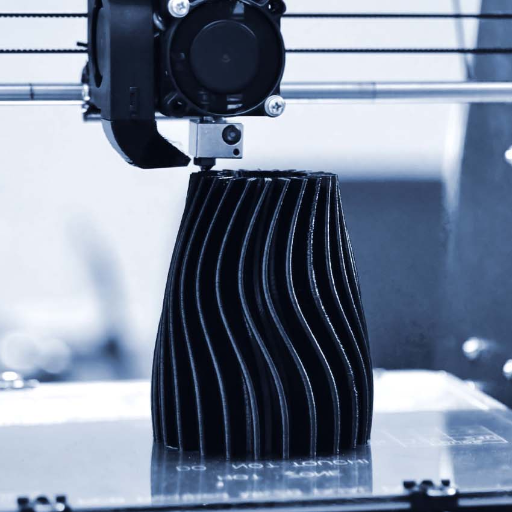
Technology-based collaboration has changed industries such as manufacturing, health, and construction. Sri-Iyer (2001) describes digital twins to improve production and maximize the efficiency of manufacturing. Healthcare services use remote diagnosis and telemedicine to improve care and increase accessibility. Likewise, VR-based construction projects are used for planning and managing risks.-These applications substantiate that technology helps in streamlining processes for better results maintained in various sectors.
Rapid Prototyping in the Automotive Industry
The automotive industry has accepted rapid prototyping as an important instrument for catalyzing innovation and efficiency. Rapid prototyping allows manufacturers to build physical models of parts through such means as 3D-printing, CNC machining, and additive manufacturing. It gives speed to the product development cycle by allowing engineers to quickly test, alter, and fix design concepts before their final production.
For example, 3D printing technologies have shortened prototype development times by 90%, industry reports say. Automotive giants such as BMW and Ford have incorporated rapid prototyping in their processes and have thereby shown considerable reduction in conceptual design time to production. According to BMW, 3D Printing technology reduces 58% of the cost than conventional prototyping methods, allowing design flexibility and reduces the amount of waste generated.
Apart from resolving design issues at an early stage, thereby eliminating the cost of rectification in full production, Ford even utilizes virtual assembly lines to simulate production activities and synchronize the physical prototypes, thus enhancing precision and reducing delay. Besides saving money, such improvements allow the construction of safer, novel, and better environmentally sustainable vehicles.
This speedier approach in prototyping and efficiency for the automotive sector makes rapid prototyping a crucial tool to accelerate the industry’s development to satisfy the increased consumer demands for quality, fast delivery, and sustainability.
Case Studies in Healthcare and Medical Devices
Rapid prototyping has shifted the paradigm in the healthcare and medical device industry by accelerating innovation, enhancing patient outcomes, and expediting production. Using 3D printing, modeling, and simulation tools, medical professionals and manufacturers can prototype with precision medical devices, surgical instruments, or anatomical models.
Patient-specific implants and prosthetics present one of the most advanced applications. Governments calls for 3-D printing have lately allowed for a reduction in production times of up to 50% when compared to classic ways of manufacturing. On top of that, experts expect that from 2023 to 2030, the global 3D-printed medical device market shall witness a compound annual growth rate (CAGR) of 16.3%, marking the speed with which it is accepted and future potential it stands for.
Surgical planning and training are another critical application. Using high-precision anatomical models generated from patient CT or MRI images, surgeons rehearse complex procedures ahead of time, increasing their accuracy and reducing operating time. Data shows that such pre-surgical models have improved surgical accuracy by an average of 20% and also significantly cut down the incidences of complications during surgeries.
Rapid prototyping is significantly involved in drug delivery systems and medical testing device-related activities. For example, prototype inhalers or glucose monitors may be developed and tested at rapid pace to assess their functioning and ergonomics prior to full-scale production. This directly shortens the time-to-market for critical medical devices whose utility and service to humanity is beyond our comprehension.
With ongoing changes in materials and prototyping techniques, the scope of application within health and medical devices not only will extend even further but also will promote innovation in tandem with accessibility and patient outcome improvements.
Reference sources
- Bone Tissue Regeneration: Rapid Prototyping Technology in Scaffold Design
- Authors: A. Ansari, N. A. Sheikh
- Published: 2022
- Journal: Journal of the Institution of Engineers (India) Series C
- Summary: This review evaluates the advantages of rapid prototyping (RP), imaging, CAD, and CAM technologies in creating scaffolds for bone tissue reconstruction. The study highlights how these technologies can benefit patients who are unable to be treated with conventional methods. The authors discuss various RP techniques and their applications in medical fields, particularly in tissue engineering.
- Methodology: The paper is a review that synthesizes existing literature on RP technologies and their applications in scaffold design for bone tissue regeneration(Ansari & Sheikh, 2022, pp. 1303–1324).
- Rapid Prototyping of 3D Biochips for Cell Motility Studies Using Two-Photon Polymerization
- Authors: F. Sala et al.
- Published: 2021
- Journal: Frontiers in Bioengineering and Biotechnology
- Summary: This study presents a new strategy for creating multilayer microfluidic lab-on-a-chip constructs for studying cell motility. The authors emphasize the importance of optical accessibility and the ability to tailor the migration area to specific cell types or experiments. The research demonstrates the versatility of two-photon polymerization in fabricating biochips that can apply different mechanical stimuli to cells.
- Methodology: The authors utilized two-photon polymerization to fabricate 3D structures in biocompatible resins, allowing for the creation of biochips designed for cell motility analysis(Sala et al., 2021).
- Abrasion Wear Resistance of Polymer Constructional Materials for Rapid Prototyping and Tool-Making Industry
- Authors: J. Musiał et al.
- Published: 2020
- Journal: Polymers
- Summary: This research presents a methodology for testing the abrasion wear resistance of various polymer materials used in rapid prototyping and tool-making. The study provides equations that describe the relationship between material type and wear resistance, contributing to the understanding of material selection for RP applications.
- Methodology: The authors conducted experimental tests using a grinding setup to evaluate the wear resistance of different polymer materials, analyzing micro and macro structures to predict wear resistance(Musiał et al., 2020).
- Top Rapid Prototyping Parts Manufacturer and Supplier in China
Frequently Asked Questions (FAQs)
What are the advantages of rapid prototyping?
There are numerous advantages, and they have a profoundly deep impact on product design. On the plus side, there are faster iterations allowing designers to begin testing their functional prototypes at the very beginning of the development cycle. This iterative process inherently reduces the time and cost usually applied in traditional prototyping methods. Moreover, rapid prototyping prevents many design problems that could threaten to compromise the entire manufacturing process from being spotted at too late a stage, which ultimately ensures a better product. By rapidly prototyping their model, companies can have a prototype with a higher degree of accuracy and surface finish. Thereby, rapid prototyping advantages encourage innovation and quality in products.
What types of services are provided for rapid prototyping?
Rapid prototyping services are many and varied, according to the various requirements placed in product development. Companies may demonstrate 3D printing services, and in essence, additive manufacturing techniques are used to transform digital designs into working prototypes. Other services may have a subtractive approach to manufacturing where material is picked away to form the required shape. Most rapid prototyping companies also offer laser cutting and fused deposition modeling amongst their services. Choosing the rapid prototyping process most suited to the requirements of the project allows businesses to fast-track their product design and development timelines.
Why is rapid prototyping important in product development?
Rapid prototyping is important because it greatly improves core product design by providing quick feedback and changes to it. It also allows designers/engineers to create an actual functional product whose prototype will be checked for testing under real-world situations. The prototypes processes are thus tested for their inherent faults; rapid prototyping provides a great opportunity for checks to be done before moving into actual manufacturing.
What are the methods used in rapid prototyping?
There are several techniques for performing rapid prototyping, each providing its unique advantages. Fused deposition modeling is perhaps the most common type of rapid prototyping where a thermoplastic filament is deposited layer-by-layer to form a model. Others include stereolithography, laser technology curing resin, and selective laser sintering that fuses powdered materials into a solid form. These technologies assist designers in understanding different prototyping technologies and thereby select the best one suited for their particular needs. These methods make the product-development cycle much more efficient and effective.
How do rapid prototyping services ensure cost reduction?
The rapid prototyping process minimizes cost by reducing waste and designing efficiency. When companies make a functional prototype at an early stage of the development process, it will be checked for any design flaws, so that adjustments can be made before entering the actual manufacturing process. This helps avoid costly mistakes and rework, which come later on. Additionally, rapid prototyping- 3D printing techniques allow the use of multiple types of materials that get done in no time, which might be cheaper than conventional ones in many ways. Overall, investing in rapid prototyping will pay off later in production and project moneys.


