


Precision, efficiency, and innovation have upended the manufacturing industry, and CNC machining has been at the center of this disruption. CNC turning centers mature with a long spell of high productivity among the broader skills and technologies of modern machining. But what does it do, and why is it essential in manufacturing tasks?
This guide sheds some light on the basics of CNC turning, how it operates, its main components, and where it finds application in real life. For anyone unfamiliar with machining or looking to build upon their existing basic knowledge, this article covers every single bit of information you might ever want to know, starting from how a CNC turning center functions to the benefits it brings to industry and how this fantastic piece of technology is continuing its global transformation of industries.
What is cnc turning?
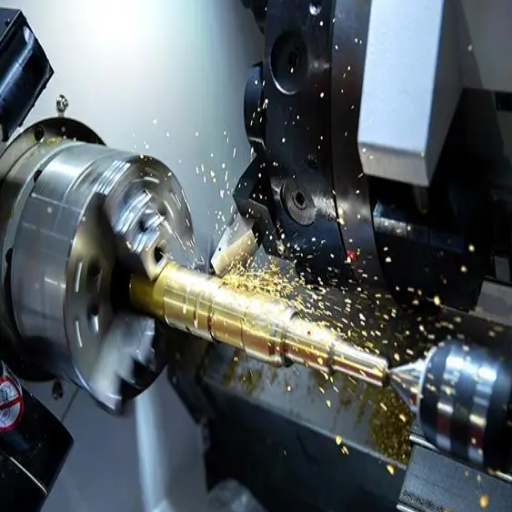
As a manufacturing process, CNC turning involves a CNC machine rotating the workpiece while the cutting tool imparts its final shape. It is used primarily for making cylindrical parts with precision and uniformity. In accordance with programmed instructions, CNC turning machines can very rapidly produce complicated and accurate parts, making them very important in the fields of automotive, aerospace, and electronics.
How does the cnc turning process work?
The CNC turning process involves clamping the workpiece onto a spindle rotating at high speeds. Following a program, a cutting tool moves on the surface of the spinning workpiece to remove material and give the workpiece the desired geometry. The entire operation is controlled by a computer that executes preloaded programs, ensuring consistency and accuracy; modern machines may also have multi-axis operations, real-time sensors for monitoring, and tool-changer systems that produce complicated and high-quality parts. With the help of advanced technology, you can turn CNC almost anywhere, with extraordinary precision and extremely efficient switching among various materials, such as metals, plastics, and composites.
What are the key components of a cnc lathe machine?
Each major part of the CNC lathe consists of a few components that should perform machining accurately and quickly. The major components include:
- Headstock: The headstock contains the central spindle and its drive mechanism. During machining, the workpiece is held and rotated at varying speeds.
- Tailstock: The tailstock supports the workpiece on the other side of the spindle, especially for long parts, to ensure stability during turning operations.
- Chuck: The chuck is a vital clamping device on the spindle that holds the work precisely so it may be machined accordingly.
- Tool Turret: Tool turrets retain and then automatically rotate various cutting tools to facilitate rapid changes of tools while working on machining.
- Bed: The bed is a heavy, rigid platform that supplies structural support and alignment to all other machine components. This ensures vibration-free working and high precision.
- Carriage: The carriage holds the cutting tools and guides them along the specified axes (usually X and Z) to cut the workpieces to shape.
- Control Panel: The panel serves as a user interface where machining parameters are input to load CNC programs and observe various machine functions in real time.
- Coolant System: The system cools down cutting fluids and supplies lubrication to the machine. It reduces heat formation during machining, tool wear, and surface finish.
- Chip Conveyor: This removes the chips and debris produced by machining, thereby maintaining the working area clean and allowing uninterrupted machining.
- Driving Motors: These drive the spindle rotation and other movements required for guiding the cutting tools along the desired axes.
Together and properly functioning, these components lend CNC lathes the precision and efficiency needed for modern manufacturing.
What is the difference between turning and milling?
Because the workpiece is rotating, turning basically involves removing material with a fixed tool, whereas milling involves removing material from a fixed workpiece with a rotating tool.
|
Parameter |
Turning |
Milling |
|---|---|---|
|
Workpiece |
Rotates |
Stationary |
|
Cutting Tool |
Stationary |
Rotates |
|
Motion Type |
Linear |
Multi-axis |
|
Material Removed |
Cylindrical |
Surface/Shape |
|
Tool Path |
Axial |
Complex |
|
Applications |
Circular |
Complex Shapes |
|
Machine Type |
Lathe |
Milling |
|
Efficiency |
High for Round |
Versatile |
What are the different types of cnc turning operations?

- Straight Turning: This operation reduces the diameter of the workpiece from end to end to produce a smooth cylindrical shape.
- Taper Turning: This operation produces a tapered shape by gradually varying the diameter of the workpiece over its length.
- Facing Operation: This removes material to create a flat surface at the end of the workpiece, perpendicular to the axis.
- Threading Operation: This is performed to produce internal or external threads on the workpiece using special cutting tools.
- Grooving Operation: Here, grooving involves cutting a narrow and precise groove or channel into the surface of the workpiece.
- Parting or Cutting Off: This method separates the finished part from the rest of the workpiece.
- Drilling: Drilling carries out hole-making along the workpiece axis with the help of a stationary or rotating drill bit on the CNC lathe.
The above operations make CNC turning machines capable of producing a wide range of components accurately and efficiently.
What is straight turning?
Straight turning is a basic machining process on a CNC lathe. Here, a cutting tool moves along the outer surface of a cylindrical workpiece, steadily removing material to reduce its diameter evenly along its length. The operation molds the workpiece into a consistent cylindrical shape with uniform dimensions and surface finish. Straight turning is used in shafts, rods, and other parts where precise linear dimensions and surface finish are required.
What is taper turning?
Taper turning is a machining process designed on the lathe to form a conical shape on a cylindrical workpiece. Whereas the diameter is constant during straight turning, during taper turning, the diameter is either progressively diminished or increased along the length of the workpiece. This can be brought about by changing the tool’s angle or the lathe’s axis of movement. The standard taper turning methods use the compound slide, offsetting the tailstock, or using a taper turning attachment. In general, pins, fasteners, and machine tool parts need a tapered geometry for correct fitting/function.
What are the types of turning tooling used?
The various types of turning tooling include the external turning tools, boring bars, tools for parting, tools for threading, drills, chamfering tools, facing tools, forming tools, grooving tools, knurling tools, and special tools depending upon materials, operations, structures, and directions of feed.
|
Category |
Key Points |
Details |
|---|---|---|
|
Material |
HSS, Carbide, Diamond, CBN |
Tool material types |
|
Operation |
Turning, Facing, Threading |
Tool functions |
|
Structure |
Single, Welded, Clamped |
Tool design |
|
Feed Direction |
Right, Left, Round Nose |
Cutting direction |
What are the applications of cnc turning?

CNC turning equipment is widely used in industries to make cylindrical components with accuracy and efficiency. The applications of CNC turning include:**
- Automobile Industry: Maker of engine parts, driveshafts, and other precision components.
- Aerospace Industry: Manufacturer of high-precision turbine components and landing gear.
- Medical Industry: Manufacture of surgical instruments and implants to extreme accuracy.
- Electronics Industry: Makers of connectors, housings, and other small, intricate parts.
Industrial Equipment: Manufacturer of bushings, couplings, and pulleys for machinery.
These uses demonstrate CNC turning’s capability of creating parts with unrivaled accuracy, whether of the smaller or larger variety.
How is cnc turning used in various industries?
CNC turning is employed in various industries to gain the advantages of precision, efficiency, and consistency in manufacturing processes. In the aerospace industry, CNC turning is used to produce high-tolerance parts such as turbine blades and landing gear with the best level of accuracy. CNC turning is also used in the automotive industry to make engine parts, brake systems, and fine gears to remain reliable and perform well. In the medical domain, CNC turning is applied to custom implants, surgical instruments, and device components that require stringent standards for patient safety. Down the line, those working in electronics utilize CNC turning to manufacture micro-level parts such as connectors and enclosures for their high-tech gadgets. On the other hand, the industrial equipment sector consists of CNC-turned components that are durable and precise and thus capable of enabling efficient machine operations. The present-day CNC turning, comprising enhanced software and high-speed tools, continues to bring innovation and high-quality production workflows to the forefront for these industries.
What are standard cnc turned products?
These CNC-turned items are available every day and span various industries due to the versatility and precision of CNC turning. Such items include shafts, bushings, couplings, and fasteners found in mechanical systems. Others include custom-made hydraulic fittings, threaded rods, and precision bolts for automotive and aerospace uses. Electronics industries require CNC turned parts, including connectors, spacers, and complex enclosures for their high-tech instruments. CNC turned products are used in medical devices that include surgical implants, screws, and components for diagnostic equipment. The demand for these machined parts is rising as industrial applications require top-quality precision manufacturing.
How does the cnc turning process differ from traditional methods?
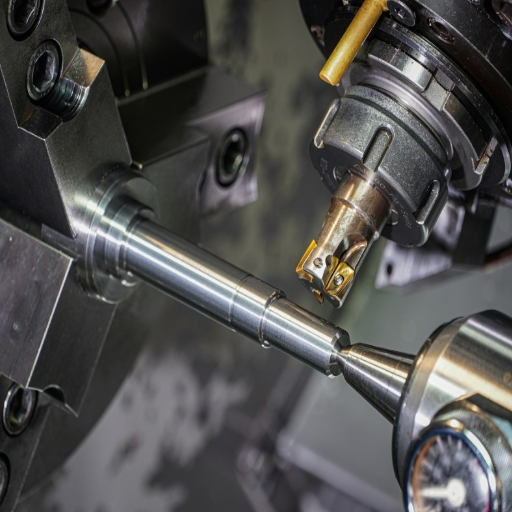
CNC turning differs from manual techniques in that it offers fine precision, automation, and great efficiency. Unlike manual machining, CNC turning employs computer-controlled lathes to shape materials with constant accuracy and repeatability. With CNC turning, there is no crying need for continuous manual intervention, reducing human errors and production downtime. In addition, CNC turning enables the production of complex and detailed designs that would otherwise be difficult to create through conventional methods, thereby becoming an advantage for contemporary industry needs.
What are the advantages of cnc turning over manual turning?
- Accuracy and Precision- Computer-aided instructions drive CNC turning machines, markedly enhancing dimensional precision and repeatability. This diminishes dimensional discrepancies to the least, barring inconsistencies among a series of parts.
- Increased Production Speed—CNC turning allows for reduced turnaround time from manufacture relative to manual turning due to automation. This is an advantage for manufacturers who have very short deadlines or who have to conduct mass production.
- Ability for Complex Designs—CNC turning also provides flexibility for highly advanced and detailed designs that can be done practically without manual intervention—the process, whether complicated or relatively simple, is even borne out by software.
- Reduced Human Errors: CNC turning also reduces errors due to human fatigue or miscalculations by eliminating the need for manual operations. This enhances the overall product quality and thus minimizes material wastage.
Cost-Effective—A CNC machine involves a higher initial investment cost; however, these machines need less supervision and are more efficient. Lower labor costs and higher production productivity will be the profitability factor in the long run.
How does cnc turning enhance precision?
Given that CNC turning commands extremely accurate movements of tools, it enhances the precision of manufacturing. CNC machines work by dictating designs with extreme minute tolerances, using accurate programming and the highest quality sensors. They, therefore, ensure consistency among each piece where thousands are being made. Another thing that enhances accuracy is real-time monitoring and adjustments, which help compensate for changes in tool wear or variations in material. Such control ensures that components manufactured are complex and intricate, with minimal human error, meeting the standards of tight tolerances in aerospace, automobile, and medical manufacturing industries.
Reference Sources
1. “Optimization of Multiple Performance Characteristics for CNC Turning of Inconel 718 Using Taguchi–Grey Relational Approach and Analysis of Variance” (Zhujani et al., 2024)
Key Findings:
- The Taguchi-based multi-objective grey relational approach (GRA) method was used to optimize the turning process of Inconel 718 alloy.
- The optimal cutting parameters were found to be a cutting speed of 100 m/min, a depth of cut of 0.4 mm, a feed rate of 0.051 mm/rev, and a tool nose radius of 0.4 mm.
- This resulted in minimum surface roughness, tool wear, cutting time, and maximum material removal rate.
Methodology:
- Taguchi L9(34) experimental design was used to test different combinations of cutting speed, feed rate, depth of cut, and nose radius.
- GRA was employed to combine multiple response characteristics into a single grey relational grade.
- ANOVA was used to determine the significance of each parameter on the responses.
2. “Convolutional Neural Networks for Raw Signal Classification in CNC Turning Process Monitoring” (Stathatos et al., 2024)
Key Findings:
- A novel 1D convolutional neural network architecture was developed to autonomously extract features from raw sensor signals (vibrations, motor speeds, and torques) for real-time quality prediction in CNC turning.
- The model achieved average F1 scores above 0.97 for predicting surface roughness, peak-to-valley roughness, and diameter deviation.
- The model was robust and could distinguish between cutting and non-cutting phases.
Methodology:
- Experiments were designed to induce variability in quality metrics by varying feed, cutting speed, and depth of cut.
- A sliding window technique was used to augment the dataset and allow the model to operate over the entire process.
- The base model was evaluated via k-fold cross-validation.
3. “Implementation of Grey Wolf, Multi-Verse and Ant Lion Metaheuristic Algorithms for Optimizing Machinability of Dry CNC Turning of Annealed and Hardened UNIMAX® Tool Steel” (Fountas et al., 2024)
Key Findings:
- Three modern meta-heuristic algorithms (grey wolf, multi-verse, and ant lion) were used to optimize the machinability of dry CNC turning of annealed and hardened UNIMAX® tool steel.
- The algorithms provided beneficial Pareto-optimal solutions for minimizing the main cutting force and surface roughness.
- Regression models achieved a high correlation between input variables and optimization responses.
Methodology:
- Response surface methodology was used to establish an experimental design with 20 base runs, eight cube points, four center points, six axial points, and two center points in the axial direction.
- ANOVA and normal probability plots were used for statistical analysis.
- The regression models were used as objective functions for the multi-objective optimization algorithms.
4.Top CNC Turning Service Supplier in China
Frequently Asked Questions (FAQs)
Q: What is a CNC turning machine?
A: A CNC turning machine is a type of CNC machine that uses computer numerical control to automate the process of rotating a workpiece against a cutting tool to produce cylindrical parts. This process is often referred to as turning work.
Q: What are the key differences between CNC turning and CNC milling?
A: The main difference between CNC turning and CNC milling lies in the movement of the workpiece and the tool. In CNC turning, the workpiece rotates while the cutting tool remains stationary, whereas in CNC milling, the tool rotates and the workpiece is moved. This results in different applications and part geometries.
Q: What are the benefits of CNC turning?
A: CNC turning offers high precision, improved repeatability, reduced production time, and the ability to create complex geometries from various materials. It is also a cost-effective solution for producing large volumes of cylindrical parts.
Q: What materials can be used in CNC turning?
A: CNC turning materials commonly include metals such as aluminum, brass, steel, and titanium, as well as plastics and composites. The choice of material often depends on the finished part’s specific application and desired properties.
Q: How does a turning center differ from a CNC lathe?
A: A turning center typically refers to a more advanced CNC turning machine that may have additional features such as live tooling and multi-axis capabilities. CNC lathes or turning centers are primarily designed for turning work, while turning centers can perform turning and milling operations.
Q: What is the turning speed in CNC turning?
A: Turning speed in CNC turns refers to the rotational speed of the machined workpiece. It is typically measured in revolutions per minute (RPM) and is crucial for optimizing cutting efficiency and tool life during turning.
Q: Can CNC turning be used for vertical turning operations?
A: CNC turning can be performed using vertical CNC turning centers, which position the workpiece vertically. This setup can be advantageous for larger parts or specific applications where gravity can assist in machining.
Q: What are some common CNC turning operations?
A: Common CNC turning operations include facing, turning, threading, and boring. Each operation achieves different geometries and surface finishes on the workpiece.
Q: What is the difference between CNC turning and turning services?
A: CNC turning refers specifically to the automated process of machining parts using a CNC turning machine, while turning services encompass a broader range of offerings, including manual turning, CNC turning, and other machining services provided by manufacturers.
Q: How do CNC turning and CNC milling complement each other?
A: CNC turning and milling complement each other by allowing manufacturers to produce complex parts with multiple features. While CNC turning is ideal for cylindrical shapes, CNC milling can create flat surfaces and intricate designs, making them both essential in modern machining operations.


