


The universal fact about stainless steel is that hardly any other steel metal, in terms of its endurance and ease of formation, displays properties better than 416 grade. Enforcing some of the high-strain automotive components, high-tech equipment, or ordering sometimes intricate elements to be machined fabrication operations, the performance and intrinsic nature of this substance can be a deciding factor for you. This is all that this article intends, unveiling to you everything about grade 416 stainless steel beginning with its exceptional features and going up to the various use. When you are done with this prose, in this line, you will be able to comprehend why 416 stainless steel is considered suitable for high technology industries all over the world, even if its influence isn’t that significant and still utilize its advantages in your numerous tasks. The information you are about to be informed is invaluable!
What are the Distinctive Features of 416 Stainless Steel?

A type of stainless steel, the 416 variety contains martenistic groups which make it for machinability, corrosion resistance and enhanced thermal strength among other things. It carries the highest percentage of chromium to improve the corrosion and abrasion resistance. It is also susceptible to heat treatment which changes the hardness to improve various aspects of abrasion and wear, thus making it to be worn as in nuts, bolts or even gears as it has a very wide range of applications. These properties make it as one of the best performing stainless steel grades when precision machining and high tolerances are concerned including in manufacturing industries.
Strength and Hardness Mechanical Properties
One of the reasons as to why 416 stainless steel is so commonly used across industries is because of the mechanical properties associated with it. This steel is to a great extent characterized by wide applications where attributes of strength and toughness are required. The tensile strength of this alloy usually ranges from 517 to 760 MPa depending on the particular heat-treatment being applied. On the other hand the yield strength varies from 275 up to about 655 MPa which is high enough to carry even the greatest of loads without permanent deformation.
The hardness attribute, in the 416 stainless steel, is quite significant as well. When unsupervised as-cast, minimal removable work in the annealed specimen is evident by its still moderate hardness of around 149 BHN. Nevertheless, hardening at suitable temperatures and utilizing a proper heat treatment regime like aging make it possible to enhance this metallic property further to a point where certain examination data reveals a maximum of about 400 BHN. In the latter case, workpiece is fitted to the component with a considerably reduced surface finish quality, as it is extremely abrasive as well as demanding.
The high levels of machinability, hardness, and ductility barrier of 416 stainless steel makes it useful in various arrays like aerospace, automobile, and general engineering industries, entities, and accessories for which an exact fitting is important and to stay effective.
Characteristics of A Material that as Resistive to Corrosion
416 stainless steel combines relatively lower corrosion resistance to that of some other grades of stainless steel. This makes it convenient for low to mild corrosive environments. Its passive film high in content of chromium which is approximately 12-14% is responsible for combating rust realization at higher levels of moisture and atmospheric aggression. However, the corrosion resistance of 416. whoever is not as good as in 304 or 316 types because slightly higher the sulfur levels, while incresed machinability their family, also results in less resistance to pitting and crevice corrosion.
The material testing results suggest that 416 stainless steel for example does offer suitable corrosion resistance properties and should not deteriorate as a result of attacking the material with fresh water, such as low saline levels or minor chemical attacks. However, this is not very helpful if one wants to use the same in marine water because of the high salt content or where the PH is extremely acidic as a manual application will highly discourage such situations. Improving the material itself in most of these cases is not that helpful, but additional heat treatments can improve the performance to some extent, they do not improve the resistance to non uniform or high rates of attack.
Under normal working conditions, using 416 stainless steel is mainly suitable for use in industrial equipment and fittings that require a good degree of wear and machinability but not necessarily corrosion resistance. This material is commonly used in the manufacture of pump shafts, valves, as well as other low moisture, and mildly corrosive medium-sensitive precision parts.
The Magnetic Properties of 416 Stainless Steel
What needs to be appreciated most about the 416 series of steel is the fact that it is magnetic in nature. Unlike lots of other categories of stainless steel which are mostly austenites or ferritics, in the case of 416, we have a martensitic grade, which tends to have higher magnetic permeability towards.
This behavior is as a result of the special coalescence atom pattern it has which is ferritic in nature enclosing iron atoms oriented in that same way due to the way heat treatment has handled it.
In the Solutions annealed or heat-treated conditions, 416 stainless steel possesses some magnetic properties with the magnetic permeability values usually in the nods of 700~900± at low strength of magnetizing fields (H) values. These properties allow to be used in applications where quite low magnetic responsivity is useful. Nonetheless, the debate here is that in working with this material there may be a reduction in the magnetsatibility if extensive machining is employed or the composition of the metal is adjusted owing to some specefic need.
The functional traits of 416 stainless steel, specially its behavior of attracting iron elements also described in terms of its magnetic behaviour do not cease at this point. The magnetic features of 416 stainless steel are sufficiently pronounced, so it is widely used in the sectors that, for example, produce solenoid valves, magnetic holders, or work pumps in low corrosive environments, equipment that has to be operated in precise, controlled conditions. This blend of corrosion resistance, machinability, and magentizability can effectively integrate the use of 416 stainless steel in the microstructural and structural design processes of precision engineering applications.
Comprehending 416 Stainless Steel Specifications

Martensitic 416 stainless steel is a chromium-bearing 400 series alloy rather popular for its excellent machinability and fair resistance to pitting corrosion. It is usually delivered in a hardened or tempered form and has a minimum composition of about 12% of chromium, which helps in chemical resistance. This particular stainless steel type can achieve different hardness and tensile properties by adjusting heat treatment parameters. The commonly referred specifications for 416 stainless steel are found in standards such as ASTM A582 and AMS 5610, which details the grade’s chemical, mechanical, and dimensional requirements for the industry. Accurate interpretation of these specifications is necessary in order to select and use 416 stainless steel in practical industrial related activities.
The Intent Of The ASTM A582 And Its Details
Grade 416 stainless steel bar is in accordance with the requirements set forth in ASTM A582, known as a standard specification for free-machining steel bars. The basis upon what the mechanical requirements are based and the relevant tolerances to be met are also described in this standard. In accordance with ASTM A582, 416 stainless steel often contains the below-enumerated elements:
- Carbon (C): ≤ 0.15%
- Manganese (Mn): ≤ 1.25%
- Phosphorus (P): ≤ 0.06%
- Sulfur (S): ≥ 0.15% (higher sulfur content enhances machinability)
- Silicon (Si): ≤ 1.00%
- Chromium (Cr): 12.00–14.00%
- Nickel (Ni): ≤ 0.75%
The characteristics included in this catalogue include the mechanical properties of the material like tensile strength, hardness and the yield strength after a heat treatment. For instance, when 416 stainless steel is normalized 277 HB (its Brinell hardness) hardness value and martensitic steel steel can be achieved. If the material has been processed correctly, its strength could be in the bracket of 70,000 to 95,000 psi.
Specific heat treatments such as quenching and tempering have a major effect on the behaviour of 416 stainless steel. For instance, it can be done to improve the alloy machinability in the referred state while heat treatment and moderate corrosive resistance can be attained.
The substance given in ASTM A582 focuses on performing inspection and testing as per the requirement of industrial applications. These standards make sure 416 stainless steel is fit for purpose and will perform accurately in all machine component applications such as shafts, bolts, gears, etc.
Stainless steel grade 416 – chemical composition and alloying elements
Martensitic stainless steel grade 416, primarily composition of iron, contains smaller quantities of chromium and carbon with little additions of manganese, phosphorus, sulfur and silicon. The majority of the chemical makeup alloys approximately 12-14% chromium, favourable for corrosion resistance development, supplements Clunar 7A for improved machining qualities and lessens tool wear. Moreover, carbon is tenacious to the face and sustains the strength/ductility of the algebra to the range of 0.15%. Today, these constituents, with their distinct characteristics, combine together to give 416 stainless steel all the essential characteristics that make it suited for precision structures and automotive applications.
Comparison with Other Grades of Stainless Steel
The primary grades of stainless steel include 304, 316, 410, 430, and 2205.
| Grade | Strength | Corrosion | Machining | Cost | Applications |
|---|---|---|---|---|---|
| 304 | Moderate | High | Moderate | Medium | Kitchenware |
| 316 | Moderate | Very High | Moderate | High | Marine Gear |
| 410 | High | Moderate | Good | Medium | Tools, Bolts |
| 416 | High | Moderate | Very Good | Medium | Precision |
| 430 | Low | Moderate | Moderate | Low | Appliances |
| 2205 | Very High | Very High | Moderate | High | Construction |
The Usages of 416 Stainless Steel?
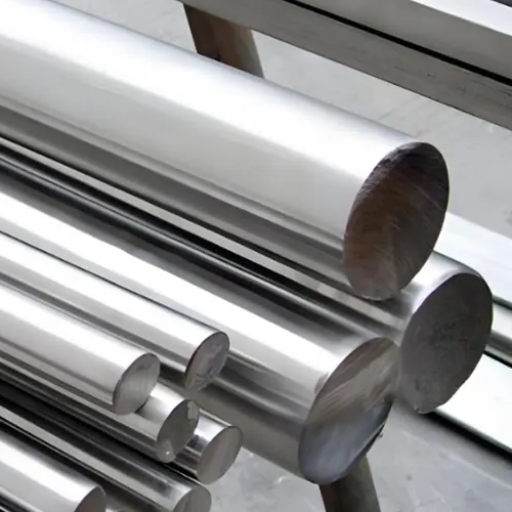
416 stainless steel is generally employed in precision applications involving gears, valves, screws amongst other components due to its excellent capability to be machined. It is also applicable to uses with a great need for a certain level of corrosion resistance and accuracy in structure.
Industrially Manufactured Units and Commercials for 416 SS
The 416 SS a highly multipurpose material and therefore it is used almost everywhere in industries as well as in commercial establishments. Being as machinable as it is, it finds third use in manufacturing items both simple as well as complex parts such as pump shafts, bolts, screws, studs, tube fittings, and automobile components. It is also used for the production of surgical tools as well as other imaging equipment where corrosion resistance is essential and any loss is highly unwelcome. Moreover, KO304 knife series is popular for kitchen cutlery as it is tough and easy to work with for this applications use.
Applications of 416 Stainless Steel in The Medical and The Automotive Capabilities
The uses of stainless steel in the medical and automotive spheres are vast on account of the inherent properties the materials have. In the medical segment, it possesses a critical use in surgical tools and implants as well as hospital devices because they can endure steam process primarily without disappointments. Quite the same way, in the automobile sector, the stainless steel usage includes fabrication within the exhaust systems, inside the engine, as well as in load-bearing sections for its antifriction and restorative properties. Seemingly, that is why it is necessary for structures that are claimed to be enduring.
Precision Production and Tool Design
Precision manufacturing is a very important part of modern mechanical methods and materials such as stainless steel, aluminum and titanium can be molded into very intricate parts. Manufacturers are able to make use of high precision cutting tools such as CNC (Computer Numerical Control) machines … and with that they are able to do parts at tolerance as close as ±0.001 inches and such cooperation assures that the parts meet the required standards in different industries.
Based on the most current research information, the CNC machining industry worldwide is expected to grow at an average annual growth rate of 7.3% from 2023 to 2030 and reach a market size of $129.2 billion by the end of the forecast decade period. This increase is due to the increased requirements for specialized parts in airplane, car and electronics. Indeed, aircraft builders have found a way of applying milling method to create engine cases which are subjected to high temperatures and extreme mechanical loads. In these functions, Stainless steel for medical applications and for the automotive components area is the befitting.
In addition, productivity and strength of the machining process has improved with the incorporation of proper machining tools which are made out of carbide and diamond materials. The technological solutions of our times are capable of prolonging the operation of tool and thereby increase the productivity as well as precision of cutting operations without undue time wastage and material costs. Mathematical models for the effective planning and emulating of the fabric let us expect further growth in the sphere of accurate machining and tooling.
How Does Heat Treatment Affect 416 Stainless Steel?

Heat treatment is a process used to alter the hardness, strength, and machinability of 416 stainless steel. Consequently, it is available in the heat treated condition because it tends to effect the mechanical properties of the steel material with cold processes such as annealing and tempering. For instance, annealing softens the material for easier removal of the material after casting, while tempering followed by hardening improves toughness minimizing brittleness. Those are among other reasons why strain hardened 416 stainless is applied on many locations specifically with such requirements in the prepared materials.
Exploring Heat Treatment Processes
Heat treatment processes are crucial since they help in customization of the properties of metals like 416 stainless steel for specific applications. These include various types of heat application where metals are taken through controlled heating and cooling completed for specific duration and temperature to achieve the desired results. An example would be annealing, which gets rid of all the internal stresses and brings back the ductility of the material making it easier for machine or/and forming. On the other hand quenched and tempered can result in an increase at the physical properties without affecting the overall brittleness of the material. For all the courses of the heat treatment processes, certain improvements are made to the steel in order to enhance its performance in a specific application such as industrial machinery, auto parts, and cutting tools. Appreciating these techniques is mandatory if the material is to be of service as well as long lasting in a variety of sectors.
Effect on the Mechanical Properties and Hardness
One of the primary effects of heat treatment is that it enhances the tensile properties of the steel and introduces new limits as far as the hardness is concerned. The deformation of the material also enhances considerably when there is annealing of the material. This means that there is the quenching and tempered which ensures that the level of hardness and toughness is on a common level especially in applications that requires wear and tear.
New research and field data confirm the usefulness of quenching and tempering. For instance, a steel sample can achieve a maximum hardness of 65 HRC (Rockwell C), upon reaching the quench temperature, depending on the carbon content of the sample and various other factors such as alloying. Nevertheless, most tempered steels in service, maintain a typical hardness range of 45-55 HRC, with increased crack-behavior toughness. The balance is appropriate for service in specific conditions where there is much resilience and wear required or in the case of automotive gears and certain industrial cutting tools which should be tough and wear rather than fracture.
Another benefit is offered by the carburizing-a surface-hardening technique-which contains wear resistant very thin surface layers with a hardness of 60-65 HRC. The surface hardened layer resists wear zip of mild to moderate magnitude. So the less resistant internal toughness remains unimpaired allowing it to cater for impact loads and hence the use of carburized steel in some applications such as bearings and camshafts.
The importance of these adverse effects cannot be over tressed, especially to the engineers and producers in the selction of the steel grades and the treatment. At present, technically developed thermal processes which include equipment like tmepeatuer controlled atmosphere furnaces and computer systems help in improving the characteristics, that suit the given serviceability conditions of their effective application in the field.
Influence of Annealing and Tempered Condition
Annealing and tempering are both methods of heat treatment, which are designed to improve the properties of steel in order to meet specific application requirements. Annealing implies aa back-flip operation where the steel is taken to a given temperature and is then left to cool down slowly so that the internal stresses are released, the grains shape is improved and the ductility is increased. It is used for the machined components that are used for mmake similar fabricated and engineered goods manufacture. For instance, a compression test revealed an malleable deformed or annealed steel to be supported by some 20-30 % increase in elongation properties, in contrast to undistorted thermal resistance based on different plate steels and heating conditions, with both having respective bearing improvements in strength.
Conversely, tempering is meant to be performed after quenching reaction so as to improve the toughness of the material by reducing the brittle nature. The steel is heated up to between 300-1100 F (150-600 C) depending on properties to be induced is the it is cooled. The tempering of the steel changes and high tensile strength the material as the last step and this can be manipulated by the heating and the time within. Thus, tempering medium carbon steels at higher temperatures reduces the hardness but increases brittleness retardation to a larger extent, thus, making them appropriate for some cutting operations used in pressure vessels and other belong to the category of structural components.
Recent improvements in tempering and systems such as annealing, due to advanced technologies received more precision, designs and controlled atmospheres for the entire heating treating practice. NACE studies suggest an improvement of over 30% in resistance to embrittlement after finding the advance tempered treatment programs with quicker tempering cycles. This is compared to the stress levels according with the small anneals, which can include up to a 25% reduction in residual stresses; especially useful when creating parts that accommodate repetitive and cyclic stresses such as advanced machineries in engineering airplanes, automotives, automotive and other waterfront systems.
Study of the 416 Stainless Steel Machining Performance
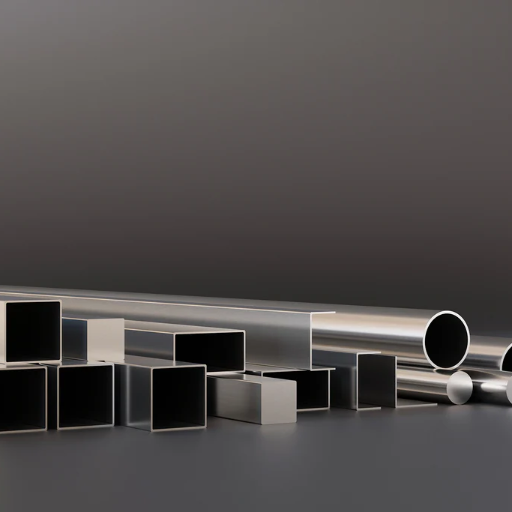
Compared to other types of stainless steel, 416 is characterized by an excellent machinability. This feature is promoted by the large quantity of sulfur in it which main purpose is to enhance tool lifespan during machining and achieve the desired chip break characteristics when machining operations are performed. It has high utility levels for operations such as turning, drilling and milling, and is therefore the appropriate choice for the mass production of close tolerance parts. Nevertheless, the higher sulphur content marginally limits its corrosion resistance with respect to other types of stainless steel, that is why when selecting materials for applications in harsh conditions, this should be taken into account too.
Why It’s the First Free-Machining Stainless Steel
One of the reasons I think it is designed as the first free cutting stainless steel is because When machining, due to the higher content of Sulphur in this alloy there is a remarkable improvement on chip control compared to that on tool wear. The provided specs allowed advanced and more precise production of parts which was unheard of at the time as there was no such stainless steel on offer.
Ways of Reaching the Greatest Machine Ability
Free machining stainless steel which is otherwise known as 303 stainless steel, is geared towards productive machines under a specific set of conditions and some particular techniques. One of the principal factors behind this is the choice of suitable cutting implements. In this instance, it is most appropriate to employ tool materials made of high speed steel (HSS) or tungsten carbide that optimally conform to machining 303 stainless steel owing to their exceptional heat resistance properties as well as the highest wear resistance. There is also the requirement to adhere to correct cutting speeds; that is, for instance, the normally recommended cutting speed while cutting 303 stainless steel using carbide tools lies within the range of about 100–150 feet per minute.
It is very important to make sure that effective lubrication and coolant techniques are implemented as they are necessary when making the process of surface finishing easier. Using a cutting fluid with very low heat generation coupled with high fluidity will help in elimination of rubbing and overheating, will further improve the quality of the cut, and helps in reinforcing the cutting tools life. Chip control is another important concern as 303 stainless steel is known to produce short chips with no flaking characteristics as a result of high sulphur. One way to counter this challenge is to make tools with composite chip breaking structures within their designs.
In conclusion, increased further tries in processes methodologies like optimizing feed rates and tool geometry, some more good results can be acquired with this.
Summarizing Tool Selection and Machine Settings
Subdivision 303 stainless steel processing shouldn’t be approached without tools selecting and machine settings planning. It is a composite material since determining speeds, feeds, cutting materials, and machine handling systems that will meet the machining touches, finish and tool life requirements similar to other engineering materials involve.
Coated Carbide Tool is best machined using the cutting tools with the steel due to the higher hardness, and subject to abrasion resistance by the said shear angle when carbide-based tools are applied. Covering the experienced carbide-based tools with TiAlN or TiCN though helps provide resilience to excessive heat and shield them against rapid tear and wear in machining for longer periods.
In setting up machinery, set which includes cutting speeds and depth of every cut made are important aspects to be considered. In certain conditions and bore sizes, these speeds may change to about 280 to 400 sfm for carbide tools in other carbide type materials or in across different operations. Use of lesser cut depths allows for pure machining at higher cut speeds. The material uncommon is possible to most in and other which is by far needed with the cutter. Feeds, on the other hand, should be adjusted to account for a balanced material removal rate without putting excessive loads on the tool. The generally accepted figures for feed rates are 0.002-0.010 inches per tooth, but these depend on the diameter of the cutter as well as the type of machining operation being carried out.
Especially, the aspects on cooling have much to do. Employing coolant having water and solvent facilitates less heating and thereby help remove the tool built up edge or cut. Increased coolant pressure systems are effective particularly in hot mm drilling operations where the main concern is the removal of chips and managing the generated heat.
Since using higher axial cutting parameters for ex. Cutting depths and getting more axial engagement results in reduced deflection of the tool and longer tool life.
With reduction of vibrations from the CNC machines and efficient tool path planning, tool path of optimal utilization is feasible for machining processes. Accurate results are attained when a combination of appropriate tools, other processes, and machining equipment is done on 303 stainless steel.
Reference sources
- Analysis of Cracking Causes of AISI 416 Martensitic Stainless Steel During Hot Rolling(Bei-Liu et al., 2023, pp. 2643–2650)
- Publication Date: 2023-04-26
- Methodology: The paper doesn’t detail its methodology in the provided abstract. More information is needed to summarize the key findings.
- Key Findings: The provided abstract does not include key findings.
- Solid Phase Sintering and Densification Behaviors of MnS Inclusions in 416 Stainless Steel(Cao et al., 2022, pp. 2427–2437)
- Publication Date: 2022-05-25
- Methodology: The methodology is not detailed in the provided abstract.
- Key Findings: The provided abstract does not include key findings.
- Formation Mechanism of Band Delta-Ferrite in 416 Stainless Steel and Its Relationship with MnS and M23C6(Tian et al., 2021, pp. 2355–2363)
- Publication Date: 2021-05-12
- Methodology: The methodology is not detailed in the provided abstract.
- Key Findings: The provided abstract does not include key findings.
Frequently Asked Questions (FAQs)
Q: What is Stainless Steel 416, and on what is it used?
A: Stainless Steel 416 is a type of martensitic stainless steel which is easily machinable and therefore, useful in any application that requires extensive machining. For that reason, it is mainly employed for the manufacture of screws, nuts, wheels and shafts.
Q: How is the machinability of Stainless Steel 416 in comparison with that of other stainless steels?
A: In regards to the relative machinability, Stainless Steel 416 tends to have the maximum machinability of any Steel so it is preferentially selected when milled areas (i.e., parts to be prototyped) are extensively milled. Due to its low frictional capacity, Manning ‘s coefficient is less and hence ease of machinability.
Q: What properties are exhibited by Stainless Steel 416 in the state of tempering and hardening?
A: In the hardened and tempered state, Stainless Steel 416 is characterized by high strength with a relative resistance to corrosion. The Brinell hardness is prescribed in a range of values to achieve a certain degree of structural activity of the material in different types of service.
Q: How high level the Stainless Steel 416 ranks in terms of corrosion resistance capacity?
A: Stainle ss Steel 416 is able to contend with corrosion to a degree, but it is not as good as compared to austenitic grades such as the ferritic alloys. It may withstand mild environmental conditions but would fail in the presence of chlorine or above pH 7.
Q: Are their any specific industries where Stainless Steel 416 is mostly used in the form of round stock?
A: Looking at the rounded stock of the alloy, it is normally employed with manufacturing screws, bolts, and other fastening components. The machining of the alloy allows for its utilization for the construction of highly precise and durable mechanical units.
Q: Can Stainless Steel 416 be treated with re-hardening after the initial hardening process?
A: Definitely, the material can be re-hardened after initial hardening but care needs to be taken that the process is done according to specific technical guidelines so that the benefits of high hardness and the material’s inbuilt durability is not affected.
Q: How advantageous is the tempered condition T in ASTM A582 for Stainless Steel 416?
A: ASTM A582 the tempered condition T, which refers to a specific heat treating treatment given to the Stainless steel 416 with the view of making the material suitable in terms of the strength and machinability for use in defined conditions. This conditioning process increases the strength other properties of the steel making it applicable for other demanding engineering applications.
Q: In the aspect of galling, how is Stainless Steel 416 different from the austenitic grades?
A: Stainless Steel 416 offers enhanced resistance against galling when compared with certain types of austenitic grades due to the lower coefficient of friction. Nevertheless, for limited applications due to the problems of galling, it might be necessary to apply other treatments or lubricants.
Q: When procuring Stainless Steel 416, which technical data should be considered?
A: When it comes to sourcing out Stainless Steel 416, there is important technical information that must be considered such as: chemical composition, type of attachment such as the dimensions of the alloy ; and mechanical properties. Also, conformance to specific standards such as ASTM A582 is crucial.
Q: How should Stainless Steel 416 be stored to maintain its properties?
A: To prevent the exposed service life of the metal, it is very important to store Stainless Steel 416 in a clean dry area without any chemicals or high temperature. This prevents oxidation of the metal and hence its durability.


