


For industries in CNC machining manufacturing, choosing the right country can be both tricky and paramount. With the progress in manufacturing technology and many options getting opened due to globalization, things like cost-effectiveness, technical sophistication, infrastructure, or quality standards stand fundamental. This blog post presents a comparative perspective of the leading countries for CNC machining to help one identify an ideal country for their production line. Whether your choices rely primarily on precision engineering, the timing of delivery, or a more basic solution, this article will put forth some key factors to assist them in making the right call.
Understanding CNC Machining
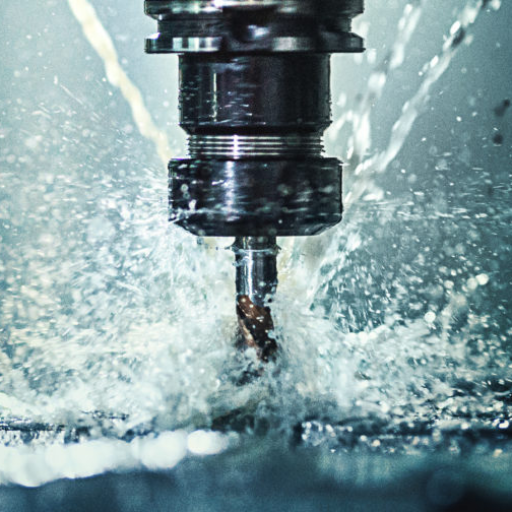
CNC machining is a manufacturing process that involves pre-programmed computer software to control the movement of machinery and tools. It helps in the fabrication of parts with high accuracy and intricacies while performing the automated cutting, drilling, and other related functions. The process is implemented across industries, mainly for its characteristic precision and time-saving features, which can be used to engrave in metals, plastics, composites, and various other materials.
An Introduction to CNC Machining
In CNC machining, CNC machine tools operate automatically with the help of computer software programs. These machine processes involve such techniques as milling, turning, drilling, and grinding and may fabricate very precise and repeatable parts. Currently, this would begin as a CAD (Computer-Aided Design) model, which is then converted to a CNC-compatible file via the use of CAM (Computer-Aided Manufacturing) software. Essentially, this file instructs the CNC machine in its operations of manufacturing, enabling precise accuracy in each production cycle.
One prominent advantage over conventional machining methods is CNC machining’s capacity to operate on a more extensive variety of materials. CNC machining accepts aluminum, stainless steel, titanium; plastics like ABS, polypropylene; and even composites and exotic materials. Generally, CNC machining will allow a tolerance of ±0.001 inches, thereby giving notable use cases in aerospace, automotive, healthcare, and electronics fields. CNC machining tooling is experiencing significant growth, and based on recent data, it was estimated to be around $83.99 billion in 2022. The market is expected to grow at a CAGR of 5.7% between the years 2023 and 2030 because of growing demand for precision components and the increased proliferation of advanced manufacturing technologies.
CNC machining has a few advantages over other manufacturing processes due to material savings as it promotes higher utilization of raw materials; furthermore, it reduces manual labor-intensive tasks. Modern CNC systems are neared to incorporate intelligent technologies like IoT and AI algorithms. These enhancements provide real-time monitoring, predictive maintenance, and operational improvements, creating CNC machining a crucial pillar of Industry 4.0.
Significance of CNC Machines in Manufacturing
CNC machines have always been an integral part of modern manufacturing industries, especially with respect to precision, efficiency, and scalability. Industry reports indicate that around USD 83.99 billion was the valuation of the global CNC machine in 2023. The market has been forecast to grow at a CAGR of 5.7% during 2023 to 2030. This massive growth underlines the ever-increasing dependence on CNC technology for meeting the mounting demands for high-end, customized, and inexpensive wares.
They act as automating the complex manufacturing processes. CNC machines minimize human error, providing accuracy and repeatability, which is especially critical in sectors such as aerospace, automobile, and healthcare, where precision is paramount. By way of example: CNC ensures tolerance in the aerospace industry at micrometers, considerably enhancing the safety as well as the performance of its aircraft.
Furthermore, CNC machines can function without any rest, losing productivity if human beings do so. By being able to work for 24 hours a day, CNC machines give a competitive advantage to manufacturers in the fast-paced market through the shortening of production cycles and lead times. Real-time data analytics is provided, while newer CNC systems integrated with IoT technology enable manufacturers to optimize workflows, minimizing downtime with predictive maintenance.
Apart from conventional computer-integrated manufacturing, CNC machining also provides great benefits towards sustainable manufacturing. Using advanced software in computer-based design and simulation for machining drastically cuts down on materials waste thrown away during production. In combination with energy-efficient machining methods, CNC machining further contributes to a greener, environment-friendly manufacturing approach. All those aspects have contributed in establishing CNC machining as a new-age technological achievement toward Industry 4.0 and innovation within the industrial landscape.
Overview of CNC Machining Services
CNC machining services take care of the broad industrial spectrum by providing ultra-precise components and assemblies. These services use highly advanced machines equipped with computerized controls that enable very complex design implementations with high precision and repeatability. CNC machining was valued at over 83 billion U.S. dollars globally in 2023 and is driven across the automotive, aerospace, healthcare, and electronics sectors by increasing demand. The revenues are projected to register a CAGR of roughly 5.7% between 2023 and 2030.
These CNC machining service providers create one of the options to customize production and support both low and high volume. They manufacture highly complex components with tolerances up to ±0.001 inches. CNC machining offers manufacturing from aluminum, steel, titanium, and plastics, such as ABS and polycarbonate. Commonly, the types of CNC machining included in these services are CNC milling, turning, drilling, and grinding, up to the needs of the manufactured parts.
Modern CNC machining is integrating with AI and IoT technologies for better performance. Smart monitoring systems provide real-time feedback on machining operations to ensure efficiencies as well as quality control. The reduction in lead time, increased scalability, and wastage minimizations put CNC machining into the limelight as a key player in modern environment for production, promulgating that it is both cost and eco-friendly manufacturing solution.
Global Landscape of CNC Machines

The global CNC machine landscape relies much on technological advancements, regional manufacturing presences, and growing industry demand. Innovation in the fields of automation and AI toward precise and efficient machining solutions is carried out by Asian, European, and North American players. The rising industries of aerospace, automotive, and medical manufacturing require advanced CNC technologies. In addition, the level of consciousness with respect to sustainability and energy efficiency is shaping the conceptualization of forthcoming machines for fulfilling green targets in production.
Leading Countries in CNC Machine Manufacturing
Principally, CNC machine manufacturing outranks Germany, Japan, and the United States. Germany has its sanctity in precision engineering and quality machinery; Japan excels in automation and innovation. The United States leads in advanced technological integration and large-scale production capabilities. The three countries set the world standard CNC machine design and production suitable for various applications in industries worldwide.
Key CNC Machining Companies around the Globe
- DMG Mori (Germany/Japan):Globally recognized to manufacture and supply a complete range of CNC machines with advanced automation solutions.
- Mazak (Japan):Famous for its innovative multi-tasking machinery and customer satisfaction.
- Haas Automation (United States):Ranked among the top standard CNC machine manufacturers developing machines that are reliable and comparatively inexpensive for use across industries.
- Okuma (Japan):Known for robust machines along with control systems that are made in accordance with industrial applications.
- GF Machining Solutions (Switzerland):Offers the recent CNC machining and automation technology for industries that require high precision.
Global CNC Machining Trends
Global CNC machining presents an ever-changing profile due to the developments and with varying global demands. When automation and smart manufacturing technologies start growing adoption trends in CNC machining industry, it becomes one of the most declared trends. As Industry 4.0 makes advancements in production plants, CNC Machines get associated with IoT devices and AI-based systems to minimize downtime and hence increase productivity. As given by new market studies, global CNC machine markets’ valuation was, by the year 2022, about 83.99 billion dollars approximation and is forecasted to be worth approximately 132.45 billion dollars in 2030, at the CAGR of 6.2% during the forecast period.
The other major trend is focused on sustainability, wherein manufacturers are working toward reduction in materials wastage and energy consumption by using greener materials and processes. For example, precision machining with improved software capabilities has facilitated better material utilization, thus cutting down a lot on scrap generation. Besides, the demand for customized solutions is also increasing, with industries such as aerospace, automotive, and healthcare requesting machining to a very specific design or standard.
Emerging markets, particularly those in the Asia-Pacific, are contributing to the global growth of CNC machining giants. China and India stand at the forefront, spending a lot of resources in the modernization of their manufacturing infrastructure. Recently, it has been reported that in 2022, the Asia-Pacific region had captured over 35% of the market, emphasizing its regional supremacy and potential standing in the CNC industry. Global interest in lightweight and high-performant materials, such as composites and advanced alloys, serves as an additional wave to enhance the need for precise and high-tech CNC solutions.
These trends point jointly toward the future, with CNC machining driving developments in many major areas so that manufacturers can remain competitive in this highly demanding industrial landscape.
Choosing The Best CNC Machining Service Providers

- Quality Assurance – Assure that the CNC machining service has stringent quality control measures that guarantee precision and accuracy and the corresponding certifications like ISO standard.
- Experience and Knowledge – Providers with proven experience of your type of industry and in handling the specific materials and designs required by you should be preferred.
- Capabilities – More importantly, check if their equipment and technology can support the complexity, tolerance, and volume requirements of your project.
- Lead Time and Flexibility – Select a CNC machining service provider with competitive lead times and the flexibility to adapt to your production schedule.
- Customer Support – Give priority to those services with transparent communication and technical support and trustworthy after-sales assistance.
Factors to Consider When Selecting a CNC Machining Service Provider
When selecting a CNC machining service provider, consider aspects such as material compatibility, equipment capabilities, lead time, quality control, certifications, pricing, customization, and customer support.
| Key Point | Description |
|---|---|
| Material | Compatible materials like metals or plastics. |
| Equipment | Advanced machinery to meet precision needs. |
| Lead Time | Quick turnaround to fit production schedules. |
| Quality | Guaranteed accuracy and consistent results. |
| Certifications | Industry standards such as ISO compliance. |
| Pricing | Competitive and transparent cost structure. |
| Customization | Tailored solutions for unique project specs. |
| Support | Reliable assistance and clear communication. |
Evaluating Reliability in CNC Machining
- Consistency: The process must meet standard by producing precise and uniform results in more than one production run.
- Equipment Quality: Ensure the use of advanced machinery that is well maintained for purposes of accuracy and efficiency.
- Certifications: Make sure that the company observes industry regulations, bearing ISO certification, so that one is compensated on quality assurance.
- Support: Look at whether one gets reliable technical support and consistently open communication during the project.
Case Studies of Successful CNC Machining Solutions
- Automotive Industry Application: In the production of complex engine components with extremely tight tolerances, the maker of a high-performance car was facing numerous challenges. CNC machining allowed them to maintain strict tolerance standards, reduce lead time, and enhance product durability.
- Aerospace Component Manufacturing: The aerospace company needed parts for an advanced aircraft that were lightweight yet strong. CNC machining allowed the company to manufacture intricate designs from exotic materials, satisfying both structural and safety requirements.
- Medical Device Production: The medical device engineer required precision tooling for surgical applications. CNC machining realized very detailed and sterile instruments that meet reliability and safety needs for medics.
Leading CNC Machine Brands
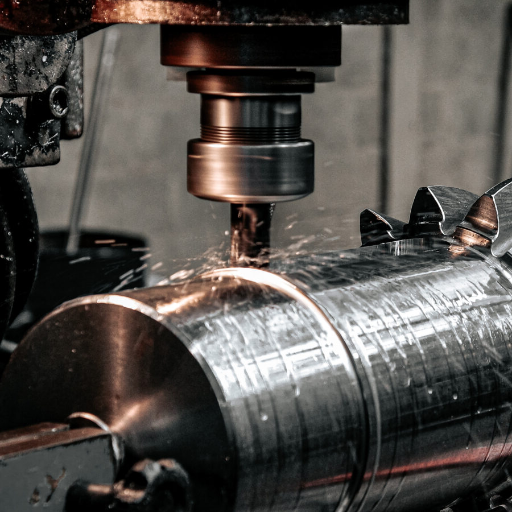
- Haas Automation – Well known for user-friendly interface and reliable performance, Haas is a common choice for application from small-scale machining to industrial production.
- Mazak – For advanced technology and universal machineries for use in different industries such as aerospace and automotive, Mazak stands in the first position.
- DMG Mori – One of the top manufacturers concerning precision and innovation, the DMG Mori machining tools are deemed highly durable and efficient.
- Okuma – Okuma making is noted for its sturdy build and utmost precision; hence it remains the best option for heavy machining.
- Hurco – Designed for simple usability and high productivity, Hurco machining is suitable for custom and flexible manufacturing.
Overview of a Key Machine Tool Brand
Top machine tool brands express a balance of precision, innovative ideas, and reliability catering to many industries. Namen like Mazak and Haas shine in delivering advanced solutions for aerospace and automotive respectively, while DMG Mori excels in providing utmost durability and efficiency. Okuma sets itself apart as a firm name that champions the production of machines robust in design and highly accurate in specifications, suited for tasks that require high demands; whereas Hurco puts a spotlight on user designs that fit flexible manufacturing. These industry names exemplify the variegated strengths needed for completing modern-day machining challenges.
Comparison of CNC Machine Brands
In my opinion, which CNC brand stands as the best will depend on your very own needs. If advanced solutions were to be considered in aerospace or automotive industries, Mazaks and Haas could very well shortlist. Whereas, DMG Mori for heavy durability and efficiency. Okuma is an excellent choice when you want accuracy and robustness, while Hurco works best with an easy-to-use style for flexible manufacturing.
Innovations Relating to CNC Machines
The CNC (Computer Numerical Control) machine industry has witnessed some big innovations, thereby paving the way for contemporary manufacturing methods to be efficient, precise, and adaptable. One of these major innovations has been the integration of artificial intelligence (AI) and machine learning for purposes of predictive maintenance and adaptive machining. By way of illustration, one such system can observe all factors with respect to the health of a machine in real time, thereby getting the maximum benefit from its available time by anticipating possible failures practically before they occur.
A profound transformation has also occurred with the introduction of multiple-axis machining, of which 5-axis and indeed 6-axis systems are now becoming more common throughout the world. With the ability to provide flexibility and accuracy for the production of very complex components means that several setups can be completely eliminated.
Data connectivity has undergone huge transformation through IoT (Internet of Things) implementation in CNC systems. Hence now smart CNC machines can externally communicate under a factory network, perform remote operation, carry out real-time data analysis, and enhance basic operations within the plant.
Hybrid manufacturing is another option emerging, with hybrid manufacturing essentially combining traditional subtractive machining with additive manufacturing, such as 3D printing. Hence, it maximizes efficiency and creates sustainability in the production of complex components with minimal material wastage.
In conjunction with the advanced software and ergonomic design improvements, these new technologies have opened the path for CNC technology to permeate a much broader array of industries, from aerospace to healthcare. Thus, at the heart of these new technologies lies the CNC machine, which is pushing the envelope on what can be achieved in contemporary manufacturing.
Types of CNC Machined Parts and Their Applications

- Engine Parts: These parts require utmost precision in performance and durability in the automotive and aerospace sectors.
- Medical Devices: The making of surgical instruments, implants, and diagnostic devices on CNC machines demands high precision.
- Electronic Housings: Machining must be very precise to ensure that enclosures can adequately protect electronic devices.
- Industrial Tools: Making custom tools and machine accessories for special industrial applications.
Most Common CNC Machining Parts
CNC machining finds extensive usage in the making of different kinds of parts including brackets, shafts, gears, bushings, enclosures, and connectors. These parts are very homologous in numerous industries including automotive, aerospace, electronics, and medical, where they are basically needed for utmost precision and reliability.
Industries Served by CNC Machining
An assortment of industries uses CNC machining for machining of parts to achieve desired precision and speed in other processes. Some of them are:
- Automotive Sector: Making engine parts, transmission parts, and custom prototypes.
- Aerospace Sector: Critical components considered are turbine blades, engine housings, and structural parts.
- Electronics: Making enclosures, connectors, and heatsinks.
- Medical: Manufacturing of surgical instruments, implants, and diagnostic equipment with great precision.
This technology, therefore, serves industries where utmost accuracy, durability, and reliability are called for.
Future of CNC Machining in Global Markets
The scenario for CNC machining is for tremendous growth amid its further integration into advanced manufacturing technologies by various industries. As per recent market reports, the global CNC machining market is anticipated to post above a 7% CAGR during 2023-30, owing to the demand across sectors for precision manufacturing and automation solutions such as automotive, aerospace, and medical.
Emerging technologies such as AI-driven process optimizations, IoT-enabled machines, and hybrid manufacturing (CNC machining in conjunction with 3D printing) are giving the CNC landscape a new inner working setup. Integration of AI allows for enhanced predictive maintenance and less time spent on machine downtimes, while the connectivity brought by IoT has huge implications on real-time monitoring and decision-making across factory floors.
Apart from this, sustainable manufacturing practices are the force that drives the innovations in material consumption and energy management on CNC systems. Quite a few companies currently prefer materials that generate minimal waste during the machining process and have CNC suppliers institute energy-saving features into the design of their newly developed CNC machines.
For several years now, Asia-Pacific has dominated the CNC machining market a testimony to its rapid industrialization and a viable automotive and electronics manufacturing base. The country especially remains an important hotspot where large contingents of funding have been channeled into promoting advanced machinery and training of the work force. Meanwhile, an aggressive thrust is noted in North America and Europe wherein automated CNC systems are being valued for satisfying the growing need for highly customized components of superlative quality.
The expanse of CNC machining is also fueled globally by sectors such as electric vehicles (EVs) and renewable energy needing precision machining of components including battery housings, rotors, and turbines. For players in the CNC machining business, it will be of utmost importance to keep abreast with the evolving technology and market trends so as to survive in this dynamic industry.
Reference sources
- Design and analysis of a small-scale cost-effective CNC milling machine – Discusses global trends in CNC machining and manufacturing activities across countries.
- Precision in machining: research challenges – Explores advancements and challenges in precision machining, relevant to understanding country-specific capabilities.
Frequently Asked Questions (FAQs)
Which Country is Best for CNC Machining and Machine Tool Manufacture?
Several factors come into play when deciding which country is best for CNC machining and machine tool manufacturing. Countries like China and Germany often come to mind because these countries possess the best CNC machining technology and very high-precision machining capabilities. CNC machining factories in China make CNC machining a cheap avenue, and hence such a country would likely attract customers that want to reduce the expenses in production. Germany, however, enjoys a reputation for being more reliable and possessing both machining tools and an after-sales service of very high quality. Thus, the best option for you would depend primarily on your machining project requirements, i.e., depending upon the intricacies of parts and the expected Machining quality.
What are the Benefits of Using CNC Milling Machines in Various CNC Machining Processes?
CNC milling machines provide key advantages in various CNC machining processes, including a high degree of accuracy and versatility. These machines accept complex designs with great precision, so the machining tolerance is suitable for either small or large production runs. The possible automation of machining processes increases efficiency and decreases the machining time of jobs. Also, some of these advanced CNC machines present a variety of machining options, including 5-axis machining, which allows for the creation of complex parts that are difficult through the traditional milling approach. Thus, they enjoy good results and good reliability by CNC accuracy that helps ensure that components pass very strict industry standards.
How Does the CNC Machining Supplier Guarantee Machining Quality and After-Sales Service?
CNC machining suppliers, indeed, deserve a big job when it comes to quality assurance for machining and after-sales service. An honest CNC machining supplier will put into practice quality control arrangements all through the machining process to ensure that every single item will be within the stipulated tolerances and that these tolerances are furthermore in line with the stipulated standards. These high CNC manufacturing techniques also include high-speed CNC machining capabilities. Besides, good after-sales services assist in addressing any concern that the customer may have after purchase. Suppliers that give priority to customer satisfaction enjoy better relations with their clients, which eventually goes a long way into cements repeat business and long-term partnerships. Thus, it can be a key decision factor to evaluate that supplier’s reputation in the machine tools industry.
What Should You Consider When Choosing CNC Machines and Brands?
When selecting CNC machines and brands, several points should be considered to ensure that the right equipment is chosen for machining needs. Search for vendors that provide high-precision machines capable of performing a wide range of machining tasks, including vertical and horizontal machining. Also, check how well respected their brands are and the reputation for reliability the brands have earned with CNC machinery used in a wide range of fields. Looking at customer feedback and available case studies can assist in determining how various brands perform in real-world scenarios. Finally, ask about the available support services, especially training and maintenance, as these will have a big impact on your whole machining experience and productivity.”
What are the Roles of Machining Centers in the CNC Machining Procedure?
Machining centers play a vital role in CNC machining, whereby several machining functions could be carried out in one setup, thereby gaining a great margin of time and creativity while machining complex parts. The 5-axis machining centers milling and turning operations in one set-up go a long way in eliminating more set-ups, saving time, and eliminating chances of errors. Going for optimizations using machining centers that also guarantee good quality machining would certainly be worthwhile for any company.


