


In the engineering of plastics, it is imperative to understand the differences between materials if the right one is to be chosen for end use. Nylon 6 and Nylon 66 are some of the most commonly used polyamides in industries. Although they may appear similar, their differing characteristics can positively or negatively influence performance under certain conditions. Impact resistance is critical to your decision as it refers to how much a material can withstand sudden forces or shocks. This blog post conducts in-depth comparative research on impact resistance on Nylon 6 and Nylon 66, addressing their strengths, weaknesses, and suitable uses. At the end of it all, one would be fully prepared to go forth and choose a material based on suitability, performance, and durability.
Introduction to Nylon
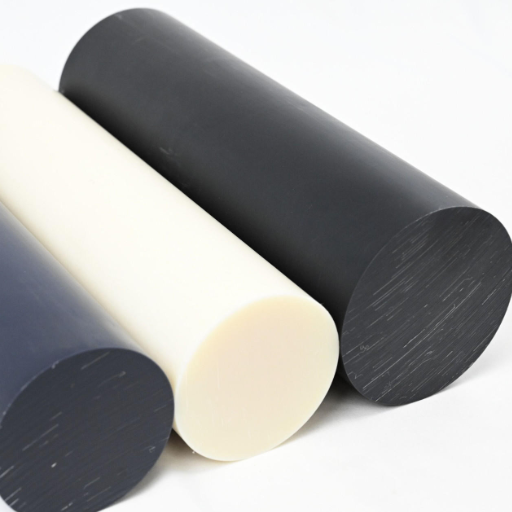
Nylon is a manufactured polymer with all kinds of properties—flexible, semi-rigid or rigid, tough, or completely brittle. One of its most valuable features for industrial applications is the ability to customize nylon’s characteristics, or make a family of modified materials where each member possesses well-defined properties. Nylon was invented in the 1930s and soon thereafter gained great popularity across many industries because it had excellent mechanical properties and was highly resistant to wear. Since nylon is lightweight and possesses good tensile strength and chemical resistance, it finds applications in textiles and automobile components. Being processed into different types like Nylon 6 and Nylon 66 ensures it can be engineered for performance, tailored to fit particular requirements.
Overview of Nylon 6 and Nylon 66
Nylon 6 and Nylon 66 are two prevalent types of nylon, each possessing unique properties suited for different applications. Nylon 6 is made from a single type of monomer, i.e., caprolactam, and is prepared by a ring-opening polymerization process. The Nylon 6 is appreciated for its high elasticity, impact resistance, and resilience, making it suitable for textiles, carpets, and molding. On the other hand, Nylon 66 is synthesized from two monomers, hexamethylenediamine and adipic acid, but through a condensation polymerization process. Meanwhile, Nylon 66 has superior thermal stability, abrasion resistance, and melting point, making it suitable for manufacturing automotive parts, industrial equipment, and high-performance areas.
Both types can also be modified further with additives to improve given characteristics such as flame retardancy or UV resistance. Nylon 6 is mostly considered because of processing simplicity and applicability, whereas Nylon 66 is in demand when multiple environmental conditions need to be met, as well as heat resistance. The selection of either would greatly depend on how well the specific application’s function is required.
Importance of Impact Resistance in Plastics
Impact resistance is one of the critical qualities for plastics to withstand sudden forces without cracking or breaking. This property directly translates into safety and performance in domains such as automotive parts, protective equipment, or consumer electronics. Advances in polymer science today enable manufacturers to enhance impact resistance using additives and blends or by employing modern fabrication methods such as injection molding. Recent statistics show that this trend is going forward at top speed, as more and more industries use impact-resistant materials to meet safety standards and consumer demands for longer-lasting products. This brings to light that while it is essential to provide impact resistance, one must strike a balance with flexibility, thermal stability, and weight to tailor plastics for diverse application needs.
Properties of Nylon 6
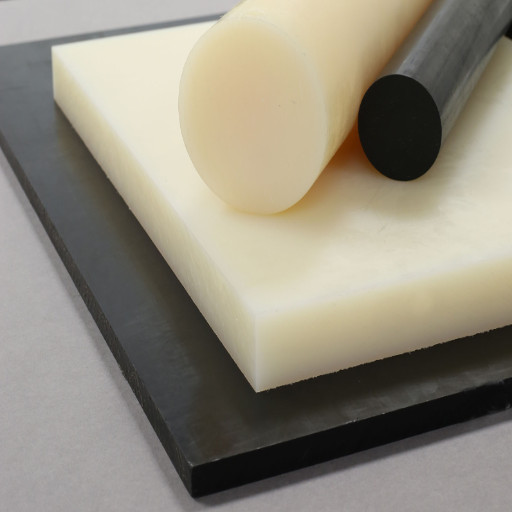
Nylon 6 is good at striking an excellent balance between mechanical and thermal characteristics. Some of the important properties are:
- High strength and durability: Nylon 6 possesses enormous tensile strength and abrasion resistance, thus suitable for heavy-duty applications.
- Flexible: It possesses good elasticity, which enables it to absorb shock without breaking.
- Thermal Stability: Nylon 6 can resist moderate to high temperatures by retaining its structural strength.
- Chemical Resistance: Nylon 6 resists several oils, solvents, and chemicals; this trait enhances its industrial value.
- Lightweightness: Although Nylon 6 is a tough material, it qualifies as lightweight. This property is significant in facilitating handling and reducing the weight of the material with which it is allied.
Due to such properties, Nylon 6 is the primary choice in the automotive, textile, and industrial components industries.
Physical Properties
Nylon 6 shows a wide array of physical properties, making it available for various uses. Its density, about 1.14 g/cm³, gives it strength and makes it lightweight. The tensile strength provides resistance to external forces of stress and strain and guarantees durability and wear resistance in Nylon 6. Nylon 6 has good toughness and can absorb shocks while resisting deformation. It also has a melting temperature of around 220250°C, which means it remains stable across moderately high temperatures. These physical properties guarantee that Nylon 6 will gain the faith of engineers when applied in the most demanding circumstances of various industries.
Chemical Resistance
Nylon 6 has impressive chemical resistance; hence, it is suitable for challenging environments. It offers excellent resistance to oils, grease, and fuels, a factor critical to applications in the automotive and industrial sectors. It also resists many chemicals well, such as dilute acids and alkalis. However, strong acids, such as sulfuric acid, and some potent oxidizing agents will attack it adversely.
Recent data studies showed higher resistance to hydrolysis, imparting durability in humid and wet conditions. Plus, Nylon 6 is resistant to the degradation caused by organic solvents like alcohols and ketones. Such chemical endurance renders Nylon 6 a reliable material in chemically aggressive environments, thus making it a good choice for manufacturing fuel tanks, machinery parts, and electrical insulations.
Mechanical Strength
Nylon 6 is known to have very high mechanical strength, and it is preferred in many industrial applications. Depending upon the use and processing conditions, typical nylon six tensile strength ranges between 75-90 MPa. Its stiffness is excellent, with a flexural modulus value as high as almost 3,000 MPa so that these materials can support considerable loads or stress without permanent deformation.
High impact strength means it can absorb large amounts of energy under stress without surface cracks or fractures. The fatigue endurance of a Nylon 6 material also allows it to withstand repeated stress cycles in parts like gears, bearings, and automotive components.
Furthermore, fiber reinforcement can improve mechanical properties. For example, 30% glass-filled Nylon 6 can reach tensile strengths higher than 150 MPa and flexural modulus values higher than 6,000 MPa, making it useful for occasions where superior strength and rigidity are required, such as structural components in networking.
Comparison of Nylon 6 and Nylon 66

Nylon 6 and Nylon 66 are commonly known polyamides that find usage in a range of applications requiring very diverse properties:
- Moisture Absorption: Nylon 6 absorbs moisture better than Nylon 66. This could lead to dimensional instability and variation in some mechanical properties in humid environments.
- Heat Resistance: Nylon 66 is more resistant to heat than Nylon 6 and thus can be considered suitable for applications with higher thermal performance requirements.
- Strength and Stiffness: Nylon 66 generally shows greater resistance to tensile forces and more stiffness than Nylon 6, although these properties may be further influenced by reinforcements such as glass fibers.
- Processability: Nylon 6 is easy to process with good flow characteristics, giving it a finer finish; Nylon 66 is processed at higher temperatures.
- Cost: Commonly, Nylon 6 is less expensive than Nylon 66, making it the choice for applications with lesser technical requirements.
The choice of respective material will be determined according to the specific performance requirements and environmental conditions of the operating application.
Differences in Production Processes
The production processes for Nylon 6, 66, and other substances differ like the monomers, polymerization techniques, temperature required, and environmental impact.
|
Parameter |
Nylon 6 |
Nylon 66 |
Other Materials |
|---|---|---|---|
|
Monomer |
Caprolactam |
Adipic acid, HMDA |
Varies |
|
Polymerization |
Ring-opening |
Condensation |
Varies |
|
Temp. Req. |
Moderate |
High |
Varies |
|
Energy Use |
Moderate |
High |
Varies |
|
Eco Impact |
Moderate |
Higher |
Varies |
|
Recyclability |
High |
Moderate |
Varies |
Impact Resistance: Nylon 6 vs. Nylon 66
Nylon 6 can be altered with moisture to improve impact resistance and flexibility, while Nylon 66 has a more rigid structure and resists abrasion better, thereby earning its place as the better choice for high-stress applications.
|
Parameter |
Nylon 6 |
Nylon 66 |
|---|---|---|
|
Impact Res. |
Superior |
Moderate |
|
Flexibility |
High |
Moderate |
|
Rigidity |
Moderate |
High |
|
Abrasion Res. |
Moderate |
Superior |
|
Moisture Perf. |
Better |
Lower |
|
Heat Res. |
Moderate |
Superior |
|
Applications |
Flexible uses |
High-stress uses |
Applications of Nylon 6 and Nylon 66
Because of their exceptional mechanical properties and chemical resistance, Nylon 6 and 66 find applications across various industries. There are five major applications listed for each material:
- Automobile Industry
Both Nylon 6 and 66 are extensively used in manufacturing automotive parts such as engine covers, radiator tanks, and air intake manifolds because of their heat resistance and durability.
Due to its higher melting point, Nylon 66 is preferred for under-the-hood applications where components are exposed frequently to high temperatures.
- Textile and Apparel
Nylon 6 is widely used to produce synthetic fibers for fabrics, carpeting, and hosiery due to its flexibility and low cost.
Nylon 66 fibers, with their superior strength and abrasion resistance, are used in textiles requiring higher performance, such as parachutes and industrial threads.
- Electrical and Electronic
Nylon of either type is used to manufacture cable ties, connectors, and circuit boards because of their insulating properties, chemical resistance, and slight shrinkage on curing.
Nylon 66 is selected where the utmost structural stability is necessary and in very severe conditions.
- Industrial Components
Used for gears, bearings, and rollers for industrial installation machinery, Nylon 6 is a low-friction material.
Nylon 66 would be for heavy-duty mechanical parts requiring load capacity and wear resistance.
- Consumer Goods
Due to its ease of processing, nylon six is used to make articles for industrial use, such as kitchen utensils, packaging films, and sports goods.
Nylon 66 is used in applications requiring higher strength, such as durable luggage, high-strength ropes, and safety equipment like helmets.
Advantages of Using Nylon 6
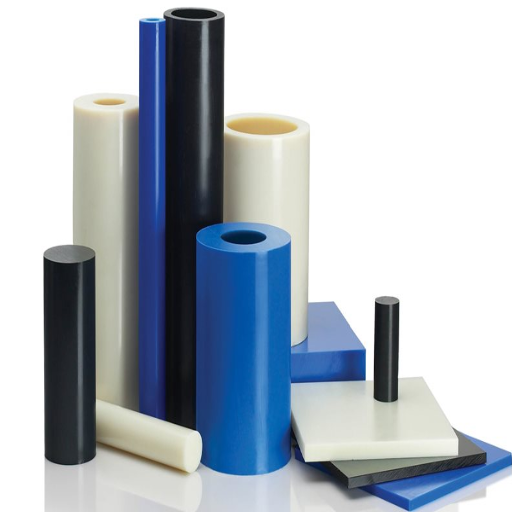
Durability: Nylon 6 offers very high toughness and wear resistance, which finds application over a very broad spectrum. Lightweight: It is lightweight, so it is ideally suited for products requiring handling and transportation ease. Chemical Resistance: It resists many oils, solvents, and chemicals, ensuring greater product life in hostile environments. Flexibility: The nylon six polymer presents high flexibility, making it easy to mold into different shapes. Moisture Absorption: Its medium moisture absorption rate improves dimensional stability under humid conditions. Cost-Effectiveness: Relatively, it is cheaper than some alternatives, while not compromising on the general performance characteristics.
Why Choose Nylon 6 Over Nylon 66?
When selecting between Nylon 6 and Nylon 66, Nylon 6 offers several advantages depending on the application. To begin with, Nylon 6 possesses a lower melting point of approximately 220°C, permitting easier and less energy-consuming processing than Nylon 66, whose melting point is around 260°C. Furthermore, Nylon 6 may boast superior toughness, elasticity, and impactful strength, thereby remaining highly suitable for any purpose where durability and flexibility are of concern. The additional capacity for absorbing moisture enables the material to exhibit enhanced dimensional stability under environmental conditions in moisture variation, thereby giving a performance edge to the material. Also, Nylon 6 is generally less expensive than Nylon 66, sharing its counterpart’s mechanical properties at a cheaper cost. While Nylon 66 may still dominate in elevated-temperature environments, Nylon 6 is the preferred route where flexibility, cost, and ease of processing are important.
Cost-Effectiveness and Availability
Nylon 6 is often considered a cheap polymer due to its relatively lower production cost and wide availability. Its production route is generally less complex than that of Nylon 66, which tends to lower the prices of Nylon 6 products in the market. The cheapness compromises make it valuable for manufacturers to balance cost and performance. Nylon 6 also benefits from large-scale production globally and an extensive supply chain network, whereby the supply chain disturbances remain minimal, providing an uninterrupted supply.
Engineering Applications of Nylon 6
Nylon 6, because of its great mechanical properties, chemical resistance, and versatility, is widely used in various engineering applications. Below are listed five major applications where Nylon 6 finds significant use:
- Automotive Components
Nylon 6 is employed by the automotive industry to make engine covers, air intake manifolds, and fuel system components. Its high strength-to-weight ratio makes it wear-resistant and high-temperature resistant, making it suitable for such demanding applications.
- Electrical and Electronics
Nylon 6 possesses excellent insulation and flame resistance, so it is used for cable insulations, electrical connectors, switches, and terminal blocks. It ensures durability in residential and industrial electrical systems.
- Parts for Industrial Machinery
Nylon 6 is used in gears, bearings, rollers, and conveyor belts. Its advantages for these components are its very low coefficient of friction, high impact resistance, and wear resistance, which makes its operation smooth and its service life longer.
- Textile Sector
Nylon 6 fiber is a major textile fiber used for the manufacture of fabric, carpets, and industrial yarns. With its elasticity, abrasion resistance, and dye retention ability, Nylon 6 is ideal for manufacturing sturdy and aesthetically pleasing items.
- In packaging
Nylon 6 is widely used as flexible packaging material, especially for food vacuum packaging. Its gas barrier property and puncture resistance help keep food fresh and extend its shelf life.
All these applications speak volumes about the versatile nature of Nylon 6 and its utmost importance in many industries.
Reference Sources
- Redesigned Nylon 6 Variants with Enhanced Recyclability, Ductility, and Transparency. (Tian et al., 2024, p. e202320214) (2024): This study systematically investigated the effects of gem-dimethyl substitutions on ε-caprolactam (Nylon 6 monomer) reactivity and polymer properties. Key findings showed that the γ-position substitution yielded an amorphous, transparent Nylon 6 with enhanced Tg, yield stress, ductility, and lower depolymerization temperature than conventional Nylon 6. The methodology involved chemical synthesis of modified monomers, polymerization, and characterization of the resulting polymers using various techniques (e.g., thermal analysis, mechanical testing).
- Machinability Characterization of 3D Printed PEEK (Wu et al., 2023)(2023): While focused on PEEK, this study’s methodology (orthogonal cutting experiments analyzing cutting forces and surface finish) is directly applicable to understanding and optimizing Nylon 6 machining, especially in the context of additive manufacturing.
- Preparation of ZnO/Nylon 6/6 nanocomposites, their characterization and application in dye decolorization (Saeed et al., 2021 2021): This study investigated the preparation and characterization of ZnO/Nylon 6 nanocomposites and their application in dye decolorization. The methodology involved nanocomposite synthesis, characterization using various techniques (SEM, DSC, POM), and evaluation of dye degradation performance.
- Top Nylon CNC Machining Parts Manufacturer And Supplier In China
Frequently Asked Questions (FAQs)
Q: What are the engineering plastic properties of nylon 6?
A: Nylon 6 is a popular engineering plastic known for its high tensile strength and impact resistance. It has excellent physical and chemical properties, making it suitable for various applications requiring durability and resilience. The polymer chains in nylon 6 provide good abrasion resistance, making it ideal for parts using this material in demanding environments. Additionally, nylon 6 can be modified with comonomers or stabilizers to enhance its performance further. Its reactivity and chemical properties allow it to be used in various industrial applications.
Q: What is the shrinkage rate of nylon six compared to nylon 12?
A: The shrinkage rate of nylon 6 is typically higher than that of nylon 12, which is significant when considering dimensional stability in manufacturing. When nylon 6 undergoes cooling after processing, it can shrink considerably due to its polymer backbone structure. This shrinkage can affect the fit and finish of components made from nylon 6, especially in applications that need precise tolerances. Understanding the difference between nylon six and 12 is crucial for engineers selecting materials for specific applications. Nylon 12, being less prone to shrinkage, may be preferred in situations where dimensional stability is critical.
Q: What is the difference between nylon 6 and PA6?
A: The terms nylon six and PA6 refer to the same polymer, polyamide 6, a synthetic polymer. Both terms are used interchangeably in the industry, although nylon six is commonly used commercially. The chemical structure of nylon 6 involves amide bonds that contribute to its durability and strength. When comparing nylon 6 to other nylon types, such as nylon 12, it is essential to note that nylon 6 typically has better impact resistance and is more suitable for demanding applications. Understanding the differences in properties helps select the right material for specific industrial uses.
Q: How does nylon 6’s water absorption affect its applications?
A: Nylon 6’s water absorption can significantly influence its mechanical properties and overall application performance. This synthetic fibre tends to absorb moisture, which may lead to dimensional changes and affect its strength and stiffness. This property must be carefully considered in applications requiring high precision, such as synthetic polymer industry. The ability of nylon 6 to alter its properties with moisture content makes it crucial to understand its behavior in different environmental conditions. Manufacturers often consider this water absorption when designing nylon products to ensure reliability and durability.


