


Nothing is more precise, efficient, and versatile than metal laser cutting for manufacturing and fabrication industries. Whether you are a long-time industry professional or simply an advanced cutting technology enthusiast, it is essential to learn what metal laser cutting is all about. This blog will go through the core elements of the new metal laser cutting process: What metal laser cutting is, the mechanism through which it operates, the price, and the equipment. At the end of this guide, you’ll understand why laser cutting is preferred for projects requiring unprecedented accuracy and finish. Let’s float through the fascinating world of metal laser cutting and see how this might take your next project to the next level!
Understanding Metal Laser Cutting
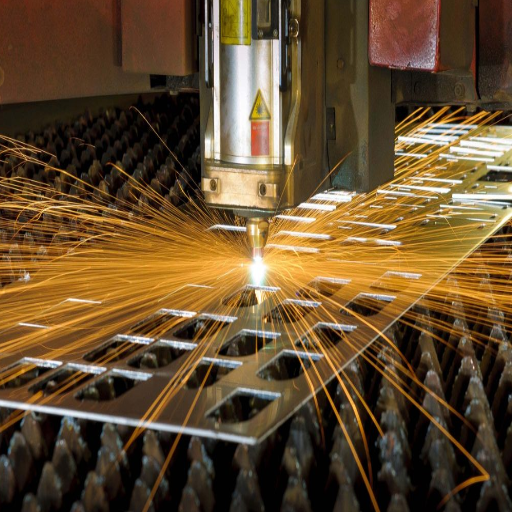
The metal laser cutting process involves precisely manufacturing metals using a high-powered laser beam as the cutting force. The energized laser melts the material to be cut along the designated path, making clean and accurate cuts with little waste. It is versatile and is used to cut metals like steel, aluminum, and stainless steel. This cutting system finds itself in a wide variety of uses due to its high performance and reliable results-from industrial fabrication to more complex designs in custom work.
What is Metal Laser Cutting?
Laser cutting of metals is a high-tech manufacturing procedure in which a laser beam is focused with high energy to cut the metal materials by melting, burn-off, vaporization, or gas-assisted ablation, in principle with precision and speed.
In metal laser cutting technology, there are three types of lasers: fiber lasers, CO2 lasers, and diode lasers. Each laser is selected for a particular application, considering its thickness and the material to be cut. Fiber lasers are perfect for cutting thin to medium sheets of stainless steel, aluminum, brass, etc. Industry data and forecasts prove that the global metal laser cutting market is witnessing rapid growth and is estimated to reach a market size beyond $5.8 billion by 2028, with increasing demand in the automotive, aerospace, and construction industries.
Another advantage is the reduction of material waste. Due to the narrow kerf width and precise cutting path, there is hardly any material loss, which makes their utilization cost-effective and environmentally conscious. With the help of CAD design, complex and good designs can be generated and cut into various metals.
Considering speed, in principle, laser cutting is a fast process. Based on materials and laser power, a modern laser machine can easily cut through thick metallic sheets such as steel at a speed of 60 inches per minute. In contrast, the cutting of thin sheets will be even faster, thus improving production timelines. Some innovations, such as adaptive laser control and real-time monitoring, guarantee that quality remains stable during production, further ensuring that metal laser cutting is a massive asset for modern manufacturing.
How Metal Laser Cutting Works
Laser cutting is in some ways very similar to engraving a graphic on the surface of a glass piece using a laser beam. A highly concentrated light beam is projected on the surface of a workpiece. The beam is created by a light source, like a CO2, fiber, or diode laser, and is focused onto a single point, generating very high heat. The metal withstands heat, and consequently melts, burns, or vaporizes, cutting the material from the working edge along the programmed design. Usually, inert gases like oxygen, nitrogen, or argon are used to enhance the cutting; they help remove molten material and cool the cut edges. CNC systems can supplement such laser cutting for automation, high accuracy, and automated repeatability in production. The process can work with various materials and diverse thicknesses, shapes, and varieties of complexity.
Benefits of Metal Laser Cutting
- Precision and Accuracy
Metal laser cutting, with its high level of precision, often accommodates tolerances in the range of ±0.001 inch. The locus maintains orthogonality with the laser beam during cutting, ensuring high accuracy under complex designs and shapes.
- High Efficiency and Fast
Laser cutting is faster than traditional cutting, especially for thin materials and complex cut geometries. Some newer equipment can cut at a maximum speed of 20 m/min, which enhances the production flow in an industrial setting.
- Cutting Any Material
This method of laser cutting can cut various materials —steel, aluminum, brass, and titanium —in various thicknesses. Such versatility makes it suitable for automotive, aerospace, and electronics industry applications.
- Keeping the Environment Clean
Its ability to precisely cut with minimal kerf width wastes little material. This translates into lower costs while optimizing material use to promote sustainable production.
- Less Post-Processing Required
The heat-affected zone in laser cutting is tiny, so it leaves smooth and clean edges requiring little or no post-processing. This greatly improves the production workflow and reduces clutter.
Laser Cutting Process

Laser cutting is a high-precision method of manufacturing, whereby a focused beam of light is used to cut through materials. The process involves setting the laser onto the material’s surface, where it heats, melts, or vaporizes the material along the cut route. A computer controls the path of the laser, which keeps the accuracy and consistency intact. This cutting process can work on all kinds of materials-from metals, plastics, woods, etc. It is mainly used in the automotive, aerospace, and electronics industries because of its precision, time efficiency, and versatility.
Types of Lasers Used in Metal Cutting
There are various lasers suitable for metal cutting, each offering its advantages as per the demand:
- CO2 lasers
CO2 lasers are the most famous for cutting, engraving, and drilling in metals and non-metals. They produce infrared light and are generally used for thicker metal sheets with smooth cuts. This laser is used primarily for mild steel and aluminum.
- Fiber lasers
Fiber lasers are powerful and versatile. They deliver a high-intensity beam that can be used to cut thin and reflective materials such as stainless steel, brass, and copper. These lasers require little maintenance and consume less power, making them the hottest option within the precision industries.
- Nd: YAG lasers (Neodymium-Doped Yttrium Aluminum Garnet)
These lasers see widespread use where high-power pulsed-beam delivery is necessary. These lasers cut and weld metals well, but the automotive and aerospace industries particularly appreciate their ability to cut and weld hard metals precisely.
- Disk Lasers
A disk laser is a comparatively newer technology that combines the features of fiber and solid-state lasers. Its high precision and maximum performance make it suitable for cutting applications that require extremely fine and clean edges.
Depending on their specific criteria, lasers offer benefits, from which the industries select the right solution for metal cutting. With every attempt to become highly cost-effective with sharp precision, innovation in laser technology occurs.
Comparing Different Types of Laser Cutting Technologies
Fiber lasers, CO2 lasers, Nd: YAG/Nd :YVO lasers, and Direct Diode lasers are the primary kinds of laser cutting.
|
Laser Type |
Wavelength |
Materials |
Precision |
Speed |
Cost |
Maintenance |
|---|---|---|---|---|---|---|
|
Fiber |
~1.06 μm |
Metals |
High |
Fast |
High |
Low |
|
CO2 |
~10.6 μm |
Non-metals |
Moderate |
Moderate |
Moderate |
High |
|
Nd: YAG/Nd: YVO |
~1.064 μm |
Metals |
High |
Moderate |
High |
Moderate |
|
Direct Diode |
~0.9-1.1 μm |
Thin metals |
Moderate |
Moderate |
Moderate |
Low |
Applications and Uses of Metal Laser Cutting

Laser cutting of metals is a quintessential and exacting service offered to many industries. It is commonly used in manufacturing to create detailed components for the automotive, aerospace, and electronics industries. The construction industry uses metal laser cutting for structural metalwork and decorative designs. In the medical field, it is used to manufacture medical devices that require extreme precision. It is also used for artistic and architectural purposes involving custom designs. These wide-ranging applications testify to the versatility of metal laser cutting in fulfilling the diverse needs of industry.
Industries Utilizing Metal Laser Cutting
Metal laser cutting is pervasive in many industries due to the precise and efficient working methods and the variety of materials that can be used. The automotive industry uses laser cutting to fabricate highly intricate components for speedy and accurate production. Similarly, the aerospace industry is positioned to exploit laser cutting technology to manufacture complex parts required for high-performance applications. The electronics industry uses this method to produce small, intricate parts vital to modern devices. The construction industry uses laser cutting to make structural and decorative designs for utmost architectural versatility. Additionally, medicine employs this technology to create precise instruments and devices that comply with stringent standards. Laser cutting is versatility indicates its prominent role in propelling innovation and efficiency in several sectors.
Common Applications for Sheet Metal Laser Cutting
- Automotive Industry
Sheet metal laser cutting is a common tool in the automotive industry to create intricate components, including engine components, exhaust systems, and other structural elements. Laser cutting precision ensures that the parts meet very high quality standards, thus ensuring vehicle reliability and safety.
- Aerospace Industry
The aerospace industry uses sheet metal laser cutting to produce lightweight and strong components, such as aircraft frame parts, turbine parts, and fuselage structure parts, in which precision and material integrity are critical.
- Electronics Manufacturing
Laser cutting is applied to generate thin and very intricate parts used in electronic devices, including heat sinks, brackets, and circuit boards. The accuracy eliminates the possibility of damaging sensitive materials during the manufacturing process.
- Construction and Architecture
The laser is used to cut decorative panels, railings, and structural elements for buildings, allowing architects and designers to incorporate intricate patterns and custom designs that are functional and pleasing to the eye.
- Medical Device Manufacturing
In the medical field, laser cutting is used to manufacture surgical instruments and other medical devices that require high precision. This technology allows for very tight tolerances, ensuring that the instruments meet very specific use requirements.
Innovative Uses of Laser Cutting Technology
Integrating intelligent systems is one of the most innovative applications for laser cutting technology. Industries achieve efficiencies and precision at unfathomable levels by combining laser cutting and IoT (Internet of Things) with AI-driven technologies. Intelligent laser cutting machines can autonomously analyze the material in real time, automatically altering their settings. This minimizes waste, shortens the production time, and guarantees consistency in the results.
Furthermore, it promotes predictive maintenance, with sensors within the machines monitoring wear and tear and alerting operators before breakdowns occur. This merger of laser technology and modern data capabilities is now changing manufacturing, prototyping, and custom production for all industries.
Cost Considerations in Metal Laser Cutting
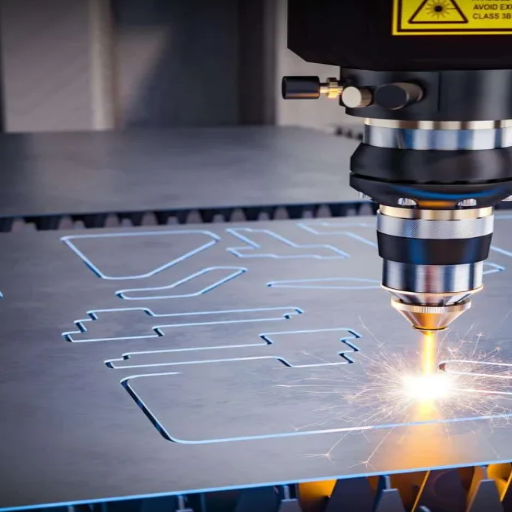
These costs in metal laser cutting depend on various principal factors. The choice of material and thickness constitutes primary considerations since dense or thick materials demand larger energy consumption and more time to be cut. Then come the expenses for running the machine: electricity consumption, maintenance, etc. Even with all this automation, some costs may still be associated with wages, at least for setup and monitoring. Another cost factor is design complexity, as intricate patterns usually take more time to cut and thus become more expensive. Businesses, therefore, aim to decrease their costs by minimizing material wastage and machine inefficiency, with an efficient design process thrown in for good measure.
Factors Influencing the Cost of Laser Cutting
- Material Type and Thickness
Each material has a different reaction when laser-cut. Metals are cut with higher fees than plastics or wood because of their density and heat resistance. Furthermore, thicker materials require a higher power laser and more time to cut, increasing the operating costs on the side. The higher the power of the laser, the faster the dense or thick stuff can be cut. It does, however, mean more energy consumption from the end-users. Thus, an efficient machine with the best settings for laser energy will save energy and operational cost and influence the final project cost. The level of intricacy involved affects production time. Cleaner and simpler shapes are produced quickly and thus at less cost than complex or highly detailed patterns that demand slower, more precise cutting, resulting in time and cost increases.
- Laser Cutter Setup and Programming Time
Setting up the laser cutter includes configuring and calibrating the machine to suit the job and creating the file required for display. The more complicated the setup, the more time and labor costs are involved.
- Production Volume
Large-scale production usually benefits from economies of scale, which decrease per-unit cost. Single- or lower-volume projects entail higher per-unit costs due to fixed preparatory expenses that must be spread across fewer items.
These factors determine the general cost of a laser-cut project, which indicates the need to plan properly and optimize resources for cost efficiency.
Cost Comparison: Laser Cutting vs. Traditional Cutting Methods
Laser cutting, on the other hand, requires a large capital outlay but is very precise, fast, and efficient; conventional methods are cheaper for small-scale or manual operations.
| Parameter | Laser Cutting | Traditional Cutting |
|---|---|---|
|
Initial Cost |
High |
Low |
|
Precision |
Very High |
Medium |
|
Speed |
Fast |
Slow |
|
Material Waste |
Minimal |
Higher |
|
Maintenance |
Regular |
Minimal |
|
Versatility |
High |
Medium |
|
Energy Use |
High |
Low |
|
Safety |
Safer |
Riskier |
|
Scalability |
High |
Low |
|
Suitability |
Mass Production |
Custom/Artisanal |
Investing in Laser Cutting Machines
Investments in laser cutting machines can significantly enhance production possibilities, precision, and efficiency in the manufacturing and design industries. These machines wield a high-power laser that can cut, engrave, or mark materials such as metal, wood, acrylic, and so on. Recent advancements in laser technologies have made them ever more accessible and versatile for the varied demands of industries.
Market insights indicate that the global laser cutting machine market is expected to grow from $4.2 billion in 2023 to approximately $6.1 billion by 2030, at a CAGR of 5.8 percent. The growth is fuelled by demand from the automobile, aerospace, electronics, and other industries for high-precision outputs and material conservation.
Modern laser cutters implement innovative features such as real-time monitoring and control, automatic parameter adjustment, and CAD/CAM software integration for a design-to-production workflow. Fiber laser technology also has its moment as it remains energy-efficient, boasts a longer lifespan, and easily cuts reflective materials such as aluminum and copper.
A quality industrial laser cutting machine may cost anywhere between $20,000 and $500,000-plus, depending upon its type, be it CO₂, fiber, crystal, and whatnot, and its capabilities. However, savings over time, by way of less material wastage, manpower, and maintenance, usually overshadow the initial investment. This also has to be seen from the sustainability angle, as laser cutting produces less waste and efficiently utilizes available resources compared with traditional cutting.
Investing in laser cutting machines generally lifts companies’ competitiveness banner and opens up avenues for innovation in design and manufacturing processes. With their capabilities ever enhanced by continuous evolution, they become investments any business that aims to maintain a lead in the fast-paced market cannot afford to miss.
Reference Sources
1. “Research on process parameter collaborative optimization of non-metal laser cutting based on carbon emission modeling and intuitionistic fuzzy sets”(Bao et al., 2020, pp. 142–157)
- Published in 2020
- This study establishes quantitative models of carbon emissions for the non-metallic laser cutting process, including emissions from electric energy, materials, the process, and waste recycling. An intuitionistic fuzzy search algorithm is then used to obtain target intervals for the process parameters, and a combinational experiment is carried out to analyze the energy consumption of each parameter combination. The results show that the carbon emission can be reduced under the best conditions of processing cost and time.
2. “Automated quality evaluation for laser cutting in lithium metal battery production using an instance segmentation convolutional neural network”(Kriegler et al., 2023)
- Published in 2023
- This study presents a deep learning computer vision approach for automating the quality inspection of lithium foil laser cutting. A Mask R-CNN model is implemented to categorize defective and successful cuts, and to segment the quality-relevant melt superelevation along the cut edge. The algorithm achieves high classification and segmentation accuracies, enabling the integration of automated image evaluation for quality inspection of lithium foil laser cutting.
3. “High speed laser cutting of ultrathin metal foils for battery cell production”(Ascari et al., 2023)
- Published in 2023
- This paper investigates the laser cutting of 12 μm-thick aluminum and 6 μm-thick copper foils using a galvo scanner and two fiber laser sources: single-mode constant wave and nanosecond pulsed wave. The cutting edges are analyzed to characterize the cutting quality, and the process is also described in terms of maximum achievable speed.
Frequently Asked Questions (FAQs)
What is a laser cutter, and how does it work?
A laser cutter is a machine that utilizes a focused laser beam to cut materials with precision. The process involves directing the laser beam onto the material, where it vaporizes the material, allowing for clean cuts. The laser cutting technology has revolutionized metal fabrication by providing faster cutting speeds and minimal waste. Different laser cutters, including CO2 and fiber, are each suited for various applications. The choice of a laser cutter often depends on the kind of materials being cut and the required precision.
What are the advantages of laser cutting for metal fabrication?
The advantages of laser cutting are numerous, especially in metal fabrication. Laser cutting offers high precision, allowing for intricate designs without extensive post-processing. It can also cut thick metal and different types of materials, making it versatile for various applications. Additionally, the process reduces material waste, as the focused laser beam creates narrow kerfs. Moreover, the speed of operation can lead to increased efficiency in manufacturing processes, making it an ideal option for industrial laser cutting tasks.
What are the main types of laser cutters?
The primary laser cutters are CO2 laser cutters and fiber laser cutters. CO2 laser cutters are often used for sheet metal and are known for their efficiency with non-metal materials. On the other hand, fiber laser cutters are ideal for cutting metals due to their high power and cutting speed. Each laser cutter has benefits and is suited for specific applications, including metal cutting and engraving. Understanding the differences can help you choose the right machine for your needs.
How does a CO2 laser cutter differ from a fiber laser cutter?
A CO2 laser cutter uses a gas laser that efficiently cuts non-metal materials and can also handle thin sheet metal. In contrast, a fiber laser cutter utilizes a solid-state laser that is highly effective for cutting metal, including thick metal. The focused laser beam in fiber lasers provides faster cutting speeds and finer detail, making them a preferred choice for industrial applications. Fiber lasers tend to have lower operational costs and longer lifespans than CO2 lasers, which can be a significant advantage in metal fabrication.
What are the benefits of sheet metal laser cutting?
The benefits of sheet metal laser cutting include its ability to produce clean and precise cuts with minimal burr. This process is particularly effective for creating intricate shapes and designs, which can be challenging to achieve with traditional cutting techniques. Laser cutting services offer flexibility in handling different materials and thicknesses, allowing for a broader range of applications. Moreover, the speed of laser cutting can significantly reduce production times, making it a cost-effective solution for manufacturers. Overall, the advantages of laser cutting make it an essential technology in modern metal fabrication.


