


For ages, metals have served as the foundation of humanity’s cultural and social evolution, providing primary materials for creating heavy machinery in industrial production, as well as intricate and rich Chinese ornamentation. Gold is a metal that is a favorite among many, not only for its visual beauty or its rate of distribution but also due to its various attribute,s among which is its melting point which plays a vital role of ensuring alloys as well as high precision applications are developed to the right properties. The principles of metal and gold alloy phase transformation and the behavior of gold during alloy formation are critical, as they apply to many fields beyond fine arts and manufacturing. This article provides a leisurely walk-through of what metallurgy is, and it also delves beyond that to explain what determines melting points, how gold behaves in alloy formation, and how these concepts are applicable in real life. Whatever your water wings need today, whether you be a jewelry maker or an architect, a construction worker, a housewife, or anybody with a love for metals, find out what melting points are and why they are of such importance.
Introduction to Melting Points
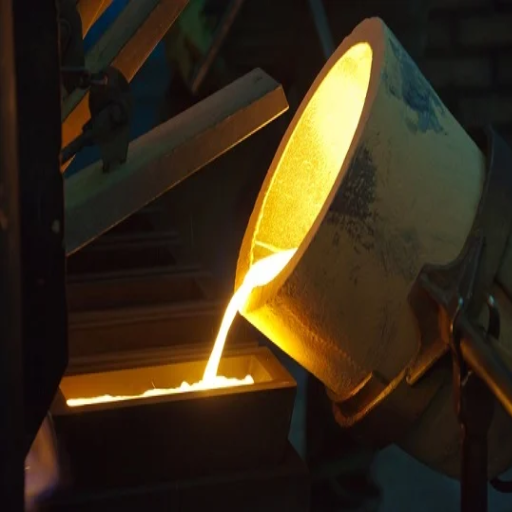
An arbitrary definition of the melting point is the temperature at which a solid changes into a liquid. This comprehensive definition encompasses the ability to conduct research and studies to gather facts about the properties and nature of the materials. Multicomponent structures or mixtures typically exhibit a range of melting points, in contrast to single pure substances. It is helpful in the fields of materials science, fabrication, and often in the instance of jewelry design, because there is a need for temperatures at which the media should be processed to achieve the desired outputs.
Definition of Melting Point
The definition of the substance melting point is the temperature at which the solid of the said material changes to a liquid at a given pressure. At this moment, solid and liquid phases of matter coexist within the substance—the measurement of how close a specific temperature range of a substance’s property is to the given. The ease of preparation of the material determines m. For instance, a completely pure substance will have a distinct melting point, whereas an impure matter or a mixture will have a range of melting points. This property, which defines the state of a solid substance intended to undergo variations, applies in many disciplines, such as chemistry, physics, and engineering.
Importance of Melting Point in Metals
Industrial applications and materials science are closely associated with the melting point of metals, among other factors. It specifies the range where specific applications, such as casting, forging, and welding, among others, can be performed, provided that the process phases are not disrupted.
As an illustration, certain metals with, for instance, tungsten, which has a very high melting point, are considered even in high temperature situations in such sectors as aerospace and energy because even in such conditions, they remain strong. On the other hand, metals with low melting points, such as aluminum, are chosen for the hottest sectors, which prefer lighter and more pliable materials, including automobiles and packaging.
Knowing the melting point data of metals is essential when developing new alloys and advancing technologies, as this information aids in various applications with specific performance requirements, such as engineering, construction, and electronics. Even more importantly, concerning the metal, the reason this data is fundamental is that it allows one to determine how much to melt before using a particular metal, which in turn makes it easier to design the manufacturing process and consume energy in a more intelligent manner.
Factors Affecting Melting Temperature
Uplifting joy, the importance of understanding gay allies, is certain that members within everyone else, most notably in Idaho, are the most affected, and this is reflected in the inventory or components. Below are five Americans the authors consider to be most important:
- The Atomic Structure
The arrangement of atoms and the strength of their bonding within a metal play a significant role in determining its richness in color. Metals with a densely packed structure of atoms, such as tungsten, often have higher melting points as there are more binding links between atoms.
- Alloying Elements
The introduction of elements into a metal might change as far as the meltings of elements are tampered. Free metallic elements typically have high melting temperatures. They are more accurately defined in terms of their individual melting points, whereas alloys have a much lower melting point due to the combination of their mixed components.
- Environmental Factors
The Variation of environmental conditions can alter this property of the metal, proportionately affecting the melting point of the metal, because the environment influences every one of the Polytropes. As one of the atoms becomes larger, the pressure increases, and this concentration will also increase, resulting in a higher melting point.
- Foreign Objects
If the material is contaminated, its entrance melts the material, and the temperature decreases. The contaminants are positioned in the material and affect the structure of the poles. The bonds weaken, and less energy is required for the metal to transition from a solid state to a liquid.
- Thermal State
The manipulation of heat or cold in the metal, or even the rate at which the metal changes, can either ease or aggravate the crystallization process and the formation of crystals during melting. When a high temperature is applied, slow and uniform melting or stable melting behavior should be expected; however, rapid heating is also anticipated, which might translate to nonuniform melting.
Melting Point of Gold

Gold has one of the highest melting points, at 1064 degrees Celsius, and it is 1947 degrees Fahrenheit when corrected for atmospheric pressure. Its high melting point is one of the main factors that make gold long-wearing and suitable for several mechanical applications, including electronics, and in the course of ratings.
Characteristics of Pure Gold
The highest gold purity, referred to as 24-karat gold, is characterized by specific, distinctive properties that set this metal apart from others. The ability to be shaped holds these high-melting-point elements together since it is strong, and you won’t get any damage. Moreover, this metal is both a conductor of electricity and heat, which is why you see sophisticated electronics featuring gold plating. This motivation is equally applicable to gold jewelers, as the precious metal possesses an additional quality: it is resistant to wear and tear due to exposure to air or moisture. This feature makes gold even more precious, making it an integral part of ornaments as well as constructions in specific industries. In its native state, the soft metal is gold, but there is no reason why this term has to be taken smoothly – it is not, and perfectly remains at the forefront of many escapades without showing signs of oxidation.
Melting Temperature of Gold
The melting point of gold is 1064 degrees Celsius (1947 degrees Fahrenheit). Such a high melting point is one of the reasons that makes the industrial significance of gold very high, especially in electronics and engineering. So the ability to handle extreme heat without collapsing, without compromising the following beneficial attributes, is of great importance in the selection of materials. The point is that the melting point of gold has been established with great clarity and precision, thereby making it applicable in many fields.
Boiling Point of Gold
The boiling point of gold is approximately 2,856 degrees Celsius, which equals 5,173 degrees Fahrenheit. At that extreme temperature, gold changes from a liquid state to a gaseous state. This feature is not only of scientific interest but is also quite helpful in many modern industrial applications, where gold is needed in vaporized form, for instance, in coating, electronics, thin-film applications, and others. The ability to understand the boiling point of gold helps one make more accurate operations in industries and ensures that materials can function in high-temperature conditions.
Alloys and Their Melting Points
There were different kinds of issues in Chaucer’s age, among which was the attitude toward different diseases. Firstly, there were several causes and conditions familiar to translators, as it was an era when numerous plagues and epidemics broke out. Secondly, there was a religious explanation for those diseases and health issues, where critics reminded of Christianity. This concomitant religious outlook had far-reaching, serious repercussions on the role of women in society. For this reason, an example of a gentlewoman in the Canterbury Tales, subject to several interpretations and cognizances, is a two-edged sword to Chaucer, as a social critic, testifying about issues of that time.
Definition and Importance of Alloys
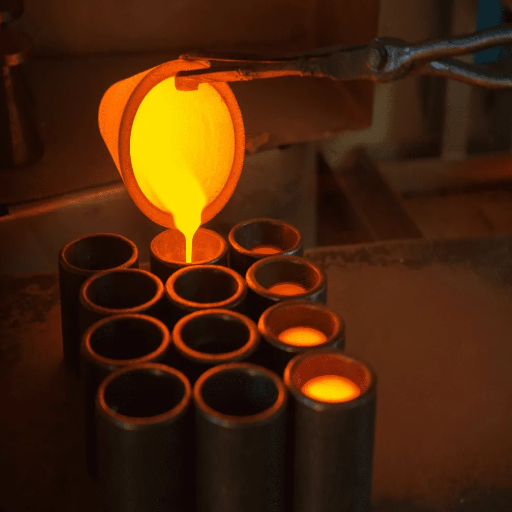
An alloy is a mixture of two or more elements, with at least one being a metal, designed to improve the properties, such as physical, mechanical, and thermal, of the resulting metal. Most of the metal specimens today are not pure metals, but rather a combination of metals or a metal and a non-metal, in which case some of the properties of the metals become enhanced compared to those of the pure metals. An example of this is through the application of stainless steel, which is an alloy of iron, chromium, and nickel. Thus, one of its characteristics is that it does not rust; however, it has very high tensile strength, which makes it of critical importance in various industries, such as construction and healthcare.
It is the flexibility of alloys and their applicability that count. They are required for making lightweight yet strong composites for aviation or high-performance devices for construction, as well as elements in modern electronics. Alloys are vital for society, as they bring about possibilities in terms of engineering and design, enabling the meeting of contemporary technology and infrastructure requirements.
Gold Alloys and Their Properties
Gold alloys are metals that are typically developed by mixing both gold and other metals such as silver, copper, palladium, or nickel, just to name a few, to enhance the physical qualities of gold… and of course, its good looks as well. Although pure gold (24 karats) is relatively soft and ductile, it is consequently unsuitable for use in specific applications. Adding different metals to gold will toughen it, making it less prone to breakage, and it can be used in various industries, including jewelry, dentistry, electronics, and robotics.
For instance, 14-karat yellow gold is made by mixing gold with both oxygen and copper at room temperature, giving it a yellowish color similar to 24-karat gold. Meanwhile, 14-karat white gold combines gold with palladium or nickel, resulting in a bright white finish, which is favored in current jewelry. Rose gold, a shade of pink, incorporates gold, but unlike the other 14k colors of yellow and white, it features a higher ratio of copper. Gold jewelry is a blend of different metals that allows for customization tailored to the wearer’s requirements.
Comparison of Different Metal Alloys
Please see this point-by-point list, which enumerates the most frequently used metal composites: steel, brass, bronze, aluminum alloys, titanium alloys, nickel alloys, and copper-nickel alloys.
|
Alloy Type |
Composition |
Properties |
Uses |
Examples |
|---|---|---|---|---|
|
Steel |
Iron, Carbon |
Strong, Durable |
Construction, Auto |
Buildings, Tools |
|
Brass |
Copper, Zinc |
Durable, Conductive |
Hardware, Marine |
Fittings, Jewelry |
|
Bronze |
Copper, Tin |
Hard, Corrosion-Resistant |
Art, Marine |
Sculptures |
|
Aluminum |
Aluminum, Zinc |
Light, Corrosion-Resistant |
Aerospace, Auto |
Frames, Parts |
|
Titanium |
Titanium, Aluminum |
Strong, Biocompatible |
Medical, Aircraft |
Implants, Parts |
|
Nickel |
Nickel, Chromium |
Corrosion-Resistant |
Electronics, Marine |
Turbines, Valves |
|
Cu-Ni |
Copper, Nickel |
Ductile, Corrosion-Resistant |
Marine, Power |
Pipelines, Hulls |
Common Metals and Their Melting Points
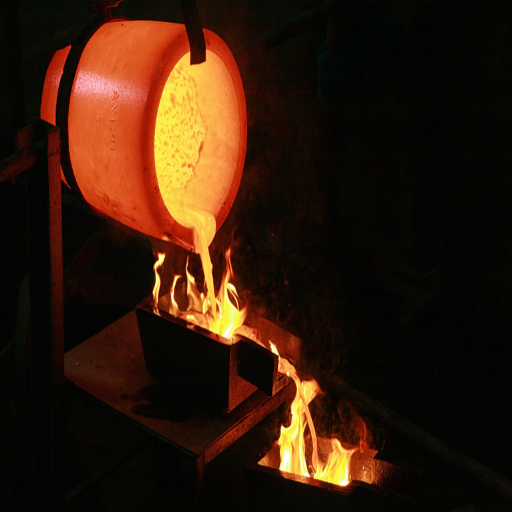
The melting temperatures of the metals usually used are as follows:
- Aluminum: About 660°C (1220°F)
- – Copper: Approximately 1085°C (1984°F)
- – Gold: Approximately 1064°C (1948°F)
- – Iron: Around 1538°C (2800°F)
- – Silver: About 961°C (1761°F)
- – Steel (carbon steel): Close to 1371°C range (about 2500°F)
These figures may vary slightly depending on the percentage content and the purity of the metal.
Overview of Common Metals
In the world of manufacturing and everyday life, it is common to use various metals, such as aluminum, copper, and steel. For example, aluminum, which is famously lightweight and rustproof, is extensively used in the manufacture of car parts, boxes, and houses, among other applications. Roll out the copper! It has high conductivity and its integration is inevitable in electric works, communication facilities, and routine repair operations. As for gold and silver, their luster and low ohmic resistance make them a possibility for use in the production of items such as jewelry, devices, and a form of savings. For example, iron and steel are extremely tough and durable metals, and they are fundamental to the building and machine industries. Every kind of metal plays a prominent role due to its unique properties in the technology and industries people pursue.
Applications of Metals Based on Melting Points
From their melting points, it can be observed that metals are selected for each specific requirement in their particular application. The melting temperatures of each metal are considered an essential factor, as they determine, to a large extent, the applications of that specific metal at different temperatures. Below are five metals which are paired with the respective applications to which they are generally used, and in the process, the importance of the metals’ melting point shall be illuminated:
- Tungsten (melting point: 3422°C/6192°F)
Uses: This element, having a very high melting point, is very effective for filament in a bulb,
in high-temperature furnaces as well as in the aerospace industry.
- Iron (melting point: 1538°C / 2800°F)
Uses: Iron is primarily used in the production of steel, which is employed in the construction of buildings, the manufacture of cars, and the fabrication of machine tools, as it is durable and has a high melting point.
- Aluminum (melting point: 660°C/1220°F)
Uses: Aluminum is employed in its molten state for packaging materials, as it is easy to melt and offers a lightweight alternative to other materials used for packaging, such as foil. It is also used in the aeronautics and motor industries.
- Gold (melting point: 1064°C/1947°F)
Uses: Gold is used in electronics because it can withstand moderate heat. It is also used in making jewelry and several other industrial applications, due to its good workability and moderate melting point.
- Lead (melting point: 327°C / 621°F)
Uses: Lead is used in products that require a material with an easily accessible melting temperature, and as such, batteries, solders, and radiation shielding are significant lead applications.
Industries can select the most suitable type of metal for a specific task, considering the varying melting points of different metals. With this, they will effectively fulfill the intended purpose without compromising flexibility.
Reference Sources
- Authors: Ž. Jelen et al.
- Published in: Nanotechnology Reviews, Volume 12, January 2023
- Citation Token: (Jelen et al., 2023)
- Key Findings:
- The study determined the melting point of dried gold nanoparticles to be approximately 1064.3°C, which is close to the melting point of pure gold.
- The absence of melting point depression in the nanoparticles was attributed to exothermic sintering occurring between 712°C and 908.1°C.
- Methodology:
- Two methods were employed to determine the melting temperature: uniaxial microcompression and differential scanning calorimetry (DSC).
- The uniaxial microcompression method resulted in sintering at room temperature, making it impossible to evaluate the melting point through this technique.
2. Structural and Small-Angle Scattering Analysis on Melting of Gold Nanoparticle
- Authors: R. Fahdiran et al.
- Published in: Journal of Physics: Conference Series, Volume 2582, September 2023
- Citation Token: (Fahdiran et al., 2023)
- Key Findings:
- The study utilized molecular dynamics (MD) simulation to analyze the melting dynamics of gold nanoparticles with a thickness of 8 nm.
- The results confirmed the melting state at the end of the simulation, indicating the system’s expansion.
- Methodology:
- The MD simulation was conducted by heating the system from room temperature to three times the melting point throughout 10 ps.
- Common Neighbor Analysis (CNA) and small-angle scattering techniques were used to confirm the melting state and analyze the system’s expansion.
3. Interior Melting of Rapidly Heated Gold Nanoparticles
- Authors: Jixing Chen et al.
- Published in: Journal of Physical Chemistry Letters, August 2021
- Citation Token: (Chen et al., 2021, pp. 8170–8177)
- Key Findings:
- The study revealed that melting can initiate from the interior of gold nanoparticles when subjected to high heating rates, which is a novel melting regime.
- This finding challenges the conventional understanding that melting starts from the surface.
- Methodology:
- The research involved the high-speed heating of gold nanoparticles and the monitoring of the melting process using advanced imaging techniques.
- The study examined the conditions under which interior melting occurs, with a focus on nanoparticle size and heating rates.
Frequently Asked Questions (FAQs)
What is the melting point of gold?
The melting point of gold is approximately 1,064 degrees Celsius (1,947 degrees Fahrenheit). This temperature is the point at which solid gold transitions into a liquid state, allowing for various applications in jewelry making, electronics, and other industries.
Why is the melting point of gold important?
The melting point of gold is crucial for several reasons, including its applications in metallurgy and the manufacturing industry. Understanding this temperature enables jewelers and manufacturers to determine the most effective methods for casting and shaping gold, thereby ensuring the integrity and quality of the final product.
How does the melting point of gold compare to other metals?
Gold has a relatively low melting point compared to other precious metals such as platinum, which melts at about 1,768 degrees Celsius (3,214 degrees Fahrenheit). In contrast, silver has a melting point of around 961 degrees Celsius (1,762 degrees Fahrenheit). This makes gold easier to work with in various applications.
What factors can affect the melting point of gold?
The melting point of gold can be influenced by its purity and the presence of alloying metals. Pure gold (24 karat) has a melting point of 1,064 degrees Celsius, while gold alloys, which include metals like copper or silver, may have different melting points depending on their composition.
How is the melting point of gold measured?
The melting point of gold is typically measured using a technique called differential thermal analysis (DTA) or by using a simple melting point apparatus. These methods enable the precise measurement of the temperature at which gold transitions from a solid to a liquid.
Can gold be melted at home?
Yes, gold can be melted at home using a propane torch or a furnace capable of reaching the necessary temperature. However, safety precautions should be taken, including proper ventilation and the use of protective gear, to ensure a safe melting process.
What are the applications of melting gold?
The melting of gold is widely used in various applications, including jewelry making, electronics manufacturing, and dental applications. Melted gold can be poured into molds to create desired shapes and forms, making it a versatile material for both decorative and functional items.
Is the melting point of gold affected by environmental conditions?
Environmental conditions do not significantly affect the melting point of gold. However, the method used to heat gold, along with factors such as pressure, can influence the melting process. In standard atmospheric pressure, the melting point remains stable at around 1,064 degrees Celsius.


