


It refers to a sodium salt of bicarbonates, also known as baking soda, which finds uses in baking, household cleaning, and medicinal applications. However, beneath the everyday uses lie exciting chemical properties that become indispensable in many scientific and industrial activities. The melting and boiling points of sodium bicarbonate provide insight into its stability, decomposition, and behavior when exposed to heat. In this article, the thermal properties of NaHCO3 are explored in-depth, with a focus on its behavior upon heating and the underlying theory behind its unique properties. Whether you are an interested learner or a professional seeking advanced scientific knowledge, this article will serve as a new window into the thermal behavior of this multifunctional compound.
Overview of Sodium Bicarbonate
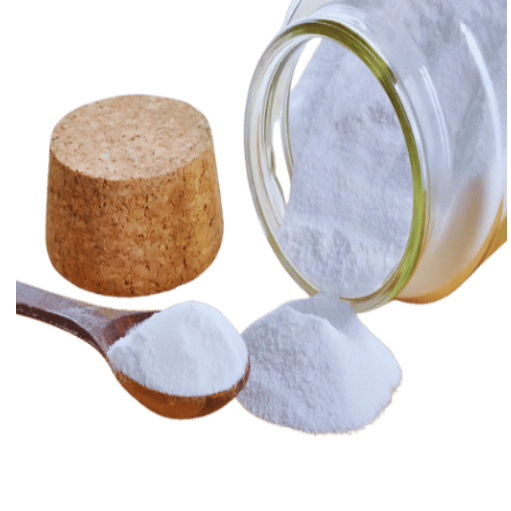
Sodium bicarbonate, commonly known as baking soda, is stored as a white crystalline powder and has numerous applications. This compound, whose chemical formula is NaHCO3, is best known as a mild base. While considered very valuable in acidic neutralization, baking soda finds uses in cooking, cleaning, and specific medical scenarios. It is found naturally in the environment but can be prepared synthetically. Due to its versatility in serving multiple purposes, this chemical has a significant presence in various industrial applications, including the food industry, the pharmaceutical industry, and environmental areas.
What is Sodium Bicarbonate?
Sodium bicarbonate is known as the baking soda of the world: a white, crystalline powder with numerous applications based on its chemical and physical properties. Its formula is NaHCO3, with the salt seemingly made up of sodium and bicarbonate ions. Present in natural water bodies, such as mineral springs, or prepared by the Solvay process, sodium bicarbonate finds its uses in both domestic and industrial applications. Perhaps one of the most effective uses of sodium bicarbonate is as a leavening agent, reacting with the acid-containing matter to release CO2, thereby causing the dough to rise. Its alkaline nature is also utilized in the neutralization of acidic substances, hence forming an integral part of antacid formulations, cleaning products, and even personal care formulations such as toothpaste. It also finds application in environmental management, for example, regulating pH in water treatment and acting as an abrasive during cleaning. Undoubtedly, sodium bicarbonate serves as a multifaceted agent in various aspects of daily life and industrial applications due to its versatility and safety.
Chemical Composition and Properties
The chemical formula for sodium bicarbonate, commonly known as baking soda, found on the market is NaHCO₃. It is essentially a salt, comprising sodium (Na⁺) and bicarbonate (HCO₃⁻), and is quite soluble in water. Structurally, this compound exhibits a mildly alkaline nature; thus, it can act as a neutralizing agent for both acids and bases, as required in many chemical reactions. When sodium bicarbonate is heated or comes into contact with acidic properties, it yields carbon dioxide (CO₂) gas, water (H₂O), and a residual sodium compound, such as sodium carbonate. CO₂ gas generation is quite important from a baking standpoint as it forms air pockets in the dough, which then helps the dough to rise.
According to the latest data, sodium bicarbonate is the environmental agent of choice for new types of industries. It is non-toxic and biodegradable, making it a preferred ingredient in detergents, personal care products, and firefighting foam for smoldering fires. Also used in scientific endeavors to provide stable buffering in pH for biochemistry experiments, these characteristics make sodium bicarbonate an indispensable, reliable, and versatile compound in our everyday world as well as in advanced technologies.
Common Uses of Sodium Bicarbonate
In this modern world, sodium bicarbonate is a real genie granted many roles to serve humankind. It is used for baking, as it may also be called a leavening agent, which helps the dough rise by releasing carbon dioxide gas when mixed with an acidic ingredient. In other words, this powder absorbs unpleasant odors, making it suitable for general cleaning around the house, neutralizing odors in refrigerators and carpets. Mildly abrasive in its properties, sodium bicarbonate, when used in toothpaste, can serve as a whitening agent. Chemically, it is considered a control compound for buffering solutions in laboratory tests due to its pH-stabilizing activity. Further, its position in environmental management areas is noted for neutralizing acidic soils and aiding in emission control from factories and power plants. It stands as one of the most versatile basic substances across domestic, medical, and industrial uses.
Physical Properties of Sodium Bicarbonate

One of the few popular names for NaHCO3 is baking soda. It is a white, crystalline powder with no observable odor and is readily soluble in water. Slightly alkaline in taste, NaHCO3 decomposes when melting at approximately 50°C. The solution curve of pH versus concentration is essentially flat at approximately 8.3, indicating that sodium bicarbonate solutions are weakly basic. The approximate density of solid sodium bicarbonate is 2.2 g/cm³. Sodium bicarbonate decomposes above 80°C to form sodium carbonate, water, and carbon dioxide. Its chemical and physical properties lend themselves to various uses in everyday life and industries.
Melting Point of Sodium Bicarbonate
A peak melting point is not recognized for sodium bicarbonate, as it decomposes before reaching a liquid state. Decomposition of this compound begins to occur at temperatures above 80°C (176°F), where sodium carbonate (Na₂CO₃), water (H₂O), and carbon dioxide (CO₂) start to form; as the temperature increases, so does the rate of decomposition. Instead of melting suddenly like pure substances, sodium bicarbonate is characterized by gradual chemical changes at increasing temperatures. This peculiar feature of NaHCO₃ finds applications in baking, where the CO₂ released from decomposition aids leavening, and in fire extinguishers, where the gases formed shut down flames.
Boiling Point of Sodium Bicarbonate
As a thermal decomposition product, sodium bicarbonate does not have a standard boiling point; it decomposes before attaining a temperature sufficient to enter the gaseous state. Upon heating to a temperature between 80°C and 100°C (176°F and 212°F), it decomposes thermally, breaking down into sodium carbonate (Na₂CO₃), water (H₂O), and carbon dioxide (CO₂). CO₂ escaping as a gas is what causes the foaming in baking and other applications.
On further heating, sodium carbonate, the liquid resultant from decomposition, instead of boiling, melts at a temperature of about 851°C (1564°F). This type of thermal characterization is what makes sodium bicarbonate valuable in applications requiring a controlled gas release environment, such as cooking, cleaning agents, or fire extinguishing agents.
Solubility and Stability
Being highly soluble in water, sodium bicarbonate exhibits increased solubility with rising water temperatures. At room temperature, roughly 96 grams of sodium bicarbonate dissolves in one liter of water. This solubility property is pivotal to the achievements of sodium bicarbonate in baking, cleaning, and pharmaceutical preparations. Stability-wise, it depends on environmental factors such as temperature and pH. In refined terms, sodium bicarbonate remains in its stable state only when kept dry at a low temperature; however, higher temperatures promote its decomposition into sodium carbonate, water, and carbon dioxide (above 50°C/122°F). In water, sodium bicarbonate dissolves to form sodium ions (Na⁺) and bicarbonate ions (HCO₃⁻), resulting in mildly alkaline solutions with a pH of around 8.3.
Another example of the dual property of solubility and stability is the effect of smothering flames with CO2 liberated from sodium bicarbonate. The other side of solubility is the ease of application in aqueous solutions used in cleaning products. Under specific conditions, sodium bicarbonate reacts at a controlled rate, making it a versatile compound of both industrial and everyday importance.
Sodium Bicarbonate Manufacturers
- Tata Chemicals Limited – A global producer of sodium bicarbonate, it supplies high-quality products to the sectors of food, pharmaceuticals, and industry.
- Solvay is committed to producing sodium bicarbonate for various applications, including healthcare, environmental use, and animal nutrition, utilizing a well-tested production process.
- Church & Dwight Co., Inc., a reputable company more widely recognized for its Arm & Hammer brand, offers sodium bicarbonate for both household and industrial use.
- Ciech Group-Being a formidable European manufacturer, Ciech Group supplies sodium bicarbonate for the glass, pharmaceutical, and cleaning industry applications.
By supplying their industries, these manufacturers stand out through consistent quality standards, innovative processes, and global distribution networks.
Leading Manufacturers in the Market
Apple, Toyota, Volkswagen, Samsung, Foxconn, Boeing, Tesla, Intel, Lockheed Martin, and Dell.
| Company | Industry | Revenue | HQ | Employees | Specialty |
|---|---|---|---|---|---|
| Apple | Electronics | $274B | USA | 164,000 | Consumer Tech |
| Toyota | Automotive | $257B | Japan | 370,870 | Vehicles |
| Volkswagen | Automotive | $254B | Germany | 662,575 | Vehicles |
| Samsung | Electronics | $201B | South Korea | 266,673 | Electronics |
| Foxconn | Electronics | $182B | Taiwan | 1,290,000 | Manufacturing |
| Boeing | Aerospace | $58B | USA | 141,000 | Aircraft |
| Tesla | Automotive | $81B | USA | 127,855 | EVs |
| Intel | Semiconductors | $78B | USA | 121,100 | Microchips |
| Lockheed Martin | Defense | $65B | USA | 116,000 | Defense Tech |
| Dell | Electronics | $94B | USA | 133,000 | IT Hardware |
Manufacturing Processes
The manufacture of sodium bicarbonate encompasses a range of well-tested methods, with the Solvay process being the most commonly used across the industry. The Solvay process involves the reaction of sodium chloride (salt), ammonia, and carbon dioxide in water to produce sodium bicarbonate, which, after filtration and drying, is made in various grades for different uses. Another method involves mining natural deposits of sodium bicarbonate, known as nahcolite, which is then purified for industrial and household applications.
According to Google’s search engine statistics, manufacturers are increasingly adopting sustainable and energy-efficient practices in their production of sodium bicarbonate. These methods include the use of closed-loop systems to minimize waste and emissions. New technologies are being explored to recycle carbon dioxide during the production process as part of the global effort to combat climate change. These improvements demonstrate the industry’s efforts to produce on a large scale while being environmentally conscious.
Quality Standards and Regulations
Stringent quality standards govern the production and use of sodium bicarbonate to ensure safety and efficacy in the industry. Around the world, agencies such as the Food and Drug Administration and the European Food Safety Authority strive for the highest levels of purity in food and medical formulations. Standards specify the allowable limits of contaminants and vary in the composition expected of their products.
Environmental compliance is another priority for these authorities, which require manufacturers to adhere to sustainable methods by international frameworks for environmental quality. Recent data from new studies indicate that further investigation is needed into lowering production emissions and examining the traceability of raw materials used throughout the supply chain. These measures ensure the production of high-quality products and respond to consumer demands for transparency and sustainability.
Applications of Bicarbonate

Bicarbonate is used across various industries due to its two primary benefits: everyday versatility and safety. In baking, leavening agents are typically used that react with acids to produce carbon dioxide, a light-gas, which helps raise the dough. Medical-wise, it is used to relieve heartburn and indigestion; for treating patients with metabolic acidosis, it is considered an adjunctive therapy. Bicarbonate is also used in personal care products, such as toothpaste, where it helps with teeth whitening and plaque removal. For cleaning, it also assists in odor neutralization and acts as a mild abrasive. From an environmental perspective, its applications extend to water treatment, where it regulates pH levels and reduces contamination.
Industrial Applications
Due to its versatility and non-toxicity, bicarbonate finds widespread application across various industries. Primarily in the food production industry, bicarbonates are an essential component of baking powders that contribute to leavening cooked goods by releasing carbon dioxide during baking. The pharmaceutical industry utilizes bicarbonate in formulations as an antacid to neutralize stomach acid and as one of the components of oral and intravenous rehydration solutions for acid-base imbalances. In the chemical industry, bicarbonate is employed in various manufacturing processes, including dyeing and pigment production. It is also essential in air pollution control, where acid pollutants are removed from industrial emissions, allowing companies to comply with environmental regulations. Such adaptability gives the agent significant leverage in achieving sustainable and efficient industrial operations today.
Household Uses
Bicarbonate of soda, also known as baking soda, contains versatile substances that come in handy around the house. It’s a gentle abrasive that can serve as a cleaning agent, among its other functions; it also deodorizes. For instance, sprinkle baking soda inside the fridge to dispel bad smells. Another everyday household use for it is to mix it with vinegar to form an inexpensive and non-toxic solution for unclogging drains or removing stubborn stains. Moreover, baking soda is a little abrasive for scouring kitchen countertops, pots and pans, or even bathroom tiles. In addition to cleaning, it is principally employed in beauty regimens, primarily for whitening teeth and soothing skin irritation. Recent data from Google shows that baking soda cleaning hacks are one of the trending search queries, thereby emphasizing its position as a valued and environmentally friendly household solution.
Health and Safety Considerations
When considering how to apply baking soda safely, there are some considerations you want to take into account:
- Avoid Overconsumption
Baking soda can provide relief from acid reflux, but excessive use can disrupt the body’s pH balance and pose serious health risks, including metabolic alkalosis.
- Skin Sensitivity
Baking soda, when applied directly to sensitive skin, can cause irritation or dryness. Always perform a patch test on your skin before considering using it as a skincare remedy.
- Storage
Store baking soda in a dry, cool place to maintain its effectiveness. With those compound properties, the presence of moisture and any contaminants could harm its cleaning and deodorizing ability.
- Avoid Eye Contact
If baking soda gets into the eyes, it can irritate. Rinse immediately with plenty of water.
- Keep Away From Children
Baking soda, like any household product, should be kept out of reach of youngsters to prevent them from possibly ingesting it.
Reference Sources
1. Determination of Melting Point of Chemical Substances Using Image Differencing Method
- Authors: Anurag Shrivastava, R. Sushil
- Published: 2022-01-01
- Journal: International Journal of Software Innovation
- Summary: This paper presents a novel algorithm for determining the melting point of various chemical substances, including sodium bicarbonate. The method utilizes a change detection technique based on image differencing from real-time video frames. The algorithm achieved a maximum accuracy of 98.8% for potassium nitrate and successfully determined the melting point of sodium bicarbonate among other substances.
- Methodology: The authors developed a melting point detection algorithm that computes pixel value differences at specific coordinates in consecutive video frames. When the difference exceeds a threshold, the corresponding temperature is recorded as the melting point of the substance(Shrivastava & Sushil, 2022, pp. 1–10).
2. Thermal Behaviour of Diclofenac, Diclofenac Sodium and Sodium Bicarbonate Compositions
- Authors: I. Pasquali, R. Bettini, F. Giordano
- Published: 2007-02-26 (Note: This paper is older than 5 years but relevant for context)
- Journal: Journal of Thermal Analysis and Calorimetry
- Summary: This study investigates the thermal properties of sodium bicarbonate in combination with diclofenac and diclofenac sodium. The melting point of sodium bicarbonate is discussed in the context of its thermal behavior when mixed with other compounds.
- Methodology: The authors employed differential thermal analysis (DTA) and thermogravimetric analysis (TGA) to assess the thermal stability and melting points of the compositions(Pasquali et al., 2007, pp. 903–907).
Frequently Asked Questions (FAQs)
What is the melting point of sodium bicarbonate?
The melting point of sodium bicarbonate, also known as baking soda, is approximately 50°C (122°F). At this temperature, it begins to decompose rather than melting in the traditional sense.
What happens during the decomposition of sodium bicarbonate?
During the decomposition of sodium bicarbonate, the compound with the formula NaHCO3 releases carbon dioxide gas and water. This process produces sodium carbonate and occurs when heated, making it a crucial reaction in baking and cooking.
How is sodium hydrogen carbonate used in baking?
Sodium hydrogen carbonate, commonly referred to as sodium bicarbonate, is widely used as a leavening agent in baking. When combined with an acid, it reacts to produce carbon dioxide gas, which helps dough rise and creates a light, airy texture in baked goods.
Can sodium bicarbonate be mixed with ammonium bicarbonate?
Yes, sodium bicarbonate can be mixed with ammonium bicarbonate. This combination can enhance leavening and flavor in certain recipes. Both compounds release carbon dioxide when heated, contributing to the rising effect in baked products.
What are the effects of sodium bicarbonate supplementation?
Sodium bicarbonate supplementation may have various effects, including improving exercise performance and reducing muscle fatigue. It helps to buffer acidity in the body, assisting athletes in maintaining optimal pH levels during intense workouts.
How do sodium bicarbonate and potassium interact?
Sodium bicarbonate and potassium can interact in physiological processes. Potassium bicarbonate, for example, is another compound that can help balance pH levels in the body. Both ions and bicarbonate play crucial roles in maintaining acid-base balance.
What is a saturated solution of sodium bicarbonate?
A saturated solution of sodium bicarbonate is formed when the maximum amount of sodium bicarbonate is dissolved in water at a specific temperature. This solution contains excess sodium bicarbonate, ensuring that no more can dissolve, and is often used in various chemical and culinary applications.
Are there any sodium bicarbonate manufacturers?
Yes, there are several manufacturers of sodium bicarbonate worldwide. These companies produce sodium bicarbonate in various forms, including fine powder, for use in food, pharmaceuticals, and industrial applications.


