


Bismuth, the heavy metal with a dazzling iridescence and peculiar properties, is in a class by itself. Because bismuth is considered to have a low toxic nature and forms a unique structure, it has excited scientists, artists, and workers alike. One of those fascinating features is that it has a relatively low melting point, thus creating giant kaleidoscopic crystals and very many other industrial and artistic applications. This article attempts to analyze the bismuth melting point characteristics, relating how this characteristic affects the behavior of bismuth and its use in various fields, from medical technology to metallurgical processes. For anyone who considers themselves a scientist or an artistic soul, the journey along this path on which chemistry and industry meet will delight you as much as it will challenge you.
Understanding Bismuth: Properties and Characteristics
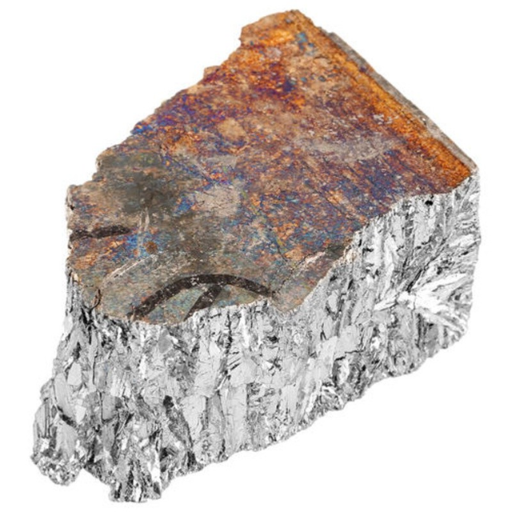
Bismuth is a brittle, crystalline metal, silvery-white in color, occasionally showing a faint hue of pink. It has an atomic number of 83 and is classified as a post-transition metal. In view of its relatively non-toxic nature compared to other heavy metals, it has enjoyed posterioral implications due to its low melting point of 271.5 °C (520.7°F) in low-temperature alloys. It is diamagnetic too and is repelled by magnetic fields. Its profuse utilization arises from properties such as expansion upon solidification and a bright, iridescent luster. The suite of properties makes bismuth scientifically fascinating and industrially important.
Chemical and Physical Properties of Bismuth
Bismuth is a chemical element with the symbol Bi and the atomic number 83. It belongs to the post-transition metals and shows some unusual chemical and physical properties. With a density of 9.78 g/cm³, bismuth is heavy, yet relatively less dense than its neighbors on the periodic table, lead and mercury. The atomic arrangement of bismuth results in low thermal and electrical conductivity compared to other metals.
From the chemical perspective, bismuth is relatively stable; therefore, it does not go through oxidation while in normal air, except for the thin protective oxide layer. Compounds of bismuth occur mainly in the +3 oxidation state, though there are rare instances when +5 can be observed under specific circumstances. Bismuth compounds such as bismuth subsalicylate are favored due to their low toxicity and medical effectiveness.
Anisotropy in crystal structure imparts the exciting bismuth property of reflection of light on its surfaces, thereby resulting in the peculiar, colorful iridescence. Bismuth also expands while solidifying, a rather unusual phenomenon shared with very few elements, among which antimony is included. Therefore, with such remarkable properties, bismuth is the chosen material in numerous scientific and industrial applications.
The Unique Iridescent Appearance of Bismuth Crystals
The iridescent hues of bismuth crystals are due to a thin layer of oxide forming on the surface as the crystals cool. These thin layers interfere with light waves through the thin-film interference mechanism, producing a rainbow of colors. At the same time, the steep terrace structure of bismuth crystals, arising from its rapid growth at the edges relative to the center, contributes to an excellent geometric look. All these phenomena combine to produce the iridescent hues that make bismuth crystals so beautiful and very much in demand, both for decorative and scientific purposes.
Diamagnetic Nature of Bismuth Metal
It is strongly diamagnetic, with the property of repelling particular magnetic fields, making it the strongest diamagnetic element in existence. This anomalous diamagnetism arises from the extraordinary configuration of its electrons where each electron pairs up with an oppositely directed magnetic moment that cancels out the external field. Recent measurements have placed its magnetic susceptibility at around -1.66 × 10⁻⁴, according to SI units, possibly the highest observed diamagnetic value. Further influences contributing to its diamagnetism are lattice vibrations and the electronic configuration, which enable the element to levitate ever so slightly when exposed to a strong magnetic field generated at very low temperatures. Such behavior has made it an intriguing substance in experimental physics and, consequently, in future applications, such as magnetic levitation systems or quantum research.
The Melting Point of Bismuth and Comparison with Other Metals

Key Melting Point
Bismuth: 271.4°C (520.5°F)
Bismuth has a melting point of 271.4°C, which is relatively low compared to other metals, such as iron (1538°C), gold (1064°C), and aluminum (660.3°C).
This table provides a comparative overview of melting points and key properties, such as electrical conductivity, density, and chemical reactivity, for selected metals alongside bismuth.
Overview of Bismuth’s Melting Point
With a melting point of 271.4°C, bismuth possesses one of the very low melting points among metals. From this perspective, it is significantly below the melting point of iron at 1538°C and substantially lower than gold’s melting point of 1064°C. The low melting temperature opens up several applications in making alloys for fire-fighting devices, where the material is expected to melt at a predefined low temperature. Moreover, the metal is helpful as an alternative to lead for soldering and other heat-related processes due to its non-toxic nature. The recently acquired data demonstrate that bismuth exhibits exciting thermal properties, including a relatively sharp melting transition and a repeatable melting temperature, which can serve as a basis for measurement and hold significant engineering and industrial value. In short, these exhibited properties make it a metal essential in low-melting eutectic alloys.
Comparative Analysis: Bismuth, Lead, Tin, and Zinc Melting Points
Bismuth, lead, tin, and zinc have melting points of approximately 271°C, 327°C, 232°C, and 420°C, respectively.
Scientific Principles Behind Bismuth’s Low Melting Point
Bismuth has a low melting point of 271°C due to its peculiar atomic and crystallographic properties. In a structural context, bismuth crystallizes in the rhombohedral system that, compared to most metals, correlates with weaker bonding interactions between constituent atoms. The rhombohedral lattice geometry is characterized by being the most open or least dense lattice, which consequently reduces the strength of metallic bonds that hold atoms together and lowers the energy required for melting the metal.
From an electronic perspective, the electronic configuration of bismuth ([Xe]4f¹⁴5d¹⁰6s²6p³) is paramount in determining its characteristic properties. The filled 6s and 6p orbitals present in the element provide high stability to the solid phase, yet low thermal conductivity: this stability and weak force of attraction at the atomic level lower the threshold energies for melting.
Recent advancements in thermodynamic research have provided a comprehensive understanding of the roles of bismuth’s high atomic mass and low atomic-level vibrational energy in affecting heat capacity and phase change properties. Another critical factor supporting a low melting point is the large atomic radius of bismuth compared to other post-transition metals, which results in diminished interatomic cohesive forces within the solid structure.
The low melting point of bismuth is quite significant in fusible alloys used in safety devices for sprinklers. In recent times, these alloys have also been utilized in environmentally safe, advanced electronics due to the non-toxic properties of bismuth.
Applications of Bismuth Driven by Its Melting Point
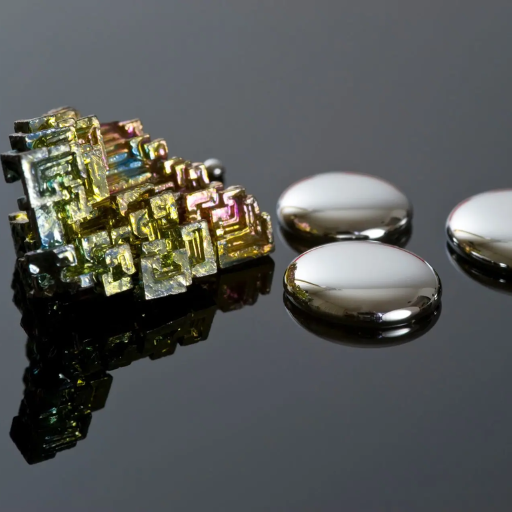
Due to bismuth’s low melting point, it is an essential constituent in fusible alloys, particularly in applications that require safety and security, such as fire sprinkler systems and electrical fuses. Bismuth is considered a safe metal, so the use of bismuth-based solders is increasing, replacing lead soldering methods and providing a solution that is environmentally friendly without compromising functionality. The low melting point also permits use in medical imaging, where bismuth-based compounds find their way into diagnostic applications. Hence, it is essential to understand the bismuth melting point due to its valuable properties and various applications.
Bismuth in Alloys: Benefits and Uses
- Low Melting Point Applications: Due to their low melting point properties, these alloys are considered suitable for safety devices such as fire sprinklers and fusible plugs, where temperature control is essential.
- Non-Toxic Substitution: Since bismuth is non-toxic, it is used widely to replace lead in lead alloys for plumbing, electronics, and other environmentally friendly applications.
- Dimensional Stability: Considering their dimensional stability, which ensures very accurate and exact mold production, bismuth alloys are cast for reproduction.
- High-Density Balancing: Due to its high density, bismuth is utilized in alloys designed for balancing components in various industries, including counterweights for industrial equipment and aerospace applications.
- Radiation Shielding: Bismuth alloys are widely used in medical and industrial applications for protection against radiation due to their excellent attenuation properties against X-rays and other forms of radiation.
Role of Bismuth in Fire Detection Systems
Bismuth finds an essential application in modern fire detection, especially in the manufacture of fire sprinkler heads and heat-sensitive devices. For producing fusible links or thermal activators for this system, bismuth-containing alloys, such as those with a low melting point, are used. These alloys, when heated to the intended temperature, will cause the release of water or activate alarms in the event of a fire. The precise thermal sensitivity, along with the non-toxic and stable nature of bismuth, assures early and effective fire detection and mitigation.
Non-toxic Alternatives: Bismuth vs. Lead in Industry
Bismuth serves as a safer, non-toxic alternative to lead in applications including soldering, ammunition, weighting, radiation shielding, and cosmetics.
Exploring Bismuth Crystals: Formation and Aesthetics
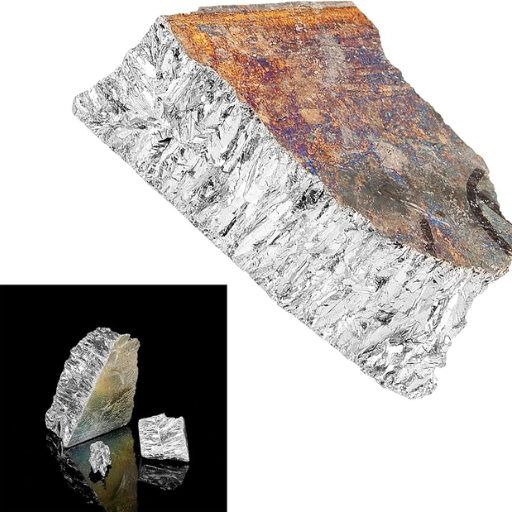
Bismuth crystals are formed through the controlled cooling of molten bismuth so that atoms arrange themselves in a geometrically structured lattice. The beautiful iridescent colors of bismuth crystals are a result of light interference caused by a thin oxide layer on their surface. The dazzling colorations, along with the stepped formations of the crystals, make for an artistic and decorative appeal. The formation process is quite simple and can be replicated even in a laboratory or at home, making it an attractive option for scientific and creative pursuits.
How to Make Bismuth Crystals
The formation of bismuth crystals is achieved by melting and then externally cooling bismuth metal, allowing the crystals to grow in the process. The following steps must be considered:
- Let Us Gather Materials
Keep on hand pure bismuth metal (with a minimum purity of 99%), a melting pot made of either stainless steel or cast iron, a heating device such as a propane torch or a stove, and personal protective equipment, including heat-resistant gloves, goggles, and a face mask. - Melting the Bismuth
Once everything is set, give the metal chunks a final inspection and place the partially filled pot over the heat to melt them away. There is no need for intense heat since bismuth has a melting point of 520°F (271°C). It is prudent to ensure proper ventilation to stay safe from fumes. - Removing Impurities
Skim the impurities that will form a layer atop the surface of the molten bismuth. This will result in a cleaner crystal and improve the quality of the final crystals. - Controlled Cooling
Allow the molten bismuth to cool at a slow rate. It is at slow cooling that crystals start to form. To assemble large and well-shaped crystals, the freshly formed solid crust should be separated from the remaining liquid bismuth as soon as a crust of solid crystals begins to form on the surface. - Harvesting the Crystals
Once the mixture is completely cooled, remove the solidified crystals carefully. Caution must be taken not to destroy the intricate patterns and break these crystals. - Optional Polishing
You can polish these crystals lightly using a soft cloth to bring out the iridescent oxide layer, which produces striking colors for aesthetic reasons.
Safety Note: By following these steps, you can create bismuth crystals that exhibit geometric forms and colors. Safety should be the priority, and proper handling techniques should be followed when dealing with molten metal and heat sources.
Understanding Bismuth Crystal Structures
Bismuth crystal formation stems from the unique properties of the metal and the slow cooling process. When molten bismuth begins to solidify, its atoms orient themselves into a highly ordered geometric array known as the rhombohedral lattice. This low-symmetry lattice structure is unlike what most metals exhibit, thus contributing to its brittleness. On the other hand, the brilliant colors seen in bismuth crystals result from a thin oxide layer that develops on the surface during formation. This oxide layer interferes with the reflected light, which gives rise to the bright colors that bismuth is known for. Tumultuous growing layers on the crystal surfaces themselves-the so-called hopper structures- are caused by faster crystal formation on the outer edges, leaving behind angled voids that supplement the unique appearance of bismuth. These phenomena make bismuth crystals both enjoyable from a scientific viewpoint and aesthetic from a sight perspective.
Oxidation and Its Effects on Bismuth Crystals
The skinny oxide layer, deposited over bismuth crystals, forms naturally as the crystal is exposed to the atmosphere. The layer results from bismuth reacting with oxygen to form bismuth oxide. Rainbow colors appear in crystals due to the interference of light as it reflects and refracts through this thin layer. The varying thickness of the oxide layer directly prevents and allows different wavelengths of light to be transmitted. This oxidation does not diminish the mechanical strength of the bismuth crystal but instead furthers its visual appeal worthy of consideration in artistic-landscape-allied endeavors.
Isotopes of Bismuth: A Scientific Perspective
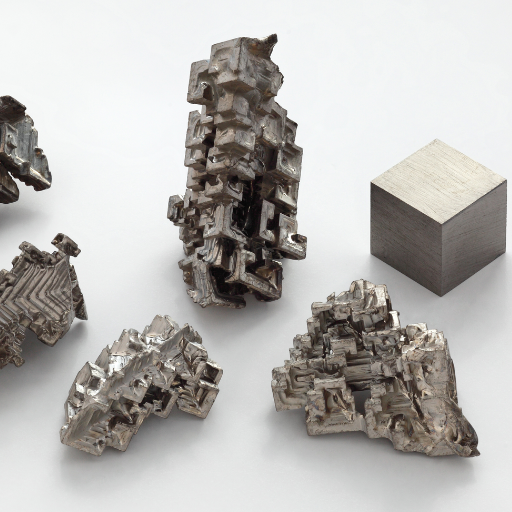
Bismuth has only one natural stable isotope; this is bismuth-209, which comprises almost 100% of bismuth in nature. In the past, isotope 209 was thought to be stable, but research later showed that it is, in fact, weakly radioactive, with a half-life estimated at approximately 1.9 × 10¹⁹ years. In practical terms, this isotope is regarded as stable because, within a human timescale, its decay is negligible. Several radioactive isotopes of bismuth, most notable among them bismuth-210, bismuth-212, and bismuth-214, have been produced synthetically in connection with various decay chains, including those of uranium and thorium. These isotopes are highly useful in nuclear science, medicine, and radiological studies, thereby highlighting the significant role that bismuth plays in scientific research.
Overview of Bismuth Isotopes
Bismuth has only one natural isotope that exhibits stability, bismuth-209, distinguished by its extremely long half-life of approximately 1.9 x 10^19 years, which renders it effectively stable. Being essential in welding and pharmaceutical industries, this isotope finds many applications. Bismuth also has a variety of radioactive isotopes, with bismuth-210, -212, and -214 being particularly important in the decay chains of uranium and thorium; they find their importance in nuclear medicine for cancer therapies and research on particle behavior and decay processes.
Applications of Bismuth Isotopes in Research
Several atomic masses of bismuth are commonly used in advanced research due to the properties they exhibit. For example, bismuth-213, which is formed by the decay of actinium, has applications in targeted alpha therapy for cancer, whereby intense alpha radiation is delivered to cancer cells, apparently causing less damage to the surrounding healthy tissue. Another pair of isotopes, bismuth-214, also aids in geochronological and radiometric dating studies by determining the ages of rocks and minerals, thereby providing insight into Earth’s history. Additionally, the properties of bismuth isotopes render them crucial in nuclear physics experimentation, with a special emphasis on studying decay chains and particle-interaction phenomena, which constitute essential scientific studies in atomic and subatomic processes.
The Stability and Behavior of Bismuth Isotopes
Bismuth isotopes with low decay rates have long been considered to possess exceptional stability, with bismuth-209 considered the heaviest stable isotope until it was shown to be weakly radioactive. The isotope’s half-life is estimated extraordinarily long at around 1.9 × 10¹⁹ years, so long as that decay is practically negligible for any time scale relevant to man, thus behaving in practice as if it were stable. The alpha decay of this isotope results in thallium-205, which is relevant to studies concerning nuclear stability and decay.
Rhymes with bismuth isotopes, they have their peculiarities in nuclear reactions. Their large atomic number and mass make bismuth targets good candidates in particle accelerators for the synthesis of super-heavy elements, as the nuclei absorb neutrons relatively well. Bismuth-214, another important isotope, is deeply entwined in radioactive decay sequences, particularly in the uranium-238 decay chain. Its behavior and detection help with radiometric purposes such as tracing sources of contamination or measuring geologic time. All in all, these properties make bismuth isotopes one of the most valuable tools at the disposal of nuclear science and technology, while their extreme stability and predictable behavior make them useful across various fields of research.
Reference Sources
- •
Wikipedia: Bismuth – Provides detailed information about Bismuth’s physical properties, including its melting point and other characteristics. - •
Royal Society of Chemistry: Bismuth – Element Information, Properties, and Uses – Offers insights into Bismuth’s melting point, boiling point, and its applications. - •
Instructables: Fun With Bismuth – A practical guide to working with Bismuth, including its melting point and how to handle it. - •
Live Science: Facts About Bismuth – Discusses Bismuth’s properties, uses, and its crystalline structure. - •
Crystal Gemstone Shop: Bismuth Metal – Highlights the purity and applications of Bismuth metal, making it a valuable resource for collectors and scientific purposes.
Frequently Asked Questions (FAQs)
What is the melting point of bismuth?
The melting point of bismuth is typically quoted as 520°F (271 °C). The melting point is relatively low, so they melt quite easily when heated. In applications, this property is utilized for alloys and solders.
Is the melting point of bismuth lower or higher than that of other heavy metals?
The melting point of bismuth is lower, particularly when compared to heavy metals such as lead and tungsten. Therefore, bismuth is preferred in processes where metals need to be quickly melted and cast into shape.
Is bismuth used for low melting alloys?
Yes, in many cases, bismuth is applied in low melting alloys. Due to its relatively low melting point, alloys containing bismuth are used in applications such as soldering and electric fuses, most often as a non-toxic alternative to lead.
What putative oxidation effects may affect bismuth?
Bismuth can undergo oxidation in the air, forming a very thin oxide layer that protects the underlying metal from further corrosion. This oxide layer is usually stable and remains in force in extending the useful life of bismuth as an applied material in various applications.
What are the isotopes of bismuth, is it radioactive?
Bismuth has a series of isotopes, with bismuth-209 being the most stable and hence the only non-radioactive one. From the rest, such as bismuth-210, they are radioactive, but with half-lives relatively shorter than those of the majority of elements.
Can it expand when melted?
Yes, bismuth expands when it heats up and reaches its melting point. This property is much like that of other metals. What sets bismuth apart, however, is that during solidification, it crystallizes in a way that causes expansion of the structure upon freezing.
How is it used in cosmetic products?
It is said that bismuth was introduced into cosmetics due to its low toxicity and ability to add shimmer to products such as foundations and eyeshadows. Due to its reflective properties and safety, it is thus favored within the beauty industry.
This comprehensive guide to bismuth’s melting point and properties demonstrates the unique characteristics that make this metal so valuable across multiple industries. From its role in safety systems to its stunning crystalline formations, bismuth continues to fascinate scientists and artists alike with its remarkable low melting point and non-toxic nature.


