


Nylon’s melting points are crucial to understand for industries that rely on the material for versatile manufacturing and engineering applications. Among the more common variants, Nylon 6 and Nylon 66 stand out due to their distinct thermal properties and structural differences. The article takes a peek into their melting points to understand how such phenomena affect durability, performance, and suitability for an application. So, if you are designing components for high temperatures or improving production processes, a firmer grasp of the properties of these materials will make your life easier. Join us as we delve into the science behind Nylon 6 and Nylon 66, offering intriguing insights into harnessing their full potential.
Table of Contents
Introduction to Nylon

Nylon is a highly versatile synthetic polymer of the polyamide variety, well-renowned for strength, durability, and elasticity. Its development and fabrication started in 1935 by DuPont, and it has since become one of the most broadly used materials in the industry. Nylon wears away the surface, the chemicals, and abrasions on their own; this poses design considerations, from textiles to carpets, industrial components, and automotive parts. However, due to its low weight and high melting point, it can perform well under various conditions, providing better efficiency and longer life to any application.
History of Nylon
Wallace Carothers and his team at DuPont first synthesized nylon in 1935, a significant advancement in polymer chemistry. Nylon was officially introduced to the market on February 15, 1938, and thereby revolutionized the textile industry, as it was the first synthetic fiber entirely manufactured from petrochemicals. It achieved commercial success through women’s stockings, who sought a replacement for silk, as nylon was more durable and elastic. During World War II, nylon also became a strategic material for the military, used in parachutes, ropes, and tents, thereby testing its capability and strength in the field. Then, in the later decades, the manufacturing of nylon spread across various industries, evolving through different grades and formulations for engineering uses, including mechanical parts and high-performance fabrics. Today, nylon is considered a considerable material in industries for its high adaptability and functional longevity.
What is Nylon?
Nylon is a synthetic polymer, scientifically known as a polyamide, and was initially developed in the 1930s by the DuPont company. It is produced by a chemical reaction of condensation involving diamines and dicarboxylic acids or more commonly, by the ring-opening polymerization of caprolactam, which results in a strong yet flexible material. Being a thermoplastic, nylon is moldable at elevated temperatures and solidifies upon cooling, making it highly suitable for fabrication.
Currently, there exist many different types of nylon, including Nylon 6 and Nylon 6,6. Each is manufactured to suit specific needs due to its unique mechanical and thermal properties. These materials are utilized in sectors ranging from textiles to automotive, electronics, and industrial equipment. High tensile strength, abrasion resistance, low moisture absorption, and chemical stability make nylon an outright contender deemed essential for engineering and design processes today.
Types of Nylon: Nylon 6 vs Nylon 66
Nylon types include Nylon 6 and Nylon 66, each distinguished by their molecular structure, properties, and applications.
Melting Point of Nylon

The melting point of Nylon is an important parameter that varies according to the type of polymer. Nylon 6 melts at approximately 220°C, whereas Nylon 66 has a melting point of around 265°C. The molecular structure variations account for this difference; the double-chain formation of Nylon 66 provides more opportunities for hydrogen bonding, resulting in greater thermal stability and a higher melting point. Therefore, Nylon 66 is used in those applications where higher operating temperatures are involved.
Exact Melting Points of Nylon 6 and Nylon 66
Nylon 6 melts at a precise 220°C, whereas Nylon 66 melts at 265°C. The fact that Nylon 66 has a higher melting point than Nylon 6 is due to the molecular arrangement in Nylon 66, which features a double-chain system, allowing for stronger hydrogen bonding between polymer chains and resulting in higher thermal stability. Conversely, Nylon 6 has a slightly less rigid structure, which contributes to its lower melting point. Both are industrial materials but Nylon 66 will be particularly chosen where higher thermal resistance is needed.
Factors Influencing Melting Point
- Molecular Structure: Arrangement and rigidity of polymer chains affect the melting point. Polymers with more ordered and crystalline molecular structures exhibit higher melting points because intermolecular forces are stronger.
- Hydrogen Bonding: The greater the number and density of hydrogen bonds between polymer chains, the greater the thermal stability of the material, and accordingly, the higher the melting point.
- Chain Length: Longer polymer chains facilitate better chain alignment and intermolecular interactions, contributing to an increased melting point.
- Additives and Impurities: The presence of additives or impurities could interfere with the uniform molecular structure and might reduce the melting point, as they prevent the molecular chains from crystallizing properly.
- Degree of Crystallinity: A higher degree of crystallinity in a polymer matrix is directly proportional to the strength of its molecular interactions, thereby giving it a higher melting point because energy is needed to disrupt these interactions.
Importance of Melting Point in Applications
The melting point is an important property that directly limits the applications of any substance. Polymers, for example, must have a defined melting point to be compatible with standard processing practices, such as injection molding, extrusion, or additive manufacturing. It provides the thermal stability that allows engineers to select materials that can operate at temperatures within their tolerance without degradation. Furthermore, a melting point is also helpful in determining whether a material can withstand mechanical stress or come into contact with incompatible substances when applied to it. In the case of pharmaceuticals, the melting point is related to frequency changes in purity and stability, ensuring the efficacy and safety of the final product.
Chemical and Physical Properties of Nylon
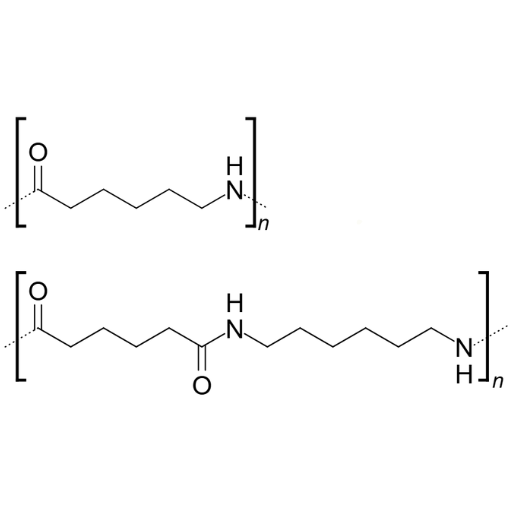
Nylon, being a synthetic polymer, exhibits a range of chemical and physical properties that are conducive to a multitude of applications. Chemically, the nylon structure consists of amide linkages (-CONH-), which exhibit very strong intermolecular hydrogen bonding—an attribute that favors tensile strength and resistance to wear and abrasion. It shows good resistance to oils, greases, and solvents but gets affected by strong acids and bases.
Nylon is physically characterized by being light in weight, having a high melting point (commonly in the range of 220 to 270°C, depending on the class), and being thermally resistant. It exhibits good elasticity and retains its mechanical properties over a wide range of temperatures. Compared to other polymers, nylon absorbs a comparatively low percentage of moisture; however, it may absorb enough moisture to cause slight swelling in one or more dimensions or mechanical attributes. These characteristics, when combined, indicate nylon’s adaptability for both industrial and consumer applications.
Chemical Composition of Nylon and Structure
It is a synthetic polymer under the polyamide family, essentially consisting of repeating units bonded together by amide linkages (-CONH-). It is the result of a condensation reaction: typically, a diacid (such as adipic acid) reacts with a diamine (such as hexamethylenediamine). Since nylon has long macromolecules, strong amide linkages, and a flexible backbone, it possesses good mechanical strength.
The molecular structure of nylon varies based on its type, such as Nylon 6 or Nylon 6,6. Nylon 6 gets polymerized from one monomer known as the caprolactam, whic,h upon polymerization, creates a six-carbon chain. However, Nylon 6,6 is polymerized from two monomers, adipic acid and hexamethylenediamine, each of which provides six carbon atoms to the polymer chain. Such a disparity in monomer types affects crystallinity, melting temperature, and the mechanical properties of the material. Furthermore, the semi-crystalline nature of nylon, characterized by both amorphous and crystalline phases, results in a balance of relative strength, flexibility, and durability.
Physical Characteristics of Nylon Fibers
Nylon fibers can exhibit a wide range of properties, varying from one extreme to the other, under different physical conditions, due to their varying molecular structures and processing conditions. They are known for their high tensile strength, which makes them ideal for applications that require durability and resistance to wear. In numerous materials science papers, it is understood that nylon fibers tend to have tensile strengths ranging between 6 and 9 grams per denier, depending on the type of fiber considered and the treatment imparted to it. This relatively high tensile strength and low weight are attributed to the fact that the polymer chains have been oriented during fiber extrusion, which strengthens the interchain hydrogen bonding that exists in the crystalline regions.
Usually having an elongation at break between 20% and 30%, nylon fibers thus have an intense degree of elasticity and an improved recovery nature. This makes them more flexible and resists any permanent changes in shape when put under stress. The presence of amino groups and carboxylic acids in nylon gives it a considerable capability to absorb moisture, approximately 4 to 4.5% in normal atmospheric conditions. This hygroscopic nature indeed makes it better for dyeing, but, at the same time, might slightly compromise dimensional stability in very humid conditions.
Nylon fibers are utilized in various industries due to their exceptional abrasion and chemical resistance, particularly to hydrocarbons, oils, and greases. They can work under wide temperature ranges, with melting points depending on their type; for example, melting points are found to be between 215°C and 265°C for Nylon 6 and Nylon 6,6, respectively. Heat-stabilized nylon fibers further extend the useful life, as they can withstand high operating temperatures without degrading significantly.
With the advancement of technology in production, more advanced nylon fibers, such as nylon composite fibers or nylon blends with additives, have been developed. These specific modifications provide improvements in UV resistance, flame retardancy, and thermal stability, thus supporting innovations in textile, automotive, and aerospace engineering.
Comparison of Properties: Nylon 6 and Nylon 66
Nylon 6 and Nylon 66 differ in properties such as thermal resistance, strength, moisture absorption, abrasion resistance, and cost efficiency.
This table provides a concise comparison of essential properties between Nylon 6 and Nylon 66.
Working with Nylon in High-Temperature Environments

In high-temperature applications, nylon 66 is typically preferred over nylon 6 because it has a higher melting point of 265 °C and is more thermally stable. This, therefore, makes it suitable for long-term use in environments with elevated temperatures. It also exhibits good tensile strength and abrasion resistance, enhancing its durability under strenuous thermal conditions of use. However, Nylon 66 has more costly and challenging processing characteristics; therefore, one must carefully weigh application requirements against manufacturing capabilities.
Best Practices for Handling and Shaping Nylon
Being hygroscopic, nylon absorbs moisture from its environment; hence, it is good to maintain moisture control when handling and shaping it. To prevent hydrolytic degradation during molding, which can affect the material’s mechanical properties, nylons must be thoroughly dried before processing. Typical drying conditions typically range from 80–90°C for 4–12 hours, depending on the grade and manufacturer.
During molding, temperature control is significant. Due to the high viscosity of nylon, its processing temperature usually remains high (approximately 260–290°C) to allow for good flow and uniform filling of molds. Mold design also plays a crucial role, where the spiral runners should be evenly balanced, and venting should be properly installed to prevent defects such as warping or sink marks.
In addition, controlling injection speeds and pressures helps lower the internal stresses built up within the moldings, thereby ensuring part quality. Post-molding annealing, however, eventually upgrades dimensional stability and performance in nylon components. Following these best practices will yield quality results for demanding applications.
Injection Molding Techniques for Nylon
Being a thermoplastic substance, molders must pay special attention to controlling various parameters during the injection molding process for nylon. The primary consideration must be on drying the material since nylon is highly hygroscopic and even a minute quantity of moisture can degrade the nylon’s performance. Typical parameters include drying at temperatures between 160-200°F for 2-4 hours, depending on the grade of nylon. Typical melt-temperature ranges from 465-525°F depending on the application so as to ensure complete melting of the material without premature degradation.
The mold must be designed to account for nylon’s particular rate of shrinkage, which typically ranges from 0.5% to 2%, depending on the level of fiber reinforcement. Uniform wall thickness must be maintained to avoid warping of the form or dimensional irregularities. Direct or edge gates may be employed, which facilitate smooth material flow and effective cavity filling. In the final stage, controlling the injection speed and pressure helps to minimize shear stresses, thereby preventing void formation and providing the final product with good mechanical properties and shape stability.
Temperature Ranges for Safe Processing
For the safe and effective processing of the nylon material, the entire temperature range of melt temperature should lie from 230 to 300°C for varying grades. The general guideline for barrel temperature is to maintain gradual zones, starting with relatively low temperatures —say around 200 to 220°C —to avoid premature degradation of the material, with higher temperatures at the higher zones to ensure complete melting of the material. Mold temperatures are typically set between 80 °C and 120°C to facilitate proper crystallization and prevent dimensional inconsistencies. This set of temperature specifications optimizes viscosity, allowing for a more uniform flow and thereby reducing the likelihood of defects such as voids or incomplete filling.
Advantages of Nylon in Various Industries

Nylon, unlike its rivals, has offered numerous benefits since its introduction into various fields due to its exceptional properties. Its high tensile strength can be exploited in automotive applications, where the parts must withstand mechanical stresses. Additionally, it is wear-resistant against abrasion and high temperatures, making it suitable for use in the industrial machinery and electronics sector. Its lightweight and low coefficient of friction help nylon perform in textile manufacturing and sports equipment production. With its resistance to chemicals and versatility, nylon is also being utilized in packaging, construction, and medical devices, making it an eminent engineering plastic.
Nylon in Automotive Applications
The automotive sector extensively uses nylon due to its strength, lightweight nature, and resistance to chemicals and high temperatures. During occur, it is used for making automotive parts such as engine covers, air intakes, and radiator tanks. To list some benefits that help car weight reduction-goal pitch improvement, fuel efficiency, and so on. Furthermore, it requires its strength against deformation under a pack of mechanical stresses; thus, it is essential in manufacturing complex precision-molded products for current vehicles. Nylon can also be reinforced through methods that add glass fibers to improve its strength and thermal resistance characteristics, which are required for severe automotive applications.
Nylon in Textile Manufacturing
Since nylon has the ideal combination of strength, elasticity, and abrasion resistance, carpeting with abrasion-resistant properties serves as a vital factor in textiles. Nylon was created in the 1930s and entered the general textile trade, providing a synthetic substitute to natural fibers with the properties of better durability and lower production cost. Today, nylon finds use in a broad array of systems, including garments that are made to be both light and strong, as well as in active wear, swimwear, and hosiery. Given the supposed textile use for performance, absorption of moisture is least, while the very drying mechanism is speedier.
Regarding the environment, another option would be recycled nylon made from post-industrial and post-consumer waste, which is glued to create those squeezed atmosphere-friendly latte messengers. Thus, they pay a worthy tribute to innovation and sustainability, in doing so, securing a Guinness World Record for locally established textile production.
Nylon in Electronics and Electrical Applications
One can say that nylon is a vital raw material used in electronics and electrical applications because of its excellent electrical insulation properties, great mechanical strength, and thermal resistance. Being a poorly conductive electrical conductor, nylon finds applications in connectors and switchgear as an insulating material for the safety of the system and reliability in service. Further enhancement is achieved by the addition of additives, such as flame retardants, to nylon, thereby raising its performance level to meet safety standards in high-temperature situations. In terms of durability and precision molding into complex shapes, nylon is widely used in circuit breakers, coil formers, and cable assemblies. Its versatility and resistance to wear and chemicals make it a suitable candidate for any modern electronic and electrical engineering application.
Reference Sources
- Nylon 6 Vs Nylon 66: Differences Explained – Righton Blackburns
This source provides a detailed comparison of Nylon 6 and Nylon 66, including their melting points and other properties. - Nylon 6 vs 66 – Entec Polymers
A comprehensive guide on the differences between Nylon 6 and Nylon 66, focusing on strength, temperature resistance, and melting points. - Nylon 6 Vs Nylon 66: Difference, Structure, Melting Point – Derun Nylon
This article explains the structural differences and melting temperature ranges of Nylon 6 and Nylon 66. - Types of Nylons Compared – Protolabs
A blog post comparing various types of nylons, including Nylon 6 and Nylon 66, with insights into their synthesis and properties. - Ferroelectric Performance of Nylons 6-12, 10-12, 11-12 – PMC
A scientific study discussing the melting points and performance of different nylons, including Nylon 6 and Nylon 66.
Frequently Asked Questions (FAQs)
Conclusion
Understanding the melting points and properties of Nylon 6 and Nylon 66 is crucial for selecting the right material for specific applications. While Nylon 6 offers cost-effectiveness and easier processing at 220°C melting point, Nylon 66 provides superior thermal stability and mechanical properties at 265°C. The choice between these materials depends on your specific requirements for temperature resistance, mechanical strength, and processing considerations.


