


Density of Lead: Understanding Its Properties and Applications
Lead stands for a dense, heavy metal that is highly malleable and has served mankind through different industrial branches for hundreds of years. Its properties, such as density, malleability, and corrosion resistance, have been utilized in applications diverging from radiation shielding to battery manufacture. Understanding a metal’s density will help us comprehend how it functions in demand-intensive industrial and scientific settings. This extensive investigation will examine the curious nature of lead, including its density, in relation to factors that enable its widespread applications in various industries.
Introduction to Lead Density

Lead is considered a heavy metal due to its density, which is around 11.34 grams per cubic centimeter at room temperature. Such high density gives considerable weight to the metal and makes it very durable, thus explaining how these properties serve lead in applications requiring them. At the atomic level, lead’s high density arises from the tight packing of its atoms and their relatively high nuclear masses.
Key Facts About Lead’s Density
- Lead has a density of 11.34 g/cm³, which is more than 11 times that of water.
- The high density enables effective radiation shielding for medical and nuclear facilities.
- Lead’s density makes it suitable for soundproofing systems that absorb vibrations and noise transmission.
- The material serves as a counterweight in industrial machinery and a balancing system.
- Dense structure provides both durability and malleability for specialized casting purposes.
Understanding Lead’s Physical Properties

Basic Characteristics of Lead
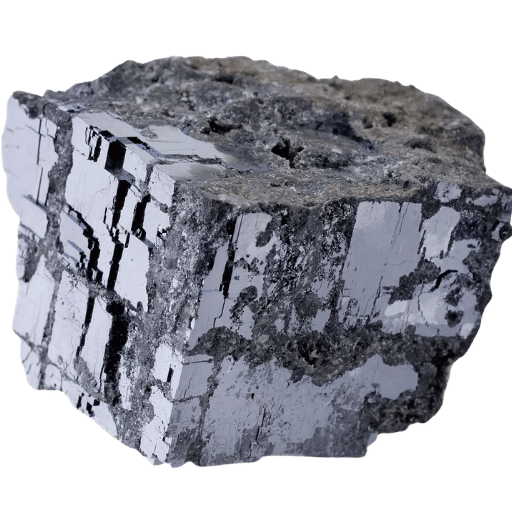
Lead, Pb, with atomic number 82, is a bluish-gray heavy and malleable metal, well known for its weight. It is one of the heaviest stable metals with a density of 11.34 g/cm³. Lead is used in various high-temperature applications, with a melting point of 327.5°C (621.5°F) and a boiling point of 1,749°C (3,180°F).
| Property | Value | Significance |
|---|---|---|
| Density | 11.34 g/cm³ | Excellent for radiation shielding |
| Melting Point | 327.5°C (621.5°F) | Suitable for casting applications |
| Boiling Point | 1,749°C (3,180°F) | High-temperature stability |
| Atomic Number | 82 | Heavy atomic structure |
| Specific Gravity | 11.34 | 11.34 times denser than water |
Being soft and having low tensile strength, it can be easily forged into any shape, rolled, or stretched without fracturing. Another essential property of the lead metal is its capacity to shield from radiation: it is favored in medical imaging rooms and in nuclear installations because lead is heavy.
Factors Affecting Lead Density
Due to atomic and molecular considerations, lead is characterized by its high density. Lead has the highest atomic number of 82; that is, it has heavy characteristics comprising a large number of protons and neutrons within its nuclear structure. A concentration of atoms exists in the attractive structure of lead, which gives rise to its density and makes lead one of the densest naturally occurring materials.
Applications Based on Lead’s Density

Radiation Shielding
Lead’s density and atomic number make it highly effective for attenuating harmful ionizing radiation. It’s essential for gamma ray and X-ray shielding in medical, industrial, and nuclear facilities.
- Medical imaging facilities
- Nuclear power plants
- Protective aprons for healthcare workers
- Radiation therapy equipment shielding
Lead-Acid Batteries
Lead plays a crucial role in lead-acid batteries, utilizing its density for positive and negative electrodes, emphasizing its application in energy storage systems.
- Automotive applications
- Energy storage systems
- Backup power systems
- Renewable energy integration
Industrial Applications
Lead’s high density makes it valuable for various industrial purposes requiring weight and mass considerations.
- Counterweights in machinery
- Ballast applications
- Soundproofing systems
- Vibration damping
Advanced Applications
Lead materials are finding increasing applications in advanced technology domains:
Modern Lead Applications Checklist:
- Lead-based perovskite solar cells for renewable energy
- Advanced battery materials for grid energy storage
- Composite shielding materials with improved versatility
- Specialized alloys for high-performance applications
- Radiation shielding in space applications
Environmental and Health Considerations

⚠️ Important Safety Information
While lead is industrially very valuable due to its density, it poses a serious hazard to the environment, health, and life. Lead persists in the natural ecosystem and can inflict damage even with tiny amounts.
Health Impact Summary
According to the World Health Organization (WHO), lead is a cumulative toxicant that can affect multiple systems in the body, particularly the nervous and cardiovascular systems. Exposure to lead in children is responsible for:
- Developmental delays
- Learning disabilities
- Behavioral problems
- Neurological damage
- Impaired cognitive functions
Environmental Concerns
Lead contamination poses long-term environmental challenges:
- Persistence: Lead pollution does not degrade naturally, building up in soil, water, and the atmosphere
- Bioaccumulation: Through absorption by plants and aquatic creatures, lead enters food chains
- Water Contamination: Opposite water infrastructure lines of leaching of lead contaminants into drinking water
- Agricultural Impact: Higher concentration of lead affects crop safety and soil health
Recent Research and Innovations

Density Studies and Comparisons
| Metal | Density (g/cm³) | Cost Factor | Primary Applications |
|---|---|---|---|
| Lead | 11.34 | Low | Radiation shielding, batteries |
| Tungsten | 19.25 | High | High-density applications |
| Gold | 19.32 | Very High | Electronics, jewelry |
| Uranium | 18.9 | Controlled | Nuclear applications |
Technological Advances
Recent developments in lead applications include:
- Improved Battery Technology: Involving the use of improved grid designs and carbon additives to extend cycle life
- Composite Materials: Lead-polymer composites are available as lighter solutions for radiation shielding
- Recycling Innovation: The recycling process is now over 99% efficient for lead from batteries
- Alloy Development: Lead-antimony alloys for enhanced performance
Regulatory Measures and Safety
Global Regulatory Framework
Worldwide regulation of lead usage has undergone significant changes to mitigate health and environmental effects:
Key Regulatory Measures:
- EPA Lead Renovation, Repair, and Painting (RRP) Rule in the US
- European Union RoHS Directive restricting lead in electronics
- Global Alliance to Eliminate Lead Paint initiative
- Bans on leaded gasoline in over 100 countries
- Strict limits on lead content in consumer products
Balancing Utility and Safety
Effective lead management requires:
- Selective Application: Use only where no suitable alternatives exist
- Safety Protocols: Implement strict handling and disposal procedures
- Risk Assessment: Regular monitoring and compliance checks
- Innovation Support: Research into lead-free alternatives
- Worker Protection: Comprehensive safety training and equipment
💡 Key Takeaway
With a density of 11.34 g/cm³, lead is suited for employment in the shielding of radiation and peculiar energy storage purposes. Environmental permanence and health risks necessitate the adoption of stringent safety measures, ensuring lead is hauled into full regulatory compliance, and conducting research into safer alternatives. One must therefore weigh the rare properties of lead alongside responsible application practices.
Frequently Asked Questions (FAQs)
Conclusion
The popularity of lead is significantly due to its high density in the modern industry and technology. With a density of 11.34 g/cm³, lead remains relevant in shielding radiation, energy storage, and a few other specialized industrial applications. However, it is kept under proper control due to its potential hazards to the environment and human health. Henceforth, the advancement of new technologies, along with appropriate regulations, has placed safety factors alongside utility.
In the future, lead applications could be based on responsible usage, advanced recycling technologies, and further studies into substitutes wherever feasible. Through technological advancement, the focus should be on sustaining the great benefits of the exceptional lead density property while minimizing risks with proper handling, regulation, and innovation.


