


Other competitors are finding the most appropriate material for industrial applications. In this case, nylon is often recognized as a potential winner. Its range includes two materials quite frequently found in industry and are of a general-purpose type, particularly nylon six and nylon 66, which have proven to be or form one of the best plastics. The method by which each material functions and the extent to which one is more appropriate than the other, concerning the individual needs, can be best explained by this blog post. Here, we intend to help you select the most suitable product by highlighting the fundamental differences, strengths, and applications of Nylon 6 and Nylon 66. Even if you want me to waste your time on quality tests, let me throw you a bone and complicate things, I bet you would love to read below it. As we proceed, we shall take a closer look at some salient properties that should be considered when deciding on the specific type of Nylon for the present problem. Get prepared to study engineering plastics and find out which kind of nylon will be able to meet and progress your undertakings at the highest level attainable.
Introduction to Nylon
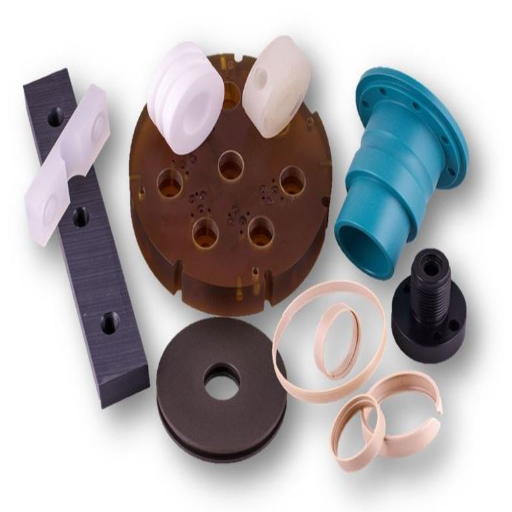
Nylon is a durable polymer and is used in the manufacture of products. Nylon is utilized in different sectors of the economy because of its striking features. It was first created in the 1930s and is used commercially in textiles and automotive components. It is stiffer, not just abrasive and does not dissolve easily, but also offers high strength. That naturally makes it great for resistance to wear and chemicals, among other factors. Of all types and varieties, nyon six and nyon 66 are much better particle representations due to the fact that they are basic uses and have different discriminative advantages for special purposes. In most cases, in some cases, this means understanding the precise differences of usage or other factors in conformance with which, one or the other material choice should be made is possible.
What is Nylon?
Nylon, a type of synthetic polymer known by the polyamide nomenclature, was first devised by DuPont during the world-famous manufacturing era of the late 1930s. This material was formulated as an alternative to natural silk, hence serving the industry for an extended period. Its durability and ability to assume various forms, leading to multiple practical applications, made Nylon a well-approved chemical application. Understandably, the process described a little bit earlier causes polymer condensation, since amide groups on monomers will be bound together. Due to this, nylon’s composition can be modified to suit a particular use through the introduction of instructional information to the understanding of its molecular makeup in manufacturing processes.
Nylon is a standard material in different fields such as garment or clothing line, and even the automobile industry, as well as microelectronic chips and devices, and constructions and engineering. It is a careful fabric product because it is thin, has a smaller strength elasticity, and therefore is less inhibiting to use in many applications and with drilling, abrasives, and many other chemicals that dissolve the material that made it. Furthermore, a vast market research suggests the global polyamide market with a value of more than $30 billion by the year 2023. Other aspects also drive the market upwards at about 5% by 2030 – the upholstery and household goods markets have always utilized nylon materials.
Nylon is loved because of its properties, and most can explain its excellence – that is, it can be ducted into many shapes and fiber types. The material is meant for use in the most extreme conditions. It is characterized by high stability and strength, which is very useful during the design of harsh machinery interiors or automobile engines. Additionally, the global nylon market has seen an increase in demand due to the realization of the need to adopt new recycling and production hygiene methods, especially in the current sustainable economies. Nothing escapes the use of nylon, even though it has assisted in the manufacturing of lightweight materials for electric cars. Thus, the material continues to be quintessential in almost all disciplines.
Types of Nylon
The common types of nylon include Nylon 6, Nylon 6/6, Nylon 12, Nylon 4/6, Nylon 5/10, Nylon 6/10, etc, and the glass-filled or composite forms.
|
Type |
Melting Pt. |
Strength |
Flexibility |
Moisture Abs. |
Key Use |
|---|---|---|---|---|---|
|
Nylon 6 |
~220°C |
High |
Moderate |
High |
Gears, Bearings |
|
Nylon 6/6 |
~260°C |
Very High |
Moderate |
Moderate |
Auto Parts |
|
Nylon 12 |
~180°C |
Moderate |
High |
Low |
Tubing, Seals |
|
Nylon 4/6 |
~295°C |
Very High |
Low |
Moderate |
High Temp Parts |
|
Nylon 5/10 |
~200°C |
Moderate |
High |
Low |
Specialty Uses |
|
Nylon 6/10 |
~215°C |
High |
Moderate |
Moderate |
Industrial Parts |
|
Glass-Reinforced |
Varies |
Very High |
Low |
Low |
Structural Parts |
Applications of Nylon in Industry
- Automobile Industry
Nylon is widely sought after by automobile manufacturers for its strength, light weight, and durability. It is used in most of the components found under the bonnet, like engine covers, air intake manifolds, and radiator end tanks. These materials are usually exposed to high temperatures and, in some cases, mechanical stress. Nylon has worked wonders, thus maximizing fuel consumption and depreciating the benefits of weight.
- Fashion and Clothing
It is typical that nylon is a critical element of the group of textile substances used to manufacture clothing and other textile articles, including tights, swimsuits, and sports clothes, achieved any loss of substance to. The high tensile strength, resilience, and abrasion resistance of nylon also make it preferable in the production processes of fabrics that are required to be long-lasting. Additionally, the quick-dry attributes of nylon make it most suitable for outdoor and performance wear.
- Electronics and Electrical
The use of nylon is widespread in the electronics industry, especially in applications such as insulation and resistance to heat and chemicals. Within this domain, nylon materials are also quite frequently used for the jackets of cables, connector units, switches, and supporting substrates of circuit boards to enhance the safety and reliability of electronic circuitry.
- Altering Subjects
Industrial and Mechanical Components
Nylon can also be used to make other parts in other applications. These include gears, more compact and less powerful drive components, bearings, and fasteners for heavy equipment, engineering, and technical equipment.
- Other Sectors
This material can be found in several other regular items. These include toothbrushes, cookery items such as nylon cooking utensils, travel equipment, and even play items like sports equipment. It’s adjustable so that it can be further
Made from good materials, it is a good feature in consumer goods design that should be strongly built and easily handled.
Nylon 6 and Nylon 66: Overview
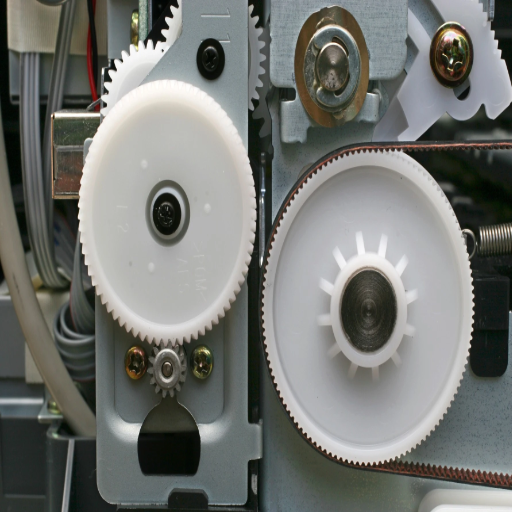
The two main types of nylon, i.e., Nylon 6 and Nylon 66, are accounted for in the nylon category. Every kind of nylon variant has properties for different applications. Nylon 6 is named as such because it is manufactured through the cationic ring-opening of caprolactam, giving it elasticity and tough wear and tear. At the same time, Nylon 66 is made of condensing adipic acid and hexamethylene diamine. It is more stable because of the additional bond on the backbone of Nylon 66, making it stronger thermally than Nylon 6. As far as Nylon 6 is concerned, it is used in textiles and consumer goods, while Nylon 66 is used in higher-grade applications like automotive industry products and textiles. Both nylons play in a mix and match mode where both characteristics are utilized complementarily to balance where one is more advantageous.
Composition of Nylon 6
‘Nylon 6’ is a commonly used term for another synthetic polymer, which on its own is made by the cationic ring-opening reaction of epsilon-caprolactam, as such polymerization can be achieved at relatively low temperatures and yields a high proportion of monomer in reaction equilibrium. Adapting this process allows the generation of multiple chemically bonded polymer chains, which have high heat and mechanical stress resistance. The main structural element in the chemical configuration of Nylon 6 is in the repetitive monomeric units of -[NH-(CH2)5-CO]-. These links confer the polymer’s high strength and flexibility and efficient resistance to physical abrasion and chemical action. Nylon 6 is approved for use in textile industries, designing and manufacturing engineering sections, and general industrial applications.
Composition of Nylon 66
Nylon 66 is manufactured as a product of the reaction between hexamethylenediamine and adipic acid, a synthetic polyamide. This elimination-condensation reaction allows for a critical monomer repeat unit to be present (amide -CONH-bond), which can be represented as -NH-(CH2)6-NH-CO-(CH2)4-CO-. Inter and intramolecular bonding is strong due to hydrogen bonding in nylon 66, which leads to its excellent tensile strength, high melting point, and ruggedness. These properties make it a readily used material in automotive, aerospace, and textiles for many products such as tire cords, industrial belts, and high-performance clothes or fabrics.
Properties of Nylon 6 and Nylon 66
Both nylon six and nylon 66 share similarities in that they possess good strength, resistance to abrasion, and resistance to many chemicals. However, there are significant differences in their physical properties due to the monomers’ structure. Nylon 6 has a slightly lower melting point, which is approximately 220 degrees Celsius; this indicates that it is arguably easier than nylon 66 to perform extrusion, but is less heat-tolerant, as the latter can operate beyond 260 degrees Celsius. On the other hand, nylon 66 has somewhat increased mechanical strength and stiffness, making it best suited for applications that demand inflation and axle loading. Both materials can resist almost any oil contamination, work well with greases and alcohols, and most other solvents, but are attacked by strong acids and alkalis. Such characteristics of nylon 6 and nylon 66 make them specialized commodity plastics employed in various industrial sectors.
Difference Between Nylon 6 and Nylon 66

It is fascinating to note that this is the case with these two types of polymers since the melting point, strength, ability to absorb moisture, cost implications, and relevance to your specific application would vary.
|
Parameter |
Nylon 6 |
Nylon 66 |
|---|---|---|
|
Melting Pt. |
~220°C |
~260°C |
|
Strength |
High |
Very High |
|
Flexibility |
Moderate |
Low |
|
Moisture Abs. |
High |
Moderate |
|
Cost |
Lower |
Higher |
|
Key Use |
Gears, Bearings |
Auto Parts, Bolts |
|
Durability |
Moderate |
High |
|
Processing |
Easier |
Challenging |
Chemical Structure Differences
The structures of nylon six and nylon 66 dictate distinct properties of nylon 6, however, that does not coincide with the copolymer formed by nylon 66. Nylon 6, the homopolymer, is obtained by the ring-opening polymerization of caprolactam, which has six carbons. In contrast, another kind of entirely different homopolymer, nylon 66, is synthesized thanks to a condensation of hexamethylenediamine (6 carbons) and adipic acid (6 carbons)—such a reaction results in the so-called nylon 66. The units in the two different types of crystalline chains determine the melting temperature of nylon 6, which is usually lower than that of nylon 66. This search of the melting temperature indicates that nylon 6 will have greater flexibility than nylon 66.
Performance Characteristics
The following paragraphs contain a thorough analysis of the strengths and weaknesses of the two types of polymers: nylon 6 and nylon 66. Melting Point: The melting temperature of nylon 66 is quite high, varying around 255°C, while that of Nylon 6 is 220°C. It is, therefore, clear that Nylon 66 is better for substances that desire heat resistance, such as automotive parts and high-performance fabrics.
- Strength and Durability:
The general design of nylon 66 is for it to have higher stiffness and toughness due to its being more crystalline. For instance, Nylon 66 demonstrates tensile strength close to 82 MPa, while Nylon 6 scores slightly below this, with 75 MPa—82 MPa. This necessitates Nylon 66 for application in producing composite products with reinforced high modulus, such as conveyor belts and transmission polymers.
- Moisture Absorption:
Both materials, however, absorb moisture from the environment, which affects their mechanical properties. Nylon 6 has a moisture absorption level of approximately 1.9%, which is higher than that of Nylon 66, which is about 1.5%. In that regard, Nylon 66 would be less likely to be affected in terms of its dimensions in humid conditions.
- Flexibility:
Comparing both, it can also be seen that at lower levels of crystallinity, Nylon 6 seems to have higher flexibility. This characteristic benefits several applications when more flexibility is desired through shaping and bending, such as in extrusion and blown film operations.
- Chemical Resistance:
Both materials possess good resistance against many oils, greases, and solvents, although broadly speaking, nylon 66 affords a higher degree of resistance to hydrolysis in a high-temperature environment, meaning it is the more advantageous material to use under rigorous chemical attack.
- Applications:
People mostly employ Nylon 6 in different works such as carpets, clothes, and engineered molded finishings, like nonmetal fasteners and other items that need toughness as well as pliability. And when we talk about Nylon 66, it is used as the main material in very challenging tasks such as professional household equipment and automotive powerplants.
These are just a few examples of how these materials can be applied. It takes into account all sectors, that is, how the unique properties of these polymers help them to be useful in several areas. These factors make the decision between Nylon 6 and Nylon 66 more difficult, and engineers, as well as manufacturers, must also consider these factors: thermal expansion, operating conditions, and economics.
Shrinkage and Mold Shrinkage
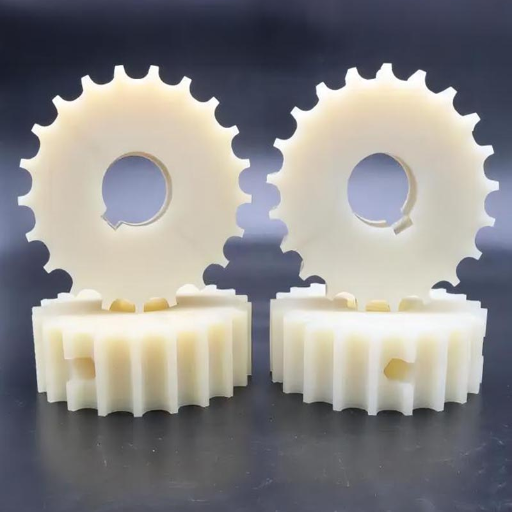
Shrinkage means the decrease in the size of the final plastic product as it cools and vitrifies when the processing is done. Shrinkage of plastic material occurs during the molded article’s cooling, expressed as mold shrinkage. Unlike others, shrinkage or expansion is entirely an overshoot. Different polymeric compounds exhibit various levels of shrinkage or expansion due to multiple structures or viscosities during the processing. Such shrinkage is considered during the construction of the molds so that the dimensions of the final product do not change.
Shrinkage Rates of Nylon 6
The shrinkage of the Nylon 6 becomes .7 – 1.5%, which is greatly influenced by the part’s processing conditions, geometry, and size, as well as the type of fraction or traction. In some cases, the two kinds of nylon can be produced under the same processing conditions but with different shrinkage values. The moisture content of the material also influences the amount of shrinkage. The setting of the cooling rates and the processing conditions are crucial for balanced molded parts.
Shrinkage Rates of Nylon 66
Regarding Nylon 66, avoiding the so-called ‘shrinkage’ is almost impossible. This is due to the thermoplastic features of the polymer, which are evident when subjected to heat. By definition, it is expected that all polymers, whether of natural or synthetic origin, including those from engineering sectors, will shrink once they are processed into finished products in the industries as they progress through the final stages of product creation. The industry refers to this as polymer shrinkage/dimension stability/Nylon 66 (or other polymer) shrinkage – and does not promote this as shrinkage – because it is an inherent part of manufacturing polymer components.
Impact on Manufacturing
Nylon 66 is very different from other plastics, as it is not used so extensively, but is still used almost worldwide, especially in the automotive, electronics, consumer goods, and apparel industries. Current assessments emphasize a healthy future for Nylon 66 with about 3.5% CAGR anticipated from 2023 to 2030, mainly because it outperforms other materials in terms of high resistance to crystallization and handling, and its ability to handle harsh, abrasive conditions is also higher.
One particular change, however, is engineering smart materials, that is, capitalizing on Ninety Six’s properties rather than on what Ninety Six shall not do. This will likely require innovative compounding systems of metallic particles in the form of thin coatings.
This has also been fathomed into the need for precision through the component or tool design. To some extent, this is induced by the excellent flow behavior of the above material, leaving aside the issue of any temperature-induced errors. It should be noted that processes at such temperatures are high since the temperatures during molding are usually between 280°C and 315 °C. Such operational practices could also increase the production costs of any such processing.
The Nylon 66 supply chain has lately had problems as several manufacturers, including Ascend Performance Materials and BASF, have reported issues in the availability of some feedstocks such as adiponitrile, hexamethylenediamine, and the like. In some cases, material prices have even been increased due to such limits, and because of this, there has been a rise in the cost of blacks and mores in manufacturing plants. However, the recycling of petrochemicals and the emergent wave of corporate social responsibility within industrial ecology have come to the rescue. Already, some regions have begun adopting some of these drastic measures, for instance, for biobased raw materials and therefore ‘Bio’ – Nylon 66.
It can be observed that the Nylon 66 manufacturing framework is adapting to market requirements alongside various occurrences like scarcity of key components and the high environmental cost of blended resources, even though there is a shift to lighter and stronger materials in cutting-edge applications. These developments indicate that the material’s usage is fundamental in spurring innovations in various sectors.
Reference Sources
- Authors: Kaifur Rashed et al.
- Published In: Rapid Prototyping Journal
- Publication Date: January 20, 2022
- Summary:
- This study investigates the effects of various Fused Filament Fabrication (FFF) process parameters on the mechanical and surface properties of Nylon 6/66 copolymer.
- A complete factorial design of experiments (DoE) was employed to analyze parameters such as infill density, pattern, layer height, and raster angle.
- Findings revealed that infill density significantly affects mechanical properties, with a 20% reduction in infill leading to a 19% increase in impact strength.
- The study also compared the efficiency of full factorial and Taguchi DoE methods, concluding that Taguchi is more efficient for linear responses(Rashed et al., 2022).
- Authors: Brandon Coburn et al.
- Published In: Volume 3: Advanced Manufacturing
- Publication Date: October 29, 2023
- Summary:
- This research uses fused deposition modeling (FDM) to explore the mechanical properties of bone tissue scaffolds made from Nylon-6 and Nylon-66.
- The study aims to fabricate biocompatible and mechanically robust scaffolds for bone regeneration.
- Results indicate that the type of nylon used significantly influences the mechanical performance of the scaffolds, with Nylon-66 showing different properties compared to Nylon-6(Coburn et al., 2023).
3. Mechanical, Electrical and Thermal Properties of Nylon-66/Flyash Composites: Effect of Flyash
- Authors: Shyam D. Maurya et al.
- Published In: Organic Polymer Material Research
- Publication Date: December 30, 2022
- Summary:
- This study investigates the effect of fly ash on the mechanical properties of Nylon-66 composites.
- Composites were prepared with varying percentages of fly ash, and their mechanical properties were evaluated.
- The results showed that adding fly ash improved the tensile and impact strength of Nylon-66 composites, indicating potential applications in structural materials(Maurya et al., 2022).
4. Top Nylon CNC Machining Parts Manufacturer And Supplier In China
Frequently Asked Questions (FAQs)
Nylon 6 vs Nylon 66: What’s the Difference in Plastic Properties?
Nylon 6 and nylon 66 are high-performing engineering plastics that share many similarities but have distinct differences. Nylon 6 is made from caprolactam, while nylon 66 is produced from hexamethylenediamine and adipic acid, resulting in different chemical structures. One notable difference is that nylon 66 typically has a higher melting point than nylon 6, making it better suited for high-temperature applications. Additionally, nylon 66 has lower water absorption and heat deflection rate, which can be crucial in specific engineering scenarios. Understanding these differences can help you choose the right nylon for your project.
How to Choose the Right Nylon for Your Applications?
Choosing the right nylon between nylon six and nylon 66 often depends on the specific requirements of your applications. For instance, if you’re looking for a material with higher mechanical strength and durability, nylon 66 may be the ideal choice. On the other hand, nylon six processes at a lower temperature, making it easier to mold and shape for various applications. When deciding, consider factors like impact resistance, heat deflection temperature, and water absorption. Each type of nylon has its strengths, which can lead to better performance in your end product.
What are the differences between impact resistance and mechanical strength?
Nylon 6 and nylon 66 possess good strength and durability, but they differ in impact resistance due to their molecular structures. Nylon 6 is known for its flexibility and lower impact strength, which can be a disadvantage in some scenarios. Conversely, nylon 66 typically exhibits higher impact resistance, making it suitable for enhanced durability applications. This difference can significantly affect the performance of components in automotive or industrial applications where stress and strain are present every day. Evaluating the specific mechanical requirements of your project will help determine which nylon is more appropriate.
Does Nylon 6 Absorb Water Differently Than Nylon 66?
Yes, nylon 6 absorbs water differently than nylon 66, impacting their performance in various environments. Nylon 6 has higher water absorption than nylon 66, leading to dimensional changes and affecting its mechanical properties. This characteristic makes nylon six less ideal in wet applications where moisture control is critical. Understanding the water absorption rates of both types of nylon is essential for ensuring the longevity and reliability of products made from these materials. Choosing the right nylon based on moisture exposure can significantly influence the overall performance of your application.
Why is Nylon 6 a Popular Choice for Lightweight Engineering Plastics?
Nylon 6 is often favored in lightweight engineering plastics due to its balance of mechanical properties and ease of processing. With six carbon atoms in its structure, nylon 6 offers good strength while remaining relatively lightweight, making it suitable for various applications, including automotive and consumer goods. Its semi-crystalline nature contributes to its high mechanical strength, while its ability to be processed at lower temperatures enhances its versatility. This combination of factors makes nylon six an ideal choice for applications that require a lightweight yet durable material.


