


The manufacturing landscape is always evolving and precision stands as the ultimate standard for successfully producing complicated parts and components. At this time stands 5 axis CNC machining- an advanced technology that is able to change the way in which intricate designs are materialized with a level of accuracy and efficiency that seems unattainable. This blog will take you through the gorgeous landscape of 5 axis CNC machining services and explain how these very machines empower manufacturers with the ability to undertake difficult projects in less time and with geometries that were once outside the realm of possibility. If you are an engineer, designer, or manufacturer looking to optimize your production procedures, this document will provide you with fundamental insights into the 5 axis CNC machining and how it is changing manufacturing in today’s times.
Understanding 5-Axis CNC Machining
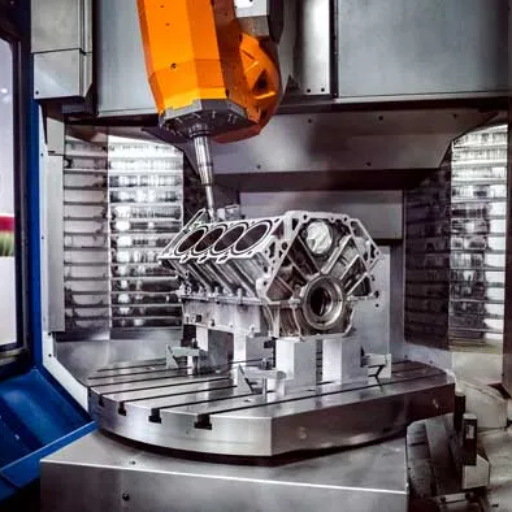
5-axis machining is performed on CNC machines that can simultaneously manipulate a tool or workpiece in five different axes. The axes are usually X, Y, and Z linear axes with two rotational axes, A and B. This advanced capability enables the creation of highly complex parts with high tolerances in a single setup, thereby improving efficiency and reducing errors compared to conventional 3-axis machines. It is a well-known process in the aerospace, automotive, and medical fields due to its ability to work with complex geometries, efficient material removal, and excellent surface finishes.
What is 5-Axis CNC Machining?
5-axis CNC machining refers to a numerically controlled machining process in which tools are allowed to move simultaneously through five different axes of motion. These axes would be the customary X, Y, and Z linear axes, as well as two other rotational axes, commonly referred to as A and B. These two additional axes enable unfathomable precision and flexibility when machining complex geometries and intricate designs.
Unlike 3-axis machines, which require multiple setups and manual reorientation of the workpiece, a 5-axis machining center can perform everything in a single setup. This reduces backdrop downtime and the chance for errors while increasing production efficiency. Similarly, the setup is maintained to minimize tightening tolerances and in terms of bigger surface finish requirements, thus engineering bends to higher limits of aerospace, automotive, and healthcare industries.
The demand for 5-Axis was considered to have increased with the application to highly complex parts, such as turbine blades, biomedical implants, and molds for the automotive industry. These systems are evolving, with advancements in software integrating dynamic toolpath optimization and real-time collision detection, making 5-axis CNC systems more reliable and efficient, and significantly improving precision engineering across various domains.
Differences Between 3-Axis and 5-Axis CNC Machines
3-axis CNC machines move along three linear axes (X, Y, Z), whereas 5-axis CNC machines allow movement along three linear axes and two rotational axes, enabling greater flexibility, complexity, and precision.
| Parameter | 3-Axis CNC | 5-Axis CNC |
|---|---|---|
| Axes | X, Y, Z | X, Y, Z, A, B (or C) |
| Flexibility | Limited | Enhanced |
| Precision | Moderate | High |
| Complexity | Simple geometries | Complex geometries |
| Setup Time | Longer | Shorter |
| Efficiency | Lower | Higher |
| Cost | Lower initial cost | Higher initial cost |
| Applications | Simple parts | Advanced parts |
| Tool Access | Restricted | Superior |
| Surface Finish | Average | Superior |
Advantages of Using 5-Axis CNC Machines
- Enhanced Geometrical Flexibility: 5-axis CNC machines fabricate highly complex geometries by simultaneously moving the cutting tools through five different axes. Hence, it can produce designs and components that might be highly problematic or impossible for 3-axis machines to produce.
- Reduced Setup Time: They can machine multiple sides of a workpiece in a single setup, dramatically reducing production time and downtime that would occur due to erroneous positioning.
- Improved Surface Finish: By maintaining the optimal tool angle during machining processes, they provide a better surface finish option for contoured or curved surfaces, thereby reducing the need for post-process finishing.
- Greater Tool Access: With profound motion capabilities, 5-axis machines provide superior tool access to previously unreachable areas, ensuring precision and quality in even the most challenging design scenarios.
- Higher Overall Effectiveness: 5-axis CNC machines enhance production efficiency by being fast, precise, and versatile, making them ideal for industries that require high throughput and precision.
Capabilities of 5 Axis CNC Machining Services
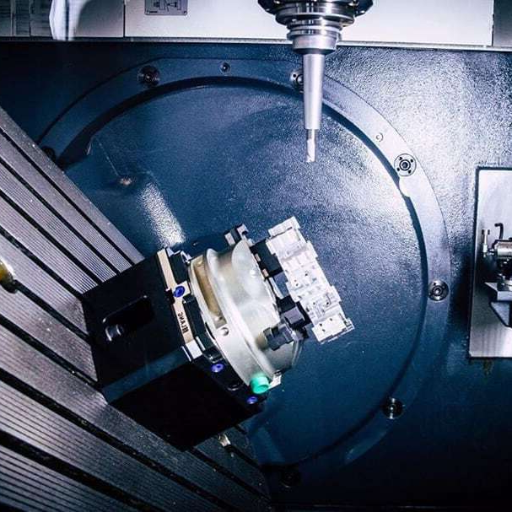
One of the key services provided by 5-axis CNC machining services is the ability to offer vast versatility and precision, enabling the creation of complex geometries and component details with minimal setup requirements. Among its key capabilities are machining multiple sides of an object simultaneously, cutting along five axes to provide maximum accuracy, and working with materials of varying hardness. The services shine when manufacturing parts for aerospace, automotive, medical, and other high-precision industries that require top-grade surface finishes and utmost tight tolerances. With these qualities, the technologies further support rapid prototyping and efficient production runs, thereby reducing lead time without compromising working standards.
Machining Capabilities of 5 Axis CNC Machines
Machining 5-Axis CNC machines are ones with unparalleled capabilities, allowing the fabrication of wonderful geometric details and complex designs. These cutters are capable of working in all five axes simultaneously, allowing for easier access to difficult areas while minimizing repositioning or multiple setups, thereby reducing machining time and enhancing accuracy. They are capable of holding tight tolerances with a smooth finish and high-quality machining of any material, whether it be metals, composites, or plastics. Furthermore, 5 Axis CNC machines are most suited for curved or contoured surfaces and, consequently, become critical in industries that require advanced part designs, including aerospace, medical, and automotive manufacturing. With such capabilities come the promise of efficiency, accuracy, and versatility for both prototyping and production operations.
Tight Tolerances and Surface Finish
Five-axis CNC machining is designed for excellent precision and can manage tolerances as tight as ±0.0001 inches, depending on the machine configuration and application. This level of accuracy is crucial in industries where even the slightest deviation can lead to failure or pose a safety risk, such as aerospace and medical device manufacturing.
Furthermore, a 5-axis CNC machine can typically produce better surface finishes than what is considered standard in the industry, and in some cases, further polishing may even be unnecessary. The multi-axis movement enables the tool to approach from the optimal angle, thereby reducing the incidence of tool marks, inconsistencies, and dimensional inaccuracies. Coupled with high-speed machining and advanced software integration, the machines provide repeatable and highly consistent quality for complex geometries and high-volume production.
Common Machining Processes in 5 Axis CNC
Simultaneous 5-Axis Machining
The process proceeds with all five axes moving continuously and simultaneously to manufacture complex geometries with intricate detailing. Typically, this type of machining is reserved for the aerospace and automotive industries for components with curved surfaces or intricate contours.
3+2 Axis Machining
Also known as “positional 5-axis machining,” the tool is held at specific angles while two rotational axes perform the function, with the other three axes doing the cutting. This process can be used for machining operations requiring precision on multiple faces of a component.
Contour Milling
Contour milling operates on the principle of manufacturing smooth, contoured surfaces, utilizing unrestricted movement of the rotary axes to ensure the best surface finish and accurate geometry.
Drilling and Tapping on Multiple Planes
Drilling and tapping operations on all kinds of complex parts with multiple planes and angles are one of the strengths of 5-axis CNC machines; thereby, they facilitate easy production and reduce manual repositioning.
Undercutting
Features that are not accessible with standard 3-axis machining can be machined using this operation. The tool-tilting capability assures material removal from areas that are otherwise difficult to access, thereby increasing design possibilities.
Industries Utilizing 5-Axis CNC Machining

🚀 Aerospace Industry
5-axis CNC machining acts as the backbone of the aerospace sector when it comes to high-performance manufacturing of intricate components, such as turbine blades, airframe components, and engine parts. It is vital for these components to meet strict tolerance and quality requirements to provide safety and efficiency under extreme working conditions.
🚗 Automobile Industry
5-axis CNC machining is utilized in the automotive industry for the precision machining of engine components, prototype models, and parts used in high-performance vehicles. Production time is drastically reduced through this technology, along with the possibility of producing lightweight but durable parts required in modern vehicle design.
🏥 Medical Industry
In the 5-axis machining technology, the medical industry finds a great way to manufacture custom implants, surgical instruments, and prosthetics. Precision is what 5-axis machining provides for these parts, enabling them to meet the response requirements of both functionality and biocompatibility in medical applications.
⚡ Energy Sector
This process is used in the manufacturing of critical components for power generation machinery, such as impellers, rotors, and wind-turbine components, where utmost reliability and precision are required.
🛢️ Oil and Gas Sector
Very critical components for the oil and gas sector such as valves, pumps, and exploration tools are to be made of convenience until resistance and precision. The industry uses 5-axis CNC machining to manufacture a robust mechanism that withstands hostile environmental conditions and high-pressure applications.
⛵ Marine Industry
The marine industry exploits the technology to manufacture intricate parts for propulsion systems, navigation equipment, and structural components. Such parts require outstanding resistance to corrosion and complex shaping, which is achieved through the accuracy of 5-axis machining.
Common CNC Machined Parts and Their Uses
- 1
Housings and Enclosures: The CNC-machined housings and enclosures find their applications in the aerospace, electronics, and telecommunication fields. These installations protect sensitive internal mechanisms or circuitry from environmental effects, including moisture, heat, and physical impacts. Precision machining ensures very tight tolerances, thereby guaranteeing a flawless fit with other components. - 2
Gears and Shafts: Gears and shafts are one of the many elements in automotive, robotic, and industrial machinery. CNC machining produces parts with great precision, ensuring they meet all durability and fit requirements for effective power transmission and mechanical functionality. - 3
Custom Brackets: Custom brackets are used in various industries to secure and support parts during their operation. CNC machining provides the flexibility to manufacture brackets that conform to specific design and load requirements, thereby contributing to the overall strength and reliability of the system. - 4
Valve Bodies: Primarily used in the oil & gas, chemical, and medical industries, valve bodies are machined with extremely precise internal passageways and sealing surfaces to control the flow of fluids or gases accurately. The high tightness of sealing surfaces ensures no leakage, thereby preventing hazardous operational risks. - 5
Prototypes and Test Components: Prototyping through CNC machining enables testing of the design for functionality and manufacturability before entering mass production. This rapidly provides test components of complex geometry and tight tolerance, supporting innovation.
The above parts exemplify the versatility and importance of CNC machining in providing reliable, high-quality solutions for critical applications across all industries.
Rapid Prototyping with 5-Axis Machines
I employ rapid prototyping with almost perfectly accurate machining by 5-axis machining. It enables tools to move simultaneously through five axes, allowing for the production of intricate parts with minimal setups. Five-axis machining, therefore, reduces production time by eliminating the need for multiple fixtures while maintaining tight tolerances. Such facilities constitute the ultimate downfall of prototyping for complex designs, especially in fields such as aerospace, automotive, and medical manufacturing, where precision and reliability are paramount.
Choosing the Right CNC Machining Service
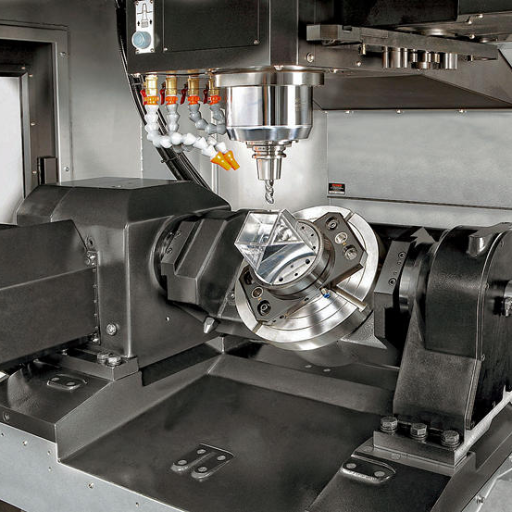
A CNC machining service must consider various aspects related to its potential, including the specific material and design complexity. Being able to hold tight tolerances is crucial for them, and obviously, they should have access to advanced machinery, such as 5-axis CNC systems, etc. Furthermore, the service must have a relevant quality assurance process and comply with all the related standards for your application. Lead time, production scalability, and customer support are also key dimensions to consider when selecting a service, ensuring that project requirements can be met.
Factors to Consider When Selecting a Machine Shop
- Precision and Accuracy: Evaluate the shop’s ability to deliver high-precision components with extremely tight tolerances, particularly for geometries that require the advanced capabilities of 5-axis CNC machining.
- Machine Capability and Maintenance: Ascertain if their 5-axis CNC machinery is available, modern, and well-maintained to afford a consistent level of performance and reliability.
- Material Expertise: Ensure that they are capable of handling all possible materials, including metals, composites, and specialty alloys, tailored to your project’s specific needs.
- Programming and CAD/CAM Expertise: Assess their experience and knowledge in high-end programming and CAD/CAM software, which is necessary for optimizing 5-axis applications.
- Certifications and Compliance: Verify that the shop complies with established industry standards and is certified accordingly, such as ISO 9001 or AS9100, which validates their adherence to quality and control in their processes.
Understanding CNC Machining Costs
Several aspects affect the CNC machining price. One perhaps is how complex the design is because a complicated geometry may need very long machining hours or advanced programming. Then, the material itself is considered: depending on the type of material, such as aluminum, steel, or titanium, costs can fluctuate. Sometimes, certain materials may carry higher charges if certifications are needed. In addition, the production volume affects the price. The higher the volume sold, the cheaper the price of each item, in economics. Meanwhile, some additional finishing processes may be required after machining to raise the costs. All in all, it is also essential to consider the types of work rates on an hourly basis and set-up costs of a particular machining shop, in combination with these other factors, for an accurate CNC machining cost estimate.
Evaluating CNC Machining Capabilities
If you are searching for a machine shop for CNC machining, it makes sense to ensure it is technically capable of meeting your particular requirements. Some of the key technical points you want to consider are CNC machines offered, the precision capability of those CNC machines, and their ability to work with complex geometries. Modern 5-axis CNC machines provide greater flexibility and accuracy for complex designs, making them desirable in industries such as aerospace and medical device manufacturing.
Also, make sure that you can handle the materials specified in your project. Aluminum, stainless steel, and advanced composites all have their unique characteristics and limitations; a shop’s experience with these materials can significantly impact the outcome and dependability of the finished product. Equally important is the software expertise within the shop; using CAD/CAM systems can help to smooth out the ripples from design work to final production.
Then come the quality standards in place at the shop, including ISO 9001 or AS9100, or other relevant industry standards, as well as the presence of inspection capabilities such as CMMs or laser scanning. Only once these capabilities are carefully assessed can you engage meaningfully with a machine shop that fits both the technical and quality requirements of your project.
Technology and Innovations in 5-Axis CNC Machining
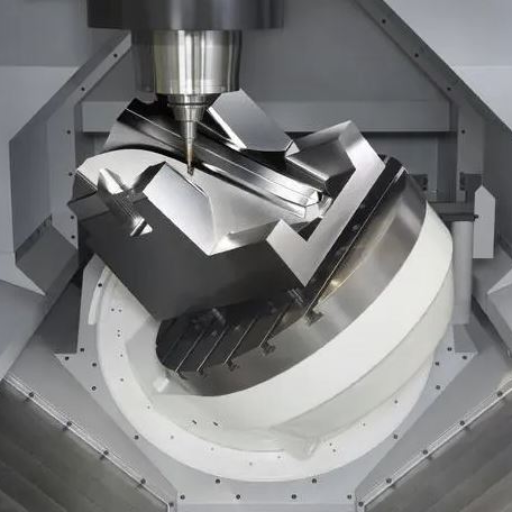
5-axis CNC machining is undergoing numerous technological advancements, with improvements in accuracy, efficiency, and versatility being observed in the industry. Among the new developments is dynamic toolpath optimization, which reduces machining time while maintaining tight tolerances, and advanced simulation software predicts potential errors before manufacturing. Additionally, having high-speed spindles and adaptive control systems enhances productivity and compatibility with a wide range of materials. These systems have always been automated through robotic loading, maintenance through IoT devices, providing quality assurance on the go, and ensuring less downtime. These advancements make 5-axis CNC machining a must-have for intricate geometries and high-specification components.
Advanced Features of Modern 5-Axis Machines
Modern 5-axis CNC machines are equipped with a range of sophisticated features that enhance precision, speed, and the overall capability of the machining operation. Dynamic toolpath optimization dispatches real-time changes to machining parameters, resulting in reduced tool wear and enhanced machine throughput. Another significant advancement is collision avoidance systems that employ an integrated software solution, whereby advanced algorithms predict and prevent all potential crashes that could be inflicted upon either the machine or the workpiece.
High-resolution encoders and direct-drive motors offer positioning accuracy and motion control that are crucial for industries such as aerospace and medical manufacturing. Sensor feedback systems enhance reliability by continuously monitoring vibration, thermal expansion, and tool condition, providing instant feedback on necessary corrective actions. With all these bells and whistles, modern 5-axis CNC machines are the most suitable avenue for highly intricate and precision-centric manufacturing solutions.
Impact of Technology on Precision Manufacturing
In precision manufacturing, technology has brought about a significant transformation, enabling faster and more accurate manufacturing processes. CNCs, in particular, with their robust computer control, produce complex parts with near-perfect accuracy. Automation has minimised human error, thereby increasing consistency and repeatability in manufacturing processes. Real-time monitoring and data analytics can, of course, offer opportunities for proactive maintenance and process optimization, further reducing downtime and material wastage. These technological advances have greatly enabled manufacturers to sharpen their ability to meet the stringent demands of industries such as aerospace, automotive, and medical device production with an unprecedented level of dependability.
Future Trends in CNC Machining Services
CNC machining services will have their future shaped by developments in automation, additive manufacturing, and smart tech. The process of automation considered with robotization will bring forth efficiency into CNC machining by way of less human interference and attaining greater production outputs in limited time. Additive manufacturing or 3D printing can be considered an evolving parallel to traditional machining that allows higher design freedom and efficiency. IoT and AI in furtherance can lead to machines being able to self-optimize and predict failures so that they will communicate in smart factory ecosystems. These trends will push CNC machining towards higher precision, cost-effectiveness, and sustainability.
Reference Sources
-
Nationwide 5-Axis CNC Machining Services – This source provides insights into the precision and versatility of 5-axis machining for various projects.
-
5-Axis CNC Machining by Precise Tool – Offers detailed information on the capabilities and applications of 5-axis CNC machining.
-
Custom Online CNC Machining Services by Xometry – Discusses the speed and customization options available for CNC machining, including 5-axis capabilities.
-
CNC Machining Services & Fabrication by RCO Engineering – Highlights the ability to mill complex shapes and work with tough materials using 5-axis CNC machining.
Frequently Asked Questions (FAQs)
Ready to Experience 5-Axis CNC Machining Excellence?
Transform your complex designs into reality with precision, speed, and reliability that only 5-axis CNC machining can provide.


