


Precision machine parts can be produced through different methods, but CNC turning services surpass them all in terms of productivity, precision, and flexibility. No matter what industry you are in, whether it be aerospace, automotive, medical, or any other sector that requires turned parts, the capacity to realize complex designs with narrow tolerances is essential. The post you are reading introduces you to custom-turned parts and demonstrates the influence of CNC turning technology on manufacturers’ ability to deliver high-quality components that meet specific requirements. From the conception of the CNC turning basics to the revelation of its main advantages and applications, the article arms you with insights that are easy to understand and that will help you make the right choice for your next project. It is time to find out how cutting-edge machining can revolutionize your manufacturing!
Understanding Custom Turned Parts
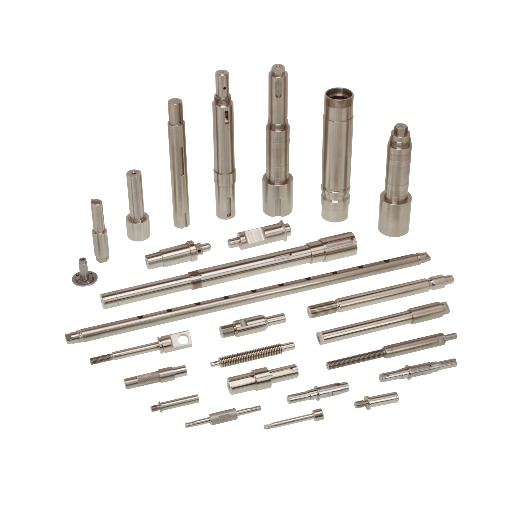
Custom turned parts are precision components made through CNC turning, where a cutting tool shapes the material as it spins on a lathe. These parts are specifically designed to meet unique design and functional specifications, ensuring perfect compatibility with a product or system. Custom turned parts, often produced from metal, plastic, and composite materials, are highly accurate, consistent, and versatile; that is why they are used in the automotive, aerospace, and medical devices industries, among others.
Definition of Custom Turned Parts
Custom turned parts are essential in the present-day manufacturing industry due to their high precision, wide range of applications, and ability to meet specified design requirements. The manufacture of these parts is done by means of CNC (Computer Numerical Control) lathes that provide not only great precision but also excellent repeatability. All kinds of industries produce custom turned parts, ranging from sophisticated medical devices to sturdy aerospace assemblies, to ensure their components meet imposed performance standards. With tech advancements, manufacturers can use innovative materials and expert cutting methods further to enhance the functionality and durability of these parts, keeping their products aligned with the changing requirements of industrial applications.
Applications of CNC Turned Parts
- Aerospace Industry:
Precision CNC turned parts are responsible for making the ultra-high precision components such as engine parts, landing gears, and brackets that can withstand the harshest conditions and quality requirements. - Medical Industry:
Surgical instruments, prosthetics, and specialized equipment, among others, are the medical areas where turned parts are the most reliable and precise than anything else. - Automotive Industry:
Engine parts, drive shafts, and other essential assemblies that need being accurate and tough are made using CNC turned parts. - Electronics Industry:
CNC turning is responsible for producing small, very complicated parts like connectors, housings, and heat sinks for electronic devices. - Oil and Gas Industry:
The turned components of very high strength, such as valves, couplings, and fittings, are essential to this industry as they cope with the extreme pressure and the most aggressive environments.
Differences Between CNC Turning and Other Machining Processes
CNC turning differs from other machining processes in tooling motion, workpiece rotation, material removal techniques, precision, and suitability for specific part geometries.
CNC Turning Process
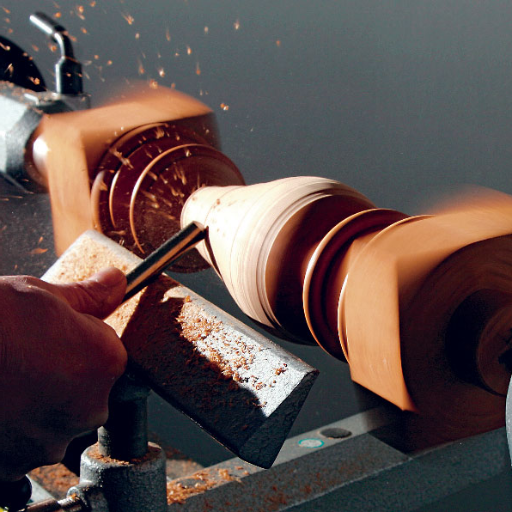
CNC turning technology makes use of a stationary cutting tool alongside a rotating workpiece to manufacture cylindrical parts. It is excellent for the production of highly precise symmetrical pieces. In contrast to other machining techniques that may involve moving tools and workpieces to obtain intricate shapes, CNC turning is the only one that is dedicated to producing round profiles with uniformity and efficiency.
How CNC Turning Works
The Very beginning of the CNC turning process is when a worker arranges a cylindrical workpiece in the lathe’s chuck. The machine will then quickly rotate the workpiece around its axis and, at the same time, lock it in place. A non-moving cutting tool will be online, engaging with the material’s surface points, allowing the machine to remove layers accurately to achieve the required shape and dimensions.
The newest CNC turning machines utilize the latest software to manage all movements, thus guaranteeing the exact tolerances and continuous copies of the parts. The operation comprises different tactics, such as rough turning to get rid of the significant material and then finish turning to smooth the surface and meet the tightest specs. Additional operations like making threads, boring holes, and creating grooves can also be performed with the same machine setup which is why CNC turning is a very adaptable process for various industrial uses.
Components of a CNC Turning Machine
A CNC turning machine has several key components that are precisely synchronized to perform the required machining tasks with great accuracy:
- Chuck – During the machining process, the workpiece is firmly held in place by the chuck.
- Spindle – The piece is rotated at different speeds to allow cutting.
- Tool Turret – The turret contains several tools that can be selected and positioned automatically.
- Bed – The machine gets its structural support and stability from the bed.
- Control Panel – The operators can program and control the machining processes through the panel.
- Tailstock – It is optional to support the workpiece at the opposite end for stability during machining.
- Cutting Tools – They can perform turning, threading, and grooving, or any other operations, depending on their types.
- Coolant System – It cools, lubricates, and keeps tools precise and wears them out slow.
All parts play a vital role in making CNC turning processes fast and accurate.
Advantages of CNC Turning Over Traditional Methods
- ✓ Higher precision and accuracy
The method of CNC turning guarantees excellent and very accurate results consistently while at the same time decreasing the chance of mistakes that occur in manual operations. - ✓ Improved efficiency
The continuous operation of CNC machines and their ability to quickly process complicated parts significantly increase productivity. - ✓ Enhanced repeatability
The programmed operations allow for the production of identical parts with the same quality and precision. - ✓ Reduced labor requirements
The use of automated systems significantly reduces manual work, which in turn lowers labor costs and also reduces the risk of human fatigue. - ✓ Versatility in design
The traditional methods of turning are unable to deal with the intricate designs and complex geometries that CNC turning can support.
Materials Used in CNC Turning
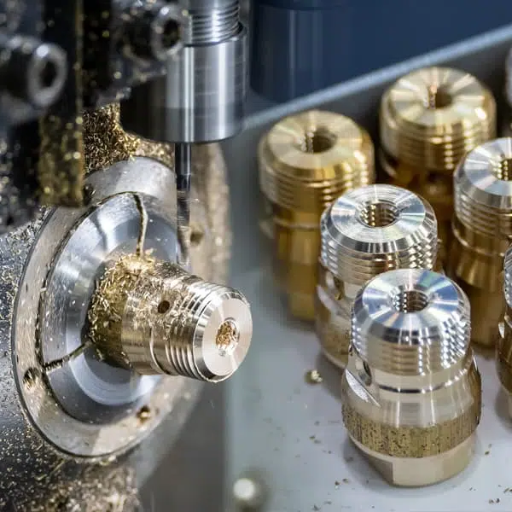
CNC turning can work with a wide variety of materials, including metals, plastics, and composites. Commonly used metals are aluminum, steel, brass, copper, and titanium because of their strength and machinability. Plastics like ABS, polycarbonate, and nylon are also often used for their lightweight and non-conductive properties. The selection of the material is based on the particular needs of the end product, like durability, electrical conductivity, or resistance to heat and corrosion.
Common Materials for Precision Turned Parts
Choosing the Right Material for Your Custom Parts
In the process of selecting the ideal material for custom parts, one needs to take into account multiple factors that will influence both performance and cost. It is always a good idea to start with assessing the application of the part and its operating environment. For instance, will the part be subjected to high temperatures, heavy friction, or chemical attacks? In such a case, one can determine whether a material like stainless steel, known for its corrosion resistance, or heat-resistant alloys like titanium, is the right choice.
After that, one should take a look at the mechanical properties, such as tensile strength, and elongation, and hardness, that are very important for the component to be functional as designed. Moreover, it is also worth noting that the ability to machine the material is an important consideration, since aluminum, for example, is very easy to machine, which in turn reduces the costs and the time needed for the process.
Last but not least, one should consider the cost and availability of the material in relation to the project’s budget. Sometimes high-tech materials with excellent properties may indeed be more costly. Yet, they will be a significant factor in providing long-term investment, as the price-performance ratio is the only way to determine the right choice.
Impact of Material Properties on Machining
The properties of the materials play a vital role in the machining processes, influencing the tool wear, cutting speed, and the quality of the surface, among others. The harder materials that include stainless steel or titanium alloys usually necessitate specialized tools and slow cutting speeds in order to avoid excessive wear and keep precision. In contrast, soft materials such as aluminum or plastics are easy to work on but might still result in problems like chip formation or deformation if the right technique is not used. The thermal conductivity of the materials is also a very important factor as materials that do not conduct heat well can lead to overheating of the tool and consequently its reduced life. The knowledge of these properties will mean efficient machining, increased productivity and lower manufacturing costs.
Choosing the Right CNC Machining Service

The CNC machining service you select should be based on the company’s experience, the variety of materials they work with, and their quality control procedures. Verify that they possess the required certifications and state-of-the-art equipment to satisfy your specifications. Moreover, assess the production lead times, customer support, and pricing to determine which service offers a good mixture of quality and affordability. A trustworthy CNC machining partner will be in line with your project requirements and will produce steady results.
Key Factors to Consider When Selecting a Machining Service
- Experience and Expertise:
Identify a machining service that has the industry experience with a well-documented history and is skilled in executing projects similar to yours. Their background can have a considerable effect on the production process’s quality and time efficiency. - Capabilities and Technology:
Take into account the company’s full range of capabilities, such as mechanical and material properties, and high-tech machinery they operate. Ensure they are competent enough to handle the intricacies of your project and meet your technical specifications. - Quality Assurance:
Ensure the service is following the stringent quality control procedures. One of the strongest signs of their commitment to precision and consistency is the certification of ISO standards. - Turnaround Times:
Evaluate the company in terms of their capability to keep up with no quality compromise deadlines. Prompt delivery is a very important factor in keeping your project on schedule. - Cost-Effectiveness:
Review the pricing systems to ensure they fit within your budget while still prioritizing quality. A clear pricing model with no hidden charges is a prerequisite for a trustworthy partnership.
Evaluating CNC Machining Service Providers
When it comes to CNC machining service providers, here are some core factors you need to look at:
Experience and Expertise:
Go for suppliers indicating an impeccable CNC machining history. Extensive experience guarantees that they will be able to complete even the most complicated tasks accurately.
Quality Standards:
Check if the supplier follows stringent quality control rules like ISO certifications, for instance. The parts produced need to be very good in quality all the time so that they can be counted upon as the same.
Capabilities and Equipment:
Validate that the supplier has up-to-date equipment and is able to cope with your particular project needs, such as choice of materials and allowances for variations.
Customer Support:
Good and quick to respond customer service is very important for answering questions, giving updates, and solving problems during your project.
Reputation:
Look into the provider’s reliability and performance in past projects by checking customer reviews, testimonials, and references.
The thoughtful consideration of these elements will enable you to choose a trustworthy CNC machining partner that meets your requirements.
Cost Considerations in Custom Turning Services
When it comes to Custom Turning Services, several main factors will impact the overall cost when setting the budget. To begin with, design complexity is the main factor; intricate geometries or tight tolerances usually require advanced machines, longer production times, and skilled operators, which may add to the cost. Next, the material selection—whether wood, plastic, or metal — affects cost, as specialized or high-performance materials are generally more costly due to their characteristics and machining needs. Moreover, the production volume is of great importance—larger quantities usually result in smaller per-unit prices because of economies of scale. The setup and tooling costs, as well as the post-processing requirements like finishing or coating, should also be included in the budget. Lastly, lead time can be a pricing factor, as fast orders usually come with a surcharge. By matching design objectives with manufacturing capabilities, companies can effectively control their costs while guaranteeing quality and accuracy.
Future Trends in CNC Turning and Machining Services

1. Increased Automation and AI Integration
The way ahead for CNC turning and machining services is through high-level automation and the joining of AI. Smart technologies are making it possible for machines to monitor themselves, optimize their work, and even predict when maintenance is needed which means less downtime and more efficiency.
2. Sustainable Manufacturing Practices
The use of eco-friendly practices, such as the installation of energy-efficient machines and the employment of recyclables, is becoming more common, as manufacturers attempt to comply with environmental sustainability demands.
3. Expansion of 5-Axis Machining
The use of 5-axis machining is becoming more common, as it provides a higher degree of precision and the capacity to create complex shapes with less time for setup which leads to increased productivity and lower costs.
4. Advanced Material Capabilities
At the cutting edge of material removal, CNC machining is able, because of continuous developments in cutting tools, to deal with a wider spectrum of materials, like composites and superalloys, thus enlarging its application for the industries of aerospace, medical, and automotive.
5. Integration of IoT and Industry 4.0
The marriage of IoT with Industry 4.0 is bringing about a revolution in CNC machining through improved connectivity, real-time monitoring, and data-driven decision-making. These factors directly enhance operational efficiency and product quality.
Technological Advancements in CNC Machinery
The combination of automation and robotics with CNC machinery has brought about remarkable changes in the manufacturing process. Automated systems not only provide the advantage of accuracy but also eliminate human error and enable uninterrupted operation, resulting in higher productivity and lower production costs. Additionally, Robotics give a company the advantage of being flexible because they can handle complex work with uniformity and quickness. This whole thing paves the way for efficient production and also satisfies the market’s need for quality products in a competitive market.
Emerging Materials and Techniques in CNC Turning
The latest CNC turning technology has brought about the use of new materials and the introduction of various techniques, which consequently, have a positive impact on performance and capabilities. The use of titanium and nickel-based superalloys is becoming more common due to their high-performance properties, which are recognized for excellent strength, high-temperature resistance, and suitability in corrosion-prone areas. Moreover, composite materials are also becoming more popular in the metalworking industry because of their light weight and long-lasting nature.
Among the techniques, high-speed machining (HSM) and cryogenic cooling have become very important. HSM is a technique that can drastically reduce machining time while maintaining high accuracy and precision. Cryogenic cooling can significantly extend the tool’s life and enhance surface quality through heat control. In addition to this, the combination of AI-driven adaptive machining techniques and real-time monitoring systems is improving accuracy, minimizing waste and allowing for customization.
Such developments help CNC turning to become more efficient, higher quality and more versatile so that the needs of modern industries can be satisfied.
Impact of Industry 4.0 on CNC Machining Services
The Industry 4.0 revolution is bringing a significant change in CNC machining services as it leads the way to increased automation, connectivity between machines and human operators as well as data-driven decision-making. IoT-integrated CNC machines in smart factories allow for continuous monitoring, accurate data analysis, and predictive maintenance thus reducing downtimes and increasing efficiency. The amalgamation of AI and machine learning is a major factor in process optimization and quality control while digital twinning helps in the simulation of machining processes to eliminate possible problems even before they arise. All these technology-driven developments mean that manufacturing will be characterized by higher output, more varied products, and less material wastage. Together, these factors will make CNC machining services more flexible and thus more competitive in today’s ever-changing industrial market.
Reference Sources
-
A CAD/CAM/CNC Curriculum for High School Students – This project discusses the use of CNC machinery in educational programs and its applications in precision machining.
-
Multi-Process CNC Build Preliminary Proposal – A detailed report on CNC router tables and their components, providing insights into CNC machining processes.
-
CNC Router Modernization – A study on modernizing CNC routers, which includes discussions on precision and customization in CNC services.
-
Custom Digital Fabrication in Industrial Design – This paper explores the evolution of CNC lathes and their role in producing custom machine parts.
-
CNC Cardboard Box Cutter – While focused on CNC applications for box cutting, this source provides valuable insights into the customization capabilities of CNC machines.
Frequently Asked Questions (FAQs)
What are custom turned parts and how are these made?
Custom turned parts are those components manufactured using a machine process on a CNC lathe. The process basically comprises removal of material from a solid block of metal or plastic to attain a specified shape and dimensions. Because of the high accuracy of CNC machines, components having close tolerance and excellent surface finish can be manufactured.
How does CNC turning differ from other machining processes?
CNC turning is a type of subtractive manufacturing that primarily involves rotating the material while the cutting tool removes material from the stock to form the part. The workpiece moves in machining with turning, whereas the tool moves in milling. This method is of the best choices for manufacturing cylindrical parts and has many advantages relating to accuracy and time.
What materials are used in custom CNC machining?
Custom CNC-machined parts are made out of a variety of CNC machining materials, including metals such as aluminum, steel, and brass, or plastics like nylon and acrylic. The choice rests on the application, the required wear resistance, and the specified surface finish of the final product.
Can custom turned parts be manufactured from prototypes?
Yes, custom turned parts can be manufactured from prototypes. Prototyping involves manufacturing a preliminary duplicate of a part so that manufacturers can test the design and functionality before high-volume technical production. This way, the final production parts comply with the required specifications and quality standards.
Why is surface finish important in CNC turned parts?
A critical consideration in CNC turned parts is their surface finish, in terms of both aesthetics and performance. For instance, smooth surfaces ensure low friction and wear, while some applications require rough finishes. Custom machining services may offer the following surface finishes: bead blast for matte finish and polishing for a glossy finish. For an additional drawing-review enquiry, CNC turning services from Zhenling provide a sourcing reference for shafts, bushings and other rotational parts, with functional surfaces and final inspection requirements identified on the print.
What are the advantages of conversion to CNC machining service for custom parts?
Several advantages of converting to CNC machining services for custom parts include accuracy, repeatability, and the ability to machine complex geometries. The services offer the flexibility to select materials, accommodating either prototypes or production parts, ensuring the customer receives the best-quality components for their specifications.
This comprehensive guide to CNC turning services and custom turned parts provides you with the knowledge needed to make informed decisions for your manufacturing projects. From understanding the basics to exploring future trends, you’re now equipped to leverage the power of precision machining.


