CNC Machining Materials: Selecting the Right Metal and Material for Machined Parts
Expert Guide: CNC machining is a precise and versatile manufacturing process employed by industries to manufacture high-quality components with the highest degree of accuracy. A CNC-machined part’s life starts and ends with one factor: the choice of material. The comprehensive material guide aims to cover all considerations for CNC machining materials, including their properties and the possible applications to which they may apply.
Understanding CNC Machining Materials

Materials for a CNC machining process are considered based on performance, durability, and cost of the finished product. This will also impact machining time and the eventual operational life of the component.
Key Insight: Material selection varies with mechanical needs, environment, and budget. Prioritizing these factors will simplify and smooth out the machining process and guarantee quality products tailored to project specifications.
The Importance of Material Selection
Material selection is the primary step for ensuring ideal product performance in many aspects:
- Performance Enhancement: The right material can lend strength, wear resistance, or corrosion protection to the object while reducing maintenance.
- Environmental Compatibility: Temperature, humidity, and chemical exposure are important considerations that affect material selection.
- Economic Efficiency: To maximize functionality and long-term reliability in the face of budgetary and operational constraints, the specifications of the raw material should be aligned accordingly.
Overview of Common CNC Machining Materials
Metal Materials
Aluminum
The lightweight nature, corrosion resistance, and ease of machining made it widely used.
✅ Advantages
- Lightweight yet strong
- Excellent corrosion resistance
- Superior machinability
- 100% recyclable
⚠️ Considerations
- Lower strength than steel
- Limitations on temperature
- Cost varies by alloy type
Stainless Steel
It gives high strength and wear resistance and is thus considered for heavier-duty applications.
✅ Advantages
- Have unmatchable durability
- Have better corrosion resistance
- High tensile strength
- Minimum maintenance required
⚠️ Considerations
- Drum up the material cost
- More difficult to machine
- Heavier than the aluminum
Titanium
Preferred for its superior strength-to-weight ratio and resistance to extreme conditions, often used in aerospace and medical fields.
✅ Advantages
- Outstanding strength-to-weight ratio
- Excellent corrosion resistance
- Biocompatibility
- Heat resistance
⚠️ Considerations
- High material costs
- Difficult to machine
- Specialized tooling required
Non-Metal Materials
| Material Type | Key Properties | Common Applications | Machinability |
|---|---|---|---|
| ABS Plastic | Toughness, impact resistance | Prototyping, consumer products | Excellent |
| Nylon | Wear resistance, mechanical strength | Gears, bearings, automotive parts | Good |
| POM (Delrin) | Dimensional stability, low friction | Precision components | Excellent |
| Carbon Fiber Composites | High strength-to-weight ratio | Aerospace, automotive | Moderate |
Detailed Material Analysis
Aluminum: Versatility and Lightweight Benefits
✓ Key Properties Checklist
- Lightweight: Highly desirable to be found in aerospace and automotive industries, where weight is critical.
- Corrosion Resistance: The natural oxide layer gives it very good protection against hostile environments.
- High Strength-to-Weight Ratio: It offers structural integrity while maintaining low weight.
- Machinability: It allows making very intricate components with precision and in great quantities.
- Thermal Conductivity: The material provides superior heat-dissipating characteristics suitable for electronics applications.
- Recyclable: With respect to recycling, it has the added advantage of not losing any property during the recycling process.
- Large Range of Alloys:A Large variety of alloys is available to allow selection for particular mechanical and thermal specifications.
- Finishing: Finishes like anodizing and powder coating are applied to this aesthetic material.
Stainless Steel: Durability and Corrosion Resistance
Stainless steel’s durability and corrosion resistance lend it great versatility in numerous industries. It does not rust nor oxidize, thanks to the chromium content that forms a passive protective layer on its surface.
💡 Expert Tip
Due to the corrosive strength of stainless steels and its low maintenance requirements, in building applications, industrial applications, and decorative applications, it remains cost-effective throughout its long service life despite the initial higher costs.
Brass and Alloy Steel: Strength and Machinability
| Material | Composition | Key Benefits | Applications |
|---|---|---|---|
| Brass | Copper + Zinc alloy | Excellent machinability, corrosion resistance, aesthetic appeal | Fittings, musical instruments, decorative components |
| Alloy Steel | Iron + Various alloying elements | High strength, durability, and heat treatment adaptability | Tools, automotive parts, structural components |
Specialized Applications
Nylon Applications Across Industries
Nylon: All-Purpose Engineering Plastic
- Automotive Parts: Engine parts, bushings, and gears for their good wear resistance and mechanical strength
- Industrial Uses: Conveyor belts, bearings, and machine parts requiring low friction and durability
- Consumer Goods: Textiles, fishing lines, and luggage for lightweight properties and resilient durability
- Electrical Insulation: Wire coatings and insulating parts with good chemical resistance
- Medical Equipment: Surgical threads and prosthetic apparatus for biocompatibility and strength
- Sports: Racket-stringing, parachutes, and sportswear emphasizing flexibility and endurance
Machinable Composites: A New Frontier
Machinable Composites: An Opportunity in Material Science to Explore Those Materials That Could Give High Strength-to-Low Weight with Thermal Stability and Abrasion Resistance. These engineered materials could be precisely machined without any loss in their structural integrity.
Current Trends in CNC Machining Materials
Now, the very latest in CNC machining materials is a strong testimonial for sustainability, innovation, and performance enhancement:
- Machinable Composites: Carbon fiber-reinforced plastic is experiencing huge growth for its superior strength-to-weight ratio
- Bio-based Polymers: Gaining traction as industries set on reducing environmental footprint
- Recycled Metals: Increasing material choices for sustainable manufacturing
- Hybrid Materials: Marriage of conventional metals with engineered coatings or polymers for added properties
- Advanced Ceramics: Rapid acceptance in electronics and energy sectors for outstanding hardness and heat resistance
Material Selection Guidelines

Key Considerations Checklist
✓ Durability and Performance Requirements
- Testing to assess a material’s ability to withstand expected stressors
- Resistance to wearing out, impact, and weathering
- Temperature changes, moisture, or corrosion exposure should be taken into account
- Testing methods may be used to confirm the suitability of the material for the application (e.g., tensile strength test)
✓ Cost-Effectiveness Analysis
- Balancing the cost of material against performance characteristics
- Including cost savings that might arise in the long run through diminished maintenance
- Considering the cost of setup and machining time required
- Counting the waste of the material and its possibilities for recycling
✓Industry-Specific Needs
- Aerospace: Lightweight and high-strength materials (titanium alloys, composites)
- Automotive: Generally high-strength steel and aluminum for durability and cost-effectiveness
- Medical: Biocompatible materials (stainless steel, some polymers)
- Electronics: Materials with certain thermal and electrical properties
Expert Selection Tips
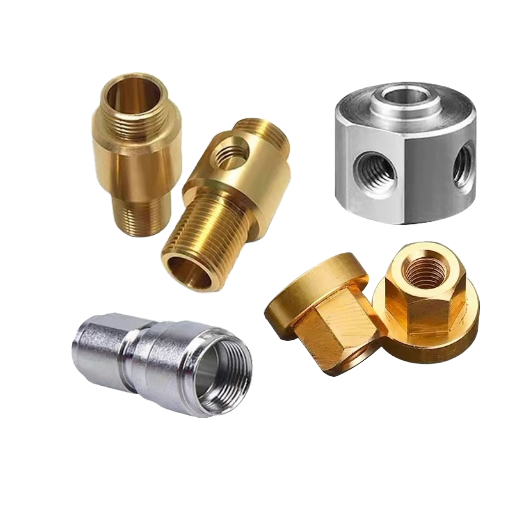
10 Essential Tips for Choosing CNC Machining Materials
- Mechanical Properties: Strength, hardness, ductility, and tensile properties should be considered.
- Thermal Properties: Heat resistance and thermal conductivity are to be analyzed.
- Corrosion Resistance: Materials should be selected considering a harsh or moist environment.
- Machinability: Machinability should be balanced with the final properties desired.
- Weight: It should be determined if the requirement is for the use of lightweight materials.
- Surface Finish: Ensure it is compatible with the type of coatings or finishing required.
- Cost: Consideration must be given to the balance between cost and performance characteristics.
- Regulatory Compliance: Make sure that the application meets standards and certifications for the industry.
- Supply: Choose materials ready for use so as to reduce delays.
- Environmental Considerations: Specific environmental exposure conditions should be considered.
Custom Parts: Tailoring Material Selection
In the selection of materials for custom parts, emphasis is placed on those that meet functional requirements directly.
- Load-Bearing Capacity: Select according to the strength of the material versus the load
- Durability Requirements: Expected life of operation considered
- Environmental Resistance: Exposure conditions considered
- Compliance Standards: Use certified materials so processes can be simplified
Prototyping Material Selection

When selecting materials for prototyping, consider:
Prototyping Priorities
- Functional Accuracy: Materials that mimic final product properties adequately
- Testing Capability: Allow evaluations to be performed accurately against performances
- Economic Factors: Cost, availability, and lead times should be taken into consideration.
- Machining Ease: Efficiencies along set parameters should be weighed against functionality during development.
Future Trends in CNC Machining Materials
The future of CNC machining materials includes:
| Material Category | Examples | Key Benefits | Applications |
|---|---|---|---|
| Advanced Materials | Carbon composites, Titanium, Inconel® | Superior performance characteristics | High-performance applications |
| Sustainable Options | Biodegradable polymers, Recycled metals | Environmental responsibility | Eco-conscious manufacturing |
| Smart Materials | Shape-memory alloys, Self-healing polymers | Adaptive properties | Next-generation applications |
Frequently Asked Questions
Q: What are the common machining materials for metal parts?
A: Some common CNC machining materials for metal parts are aluminum, stainless steel, brass, and titanium. Each material has its own different properties that make it suitable for a wide array of applications, often used in various industries. For example, aluminum is light and has very strong corrosion resistance against corrosion, whereas stainless steel is known for its tensile strength and durability. For instance, being used heavily in aerospace, titanium is considered to offer an advantageous strength-to-weight ratio over many other materials.
Q: How should I select the material for a CNC machining project?
A: Selecting the material for your CNC machining project entails factoring in strength, weight, corrosion potential, etc. Hence, the properties of the material and material requirements should be looked at in terms of the application it is meant for. Potentially, titanium or medium carbon steel would be ideal for very high strength requirements, while other systems may require aluminum or other groups of light alloys where weight reduction becomes very important.
Q: What are the advantages of titanium for CNC-machined parts?
A: Due to excellent corrosion resistance, tensile strength, and low density, titanium is typically used in aerospace, marine, and other high-performance applications. The greater corrosion resistance will be required for components subjected to harsh and high-demand environments. This can extend to the ability to provide sufficient heat resistance for industrial applications as well.
Q: Which materials are easier to machine for consumer products?
A: Some materials considered easier to machine for consumer products are softer plastics and certain aluminum alloys. Some machinable plastics, such as nylon, have widespread use because of their easy machining processes that result in high-quality parts quickly. In short, these materials often demand less machining time, thus cheaper for consumer products.
Q: In what way is the material selection process influencing machining?
A: Material selection greatly influences machining efficiency and side effects. Materials chosen with appropriate machinability will make the operation go smoothly and reduce tool wear in CNC-machined parts. For example, if you use a material with a low friction coefficient during machining, you would probably see that it benefits the process. With a material that is harder, the machining time will be longer, which will wear out tools faster.
Q: What are the properties of materials commonly used for aerospace applications?
A: The materials commonly used for aerospace applications, such as titanium and aluminum alloys, have the following properties: high tensile strength, impact resistance, and excellent corrosion resistance. These properties are required to provide performance and safety to aerospace components with the ability to resist extreme conditions with minimum weight.
Q: What are some common machining processes to make custom parts?
A: Among the more common machining processes used in producing custom-made parts are milling, turning, and grinding. Each process is chosen based on material properties and the finish needed. For example, CNC milling is often a go-to for complex geometries, while turning is more ideal for cylindrical parts. Material selected is also going to be a consideration: harder materials may need relatively more specialized techniques, especially when they require high heat.
Q: How do I ensure wear resistance in CNC-machined metal parts?
A: Application of wear-resistant materials like alloy steels and some aluminum alloys will help assure wear resistance in CNC machined metal parts; further, this process can be enhanced with surface treatment like anodizing or hardening of such parts. It has to be considered for parts that are exposed to a lot of friction or an abrasive environment.
Reference Sources
1. Prioritization of factors impacting surface roughness of wood and wood-based materials in CNC machining: a fuzzy analytic hierarchy process model
- Authors: Hilal Singer, Şükrü Özşahin
- Published in: Wood Material Science & Engineering, 2020
Key Findings:
- The study employed fuzzy analytic hierarchy process (FAHP) for prioritizing factors affecting CNC machining surface roughness on wood materials.
- There were four main factors and eighteen subfactors, with wood properties and machining parameters considered the most important.
- In terms of wood, density was identified as the most important subfactor with respect to surface roughness, influencing material choice in CNC machined parts.
Methodology:
- The construction of the hierarchical structure was based on expert opinion; after this, the factors were analyzed to derive their importance(Singer & Özşahin, 2020, pp. 63–71).
2. Effects of CNC Machining on Surface Roughness of Fused Deposition Modelling (FDM) Products.
- Authors: M. Lalegani Dezaki, M. K. A. Mohd Ariffin, M. Ismail.
- Published: Materials, 2020.
Key Findings:
- The research concluded that the build orientation hugely affects the surface texture of FDM products.
- CNC machining further enhanced surface smoothness in thermoplastic samples, with specified Ra and Rz readings for various orientations.
Methodology:
- First, the study printed and machined samples in different orientations to maintain statistics on surface roughness (Dezaki et al., 2020).
3. Top custom stainless steel parts Manufacturer and Supplier in China
Conclusion
Key Takeaway: Successful CNC machining depends heavily on informed material selection. By understanding the properties, applications, and trade-offs of different materials, manufacturers can optimize performance, cost-effectiveness, and durability in their final products. Whether working with traditional metals like aluminum and stainless steel or exploring advanced composites and sustainable alternatives, the right material choice forms the foundation of successful CNC machining projects.
As technology continues to advance, the landscape of CNC machining materials will evolve, offering new opportunities for innovation while maintaining the fundamental principles of matching material properties to application requirements.