


Metal cutting technology has gone a long way and has become an exact, efficient activity due to high-power laser technology. In the range of applications, one of the most prevailing types of laser cutting has always been used by those industries that require precision and flexibility. However, why do lasers help cut metals, and what laser is used for metal cutting? The article shall provide different types of lasers for cutting metals and their working principles, uses, and benefits. Production specialist, engineer, or simply enthusiast of industrial human development, the guide offers a critical insight into one of the most progressive material processing technologies.
Introduction to Laser Cutting
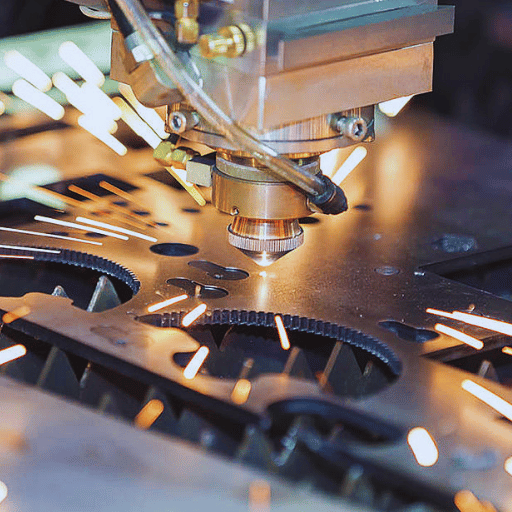
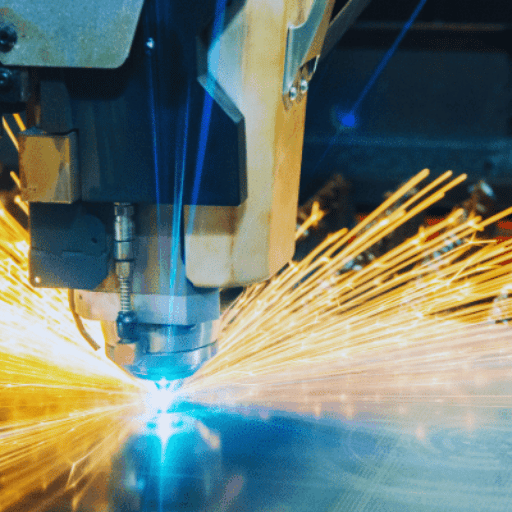
Laser cutting has revolutionized metal cutting technologies using highly concentrated light energy from a metal laser cutter, enabling the cutting of hard materials due to its precision and efficiency. In this case, the metal is gradually heated and melted along a chosen track. What laser is used for metal cutting? The laser most commonly employed in this application is the carbon dioxide laser, the fiber laser, and the diode laser, which are also being used. For this reason, they are so excellent at cutting many metals like steel and aluminum with high accuracy. Fastness, precision, and optimization of resources are among the factors contributing to adopting the said technology in the automotive, space, and equipment manufacturing sectors.
What is Laser Cutting?
Laser cutting uses an extremely high energy intensity coherent beam or a solid state laser to cut through or engrave the materials. The cutting lasers have sufficient energy to melt, burn, or vaporize the material’s surface, thus creating elegant and precise cuts. This technique is heavily relied upon because of the range of materials, such as metal, plastic, wood, composite, etc., that can be effectively cut. Laser cutting is applauded for its accuracy, speed, and capability to create complex shapes with low material waste.
History of Laser Cutting Technology
The origins of laser cutting can be traced back to the history of laser technologies in the middle of the last century. In particular, the roots of this technology lie in the very application of the laser device by T. H. Maiman, whose patent was issued in 1960. Industrial application of the laser technology followed thereafter. By 1965, Western Electric had produced the first cutting machine to cut micro-sized holes in diamond torches using laser technology. However, it was not until the 1970s that carbon dioxide (or simply CO2) laser development made cutting materials other than metals worthwhile. From then on, laser beam cutting started to improve thanks to many innovations. It is currently used widely in the industries, especially the manufacturing, automotive, and aerospace industries, for its high speed and extreme accuracy.
Importance of Laser Cutting in Metalworking
Metal processing is impossible to imagine without laser cutting since it achieves exceptionally high precision and efficiency. It enables the production of complex shapes and intricate designs with very little waste of materials. This technology encompasses different metallic materials such as steel, aluminum, and titanium, thus allowing them to be used in various activities. Besides reducing production time, one more advantage of laser cutting is that it minimizes the use of other processes and is an economical option for industries where quality metal work is needed. Therefore, it is now a commonly accepted metal fabrication procedure due to its dependability and precision.
Types of Lasers Used for Metal Cutting
CO2 Laser
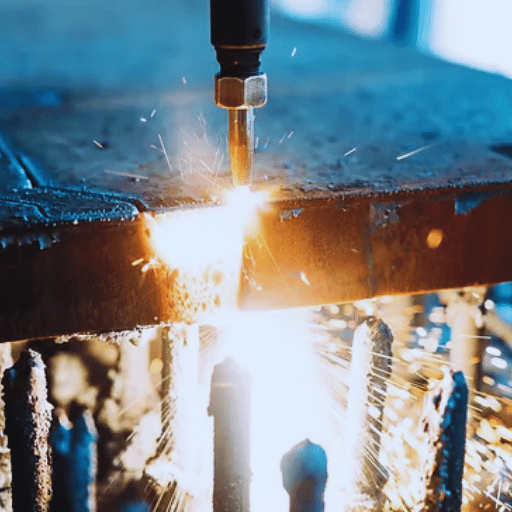
When discussing the types of lasers used for cutting materials, carbon dioxide (CO2) lasers rank high in the list due to their efficient utilization and ability to handle various non-metal and metallic materials. These lasers are operated by stimulating a gas blend mainly made of carbon dioxide, nitrogen, and helium to generate an infrared laser beam of around 10.6 micrometers in length and direction. It is then guided and concentrated onto the intended object by a series of mirrors with specific optics.
CO2 lasers are also highly efficient and helpful for smooth-cutting mild steel, stainless steel, and non-metals such as acrylic, wood, and plastics. YAG lasers are getting increasingly popular for high-power operations. They cut so smoothly and accurately with little or no finishing work. Power ratings for commercial CO2 lasers range from about 20W to over 10kW, making possible thickness variations of metals that can be worked upon using laser beams.
An advantage of CO2 lasers is their ability to provide uniform performance over extended areas, which may explain their preference in most applications that involve large-format cutting and engraving. The operational cost of using fiber lasers is usually less than that of CO2 lasers, as CO2 lasers require gas replenishment and other delicate optics. That notwithstanding, in industries ranging from aerospace to signage making, CO2 lasers are employed as end products since they’re known to be effective and flexible.
Fiber Laser
Fiber lasers use optical fibers made from atomic components, such as rare-earth elements like ytterbium, as a gain medium, providing a more design-effective laser solution and a more portable version than existing laser systems. These laser systems are respected for their superior beam quality, focus ability, and power capability, and are hence suitable for working in certain areas that include scribing, marking, and welding.
An essential benefit of fiber lasers is that they need minimal maintenance, operate for a long period, and are pretty efficient in laser cutting metals. Since no moving parts or mirrors are used in the laser source, the more durable and reliable fiber laser systems allow users to reduce the costs of such inconvenience, if not eliminate it. They also have better energy efficiency, i.e., up to 70% transfer of input energy to the output as a laser beam, unlike CO2, which only converts about 20% to 30% of the input energy into the laser beam.
Fiber lasers are also perfect for high-speed operation and are appropriate for carrying out operations, especially when cutting these reflective surfaces containing aluminium, brass, and copper. Their shorter wavelength, which is 1.06 mm (approximately 10 times shorter than the CO2 laser), allows larger photons to drill holes in the metallic surfaces more efficiently than the CO2 laser, which operates at a wavelength of 10.6 mm. This advantage makes them suitable for application in automotive, electronics, precision manufacturing, etc., which require high-quality components with high precision and clear processes.
Moreover, as few watts to several hundred kilowatt lasers are now available, fiber lasers are scalable compared to CO2 lasers for only small-powered marking processes and heavy-duty cutting operations. Coupled with sophisticated beam delivery methods and computer control systems for automation, fiber lasers offer flexibility and good performance for industrial applications today.
Direct Diode Laser
The innovative laser technology classified as direct diode lasers is characterized by high efficiency and reliable operation; hence, they are a little more specialized in applications where high wall-plug efficiency is required to lower operating expenses. In the case of direct diode lasers, light emerges from the diodes directly, and there is no gain medium required, nor any extremely complex optics as is mandatorily required in fiber and CO2 lasers. They lie in the wavelength spectrum of 800 to 980 nanometers and are used in many applications such as heating metals, welding, cladding, surface hardening, etc.
One of the significant benefits of direct diode lasers is their efficiency, with wall-plug efficiencies as high as 45% and above in some cases. This makes the use of power significantly lower than some other laser systems. Direct diode lasers also achieve the brilliant beam quality and power stability necessary for the uniformity of laser processes in the industry. Modern system architectures have different power sources from a few watts to as high as 10 kilowatts; thus, they have applications both in small-scale and large-scale.
In addition, improvements in diode laser technology tend to increase the system’s life and lower downtime. Maintaining a few optical components and simplifying the design of the optical beam delivery, direct diode lasers do not require much engineering to function at maximum performance. Eliminating such expenses makes them relatively cheap in diverse manufacturing and material processing industries.
Applications of Laser-Cut Metal
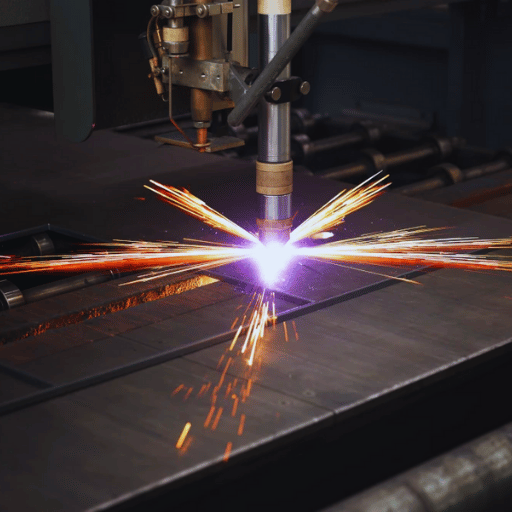
Industries Utilizing Laser Cutting
- Automotive Industry: These machines significantly improve vehicle performance and manufacturability by providing high precision in cutting and shaping different components.
- Aerospace Industry: This permits manufacturing lightweight, highly configured components such as aircraft or spacecraft parts.
- Electronics Industry: This is used for specific devices, such as circuit boards, which consist of specific small parts that must be cut and placed accurately. It also employs a high-power laser for enhanced accuracy.
- Construction Industry: Used to create structural and decorative items with complicated shapes.
- Medical Industry: Laser technology is employed to develop surgical instruments, implants, and other intricate devices.
Common Materials for Laser Cutting
|
Material |
Type |
Key Features |
Laser Type |
Precautions |
|---|---|---|---|---|
|
Wood |
Natural/Plywood/MDF |
Versatile, flammable |
CO2 |
Adjust power/speed |
|
Acrylic |
Plastic |
Clear, polished edges |
CO2 |
Ventilation needed |
|
Metal |
Steel/Aluminum |
High power needed |
Fiber/CO2 |
Reflective risks |
|
Paper |
Cardstock |
Thin, intricate cuts |
CO2 |
Low power required |
|
Cardboard |
Corrugated |
Inexpensive |
CO2 |
Moderate power |
|
Leather |
Natural/Faux |
Durable, flexible |
CO2 |
Ventilation needed |
|
Fabric |
Cotton/Silk |
Digital embroidery |
CO2/Diode |
Low pressure |
|
Foam |
Polystyrene/EVA |
Lightweight |
CO2 |
Toxic fumes |
|
Plastic |
POM/Polyester |
Engineering uses |
CO2/Diode |
Toxicity risks |
|
Cork |
Natural |
Lightweight |
CO2 |
Low power |
|
Rubber |
Silicone/Natural |
Smooth edges |
CO2 |
Ventilation needed |
|
Glass |
Fragile |
Frosted patterns |
CO2/Fiber |
Cooling system |
Precision and Detail in Metal Cutting
The precision and details attained in metal cutting have greatly improved with the evolution of laser cutting. Contemporary CO2 and fiber laser systems can cut various hierarchical structures and forms of metals such as steel, aluminum, and copper with a precision of up to ±0.001 inches, depending on the material used and the conditions of the machine. The cutting process involves an energy-focused beam onto the cutting area, resulting in smooth cuts with minimal heat effects and less material loss.
Fiber laser systems have been identified as the most suited for cutting reflective metals like aluminum and brass due to their short wavelengths, which permit more energy absorption. Hence, innovations in beam delivery systems and assist gases such as nitrogen or oxygen have optimized the cutting protocols. Such gases have anti-oxidation capabilities and enhance cutting speeds and edge finishes, which are suitable for industrial work with critical requirements in surface finish.
Moreover, sophisticated software and active sensor controls help optimize cutting parameters for operators, even beyond that. It could be a power control, focus, or even the speed of cutting, which produces favorable conditions in high-rate manufacturing, as it does not allow human interference with the process. These technological advancements prove that accuracy and precision in phoenix ring manufacturing are no longer just wishful thinking.
Advantages of Laser Cutting
Speed and Efficiency
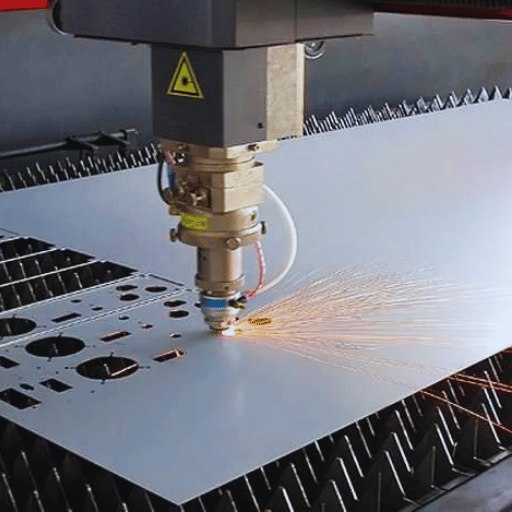
Laser cutting is perfect for requiring acute angles and cutting schemes, especially with intricate cuts and dense workpieces. One of the factors enhancing rapidity is the use of targeted laser beams, which can make cuts exceeding 20 meters each minute, depending on the material characteristics. In the case of light material such as aluminum or stainless steel, several thin sheets in laser cutting equipment are most often cut in less time than it would take using other cutting instruments. Low material loss is also significant because it enhances consistency, since the kerf made has a minimal width and smooth industrial pieces, which may require less finishing due to targeted laser beams.
In addition, more and more advanced laser cutting machines today incorporate some strong computer and control systems that render the process even smoother. Tools, including circuitry patterns, increase the number of layers a sheet can have because they help utilize the material for the effective rate, consuming less time. In addition, with the help of automation, the production time is shortened with greater accuracy from each of the manufacturer’s operations. What laser is used for metal cutting? All these developments make laser cutting an essential technology for sectors that demand high levels of precision and speed in manufacturing.
Minimal Material Waste
One of the central benefits of today’s laser cutting machinery is its efficient consumption of materials. Specialized products based on CAD and CAM systems enhance further usage of materials flowing in nesting conditions by minimizing the surfaces between constructed features and either very efficiently or inefficiently making layers or elements that need to be cut out. Research papers have also indicated that most of these measures enhance material use by as much as 30%, subject to the shape and complexity of the components to be manufactured. Furthermore, since the laser cut results in a narrower section, there is less wasted material, thanks to lasers’ ability to create a fine cutting surface. In conjunction with other technologies, such systems allow users to follow the procedure and modify parameters to optimize the process, cutting costs and ensuring sustainability in various industries.
Versatility of Laser-Cut Metal
Metal material, especially sheet metal, processed using laser beam separation, has shown outstanding performance in many industrial applications due to its accuracy, flexibility, and speed. Aerospace solutions are widely employed to create lightweight parts with complex shapes and high dimensional tolerance to enhance aircraft performance. Similarly, laser cutting is used to manufacture car parts such as body-work parts, exhaust pipes, etc., where production efficiency should not be compromised on accuracy.
Moreover, the importance of laser cutting in custom metal works cannot be overemphasized, as it has opened doors to using several different metal types, such as aluminium, stainless steel, and titanium. The thickest sheet that can be cut varies from less than 1mm to above 25mm due to the power of the laser beam and characteristics of the material in use. A report estimates that the laser cutting industry will cost $5.23 bn in 2028; this means that using a laser cutter in businesses will become more necessary.
Fiber and CO2 lasers used in most present-day machines can cut at speeds of more than 20 meters per minute, allowing a rapid transition of labor time. This feature is further enhanced with CNC, which provides fast drawing and production of any object with great precision. All these features combined highlight the flexibility and importance of metal laser cuts for the success of the modern manufacturing industry.
Future Trends in Laser Technology for Metalworking
Advancements in Laser Efficiency
To improve the efficiency of lasers in all metal-related tasks, attention has been directed towards increasing laser power output without adding to the energy costs by using better optics designs. Fiber lasers, among others, have become a game changer with better efficiency than the existing CO2 lasers. Moreover, sophisticated mechanisms are built, including the ability to cool down machines and monitor conditions to cut down on consumption and increase the helpful lifetime of this equipment. Improvements help boost output and reduce operational costs, contributing to the green initiatives adopted in the current manufacturing practices.
Integration with Automation and Robotics
The combination of lasers and robots has changed how most processes are carried out today, including manufacturing ones. Nowadays, automation, as well as robotic arms, makes it possible to perform accurate repetitive assistance in laser cutting, engraving, and some welding processes, thus significantly reducing the possibility of human operator mistakes while increasing production lines. A recent report on the trends in the industry shows that at least 57% of manufacturing firms indicate the use of robots and advanced lasers as part of their operational improvement processes.
For example, as robotic structures move, they synchronize with high-power lasers in real time, allowing the fabrication of complex shapes with micro precision. An instance of such innovation is robotic-assisted laser welding machining systems applied in vehicle-lighter-weight manufacturing assemblies. This market looks forward to the higher adoption of electric vehicles in the coming days.
Also, regarding lasers and robots, Industry 4.0 aspects such as IoT and AI come into play to aim laser machine tools at robot structures. A system can compensate for its error because of the data it gets during the manufacturing operation. These are some of the components of automation robotics and precision of lasers that serve different purposes and bring more hope in innovation in many industries, such as the aircraft and electronics industries.
Emerging Technologies in Metal Cutting
With the current level of technology, we observe that more adaptive laser cutting methods have been employed in metal cutting to achieve precision and increase efficiency. The approach involves real-time data analysis combined with machine learning functionalities and the Internet of Things to vary cutting procedures. Specifically, laser cutters driven by artificial intelligence devices can identify such parameters as the thickness of the material, the surface condition or temperature, and the thermal conductivity, and adjust themselves for optimal operation.
Recent developments have also demonstrated the use of novel ultrafast lasers, for example, femtosecond or picosecond types, that achieve more precise metal laser processes by reducing the heat-affected zone compared to conventional lasers. Such devices are essential in medical instrument production and microelectronics, where small details and material preservation are essential. There are also hybrid systems in which laser cutting is combined with plasma arc cutting, which is becoming more popular due to better cutting speed with reduced compromise of quality cuts.
Statistics show an increasing tendency to use fiber lasers instead of CO2 lasers during copper, aluminum, and stainless steel laser processing. Fiber lasers can process roughly 30% faster than CO2 and have better energy consumption. They are also less inspection-prone, making them a more favorable solution in machining. Such innovations enhance production efficiency and facilitate green manufacturing, meeting modern environmental goals.
Frequently Asked Questions (FAQs)
Q: What laser type is suitable for cutting metals in particular?
A: The fiber laser, known as the solid-state laser form, is usually used to cut metals. Fibrous lasers are ideal for this, as they require less energy and firing capability to efficiently cut metals such as stainless steel and carbon steel, amongst others, with high precision and speed.
Q: How does a laser cutter work to cut metal?
A: In principle, the laser cutter’s laser acts like a burning torch; the focused laser beam melts and vaporizes the material to be cut in some places, thereby facilitating the cutting of metal sheets. An outline of the laser cutting is inserted in the material to make the involved material solder, e.g., a rectangle we want to cut.
Q: Can a 150W CO2 laser cut metal?
A: Although the 150W power of a CO2 laser could be employed to cut metals of low thicknesses, it is not generally considered adequate for cutting heavy and more robust metallic sections. CO2 lasers are more inclined to non-metal materials, as light-sheet metals can still be processed.
Q: What are the benefits of utilizing fiber laser cutting equipment in metalworking?
A: Fiber laser cutting equipment has several advantages, including faster cutting speeds, lower operational costs, and the ability to work with reflective materials. Moreover, it is more energy efficient than other laser systems.
Q: Which metal is used in laser cutting besides the common metals within many engineering metals?
A: The laser in laser cutting serves as the cutting principle for cutting multiple kinds of metals, including carbon steel, stainless steel, aluminum, brass, etc. Here, the options for lasers and cutting equipment are determined by the thickness and type of the raw material.
Q: In which cases are pulsed and continuous wave lasers used for cutting?
A: The nature of pulsed and continuous wave lasers is different, with constant lasers better suited to more intense laser beams. Pulsed lasers are Optimal for cutting thin metal and engraving, while CW lasers emit a uniform, narrow beam of light suitable for cutting thick metal objects. Both have their respective uses in metal cutting.
Q: Are there any laser machines designed to cut metals, specifically reflective ones?
A: Yes, laser cutters such as fiber lasers that can work against the reflective nature of certain metals, such as copper, even brass, are available. These cutters can work on these materials without any damage, penalties, or output limitations on the laser cutters.
Q: What is nitrogen used for in laser cutting technology?
A: In laser cutting, nitrogen is widely used as an assist gas to prevent burning of the cut, which helps to improve the cut Quality. It helps remove the molten material without removing any heat during the cutting until the hot metals have been cut. This prevents oxidation from marring the quality of the finished product.
Q: Is there a difference between industry lasers and regular laser cutters?
A: Standard laser cutting machines are lower powered and cannot run as long as industrial lasers. They do not have the identical sturdiness as industrial lasers because they are built with adequate ruggedization to withstand harsh working conditions. These machines are designed to run at high speeds, cut thicker materials, and incorporate advanced equipment like CNC.
Reference Sources
1. High-speed laser cutting of ultrathin metal foils for battery cell production(Ascari et al., 2023)
- Publication Date: 2023-11-01
- Methodology: An experimental study of laser cutting of ultrathin metal foils using a galvo scanner and two kinds of fiber lasers: continuous and nanosecond. The cutting cuts were investigated using optical and SEM microscopes. The limitations of the cutting process were also described in this article.
- Key Findings: This study investigated the remote cutting of ultrathin aluminum and copper foils. Single-mode CW and nanosecond pulsed lasers were compared, analyzing cut quality and speed. The results showed, with a particular focus, the drawbacks of laser cutting of low-thickness, very high-reflective materials.
2. Laser Cutting—Michigan State University Libraries: This is a tutorial for librarians on metal cutting with the guidance of high-power adaptive lasers.


