


Stainless steel CNC machining services have become very important in aerospace and medical devices, thanks to their precision, durability, and capacity for working with stainless steel. It is because of the ability of stainless steel to resist the effects of corrosion and metal fatigue that complicates or renders many other construction materials ineffective, and it is preferred in manufacturing parts of high-performance equipment and other applications. Here, you will be fully taken through stainless steel machining, as this topic has already been covered in the article I’m referring you to. This discussion is designed to help parties interested in procuring high-performance stainless-steel machining for their current or future applications.
Introduction to CNC Machining

CNC (Computer Numerical Control) machining can be defined as computers controlling machines to help shape other material into the needed designs using tools. This is commonly applied in various areas due to its ability to maintain precision and consistency in producing components with intricate features. Several easy-to-cut materials can be used in CNC machining, including 304 and 316 stainless steels, plastics, and composite materials, which are mostly machined for the following industries: aerospace, automotive, and medical. With these tasks automated, CNC machining spares the labor errors and helps to deliver more output, which puts it at the very core of today’s manufacturing.
What is CNC Machining?
Computer Numerical Control (CNC) is the automation of machine tools and related equipment using command data from a program. In CNC machining, coded instructions control a machine or tool for shaping a given part into a desired figure. CNC is used in many pieces of equipment with a commonly fixed exchange ratio because it effectively ranks tasks during operation.
Overview of CNC Machines
CNC machines are an improved version of the machine tools whose main objective is the ongoing operation of accuracy and automation. With a great application in various sectors, they are a perfect craft at translating digital design files by cutting, mashing, polishing, etc. These are of different forms, such as the lathes, milling machines, routers, and many more, and those are most appropriate for specific applications. Their most significant advantages include increased precision, repeatability, and the ability to deal with intricate geometrical forms with the least effort. These manufacturing tools are very useful in the present day in terms of enhancing the speed and effectiveness of creation when compared to the archaic manual methods that were very common in their use in solving mechanical puzzles.
Importance of CNC Machining in Manufacturing
Stainless steel CNC machining is essential to contemporary manufacturing given its level of precision, speed, and complexity. Stainless steel machining, in particular, helps manufactured parts remain of high quality by maintaining consistency and eliminating human mistakes, which usually means high costs and low output. The technology allows working within strictly specified dimensions and creating the same shape much more frequently, thus supporting mass production. In particular, CNC machining is cost-effective for many metals, extending over several material options and industries such as the aerospace and automotive industries. The necessary aspects of the production process also include reducing material use and saving possible production times. Hence, it is even more relevant in manufacturing, especially with intense competition.
Understanding Stainless Steel
What is Stainless Steel?
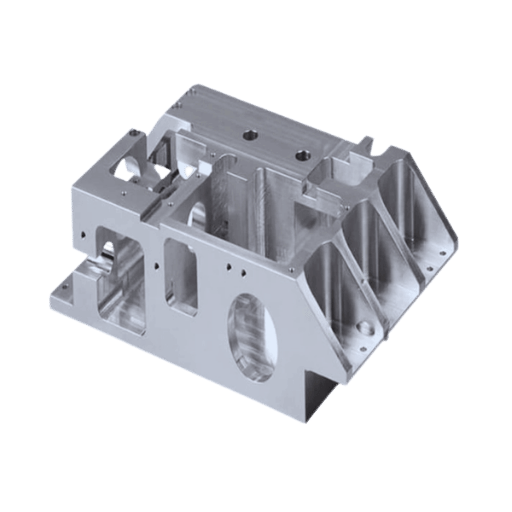
Stainless steel is a highly durable alloy that consists mainly of iron and at least 10.5% chromium by weight. The chromium content produces a durable oxide layer over the surface of steel, resisting corrosion, thereby enhancing the steel’s life. Based on the particular grade of this alloy, specific other components like nickel, molybdenum, and manganese may also be present to enhance its properties, including ductility and resistance to high temperature and some chemicals.
There are several classifications of steel based on its crystal structure, including austenitic, ferritic, martensitic, duplex, and precipitation hardenable. A good example is austenitic steel, which accounts for about 70% of the total stainless steel manufactured and used. It has good corrosion-resistant properties and is strong at elevated temperatures. In the case of duplex stainless steel, the good aspects of both the austenitic and the ferritic steels are deployed in that there is enhanced strength, and the susceptibility to stress corrosion cracking is minimal.
Due to its diverse characteristics and features, it has been used in metals and many other applications. Stainless steel has been applied in construction, medical steel equipment, food industry devices, and the automotive industry, including martensitic stainless steel, with the increasing demand as evidenced by the latest reports, demand for more than 50 million tons of stainless steel has been reached, indicating its wide usage and significance in the world of manufacturing and engineering.
Types of Stainless Steel
|
Type |
Magnetic |
Corrosion |
Hardenable |
Ductility |
Weldability |
|---|---|---|---|---|---|
|
Austenitic |
No |
High |
Cold Work |
Very High |
Very High |
|
Ferritic |
Yes |
Medium |
No |
Medium |
Low |
|
Duplex |
Yes |
Very High |
No |
Medium |
High |
|
Martensitic & Precipitation Hardening |
Yes |
Medium |
Quench/Temper |
Low |
Low |
Benefits of Using Stainless Steel
- Corrosion Resistance: Since stainless steel is impervious to the deleterious effects of rust, staining, and corrosion, this material can be used in harsh conditions, such as the marine and industrial sectors.
- Durability: Due to its exceptional durability, stainless steel is the ideal material for manufacturing heavy-duty products that need periodic replacement.
- Hygienic Properties: Stainless steel has a smooth, non-absorbent surface that is simple to keep clean. This property is highly sought after in certain economic sectors, such as health care, food handling, and drug manufacturing.
- Sustainability: Stainless steel is supposed to be completely reusable, which lessens its usage and supports the world’s environmental goals.
- Aesthetic Versatility: Stainless steel has stylish, sophisticated, and modern looks and is also operational, making it an attractive material for architecture or decoration.
Stainless Steel CNC Machining
How CNC Machining Works with Stainless Steel
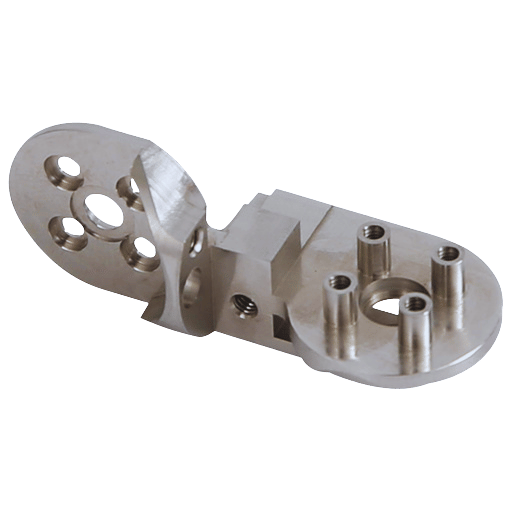
Stainless Steel CNC Machining Services use computer-programmed machines to cut, shape, and polish stainless steel parts. The fabricating architectural process comes with drawing the detailed design of the component on CAD (Computer Aided Design) software. The software generates a CAM (Computer Aided Manufacturing) file to enable cnc machining of the developed drawing. The stainless steel component is placed securely, and machine tools like mills, lathes, drills, or grinders, amongst other machine tools, work on the material removal and end finishing.
Stainless steel is a widespread material choice due to its strength and resistance to heat or corrosion; however, its strength makes it challenging to machine, most notably the rate of tool wear or the temperatures generated. These problems are addressed with the use of appropriate cutting tools, sufficient cooling for cutting surfaces, and machine settings tuned to sharp cuts and sleek surfaces. Most stainless steel components made in various industries, especially where high strength and corrosion resistance are required, are produced using CNC technology.
CNC Machining for Stainless Steel: Techniques and Tools
- Tool Material Selection: It is advisable to use carbide or ceramic cutting tools since these provide resilience to the cutting edges and allow sustained and stable cutting performance in machining stainless steel.
- Cutting Speed and Feed Rate: Reasonable cutting speeds and appropriately selected feed rates should be observed to ensure optimal material removal without jeopardizing the service life of the tools employed. Excessive speed causes the appearance of overheating, which might be detrimental to accuracy.
- Cooling and Lubrication: The use of efficient coolant systems helps suppress heat, which in turn reduces tooling wear. This ensures improved surface quality and dimensional consistency.
- Workpiece Stability: The stainless steel component should be anchored in a stable position to avoid vibrations during production that would otherwise be detrimental to the quality of the finished part and the tools.
- Finishing Pass: A final finishing pass is important when manufacturing parts for sensitive or precision applications to obtain the correct dimensions of the part and a smooth surface of the walls.
Common Applications of Stainless Steel CNC Machining
- Medical Devices: The material used makes surgery, implants, and diagnostic equipment biocompatible and hygienic.
- Aerospace Components: This helps in the production of accurate and complex parts, such as brackets and fasteners, in high-stress zones.
- Automotive Parts: Used for better efficiency and durability in the car’s engine, exhaust, and body parts.
- Food and Beverage Equipment: Mainly used to produce sanitary processing devices such as mixing tanks and transporting systems.
- Industrial Machinery: Used to fabricate some pumps, valves, and action equipment components to work efficiently in harsh environments.
Choosing the Right Stainless Steel Grade
Overview of Steel Grades for CNC Machining
| Grade | Type | Machinability | Strength | Weldability | Applications |
|---|---|---|---|---|---|
|
1018 |
Carbon |
High |
Moderate |
Excellent |
Shafts, rods |
|
1215 |
Free Mach. |
Very High |
Low |
Poor |
Screws, pins |
|
1045 |
Carbon |
Moderate |
High |
Good |
Gears, bolts |
|
4130 |
Alloy |
Moderate |
High |
Difficult |
Aircraft parts |
|
4140 |
Alloy |
Moderate |
Very High |
Moderate |
Spindles, bolts |
|
303 |
Stainless |
High |
Moderate |
Poor |
Screws, fittings |
|
304 |
Stainless |
Moderate |
Moderate |
Excellent |
Food, auto parts |
|
416 |
Stainless |
Very High |
Moderate |
Poor |
Gears, valves |
|
17-4 |
Stainless |
Moderate |
Very High |
Moderate |
Turbines, oil |
|
1144 |
Free Mach. |
High |
High |
Poor |
Pistons, gears |
|
8620 |
Alloy |
Moderate |
High |
Good |
Gears, chains |
|
8630 |
Alloy |
Moderate |
Very High |
Moderate |
Crankshafts |
Duplex Stainless Steel: Advantages and Applications
Duplex stainless steels are valuable due to their microstructure’s austenitic and ferritic phases. The significant benefits include good strength, resistance to corrosion, and resistance to stress corrosion cracking, which is better than the standard type of steel. This renders it fit for severe environments in the oil and gas, chemical industry, and marine applications. They are extensively used in pipelines, storage tanks, heat exchangers, and pressure vessels where toughness and harsh environment resistance are necessary. Besides, duplex steels added mechanical benefits often mean making thinner sections, hence saving cost on materials without sacrificing functionality.
Factors to Consider When Selecting Stainless Steel Grades
- Corrosion Resistance: Select a grade appropriate for the given conditions, such as exposure to moisture, chemicals, or saltwater.
- Mechanical Properties: Evaluate the necessary factors, including strength, toughness, and flexibility, for the application.
- Temperature Resistance: Consider the properties of the material at very high or very low temperatures, where these apply.
- Fabrication Requirements: Based on the production processes, assess the steel’s weldability, machinability, and work hardening.
- Cost-Effectiveness: Ensure that the full costs of materials are taken into account and are offset by the performance characteristics.
- Application-Specific Needs: Consider certifications, standards, or surface finishes appropriate for the industry and purpose.
Benefits of Stainless Steel CNC Machining Services
Precision and Accuracy in Machining
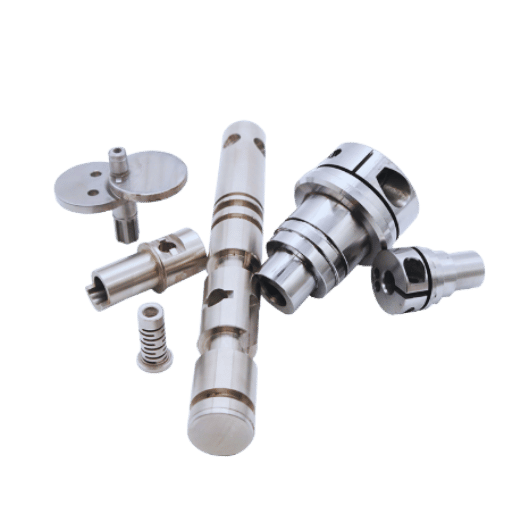
Stainless Steel CNC Machining Services I would use to provide laser sharp precision as requested by the customer, and this is done by taking advantage of the modern computer machine. Most of the CNC machines available today can produce extremely high tolerance levels, as low as ±0.001 inches (±0.0254 mm), making it possible to achieve the desired designs of various complexity levels without going off the engineering specifications. This level of accuracy is fundamental in fields such as aerospace, cars, medicine, and other industries where high performance and reliability depend on the parts assembled with precision fit and functionality.
By incorporating high-resolution sensors and automatic feedback mechanisms, CNC technology eliminates the possibility of errors due to human intervention, ensuring uniform and repeatable results. Making stainless steel, which can withstand substantial stress, no challenges are encountered in machining such configurations without affecting durability. Advanced tooling and multi-axis machining capabilities further enhance the accuracy of the process, allowing for the production of components with detailed surface finishes and precise dimensions. For this reason, CNC machining has gained immense workability and effectiveness for high-performance applications.
Durability and Longevity of Machined Parts
Due to high-grade materials and proper approaches to making such products, machine components are robust and have a long service life. By using CNC machining, there are minimal defects or deviations in the structure of the parts, while they are stressed within the limits of their strength, often remaining intact. Besides, the possibility of fitting different panel surface finishes increases the possibility of abrasive, chemical, and climatic resistance of the parts, therefore improving their functional condition for more extended periods of operation in their respective working environments.
Cost-Effectiveness of CNC Machining Services
The CNC machining services are primarily used to reduce the cost of manufacturing processes, as they are considered highly effective in precision, production, and overall efficiency. Applying this computerized technique improves the performance of machine tools and services by reducing the wastage due to excessive resources, which minimizes the costs of manufacture. Data collected over the years suggests that cost savings of as much as 30% are made compared to conventional manufacturing. Such savings are realized due to the low incidence of flaws and the ability to perfect the same factors that make good parts. Another added capability is that the CNC machines work in sustained runs with zero or only limited breaks; production levels stand to be heightened, thus saving on labor costs.
They also offer other economic benefits, one being maximum, especially with the machining of stainless steel and mild steel materials. CNCs’ flexibility allows them to perform within a short lead time without extensive downtime on any task or design change over, without much retooling, thus enabling efficient completion of projects. On-demand machining is essential to industries, primarily exhibiting small-batch or special-demand productions, such as aerospace and medical tools manufacturing. Besides, multi-axis machining and the efficiency of the tools are managed to make more money, and precision with the capacity to manufacture aggressive centers are yet further benefits. The benefits associated with CNC machining explain why it is an effective method of lowering the cost of production over long periods without changing the quality of products.
Frequently Asked Questions (FAQs)
Q: What is stainless steel CNC machining?
A: Stainless steel CNC machining is a manufacturing process that uses computer numerical control (CNC) machinery to cut, shape, and finish stainless steel parts accurately.
Q: What are the advantages of CNC machining stainless steel?
A: Compared to other machining methods, CNC offers stainless steel high accuracy, uniformity, and an excellent ability to produce intricate patterns. It is also economical regardless of the quantity of stainless steel components being worked on.
Q: What types of stainless steel can be machined using CNC?
A: These are the widely used 304, 316, and 17-4PH stainless steels, each with distinct features like corrosion-eroding capabilities, strength, and machinability.
Q: What industries use stainless steel CNC machining services?
A: All these operations seek to increase strength, which machining is perfect for if the right machine tools are available. This is why industries such as aerospace, medical, automotive, and food processing, among others, use stainless steel CNC machining for turbine components, spacer blocks, and other critical parts.
Q: Are there any challenges in machining stainless steel?
A: Machining stainless steel presents challenges. Its toughness and ability to work harden effectively create difficulty, so denser materials are a displeasure, and precise settings/adjustments in the use of tools are necessary.
Q: What applications are best suited for stainless steel CNC machining?
A: Custom machine parts, medical device components, fasteners, pumps, and other food processing equipment would be some of the best fits for stainless steel CNC machining.
Q: How can I ensure cost-effectiveness in stainless steel CNC machining?
A: Utilizing the correct grade of stainless steel, making good designs, and having well-trained professionals at the workshop can all help contain costs while enhancing effectiveness in machining processes.
Q: Can stainless steel CNC machining reach close tolerances?
A: Obviously, it can. CNC machining is capable of providing very close tolerances in most cases. It is possible to expect tolerances of ± 0.001 inches during the machining of stainless steels based on the required dimensions.
Reference Sources
1. OPTIMIZATION OF SURFACE ROUGHNESS IN AISI 304 STAINLESS STEEL MILLING USING A CNC VERTICAL VMC. AN EXPERIMENTAL STUDY (Avcı et al., 2024)
- This paper assesses the outcome of the effect of the machined parts’ parameters on their surface roughness in CNC milling of AISI 304 austenitic stainless steel.
- The testing was performed using the methodology of the Taguchi L18 design to determine the influence of cutting speed, feed rate, and depth of cut on surface roughness.
- The experimental measurements also revealed that the surface roughness decreased during dry machining compared to coolants.
2. Optimization of cutting parameters of SS304 for CNC turning operation – Exploration of the effect of various cutting parameters on the accuracy of dimensions of stainless steel parts in terms of CNC machining.
4. Leading Stainless Steel CNC Machining Services Provider in China


