


Diamonds have traditionally been known for their brilliance and beauty but are also known for some downright extreme physical properties, with density being the most defining attribute. This article delves into the technical details of diamond density to clarify precisely what makes diamonds so densely packed compared to other materials. It aims to uncover the major factors that contribute to their unwavering structure and compare them with some materials with nearly same densities and some almost on the other end of the spectrum, give or take, to create a context for their uniqueness. Understanding diamond density will therefore aid readers in perceiving some heavier industrial concepts relevant to industries, such as gemstone qualities, among others: a must for any enthusiast and professional.
What is Diamond Density?
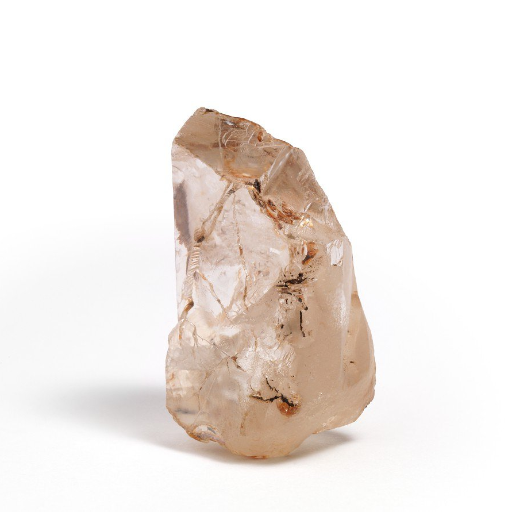
Diamond density means mass of the diamond material per unit volume, usually stated in g/cm³. Diamonds weigh about 3.51 g/cm³ and hence are much denser than many substances, such as quartz (2.65 g/cm³) or aluminum (2.70 g/cm³). This density arises from diamond’s crystal lattice, whereby each carbon atom is bound tetrahedrally to four other carbon atoms. These strong covalent bonds and the crystal arrangement leave little room vacant inside the crystal, thus making it the most compact structure possible.
This emphasis on recent data reaffirms the precision with which diamond density has been measured, thereby facilitating significant advancements in the fields of materials science and gem grading, where density is a crucial parameter used to identify and authenticate diamonds.
Defining Density and Specific Gravity
Density indicates the mass in relation to the volume of a substance, with g/cm³ and kg/m³ being standard unit expressions. Being an intrinsic property, density really tells how closely packed the particles in a material are. Specific gravity, also referred to as relative density, is a dimensionless parameter that compares the density of a material with that of a reference substance, typically water at 4°C. It is instrumental in comparing the relative heaviness of materials without requiring unit conversions.
Diamonds have a density of approximately 3.5 g/cm³ for all high-purity samples. Correspondingly, their specific gravity should nearly equal this, thereby accentuating their compact atomic nature. These properties have been instrumental in the identification process of stones in the fields of materials science and industry, including distinguishing between natural diamonds and synthetic or fake ones.
The Importance of Diamond Density
Density is perhaps the most elemental physical property governing its several applications throughout industries. The close arrangement of atomic carbon particles in the diamond lattice is what ensures the density of a diamond, thus being directly related to its hardness and thermal conductivity. This property finds its essential applications in new technologies, such as precision cutting tools and heat sinks, where it is required for the material to sustain extremely severe conditions.
Moreover, measuring diamond density is also essential for gemmological purposes, which serves to verify diamonds and distinguish them from impostors such as cubic zirconia or moissanite, which have different densities. Densitometry is one of the ways by which scientists and industrial professionals maintain a strict quality control of materials used in manufacturing and jewelry applications.
Density of Diamond: A Key Metric
Diamonds probably have a density around 3.52 grams per cubic centimeter. Structural imperfections or impurities in the crystal lattice may slightly affect this value. The density of diamonds is greater than that of many other gemstones because of their densely packed carbon atoms in a four-sided arrangement. This measurement helps discriminate diamonds from common simulants and serves as a parameter in the analysis and grading of these gemstones.
Physical and Chemical Properties of Diamonds

1. Thermal Conductivity
The thermal conductivity of a diamond is exceptional, with values approaching 2000 W/m·K at ambient temperature. This value results from strong covalent bonding between carbon atoms and efficient lattice vibrations (phonons) in the crystal. The high thermal conductivity of diamonds gives them industrial prominence in heat dissipation in electronic devices.
2. Hardness
These stones are the hardest ever known in the world, having a rating of 10 on the Mohs scale. This happens due to the tetrahedral bonding of carbon atoms, that do not allow scratching or abrasion of a diamond. This quality is essential in all applications that involve cutting, grinding, and drilling with diamonds, making them a perfect, wear-resistant tool.
3. Optical Properties
Diamonds possess excellent optical properties, including a high refractive index (around 2.42) and significant dispersion, which gives the gems their distinctive fire. These optical properties arise from the diamond crystal’s ability to efficiently bend and disperse light, thereby enhancing its brilliance and beauty.
4. Chemical Stability
Diamonds exhibit chemical stability under normal conditions; they do not corrode when subjected to acids or alkalis. However, combustible conditions emerge for diamonds above a temperature of 850°C in an oxygen-rich environment, allowing them to oxidize to carbon dioxide. This stability ensures their longevity in many applications where durability is crucial.
Chemical Composition and Forms of Carbon
Carbon is designated with an atomic number of 6 and is a favorite non-metal due to its extreme versatility in forming many compounds. The nuclear cloud consists of six protons in the nucleus, six neutrons kept inside the nucleus resonating with the positive force exerted by the protons, and six electrons comprising two in shells close to the nucleus and four placed in the outermost shell, which makes it tetravalent. A carbon atom now has four bonds available to join with four other atoms of either other elements or itself in any combination, resulting in vast numbers of organic and inorganic compounds.
Carbon makes multiple allotropes that differ in their physical properties, caused by the arrangement of atoms. The primary crystalline forms of carbon are diamond and graphite. In a diamond, a carbon atom is covalently bonded to four other atoms in a tetrahedral lattice, imparting extreme hardness and various optical properties. On the other hand, graphite in its structure consists of layers where carbon atoms are arranged in hexagonal planes, bonded weakly to each other through van der Waals forces, making it an excellent lubricant and electric conductor.
Aside from these, amorphous forms of carbon, such as coal, soot, and charcoal, are familiar inventions, although they lack the perfectly homogeneous atomic arrangements found in crystalline ones. Entering the modern era brought new inventions of carbon structures, such as carbon nanotubes and graphene, which have fascinated humanity due to their immense strength, superb electrical conductivity, and ultra-lightweight characteristics, giving new impetus to research and development in electronics, materials, and nanotechnology. Each of these carbon forms highlights the versatility of the carbon element and the importance of informed decision-making processes in industry, life, and the environment.
The Diamond Lattice Structure
Diamond lattice is a three-dimensional arrangement with carbon atoms covalently bonded to four other carbon atoms in a somewhat tristimulus tetrahedral or already tetrahedral configuration. This extreme symmetry is a basis for exceptional hardness and thermal conductivity of the diamond. The stronger the covalent bond set, the more rigid the lattice becomes and thus can resist deformation imposed upon it; however, the spatial arrangement serves to minimize all weaknesses, subsequently increasing strength. Hence, the unmatched geometry stands out as one of the reasons why diamonds are valued for their physical properties, apart from their brilliance.
Hardness and Its Relation to Density
For a stone, the toughness it enjoys must be attributed to its high atomic density and strong covalent bonding. Diamond has a density of approximately 3.5 grams per cubic centimeter, which arises from the carbon atoms densely packed within their tetrahedral arrangement in the lattice. A densely packed atomic lattice allows for minimal gaps within the crystal; as the applied forces are spread evenly throughout the lattice, any cleavage will not occur under pressure. Additionally, the short interatomic bond length between carbon atoms and the high strength of these sp³ hybridized bonds offer extraordinary resistance against deformation. This interdependence between hardness and density accounts for diamonds being unequivocally the hardest natural substance, hence justifying their primary function in many industrial applications, such as cutting, grinding, and drilling.
Measuring the Density of Diamonds

The density of a diamond can be measured using the water displacement method or through very precise calculations based on its molecular structure. In the water displacement method, one submerges the diamond in a graduated cylinder containing water, records the volume of water displaced, and divides the mass of the diamond by the volume. On the other hand, one could calculate the density from the uniform crystalline structure, with diamonds known to have a density of around 3.51 grams per cubic centimeter. This very high density results from the closely packed carbon atoms in the lattice.
Methods to Calculate the Density
The density of materials can also be determined by utilizing modern instrumental techniques, which provide greater accuracy than traditional methods. One such method is X-ray diffraction (XRD), which uses the diffraction patterns of X-rays passing through a substance to study its crystal lattice and arrive at the density value having knowledge of atomic spacings and unit cell dimensions. Another viable method is the use of a pycnometer, which makes volume measurements of irregularly shaped substances based on fluid displacements within a sealed container graphically designed to ensure minimal error. Modern computational software can also simulate atomic structures and bring about density values by processing molecular geometry and atomic weights when these are known. These advanced methods not only increase the accuracy of measurement but also permit the characterization of substances whose measurement cannot practically be performed by traditional means.
Precision Weighing Techniques
Modern precision weighing, therefore, encompasses progressive instrumentation along with techniques for highly exact and reliable measurements. Balance systems of the analytical type utilize the principle of electromagnetic force restoration (EMFR) to weigh masses with great accuracy, which can often discern disparities at the level of micrograms. These units feature a vibration-dampening mechanism, calibration means, and environmental compensation to counter external interference, such as air currents, temperature fluctuations, and humidity.
Another common practice in determining material properties is gravimetric analysis, which involves weight determinations. In this method, one isolates a given amount of the substance under consideration in a sample by chemical precipitation or physical separations of another kind. Strong developments in digital integration, for example, automatic tare and real-time data logging, present an opportunity for automatic optimization of workflow and, consequently, reduction in human errors.
In summary, high-precision weighing instruments are evolving in tandem with the advent of new ideas and integrated intelligent software for a wide range of scientific and industrial processes that demand accuracy, reproducibility, and efficiency.
Volume Calculations in Diamond Density Measurement
An accurate determination of volume is essential to find out the density of a diamond, where the general relation defines density:
Depending on the size and shape, the volume of a diamond can be determined using the geometric method for specific shapes, or more general methods such as liquid displacement and 3D scanning may be employed. For simpler shapes, geometry can be used to work out the diamond volume. For instance, an approximate volume of a round diamond is given by:
Where’d stands for diameter. Here, the approach is to assume that the diamond is cut symmetrically with all dimensions equal, which is not true for highly complex or irregular cuts.
An alternative method for measuring the volume of non-regular shapes is liquid displacement. The Archimedes principle is employed wherein the stone is submerged in a liquid, which is distilled chiefly water or a suitable inert liquid, while measuring the volume displacement. This factor accounts for irregularities; however, such methods require very accurate measurements to avoid errors due to surface tension or variations in buoyancy.
Nowadays, high-end technological equipment, such as laser scanning or industrial CT-based imaging, can provide the most volumetric data. These use triangulated laser beams or x-rays to compose a detailed 3D model of the diamond, whose volume can be computed with microscopic precision. For example, laser scanners are typically capable of achieving ±0.001 mm³ accuracy, while CT imaging analyzes the internal structure, inclusions, or voids, which is essential for accurate grading in high-value contexts, such as gem certification.
Comparative Analysis of Diamond Density
The diamond’s density is typically categorized by type and purity, as these two properties determine the stone’s mass and structure. A pure diamond theoretically has a density of 3.51 g/cm³. Realistically, this figure can greatly vary if the stone contains a few inclusions or impurities or may even have some structural anomalies. With modern mechanisms such as pycnometry or hydrostatic weighing, one can precisely measure the density of any sample by finding its mass-to-volume ratio.
For comparison, synthetic diamonds have densities closer to the theoretical value due to the controlled conditions of manufacture. In contrast, natural diamonds may differ slightly from this due to internal defects or inclusions. Such deviations can be quickly analyzed and factored into the diamond’s characterizations through industrial CT imaging or laser scanning. This level of precision is essential in industries that require precise adherence to density for purposes of classification, valuation, or structural analysis.
Density of Diamonds vs. Graphite
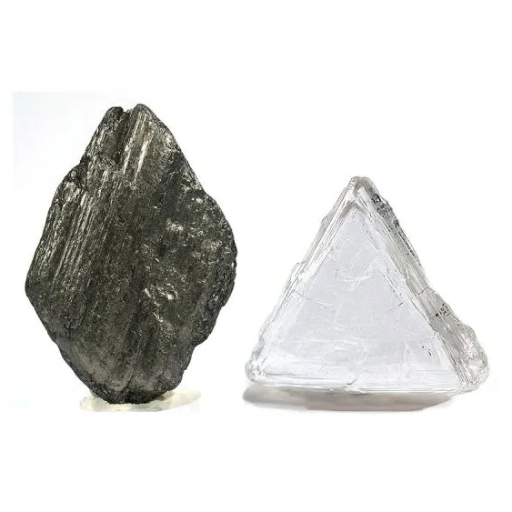
Diamonds have a density of approximately 3.5 g/cm³, while graphite has a density of roughly 2.2 g/cm³.
Relative Density of Other Gemstones
The density of various gemstones varies significantly based on their composition and crystal structure, which directly impacts their classification and applications. Below is a comparison of the relative densities of some commonly known gemstones:
This comparative data emphasizes that gemstone density is closely tied to their mineralogical and chemical properties. For instance, rubies and sapphires, both composed of corundum, exhibit higher densities compared to quartz-based stones like amethyst. Understanding these physical attributes is critical for practical uses such as jewelry design, valuation, and material identification in scientific studies.
Implications of Density in Different Materials
A material density directly affects its functionality, stability, and applications in all fields. An example application can be seen in construction and engineering: loading structures made of heavy materials such as steel or concrete require strength and durability. Conversely, insulation or lightweight categories are serviced by low-density materials, including foam and composites, which make them efficient without compromising structural integrity.
For industries, density plays a crucial role in considerations for processing, transportation, and utilization techniques. For example, in aerospace design, where cutting down on weight is costly, state-of-the-art low density alloys and carbon fiber composites are used to increase fuel efficiency and structural performance.
In addition, understanding density in materials can have far-reaching scientific implications. For example, denser materials are utilized in radiation shielding, such as lead, which absorbs harmful rays. Fundamentally, understanding density helps geologists and chemists in establishing the correct identity of minerals and compounds, thereby accurately labeling samples in both theoretical and applied settings.
Applications of Diamond Density in Various Industries

- Abrasive Materials: Diamonds are used where grinding and polishing with utmost surface finishes are required, such as in the optics industry or jewelry manufacture.
- Scientific Research: Synthetic diamonds with controlled density are used in high-pressure experiments as part of diamond anvil cells, which simulate extreme conditions for materials science studies.
- Thermal Management in Aerospace: The diamond density, along with its thermal properties, is leveraged in the aerospace industry for advanced thermal management solutions that provide reliability for sensitive equipment in extreme environments.
- Cutting and Drilling Tools: Their extreme density and hardness have conversely drawn industrial attention to diamonds for cutting and drilling in machining operations that assemble tough materials, including metal alloys, ceramics, and stone.
- Electronics and Semiconductor: With the perfect density and thermal conductivity, diamonds are employed as heat sinks in electronic devices, amplifying heat dissipation and, consequently, device performance.
Industrial Uses of Diamonds
Indeed, diamonds prove very useful in industry on account of their hardness, thermal conductivity, and durability:
- Cutting and Drilling Tools: Industrial diamonds may be supplied for cutting, drilling, or grinding, and are used to process hard materials such as stone, concrete, and metals. These diamonds are used because their hardness allows precise and efficient cutting.
- Semiconductor Manufacturing: Diamonds are placed as heat spreaders on electronic devices to spread and dissipate heavy heat from semiconductors.
- Electro-Optical: Diamond gives the transparency and thermal conductivity required for high-performance lenses, windows, and optical components.
- Mining Application: Diamond-coated tools are in use in mining machines to resist extreme conditions and cut through rugged rock formations.
These are properties that hold diamonds invincible as an industrial material in industries requiring heavy application and resilience.
Impact on Jewelry and Value Assessment
Diamond typically has a density between 3.50 and 3.53 g/cm³; this density is a crucial factor in defining the physical properties of the stone and determining its value. Higher density is owed to the unique inter-atomic architecture of carbon atoms in a tetrahedral lattice, which imparts diamonds with their greatest strength and splendor. It is this unique property that influences the jewelry industry in two significant ways:
Cutting and Sparkle
Density controls how much light refracts inside a gemstone. A poorly cut diamond wastes this potential to internally reflect light. In contrast, an ideally cut diamond utilizes its density to reflect light with maximum power, resulting in a fire and sparkle that is rare in fine jewelry.
Authentication and Valuation
Gem laboratories often use density measurements to assert the authenticity of gems. Using gravimetric analysis, they can pinpoint natural diamonds from synthetics or simulants which differ subtly in density. This ensures accurate grading and pricing.
An understanding of density enables jewelers and gemologists to make informed decisions about design, certification, and valuation, thereby solidifying a diamond as a symbol of luxury and rarity.
Understanding Diamond Hardness in Practical Applications
Industrial and jewelry applications require a hardness considered exceptional, as it is classified as 10 on the Mohs scale. The uniqueness of this property stems from its crystalline arrangement, in which every carbon atom is covalently bonded to four other carbon atoms in a tetrahedral network, thereby conferring an unparalleled lattice strength.
Most diamond hardness-related functions are performed in different designs. Industrial diamonds are extensively used in manufacturing cutting, drilling, grinding, and polishing tools, employing an abrasive process to treat complex substances such as granite, quartz, and metals. These usages require diamonds to remain sharp and resist wear under harsh conditions.
Synthetic diamonds have also been developed and utilized in microelectronics and heat management, thanks to advancements in materials science. Its high thermal conductivity, fused with hardness, offers ideal heat dissipative characteristics for high-performance electronic components. This practical application confirms the value of a diamond beyond mere luxury and establishes its pivotal role in technological advancements.
Reference Sources
-
Diamond Mechanical Properties: Density, Hardness – Discusses the average density of diamonds and how it varies based on trace elements and inclusions.
-
Diamond – Wikipedia – Provides an overview of diamond density, including its range in natural and synthetic forms.
-
Understanding the Density of Diamond: A Comprehensive Guide – Explains the density of diamonds and its relationship to the arrangement of carbon atoms.
-
The Anatomy of a Diamond: Physical Properties – Covers the unique physical, chemical, and optical properties of diamonds, including density.
-
Which is heavier: gold or diamond? – Compares the density of diamonds to other materials like gold, providing a broader context for understanding its unique characteristics.


