


Understanding the Density of Steel: Importance and Applications
Steel is considered one of the most commonly used materials in engineering, buildings, and manufacturing. Yet its density marks its performance and its application. Working with steel density, engineers can therefore consider better solutions for the structure and optimized materials for use, contributing to both cost reduction and environmental benefits. This article explores the significance of steel density, its impact on mechanical properties, and the industries that heavily rely on this concept. Upon completion, you will gain a concrete understanding of why density is a key parameter that brings about the versatility and viability of steel.
What is the Density of Steel?
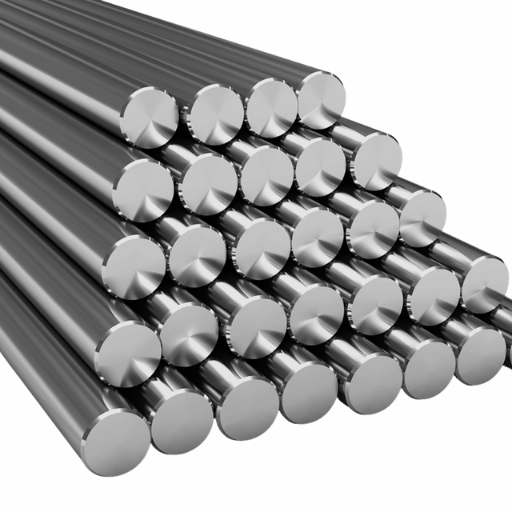
Due to the varying alloying elements, such as carbon, manganese, or chromium, the density of steel ranges from 7.75 to 8.05 g/cm³, depending on its composition or grade. An average density of 7.85 g/cm³ is used for calculations, as this value is pretty representative of most carbon steel grades.
Definition of Density and Its Significance
Density defines the mass a material has for a given volume. The usual units are g/cm³ or kg/m³. An important property in materials science and engineering, it determines the dimensions of the materials and their specific strength as well as applicability. For instance, knowing the density of steel helps in calculations for construction, manufacturing, and design, ensuring the structural integrity and efficient use of materials.
Typical Range of Density of Steel
| Steel Type | Density Range (g/cm³) | Typical Applications |
|---|---|---|
| Carbon Steel | 7.75 – 7.85 | Construction, automotive parts |
| Stainless Steel | 7.9 – 8.05 | Food processing, medical instruments |
| Alloy Steel | 7.8 – 8.0 | Aerospace, heavy machinery |
Variations in Steel Density Based on Composition
Variations in steel density are primarily caused by the presence and quantity of alloying elements. For instance, stainless steel, with higher chromium and nickel content, will be close to the upper end of the density range, at approximately 8.0 g/cm³; whereas carbon steel, containing fewer alloying elements, will be close to the lower end of the density range, at approximately 7.75 g/cm³. Such minute variations become particularly important when performing exact calculations, especially in structural engineering and manufacturing.
How is the Density of Steel Measured?
The Density Formula: Mass Over Volume
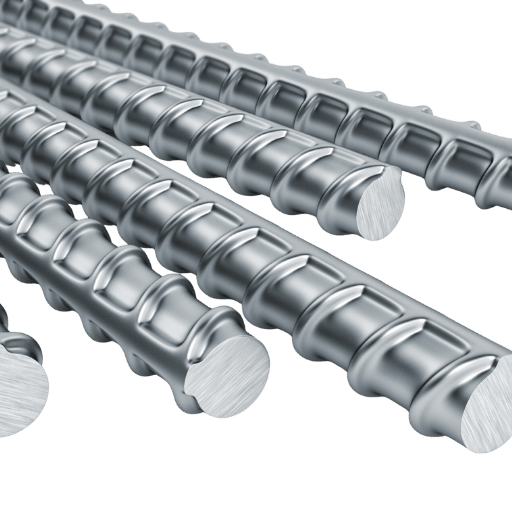
A density of 7850 kg/m³ is usually found for steel. To arrive at such a value, one must have an accurate measurement of the mass and the volume of the material. Steel mass is typically measured on a precision balance to obtain accurate results in the most minor units of measurement. For volume calculation, simple geometry can be applied to volume solids. For irregular solids, the displacement of water is a standard method.
Standard Measurement Procedures
- Archimedes’ Principle Method: Submerginga steel sample in water and measuring the displaced volume
- Electronic Densitometers: Using oscillating frequency and mass measurements for quick readings
- Hydrostatic Weighing: Weighing samples in air and liquid for irregular shapes
- X-ray Tomography: Non-destructive mapping of density variations
- Ultrasonic Techniques: Using sound wave propagation velocity
Advanced Measurement Techniques
Some advanced techniques for measuring steel density utilize contemporary tools to achieve accuracy and efficiency. XRF spectrometry analyzes the elemental composition, which can be correlated with density. Ultrasonic systems, on the other hand, assess densities by measuring the velocity of sound waves that travel through a material. These methods are instrumental when dealing with large or critical components that require non-destructive testing.
Factors Affecting the Density of Steel
Composition and Carbon Content
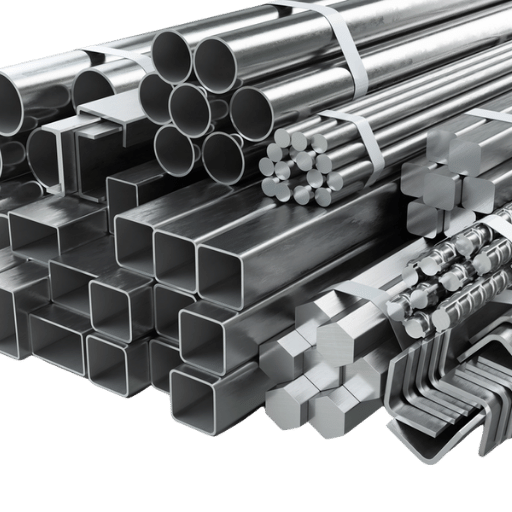
The density of steel varies depending on its composition, with carbon content being the governing element. The carbon percentage thus varies between approximately 0.02% and 2.14% wt%. The greater the carbon content, the greater the strength and hardness it imparts to steel, but the lesser the density of the material. Low-carbon steels, with carbon levels roughly between 0.05 and 0.25 pct, have a density close to 7.85 g/cm³.
Impact of Processing Techniques
The processes used for its manufacture affect the characteristics of steel and its density. Heat treatment, forging, and cold working are processes capable of modifying the internal microstructures of metals to enhance hardening, ductility, and tensile strength. Cold working causes strain hardening, resulting in yield strength improvements of approximately 20 to 30% in cold-rolled steel compared to hot-rolled steel.
Cold Working Benefits
- Increased yield strength (20-30% improvement)
- Better surface finish
- Improved dimensional accuracy
- Strain hardening effects
Cold Working Limitations
- Reduced ductility
- Increased brittleness
- Residual stress formation
- Higher processing costs
Role of Impurities in Density
Impurities affect the density of materials and influence various physical and mechanical properties. The insertion of impurities disrupts the uniformity of atomic arrangements within the material and causes density effects that may either increase or decrease it. Lighter atoms, such as hydrogen or carbon, reduce density, while heavier atoms, like lead or tungsten, improve it.
Why Does Steel Density Matter?
Structural Integrity and Load-Bearing Capacity
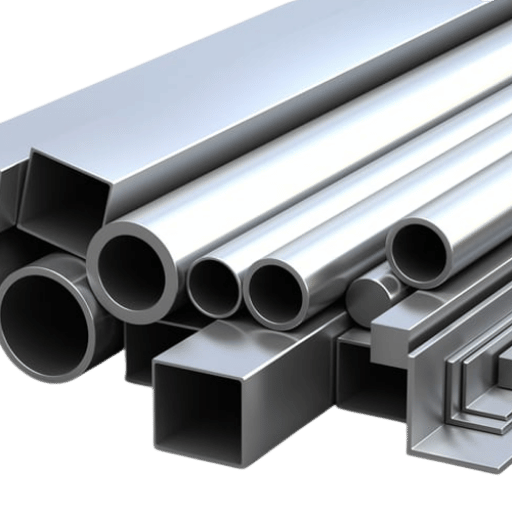
Steel density directly impacts structural integrity and load-bearing capabilities of constructions and machinery. The density of steel lies between 7,750 and 8,050 kg/m³ while providing excellent strength-to-weight opposition. Alloy steels of higher density find use when heavy stresses adversely affect constructions like skyscrapers, bridges, and heavy machines.
| Application | Steel Type | Density (kg/m³) | Key Benefits |
|---|---|---|---|
| High-rise Buildings | High Tensile Steel | 7,900 | Yield strength >250 MPa |
| Aerospace Components | Light Alloy Steel | 7,750 | Weight reduction, safety standards |
| Heavy Machinery | High-Density Alloy | 8,050 | Maximum load resistance |
Weight Considerations in Various Industries
Weight considerations reveal the importance of materials in engineering applications for selecting solutions that meet stringent industrial requirements while providing the best value for performance and sustainability. The automotive sector is a key domain for lightweighting, enabling better fuel economy and reduced pollution. The manufacturing of automobile bodies is moving toward higher applications of high-strength steel alloys, aluminum, and magnesium.
Industry-Specific Applications:
- Aerospace: Carbon fiber composites and lightweight steels for fuel efficiency
- Automotive: High-strength, low-weight alloys for electric vehicle battery range optimization
- Construction: Balance between weight and structural strength for foundation requirements
- Manufacturing: Precision tooling requiring specific density characteristics
Thermal and Electrical Conductivity Correlation
Thermal and electrical conductivity are interrelated properties in metals with high density due to free electrons within their structure. The Wiedemann-Franz Law explains this correlation by stating that the ratio of thermal conductivity to electrical conductivity is proportional to temperature in conductive metals.
Practical Applications of Steel Density
Importance in Construction Projects
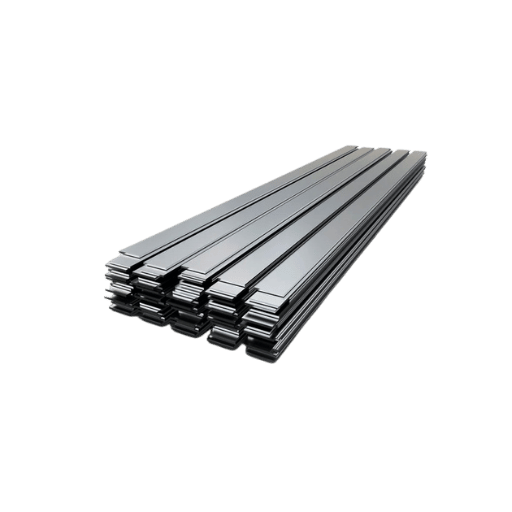
Steel density stands foremost in the minds of engineers in construction projects because density is directly related to weight, which in turn defines the load-carrying capability and strength of buildings and infrastructure. Steel, having a density of around 7,850 kg/m³, is one of the strongest and most versatile materials used in construction.
Construction Benefits:
- Excellent strength-to-weight ratio for tall buildings
- Resistance to static and dynamic loads (wind, seismic activity)
- Enhanced tensile strength when used as concrete reinforcement
- Long-term durability with proper maintenance
Role in Manufacturing and Tool Production
Steel has always remained an inseparable companion of the craft and industrial production process. The beauty in the very practice of alloying steel is in adding to it certain elements, say chromium, nickel, or manganese, to impart specific properties for certain industrial operations. For example, stainless steel, which is considerably resistant to corrosion, is used in precision tooling, the manufacture of medical instruments, and food processing machinery.
Manufacturing Statistics: According to worldwide manufacturing statistics, the production of crude steel in 2022 was approximately 1.9 billion metric tons, thereby retaining its position as a backbone for industrial development.
Tool Steel Applications:
- Cutting Tools: High-speed steel for machining operations
- Molds and Dies: Tool steels for plastic injection molding
- Precision Instruments: Stainless steel for medical devices
- Custom Tooling: 3D printing and laser cutting applications
Applications in the Energy Sector
Steel plays a crucial role in the energy sector due to its strength, durability, and versatility—all of which are essential in various forms of energy production and distribution systems. Now, steel is widely used in making wind turbines, as high tensile strength is needed in making turbine towers that are subjected to gigantic forces and continue to function in the environment for several more decades.
| Energy Application | Steel Requirement | Typical Usage |
|---|---|---|
| Wind Turbines | 140 tons per MW capacity | Tower construction, foundation |
| Solar Systems | Weather-resistant coatings | Mounting systems, trackers |
| Oil & Gas | Corrosion-resistant alloys | Pipelines, offshore platforms |
| Hydrogen Energy | High-pressure resistance | Storage tanks, transport pipelines |
Measurement Techniques and Best Practices
Standard Measurement Checklist
- Ensure the sample is clean and free from surface contamination
- Use a precision balance for accurate mass measurement
- Control temperature during measurement (thermal expansion affects volume)
- Select an appropriate method based on the sample geometry
- Perform multiple measurements for statistical accuracy
- Account for atmospheric conditions and buoyancy effects
Tips for Accurate Density Measurement
- Temperature Control: Maintain a constant temperature to prevent the steel’s expansion due to heat.
- Surface Preparation: Prepare surfaces to remove any oils, oxides, or coatings that could interfere with measurements.
- Method Selection: Water displacement for irregular shapes; geometrical calculations for regular shapes.
- Calibration: Calibration of measuring equipment using known standards should be a routine practice.
Research Findings and Advanced Applications
Latest Research on Steel Density
Recent studies on 316L stainless steel parts manufactured through laser powder bed fusion have shown remarkable results. Research by Pragana et al. (2020) demonstrated that maximum relative density of 99.87% can be attained using a Nitrogen atmosphere, with near full-density parts produced without post-processing requirements.
Key Research Findings:
- Processing parameters significantly influence final part density
- Nitrogen atmosphere improves density outcomes
- Vector size negatively affects part density
- Advanced manufacturing techniques can achieve near-perfect density
Frequently Asked Questions (FAQs)
What is the density of steel?
The steel density ranges close to 7,850 kilograms per cubic meter, or approximately 490 pounds per cubic foot. This is, again, an average because, from the perspective of the steel and the alloying elements it contains, densities can vary.
How does density differ between carbon steel and other steels?
Carbon steel generally has a density close to that of mild steel, 7.85 grams per cubic centimeter. Nonetheless, these densities can vary slightly depending upon the carbon content and alloying elements, and thereby some carbon steels will be denser than others.
What defines the density of carbon steel?
Variations in carbon content and other alloying elements such as chromium, nickel, and molybdenum cause changes in the density of carbon steels. An increase in carbon content increases densification due to the presence of these elements.
Is knowing the density of steel significant?
Given that steel density is the key factor in material selection for construction and engineering applications, engineers typically determine the weight-bearing capacities and load-bearing capabilities of steel beams and columns through density assessments.
Does the density of steel affect its properties?
With density comes strength; the hardness and corrosion resistance of steel are also affected. Different densities imply different behaviors of steel in various applications; hence, it is vital to select the correct type of steel for each specific application.
Does temperature change steel density?
Usually, the density of steel decreases with increasing temperature. When heated, steel expands, meaning an increase in volume for the same mass, thereby reducing its density. This property is fundamental in areas with extreme temperatures.
Summary and Key Takeaways
Essential Points to Remember:
- Standard Density: Steel typically ranges from 7.75-8.05 g/cm³, with 7.85 g/cm³ as the standard value
- Composition Impact: Alloying elements like chromium, nickel, and carbon significantly affect density
- Measurement Accuracy: Proper measurement techniques are crucial for engineering calculations
- Industry Applications: Density considerations are vital in construction, manufacturing, and energy sectors
- Performance Relationship: Density directly correlates with structural integrity and material performance
Understanding steel density is fundamental for anyone working with this versatile material. Whether you’re involved in construction, manufacturing, or engineering design, the principles outlined in this guide will help you make informed decisions about selecting and applying steel. The relationship between density, composition, and performance makes steel one of the most reliable and adaptable materials in modern industry.


