Tungsten: Understanding Its Density and Applications
Introduction to Tungsten and Its Remarkable Density
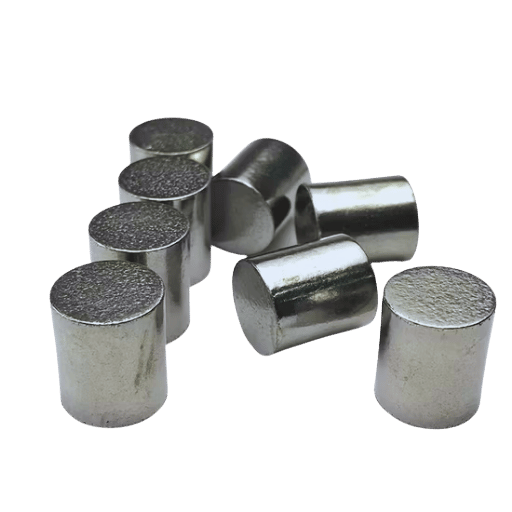
Overview of Tungsten as a Metal
The value of tungsten has increasingly grown across various sectors owing to its huge density, melting temperature and hardness. These values are adequate and hence can be applied in the following ways:
- Processing cutting tools such as drills and saw blades
- Manufacturing filaments for incandescent lamps
- Creating electrodes for welding applications
- Aerospace and defense technologies require extreme durability
Importance of Density in Scientific and Industrial Contexts
Relying on the density of a particular material, its properties are affected according to the situation. In material science, the density of tungsten makes it possible to ascertain the capability of the material to be used, among others, in civil engineering, aviation, and the manufacturing industry.
Whereas for applications needing strong and stable materials with high high-density elements like tungsten are used. There are also materials of lower density, such as aluminu,m for lighter constructions.
Understanding Tungsten’s Density
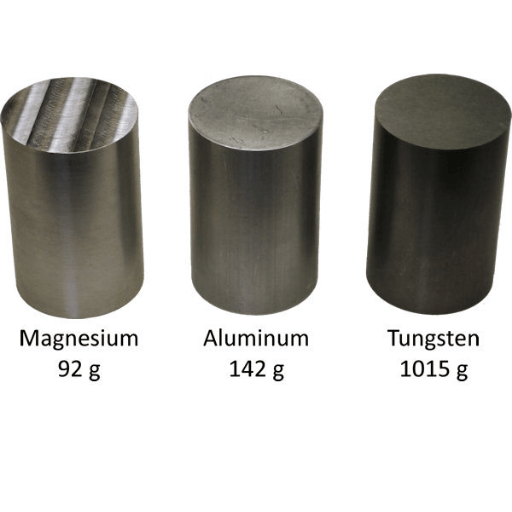
What Defines Density?
Density (ρ) = Mass (m) / Volume (V)
Units: g/cm³ or kg/m³
Density represents the mass of an object per unit volume, serving as an intrinsic property that determines how tightly matter is packed within a given space. This property finds extensive application in scientific and industrial processes, providing insights into material behavior and suitability for specific applications.
Tungsten’s Density: Comparative Analysis
| Metal | Density (g/cm³) | Comparison to Tungsten |
|---|---|---|
| Tungsten | 19.3 | Reference standard |
| Gold | 19.3 | Equal to tungsten |
| Osmium | 22.5 | Densest natural metal |
| Lead | 11.4 | ~60% of tungsten’s density |
| Steel | 7.9 | ~40% of tungsten’s density |
Why Is Tungsten So Dense?
What makes tungsten incredible in terms of density is the atomic structure as well as its position in the periodic table. It has atomic number 74 and there is:
- Relatively small atomic radius compared to other metals
- Tight atomic binding with high atomic mass per unit volume
- Body-centered cubic crystalline structure enabling efficient dense packing
- Strong electron-nucleus interactions due to high nuclear charge
Industrial Applications of Tungsten

Electronics and Power Supply
- Incandescent light bulb filaments
- Electrical contacts and switches
- X-ray tube components
- Power supply systems
Aerospace and Defense
- Turbine and jet engine components
- Missile and rocket parts
- Radiation shielding systems
- Kinetic-energy penetrators
- Aircraft counterweights
Medical Applications
- Radiation shielding equipment
- Surgical instruments
- X-ray tube components
- Medical lighting systems
- Cancer treatment equipment
Manufacturing and Tooling
- Tungsten carbide cutting tools
- Industrial molds and dies
- High-temperature furnace parts
- Welding electrodes
- Heavy-duty machinery components
Practical Applications: Why Density Matters
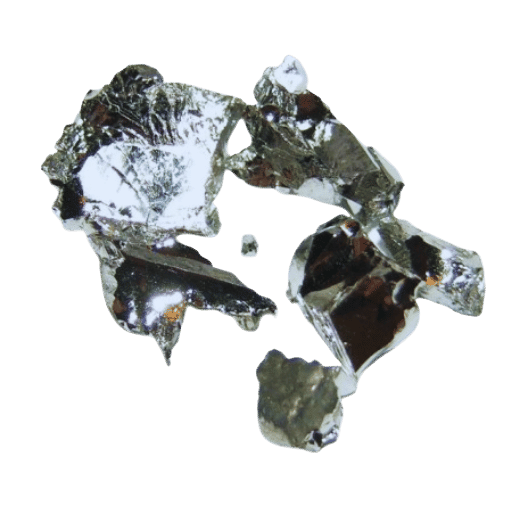
Critical Industries Leveraging Tungsten’s Density
- There are several applications of high-density materials, and it is worthwhile to discuss them.
- Aerospace: Weight, spinning wheels, and anti-radiation covers for both satellite and space vehicles
- Weapons: Protruding projectiles, throwing kinetic rods, and vibration-control devices
- Healthcare: Shielding of radiation for the equipment in diagnosis and cancer treatment
- Sports: Metal heads of golf clubs, cutler darts, and fishing sinkers made for better results
- Atomic Power: Protectors used against reactors and barriers for radioactive materials
- Power: Oil, gas pumps, stabilization, and sustaining gadgets
High-Stress Environment Applications
Real-World Examples:
- Automotive Racing: F1 cars use tungsten for weight redistribution and stability under extreme racing conditions
- Military Applications: Armor-piercing capabilities and vehicle protection under severe impact forces
- Mining and Drilling: Tungsten carbide tools withstand harsh environmental conditions
- Power Generation: Turbine components in power plants operating under high temperatures and mechanical stress
Environmental Impact Considerations
Tungsten presents both environmental challenges and benefits:
Challenges:
- Mining operations can disturb ecosystems and wildlife habitats
- Processing may produce waste containing heavy metals
- Potential soil and water contamination from mining activities
Benefits:
- Non-toxic and environmentally safe material
- Highly recyclable, reducing mining demands
- Long-lasting durability minimizes replacement needs
- Energy-efficient recycling processes
Conclusion
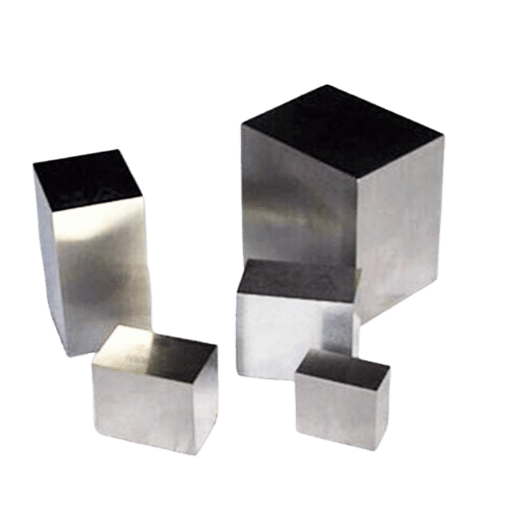
The Exceptional Nature of Tungsten’s Density
Tungsten’s extraordinary density of 19.3 g/cm³, comparable to gold, positions it among the heaviest naturally occurring elements. This remarkable property, combined with its exceptional melting point and tensile strength, makes tungsten irreplaceable in numerous industrial and scientific applications spanning aerospace, defense, medical technology, and beyond.
The Vital Role of Tungsten in Modern Society
The importance of tungsten in contemporary society cannot be overstated. Its unique characteristics enable applications where no other metals can perform adequately. From advanced aircraft engineering to life-saving medical devices, tungsten continues to be fundamental in developing materials that demand longevity and optimal performance. As industries discover new applications and improve material properties, tungsten’s role will undoubtedly continue expanding.
Frequently Asked Questions
Q: How much does tungsten weigh?
A: Density of change means the outermost density is the third limit (19.3 g/cm3) and therefore is one of the densest metals. This astounding metal density also enhances relevant industrial purposes, for instance, the design of protective barriers against radiation and counterweights.
Q: How does the density of tungsten rate in comparison to other materials?
A: Compared to such metals as lead or most other metals, tungsten is denser. Density in such cases is important as it ensures that cutting tools, for example, tungsten carbide drills, etc., etc., are not bulky.
Q: How can the physical properties of this metal, tungsten, be assessed?
A: The main physical properties of any material, such as high heat-resistant materials like tungsten, are that they cannot melt at 3422°C or do not undergo their melting point. Also, tungsten is very hard because of its such as those employed in high temperature and special purpose machines, such as machining, because it is well-suited for such conditions. What is the role of high tungsten density in alloys?
Q: What is the function of tungsten powder in the manufacturing industries?
A: Specific techniques like selective laser melting or selective electron beam melting are possible to be produced out of powders in an additive manufacturing process. Using such techniques without a doubt helps to produce tungsten products that are dense and mechanically strong with precision.
Q: How is the density of tungsten enhanced by its atomic structure?
A: The atomic configuration of tungsten is body-centered cubic. This results in the metal being dense due to the packing of the heavy atoms to be dense. Moreover, the packing of tungsten atoms in this structure enables increasing the theoretical density of tungsten.
Q: In what ways is tungsten carbide used? How is it beneficial due to its density?
A: One of the exemplary properties is its extreme density and wear resistance of tungsten carbide is that it is used for the production of cutting and other industrial machinery tools. This feature, for obvious reasons, is required in many industries.
Q: What happens to the density of tungsten as the surrounding temperature changes?
A: When the temperature increases, the density of tungsten only decreases marginally, and in any case, it does not change to the same extent as other materials are subjected to. In high-temperature operations, these characteristics help to maintain the operational requirements of the product.
Q: How is the density of tungsten related to its atomic mass?
A: The Higher atomic number of Tungsten leads to, of course, a high-density characteristic. This is because the entire structural effect of the weight of the tungsten atom per given volume is quite breathtaking and one of the most important research in the present-day plastic industry.
Reference Sources
- 1. Factors that Affect the Density of Tungsten and Others
- Authors: M. Leitner, G. Pottlacher
- Journal: Metallurgical and Materials Transactions A
- Publication Date: July 1, 2019
- Intext Measure: (Leitner & Pottlacher, 2019, pp. 3646–3653).
Abstract:
- The research sought to experiment on the density of the mentioned metals, niobium and tungsten, as of their liquid states in terms of temperature, applying the principles of ohmic pulse-heating. The authors checked out the data collected against various works published and presented the approxima based on the density of the liquid as such a task was also accomplished in a previous work. Lastly, the temperatures and densities that are critical for these metals, have been also calculated.
- Materials and Methods: The researchers conducted density measurements using a stepwise technique and compared the results with the available literature accounting data to evaluate the uncertainties of the measurements.
2. An Investigation into the Electrochromic Coloration and its Relation to the density of tungsten trioxide (WO3−x) thin Films fabricated by Electron Beam Evaporation
- Authors: K. M. Karuppasamy, Aryasomayajula Subrahmanyam
- Journal: Journal of Physics D: Applied Physics
- Publication Date: 7th May, 2009 (even if it is older than 5 years, it is relevant)
- Citation Token : (Karuppasamy & Subrahmanyam, 2009, para. 095301)
Summary:
- This study aims to examine the degree of electrochromic coloration achievable with regard to tungsten trioxide thin films and their density. Further, the authors tried to relate the electrochromic columetric variation as a function of the density of the thin films.
- Methodology: The authors in this paper adopted the electron beam evaporation technique for the lustrous thin film and electrometry for electrochromic characterization in order to establish the relationship.
3. An example is the density of tungsten. These emissions have been reproduced using a colli03isional-radiative model with reabsorption and deexcitation being included in these models.
- Authors’ collective: Yang Liu et al.
- Journal of Submission: Japanese Journal of Applied Physics
- Acceptance Date: September 18, 2018
- Referencing Token: (Liu et al., 2018)
Abstract:
- The general idea of this work consists of calculating the density of tungsten ions in a certain plasma. Throughout the work, EUV emission spectra of the ions mentioned were recorded, and density versus radial distance distributions were constructed.
- Method: To do that, a collisional-radiative theory was applied, and photon emission coefficients were determined together with the chords integrated profiles collected by the Abel technique being inverted to the respective emissive profile.