


Creating a do-it-yourself cnc milling machine is one of the most ingenious and satisfying tasks that one can undertake, in terms of engineering, creative concepts, and a bit of handiwork. For those interested in creation, aspiring to be in the engineering disciplines, or even for those who are just swooning at the thought of being able to construct something consummately digital, building what is known as a DIY CNC mill is an unparalleled example of precision machining combined with customization of tools for personal purposes. In this article, the main principles of the process, aspects to consider, and tools to make your own CNC tool are expounded. From designing a proper plan, to choosing the most needed components, and building a working, effective real system, we will provide the basic tools required to handle the self-building of your CNC. When you reach the end of the article, not only will you be better equipped with knowledge about CNC technology, but you will also be able to make precision components in your workshop.
Understanding CNC Milling
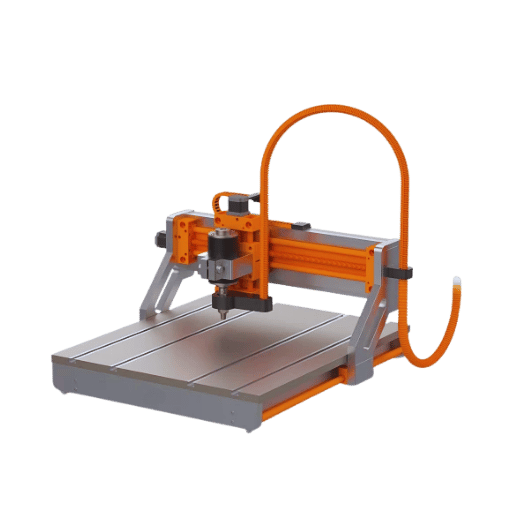
When you plan to create something, it is essential to know that CNC milling is the technology of designing an object from a blank piece of material by cutting out a part of it in the exact shape desired using computerized equipment. This technique is engaged by computerized programs that operate the tool used in the removal of material from a machined component in different directions. Hence, precise shapes and objects can be fashioned. These are the reasons why CNC milling appeals to industries such as automotive, electronics, and aerospace sectors, among others. Making extremely accurate components with repeated high-quality is possible with this machine. These advantages incorporate cleaner production, fewer mistakes from people, and automated processes with compound shapes.
What is CNC Milling?
Computer(controlled)-Numerical-Controlling Milling is a mechanical device used in the production of discrete objects and shapes. This is done through the removal of sections of an object with cutting tools under computer numerical control. The cutting machines take that form thanks to those instructions. This technology is effective, precise, and produces elements with intricate geometries that are relevant to a spectrum of fields.
Key Components of a CNC Milling Machine
Control Interface
The computer hardware or software interface wherein the operator inputs programs and commands to control the machine operations.
Frame of Machine Structure
The structural base for the entire milling machine provides stability and support.
Spindle
The rotating component holds the cutting tool and rotates it at different speeds.
Cutting Tool
Tools such as end mills or drills are used for removing the material from the workpiece.
Worltable
The surface onto which the workpiece is securely mounted for machining.
Axial Movement Mechanisms
Includes lead screws, linear guides and all such components that allow precise movement in X, Y and Z directions.
Coolant System
Delivers coolant that reduces heat and friction during cutting.
Chip Management System
Systems like chip conveyors and vacuums that clear debris from the surroundings of machining.
Motors and Drives
Provide motion to the moving parts, including the spindle and axes.
Tool Changer
An automated system that selects and changes cutting tools when they are needed during machining operations.
Sensors
These devices monitor parameters such as tool position, speed, or pressure to ensure safe and precise operations.
Software and Controls
Applications of CNC Milling
- Automotive Industry – CNC milling is used extensively to manufacture engine parts, custom fittings, and prototypes that necessitate high precision and repeatability.
- Aerospace Industry – It is used for manufacturing complex components such as turbine blade designs, structural parts, and other intricate airframe designs.
- Medical Sector – It enables the manufacturing of surgical instruments, implants, and prosthetics according to patient specifications.
- Electronics Manufacturing – The crafting of circuit boards, heat sinks, and enclosures of intricate designs are all facilitated.
- Tool and Die Industry – This goes into making molds, dies, and fixture for use in mass production processes, among others.
Essential Tools and Materials for DIY CNC
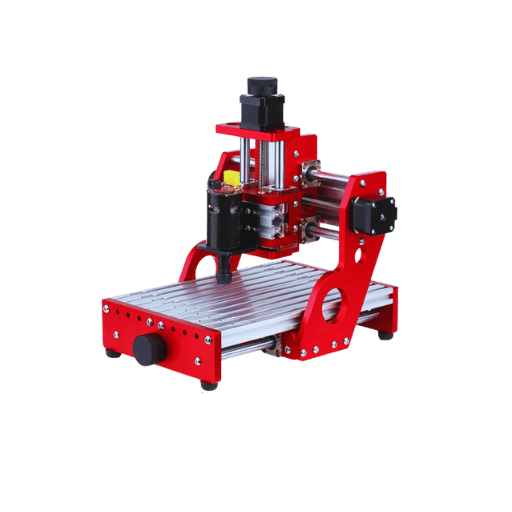
Necessary Tools for Building a CNC Machine
- Stepper Motors and Drivers – These provide precision control of the machine movement on the X, Y, and Z axes.
- Linear Guides and Rails – Allow for smooth and accurate motion by reducing friction, thus providing stability during working, which is important in building your CNC.
- CNC Controller Board – The brain of the CNC machine; it converts computer software instructions into motor actions.
- Cutting Tools (End Mills, Drills) – These are used for removing material and shaping, available in different sizes and coatings for use on various materials.
- Power Supply Unit – Provide a steady and reliable voltage to the motors, drivers, and other electronic units.
Materials Required for Your DIY CNC Mill
Budget Considerations for Your CNC Project
Expenditures for the creation of a homemade CNC machine should be planned thoroughly as to what components are required, of what quality, and consequently what they will cost. It is a good initiative to start by setting aside the money for the engine, controller board, and cutting bits since they are the fundamental parts and most of the time constitute the main expense. Do your investigation and figure out the cost and where one can find the materials without being conned. Endeavor to choose components in such a way that both durability and price are accommodated for their purchase, as cheap choices might end up being very expensive in the long run, in case they require repair or replacement. Furthermore, software licenses and/or any other fees, such as mounting and servicing tools, should be included in the cost estimation. With good arrangement, a CNC machine can be assembled within a given monetary limit.
Step-by-Step Guide to Building Your DIY CNC Milling Machine
1
Planning and Design
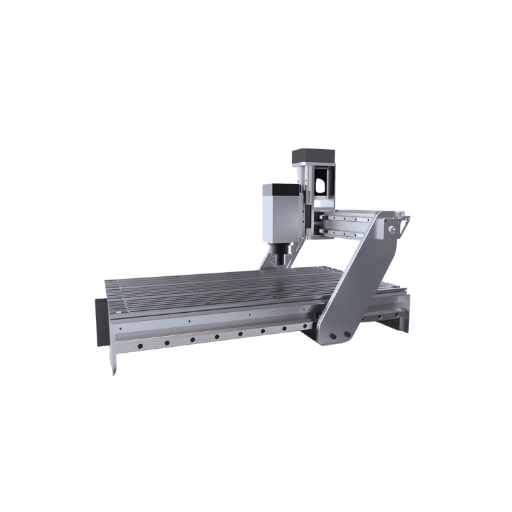
Identify the reasons behind having a CNC milling machine and its main tasks. Identify the material that will be used, the dimension of the workpieces, and the level of accuracy, if enhanced, should be accomplished. Make a clear theoretical picture either in the form of sketches or using CAD (Computer-Aided Design) drawings. Within this stage the most important is the determination of the size of the machine, the axes arrangement (e.g. 3 axis or more); the motors or the drive systems that will be installed within the machine. To improve your project, study some relevant models on the internet and engage with useful and accurate publications. Creating a proper layout will help you achieve the remainder of the project easily.
2
Assembling the Frame of Your CNC Machine
As it is expected of any good structure, the frame of a CNC machine is meant to support the rest of the structure. It starts with a tough material, either aluminum or steel, for stability, as recommended, and to reduce shocks while working. Build the frame with precision by carving and joining the parts perfectly with screws or welding them where required, when using the conventional methods of joining. Aluminum as well as the steel frames take some measurements of levelness and rigidity when leveling the structure is under discussion, since a tilt affects the precision of the machine in question. Balance the constructed frame after finishing this frame, and if it is necessary, change it and do not keep going further with the structure, fixing other parts.
3
Installing Motors and Rails
To start, attach the linear rails properly to your machine frame. In attaching the rails, make sure that they are straight and in parallel orientation for easy operation of the movement. Afterwards, position the motors at their respective position and align them properly with the rails. Furthermore, bolt down the motors and check if they are properly secured. Alternatively, connect the motors to lead screws or belts, as the case may be, making sure that the tension is set at the desired level. After they are added, test the structure/chart by moving the parts back and forth to determine if there are any binding or other impediments across the rails. Do Alter the settings where applicable towards better performance.
4
Wiring and Electronics Setup
First and foremost, arrange all the cables so that none of them tangle, nor are they entangled in any way. Followed by attaching corresponding stepper motors to drivers and ensuring that the connections follow the diagram given by the manufacturer. Connect the power source to the primary board, making sure that the voltage is the one for which your system works. For the signal cables, ensure they are well attached to avoid them getting loose when in operation. Lastly, assemble the control board onto the computer or controller and ensure that all the connection wires are within the guidelines of the assembly. Run the system in full operational mode and ensure that there is communication between the components, and attend to any error messages. This work process is designed carefully for your convenience when working.
5
Software Setup for CNC Operation
The software for operating the do-it-yourself cnc milling machine can be installed very easily. The first step is the installation of CNC control systems set by the manufacturer’s engineers. They should be able to work together with the operating system that you are using. After the process is done, the most important step is to set up the essential parameters for the system, for example, the size of the machine, the type of tools to be used, maximizing the working axis, etc. Compose the settings enabling the use of the machine classically and carry out some movements for the alignment of the CNC. Make sure that each and every firmware and driver is up to date in order to roll out the best performance. Store your configuration, outlining the specific purpose so that the same can be reproduced at a later date or for use.
6
Testing and Troubleshooting Your CNC Mill
First and foremost, it should be remembered that numerous test operations should be carried out in order to check the efficiency of the mechanism. Starting by controlling feeding and movement by means of simple instructions along separate axes, as well as the spindle rotation. Attention should also be placed on checking unusual sounds, vibrations, or misalignment of the unit during any processes. Examine the test samples to check the cut or engravings and to evaluate the outcome if necessary. If there are problems, review the software and the three out of four layers, including its hardware, as the fourth layer may have some errors with several components. However, in cases where help is required, please refer to the manual of the do-it-yourself cnc milling machine, or more simply, the technical support. Otherwise, it is necessary to perform the tests in a safe and sterile setting in order to evade any damage to the working tool or the part.
Common Challenges and Solutions in CNC Milling
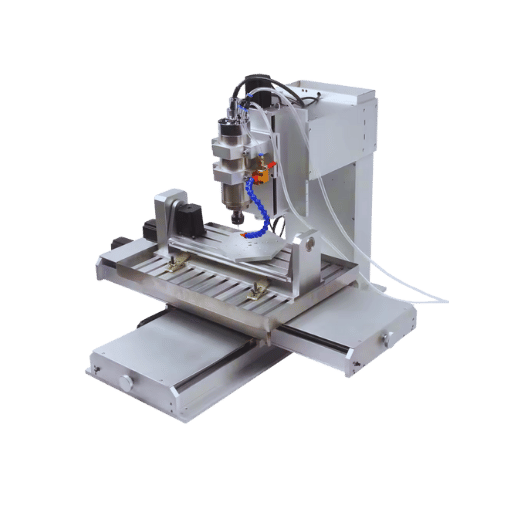
Alignment Issues and Their Solutions
Incorrect Workpiece Positioning
Miscalignment of the workpiece makes machining erroneous, so everything must be aligned while designing a machine. The workpiece should be tightly clamped and aligned with the machine axes before processing. Use accurate measuring scales such as dial indicators.
Tool Offset Errors
Wrong tool offsets will cause unwanted deviations. Always verify and update tool offset parameters in CNC software before running a job. Always check tools for wear or damage that may affect accuracy.
Machine Bed Leveling
An uneven machine bed causes misalignment once in operation. A spirit level or similar tools must be used to check the machine bed periodically and make adjustments accordingly.
Loose Machine Components
Inordinate free components, such as screws, bolts, or bearings, may cause misalignments. Carry out regular preventive maintenance with all machine components being tightened and fastened, and treated or checked for wear or instability.
Axis Calibration Errors
Software Configuration Challenges
❌ Incorrect Software Parameters
Discrepancies between the parameters, such as feed rates, cutting speeds, or tool offsets, can cause improper behaviors in machining. Review all software settings to ensure they meet the machine requirements for proper operation.
⚠️ Compatibility Issues
Outdated or non-compatible system software may pose communication errors between the machine and the control system. Always do your best to install the latest software versions and check for compatibility of the system beforehand.
📝 Data Input Errors
Input errors in data, such as erroneous G-code or CAM files, can wreak havoc on machining operations and cause alignment problems. Establish validation schemes to allow input data checks before execution so as to minimize any snags introduced by human error.
Material Compatibility Problems
Material compatibility concerns arise when the material is unsuitable for a machining process or the final intended application. Tool wear is excessive, while surface finish is inferior, or there is distortion of the material during machining. The following could be done to solve problems:
Material Selection
The selected material must meet the product functional requirements within the capabilities of the machine, according to manufacturers’ specifications or industry standards.
Tooling Compatibility
Use tooling that is specified for the material type, so damage to the tooling or inaccurate cuts do not arise.
Pre-Machining Tests
Conduct tests to determine material behavior in machining conditions and be able to foresee any adjustments required.
Following such practices may drastically reduce the risks, and so consistency in machining performance is ensured for your CNC building.
Tips for Optimizing the Performance of Your DIY CNC Machine

Maintenance Tips for Longevity
🧹
Regular Cleaning
Cleaning should be done after a CNC machine operation to get rid of any carved wood chips, dust, or residue that could affect its components or machining.
🔧
Lubrication of Moving Parts
Depending on the particulars, all moving parts should be lubricated from time to time; for example, lubricate the bearings and lead screws to minimize
friction and wear.
🔩
Check and Tighten Fasteners
Examine all bolts, screws, and fasteners on a regular basis to ensure that they are held firmly in place. Tighten anything that could create a mechanical
instability.
🔄
Examine Worn Parts
Including belts, tools, or motors, any parts considered to be critical will need to be checked regularly for signs of wear and replaced if found. In this manner,
performance will be sustained.
💻
Update Software and Firmware
Update your CNC software and firmware as soon as an update becomes available, to maintain system compatibility with improvements in functionality and
efficiency.
Upgrades to Enhance Your CNC Machine
Some improvements in the CNC machine should be made for better performance:
- Precision Tools: Very good-quality tooling should be bought for high machining accuracy and good surface finish.
- Control System: Upgrading to a better control system would allow for better precision and functionality.
- Coolant System: Mist or flood-type coolant systems are the best candidates considering heat dissipation during cutting.
- Automation Features: Other automatic operations could be considered such as a tool changer or a robotic arm to carry out jobs that may be needed for more productivity.
Efficiency Tips for Better Performance
Frequently Asked Questions (FAQs)
Q: What is a do-it-yourself cnc milling machine?
A: A do-it-yourself cnc milling machine eliminates the hassle of hand-operated milling for users and machine workers. Such machines help in precision cutting of metals, sharpening of edges or materials and as well as carving decorative shapes in wood and non-metal materials. Such machines make this effort easy by using x-axes, y-axes, and finally z-axes.
Q: How do you make your own cnc machine?
A: When designing a home-made cnc machine, the frames, motors, gantr,y and the spindle are only a few components to be stressed on. With the use of open source software like Mach3, constructing your own cncs has so many limitations. Plywood, steel sheet, and ball screws will be needed with a comprehensive guide on the project of the machine.
Q: What is the definition of the working area in a cnc milling machine?
A: The working area of a cnc milling machine is understood by the operator as the size of stock that can be turned in the machine. This is dependent upon the size of the machine and the travel of the spindle in the x-axis, y-axis, and z-axis.
Q: Is it possible to do routing using a CNC for Milling?
A: Yes, it is possible to set up CNC routing to do milling, but care must be taken in this case to ensure that the given router is strong enough to withstand the forces and materials that are being used. For precision milling such as drilling or surfacing, a desktop CNC mill may be more appropriate.
Q: Which materials can be worked on using a do-it-yourself cnc milling machine?
The do-it-yourself CNC milling machine can machine some of the materials that are listed below, including wood, plastic, and aluminum, as well as less hard or very soft metals, making it an “awaited” tool among all those who wish to make one. The maximum manufacturing features mean these would vary depending on the type of spindle and the machine considerations.
Q: What should I do to increase the accuracy and tolerance of my CNC machines?
A: CNC precision requires good components, such as ballscrews or even limit switches, among other things, to be used in any CNC system. A square piece can also keep the user from making wrong assemblies that could lessen the degree of precision achievable. Proper maintenance and or calibration can also be helpful.
Q: What role does a gantry play in designand architecture?
A: CNC gantry machines save machining time. The inordinate deformation of the spindle tip and travelling beam under self-weight significantly influences the blank material to be machined. The geometry of the saddle also maintains a nearer constraint condition on the work when cutting due to the reduced interior space created by the mechanical shell.
Q: Is there a ready-to-use CNC machine for sale?
A: There is good news if you want to have a do-it-yourself CNC milling machine with ease: there are ready-to-install machines that are fully assembled and do not require installation from the user.
Q: Can someone else make a part of CNC from a 3D printer?
A: Using a 3-D printer could help you to create components of your CNC mill, such as the mounts or frames. But for those parts that could engage heavy loads it is more recommended to utilise hollow steel or epoxy granite.
Q: What do the CNC machine parts need to have for safety reasons?
A: Some of the components that need to be included in a do-it-yourself CNC milling machine include safety measures like emergency stop buttons, limit switch panels, and appropriate shields. Such features ensure the machine is safe to work on and provide the necessary protection for the user against any possible risks.
Reference Sources
1. CNC Milling Machines – Joseph Henry Project (Princeton University)
- This page is about CNC milling machines, including desktop varieties like the Carvey.
2. Development of CNC Milling Machine for Small Scale Industry – ResearchGate
- An academic paper that talks about the development of 3-axis CNC machines for small-scale industries.
4. Machine
5. Machining
6. Top custom stainless steel parts Manufacturer and Supplier in China


