


Machining toothed pulleys requires precision in both the craft and CNC machining. Machinists and engineers find the challenge in practicing complicated designs on a normal 3-axis CNC machine, and the assumption usually is that it needs higher-end equipment. This blog post dives machining toothed pulleys, particularly the cunning tricks, jigs, and techniques that will aid you in mastering this craft. Whether you want to improve your current workflow or are attempting it for the first time, this guide will provide valuable takeaways to enhance your skills and push the limits of a 3-axis CNC.
Understanding Toothed Pulleys and Their Role in CNC Systems
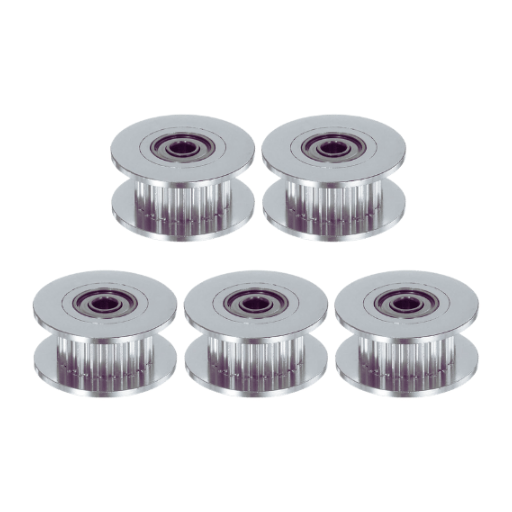
Toothed pulleys are a must for passing motion cleanly and accurately between parts in CNC machines. In stand-alone works with timing belts, these pulleys must keep the movement synchronized enough to cause almost no slippage, and hence they must work with precision. Theoretically, the evenly spaced teeth of the pulleys ensure perfect engagement between the belt and pulley, making it particularly pertinent to the accuracy of CNC machining tasks. Working excellence makes these toothed pulleys a must in all cases where exact range and repeatability might be required. With maximum power transmission and smooth coasting, the deployment of these components contributes to the enhanced performance of CNC systems.
What are Toothed Pulleys?
Toothed pulleys, also called timing or synchronous pulleys, are mechanical elements in synchronous belts. The circumference of these pulleys has grooves or teeth equally spaced, which perfectly match the profile of a toothed belt. Thus, the belt is held firmly, preventing any slip, and allowing for precise power transmission through the conversion of motion. Toothed pulleys are used for applications where timing and positioning are very important, such as CNC machinery, automobile engines, and robotics. Their capability of providing consistent and efficient motion places these applications among industries requiring a high degree of precision and reliability.
Role of Toothed Pulleys in CNC Machines
Toothed pulleys are essential for CNC machines, imparting them precise and synchronized motion. These pulleys are used with toothed belts for the following purposes: preventing slippage between the moving part and the belts, constant power transmission to the machine parts being positioned, and maintaining the accuracy of movement. This is very important for CNC machines, as it ensures movement with absolute precision to extrude products with elaborate detailing.
Since toothed pulleys are used for power transfer with high torque, their action becomes essential when dealing with heavy loads or when high acceleration and deceleration are involved. On average, they require meagre maintenance of any kind due to their durable nature. Industry reports have revealed that manufacturers are applying aluminum and other forms of fine steel to toothed pulleys to achieve a better strength-to-weight ratio, thereby decreasing wear and increasing machine working efficiency.
According to certain research, a CNC system that utilizes high-precision toothed pulleys can position a piece with micrometric level accuracy, thereby promoting a high work rate and reducing defects. More advanced tooth pulley designs are featured in some modern CNC application systems, enabling energy efficiencies of up to 20% compared to conventional mechanisms. This makes them highly sought after in aerospace, automotive, and electronics markets where a particular level of precision, reliability, and time characteristics are mainly needed.
Key Components of Toothed Pulleys
| Key Point | Description |
|---|---|
| Tooth Profile | Shape of the teeth (e.g., trapezoidal, curvilinear) for power transmission. |
| Pitch | Distance between adjacent teeth, critical for belt compatibility. |
| Material | Composition (e.g., aluminum, steel, plastic) affecting strength and durability. |
| Hub | The central part connecting the pulley to the shaft. |
| Diameter | Outer size of the pulley influences torque and speed. |
| Belt Type | Compatibility with specific belts (e.g., timing belts, V-belts). |
Preparing Your CNC Machine for Pulley Machining

The establishment of the CNC machine for the cutting of toothed pulleys goes as follows:
- Inspect the Machine: Ensure that each component of the machine, including the spindle, tool holder, and clamps, is clean and free from debris. Also, check for wear or damage that would have impaired precision.
- Select Appropriate Tools: Utilize tools with specifications for cutting pulleys. Double-check if the tools are sharp and in good working condition to obtain accurate cuts.
- Calibrate the Machine: Run the necessary calibration procedure to verify and confirm the accuracy of the CNC machine, including zero points and tool offsets.
- Set up the Material: Clamp the raw material firmly on the worktable or fixture so that it remains stationary during the machining process. This ensures a constant result.
- Program the Design: Enter the proper pulley design specifications into the machine software. Validate the G-code twice to ensure accuracy and eliminate any cutting errors.
- Testing of the Setup: Simulate or dry-run the process to troubleshoot known issues, all accepted before the start of the actual cutting process. This reduces the likelihood of errors during machining.
Upon following these steps conscientiously, one can be assured that the CNC machine has been appropriately prepared to machine reliable and precise toothed pulleys.
Machine Calibration
Machine calibration plays a vital role in ensuring accuracy and precision in CNC operations. When an industrial tool is calibrated, it is expected to exhibit minimal deviation from certain practical standards, producing outputs of consistently high quality. The checks and adjustments usually comprise measuring spindle alignment, flatness of the worktable, and the accuracy of axis movements. Occasionally, other tests are implemented for backlash compensation, probe calibration, and other purposes, to further improve machine efficiency. Using the right calibration tools and technologies back up preventive maintenance efforts to avoid errors and increase machine life, thereby allowing the machine to be dependably used in very complex machining processes.
Workpiece Setup
The setup of the workpiece demands precision to ensure accurate machining results. The first step is to clamp the workpiece on the worktable, giving utmost priority that it does not move during operation.Using either a vise, fixture, or jig to hold the part contributes to positional integrity. Check the alignment of the workpiece along the axes of the machine by means of an edge finder or dial indicator. Moreover, ensure that the zero point coordinates set into the machine control software correspond to that set on the design. A well-organized workpiece setup will, to a reasonable degree, ensure a high level of accuracy with fewer errors and damage during machining operations.
Tool Machining
Tool selection for machining is crucial for achieving the required precision, operational efficiency, and a superior finish. Basically, it depends on the workpiece material, machining operation (whether milling, drilling, or turning), and cutting conditions (speed, feed rate, depth of cut). It is generally accepted that the primary tool materials are HSS, carbide, and ceramic, with each having their associated advantages and disadvantages, depending on the circumstances. For example, a carbide tool is chosen for high-speed operations because it is hard and resistant to heat, whereas an HSS tool is more suitable for general-purpose operations and other light applications. Too much or too little can hurt productivity or tool life: An inappropriate tool geometry and flute count or incorrect coating. If tool handling is carried out correctly, there will be less downtime, less waste, and a superb machining finish.
Common Challenges and Solutions in Pulley Machining
Material Hardness
Challenge: Hard materials increase tool wear and reduce machining efficiency.
Solution: Tools with strong coatings must be chosen, such as carbide, or diamond coating, that can withstand considerable wear and heat resistance.
Dimensional Accuracy
Challenge: Maintaining tight tolerances is challenging because of tool deflection or vibration.
Solution: Use precision fixturing and tools with high rigidity to reduce deviations.
Surface Finish Quality
Challenge: Inadequate surface finish on the pulleys caused by an unfavorable selection of tools or feed rates.
Solution: Select the right cutting parameters with finishing tools, and apply coolant if necessary.
Chip Removal
Challenge: Chip removal inefficiency can cause damaged tools to pit against the surface, mar the finish.
Solution: Employ good chip evacuation practices, such as using tooling with chip breakers and maintaining proper coolant flow.
Heat Generation
Challenge: Excessive heat generated during machining promotes tool life deterioration and thermal deformation of the component.
Solution: Cutting fluid application should be followed by cutting speed selection, and the material should be best-suited for heat reduction.
Achieving Precision in Machining
Achieving machining precision has always been a complex endeavor, requiring meticulous attention to several crucial factors that affect product quality. They range from the choice of tooling materials to machine calibration to workpiece clamping. High-precision machining often utilizes new technological systems, such as CNC, to achieve the desired accuracies in performing complex operations automatically. Other factors that can affect results include temperature and vibration. Continuous checks can minimize these through an online measurement system. All these aspects will help the machinist to ensure better precision, more efficiency, and reliability in the involved processes.
Tool Wear and Maintenance Strategies
Several tool wear and maintenance patterns contribute to efficient machine operation, reducing downtime, and extending its life. Here are five patterns we suggest implementing:
- Regular Inspections and Monitoring: Regular inspections, whether visual checks or those conducted with high-end monitoring equipment, can be performed to detect early tool wear, which helps prevent tool breakdowns. This may include measuring wear patterns or using sensors to watch performance metrics.
- Proper Lubrication: Adequately lubricating tools and machine components prevents friction and heat induction, which catalyzes tool deterioration. Proper lubrication goes a long way in prolonging the life of tools.
- Scheduled Maintenance Program: By practicing scheduled maintenance, any special tool can be either maintained or replaced before it becomes too worn, thereby avoiding hazards and unforeseen interruptions to production.
- Quality Cutting Tools Should Be Employed: One should invest in cutting tools that are wear-resistant and maintain their cutting performance over a long period, even under heavy-duty operations, manufactured from advanced materials such as carbide or ceramic.
- Optimal Cutting Parameters: Setting the correct feed speed and cutting depth ensures that tools are not overloaded when working, and hence do not cause unnecessary stresses or wear.
Addressing Power Transmission Issues
Power transmission issues can significantly impact the efficiency and performance of an industrial system. Identifying such issues and applying corrective action promptly will ensure dependable operation. Let us take a look at five common power transmission problems with some details:
- Misalignment: In general, shafts, belts, or chains are affected by misalignment, generating uneven wear on transmission elements, resulting also in inefficiency of power transmission. Routine checks must be conducted to verify alignment, thus accomplishing the best performance.
-
Less Lubrication Than Required: Friction increases along with heat generation if lubrication is little or insufficient and this happens between the transmission elements comprising gears and bearings. Such a problem will not occur when there is a suitable lubrication schedule.
- Overloading: Overloading the transmission systems will not only cause excessive wear but may cause overheating and failure of the components themselves. Loads must be calculated accurately, and the design must be within the capacity limits.
- The Components Experiencing Wear and Tear: Certain components, such as the belts, chains, and gears, will begin to degrade through wear. A program of inspection that includes replacing worn components will preserve reliability in operation.
- Vibration and Noise: Excessive vibration and abnormal noise may indicate more serious problems with the power transmission mechanisms. Tracing the root cause, whether it be an unbalanced component, a loose fastener, or other issue, is necessary.
Enhancing Durability and Performance of Toothed Pulleys
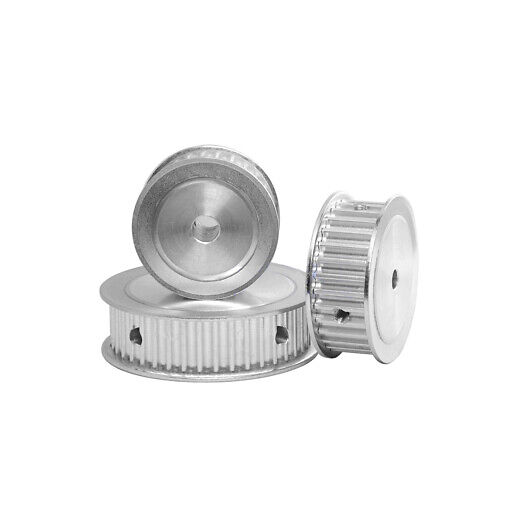
To maximize the lifespan and working efficiency of toothed pulleys, attention must be paid to maintenance and material selection. Inspect the pulleys regularly for signs of wear and tear, including cracks or surface degradation. Damaged parts shall be replaced immediately so that further damage could be prevented. Aligning the belt and tensioning should be done to minimize stresses on the system and working efficiency. Pulleys may be selected out of materials able to resist wear and corrosion like aluminum and reinforced plastic. Lubricate as necessary to reduce friction, hence increasing pulley life. These tips will substantially increase the reliability and working efficiency of toothed pulleys.
Material Selection for Toothed Pulleys
When concerning pulley material selection, one should take durability, weight, and resistance to environmental conditions into account. Aluminum certainly stands out as it is light with superb resistance to corrosion and good strength to fit applications where high precision with low inertia is needed. On a lower side of the price scale, however, such reinforced plastics like glass-filled nylon are deemed acceptable.They can withstand wear and chemical exposure without significantly compromising their durability. Steel or stainless steel can be considered for expected heavy wear and tear, offering great strength with moderate fatigue resistance, although this comes at the cost of reduced weight. One must consider the exact needs of the particular application environment, taking into account temperature, loading nature, and exposure to either moisture or chemical agents, before making this choice. A proper selection of materials will guarantee a long life and efficient working performance of toothed pulleys.
Optimizing Tooth Profiles for Performance
The performance of tooth profiles can be optimized to achieve an accurate engagement between the pulley and the belt, resulting in a reduction of concentrated stress, elimination of backlash, and smooth power transmission. The general frequency and aspect of the teeth affect the power transmission efficiency of the whole system. In modern designs, tooth profiles are rounded to promote the transfer of loads and to diminish wear. Development thus must take advantage of these advancements in machining and measurement, enabling modern precision approaches to achieve the tightest tolerances and ensuring the broadest possible compatibility across their various applications.
Precision and Repeatability in Manufacturing
In modern manufacturing, every hour is precious, and these precious hours enable the production of an excellent quality product to customers in a timely manner and in the required quantity. Precision is the ability of the manufacturing process to carry out a process with specific dimensions and, if repeated, to produce the same results such that components manufactured fit together and perform as intended. Repeatability refers to the ability to consistently reproduce a result on successive occasions within specified limits.
Manufacturing technologies advanced, raising the glass ceiling in manufacturing processes. A CNC machine, for example, can produce parts with tolerances of ±0.001 inches, making them well-suited for deployment in engineering for aerospace and medical devices. The other manufacturing type, additive manufacturing, also known as 3-D printing, has reduced the layer height to 0.01 mm, allowing for the production of extremely complicated and highly detailed parts.
Supporting these statements with data, it is reported that improving precision has reduced defect rates in the automotive industry by nearly 30% over the past decade, resulting in millions of dollars saved in recall costs. In robotized production lines, repeatability with a deviation of less than 0.02 mm is guaranteed, thereby giving even the highest specifications serious attention. Precision metrology systems, such as laser scanning, can achieve better accuracy by detecting deviations of the most minor magnitude from specifications on manufactured parts.
Industrial AI finds itself at a crossroads, where Industry 4.0 is driving the adoption of AI- and IoT-linked automated quality control systems, which are quickly becoming the standard. In other words, the entire association offers the possibility of real-time monitoring, which limits errors and creates repeatability, even under fast or large-scale production. These number one prime movers lead us toward the new epoch of reliable, efficient, and innovative manufacturing.
Reference Sources
Title: Research of the Modified Tooth-Belt Drive for the Machining Center
Title: Research of Toothed Belt Transmission with Arched Teeth
Title: Study of Machining of Gears with Regular and Modified Outline Using CNC Machine Tools


