


It’s no secret that machinists and manufacturers often face issues arising from the concession requirements for CNC lathe tools. What happens, however, when a Hitachi Seiki CNC lathe is paired with a SAE Morse lathe – can the same program be used ergonomically without having to make any adjustments? This perennial issue is necessary for the successful use of multiple machines and for preventing programmed incompatibilities from becoming a source of downtime. This is the reason why, in the following, we will provide insight into the use of the given CNC lathes, discuss the issues associated with programming them, and aid in the decision-making process regarding their ability to share a common program. To minimize hesitation while programming a tool and ensuring adequate flow in a machine shop, consider implementing most of the advice provided here.
Understanding CNC Lathe Programming
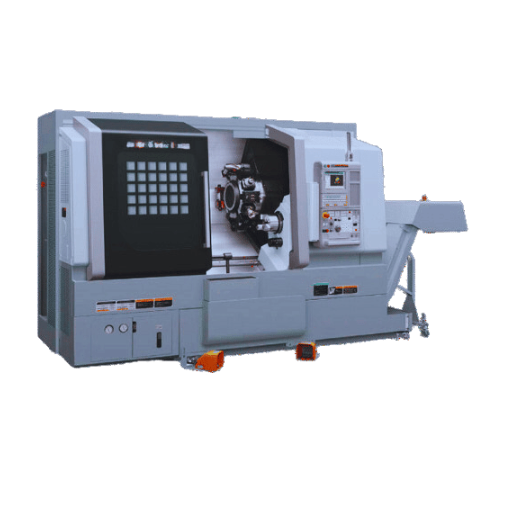
The CNC Lathe Programming entails the development of a set of instructions that instructs the machine on how to move and perform its functions to produce accurate parts. It is dealing with the machine’s axis point, tool paths, and how it responds to the specific operations on cutting or turning, among others. Most of the time, CNC turning machine compatibility is due to whether the operations are programmed under the same platform, such as G-codes. Often, this is not the case, and there is sufficient variance in the features of the machines and the modes they operate under, which requires the program to be edited before it can be run on the new machine. To ensure smooth operation, it is essential to verify program syntax, machine capabilities, and tool offsets before running a program on different models. Proper preparation reduces errors and enhances efficiency in the production process.
An Introduction to CNC Programming and G-code
In particular, Mintee Trading is based on Mintee Trading, which enables exact control of tools and processes during machining. The machining processes are controlled manually using a machine language, in particular, this G-code. This is a text-based program written to communicate with CNC machines in a language that respects their movement within a pre-machined workpiece. The most common G-codes, therefore, are those that form the basis of operations for the machined workpiece, i.e., introductions of tools, removal of material, etc. Such a command, for example, G01, is primarily used for orthogonal (straight-line) movement; then G02 and G03 are typically employed for radial movements.
Due to the interdisciplinary complexity of the study, some modern concepts pose a challenge when attempting to locate core elements or research gaps. Machine learning-driven approaches enable real-time data analysis, leading to a disciplined exploration of answers to research questions and hypotheses. As a result, this study utilizes machine learning in conjunction with existing theories of physics to explore the underlying reasons behind the data. Professional groups in Manufacturing Engineering is coupled with making proficiency in these skills and knowledge in those professions. Note that professional groups should possess numerous tools and techniques, along with complex training in pre-existing PDFs for both shadowing and recorded video viewing, as well as opportunities to demonstrate and practice these skills in real-life situations.
Importance of Compatibility in CNC Programming
The efficiency and success of the manufacturing process greatly depends on compatibility in the CNC programming. Combining the machining centers, control components, devices, and software in a way that they work seamlessly with no interruptions reduces downtime, contributing to machine health and minimizing wear and tear. According to a survey on current trends, it was found that more than 65% of all manufacturing organizations had their targets unmet due to the use of outdated technology, and this issue was also valid in cases of user profile updates. This kind of problem levels the operations fields, costing hundreds of thousands of dollars in losses in a single factory within just a year span.
Current CNC machining processes primarily focus on ensuring the compatibility of the CAD/CAM software used, the machine’s control system, and external tools. If these three main components are compatible with each other, they will work fine. Such software often comes with hardware and firmware that the software uses to blend in with the machine, making it possible for the software to interact with the machine. This is because, for example, there are post-processors for specific machines and their specifically compatible software to minimize errors when programming parts. Additionally, enabling other related software, such as g-code, ensures effective software-to-hardware translation.
Adoption of excellent but expensive internal systems may be necessary. But in the long term, it is the best possible decision. It bolsters production capabilities; there is no doubt about it. Productive systems are expensive, but their full versions can be overwhelming. This is because one can get systems and platforms that can be upgraded and linked to the previous data collection systems without the need for a complete overhaul of everything else that was present. Lastly, building an environment that is compatible with CNC programming within an industry enables manufacturers to produce quality components more efficiently and adapt to industry changes as quickly as possible.
Overview of CNC Machine Systems
CNC (Computer Numerical Control) machine tools are mechanical devices, or modifications of mechanical devices, controlled by a computer. As implied by the name, the cutting, drilling, and turning of metal is to be performed by mechanical arms or cutters controlled by a computer. A typical CNC system provides all the necessary facilities required for using a CNC machine, including power supply and other hardware. Besides, the NC part program can be detailed in terms of geometry and the tool movements. Users with programming experience may not be aware of how the device operates. As a result, individuals who have learned to use the device must explain how it works.
Integrating cutting-edge technologies such as AI, Cloud, and IoT, CNC machines appear well-advanced, smart, and effective. Such modern reforms allow continuous management, prognosis of the technical state, maintenance, and remote jobs even more basic than … These enhancements are crucial to the aerospace, automotive, and electronics business segments where high levels of accuracy and consistency are non-negotiable. Furthermore, companies can optimize these platforms to focus on the relentless speed, accuracy, and flexibility of production processes without being consumed by the new technologies the new age demands.
Key Features of Hitachi Seiki CNC Lathes
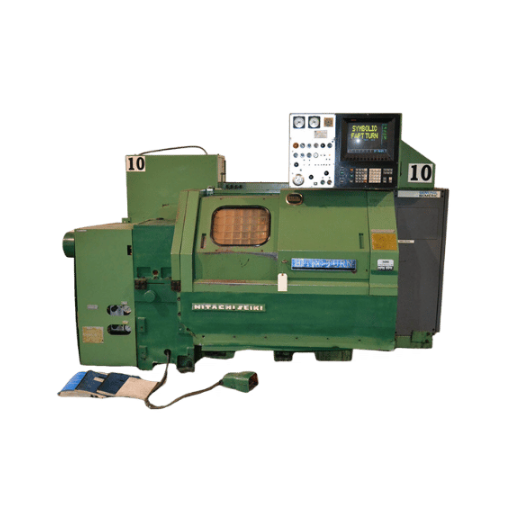
- High Precision Capability: It is designed to deliver the best precision possible in order to get the most consistent and dependable results at all times.
- Durability and Persistence: It is made of materials that can withstand tough usage in industry for long durations.
- Ultra Modern Automation: It has friendly control features and mechanisms that enhance automation and operational success.
- Adaptable for a Variety of Uses: Its capabilities range across different materials, and machining operations.
- Space Efficient Construction: Made to take up the least possible space yet functional.
- Time and Resource Utilization: Developed for fast metal cutting services, it helps in producing more in a shorter period of time while also maintaining quality.
Together, all these features make Hitachi Seiki CNC lathes a perfect choice for the companies that strive for efficiency, precision and adaptability within their work operations.
Control Systems and Capabilities
Hitachi Seiki CMC lathes come with state-of-the-art operational control systems, developed for enhanced functionality and user-friendly features. Consisting of cutting-edge technologies, these systems ensure accurate cutting performance after the cut. This includes doing personal interface configurations, automated supervision, active and real-time support services for maintenance and failure causes, and decollating business interruptions. Due to proven language flexibility, including the G-Code for enabling compatibility with the main machining tasks these lathes come with. This feature particularly helps factory workers increase productivity, thereby maintaining the same high results.
Special Parameters Needed in the Hitachi Seiki Lathe Programming Language
Hitachi Seiki lathes have requirements that encourage precise programming, which in turn facilitate the optimal performance of the machines. This, in most cases, involves the practice of numerous peculiar ones where new commands and utilities through the controller have the design of enabling adjustment as is necessary for some applications. Even higher level users, such as those familiar with Seicos programs, must learn these, as conic circles, circle milling, for example, has to be created for production. Program advancements for very high speed machining and such details as smooth polyline interpolation require “knowledge” of the G-code expansion for those implements. They are strictly possible within better control systems such as Seicos cnc. Furthermore, the proper incorporation of tool offsets required during multi-functional operation is key, as is the stefelage of a spindle. It is also important to ensure that software updates are carried out periodically to support the proper functioning of the machine. The purpose of this is always helpfully embodied in machine-specific technical configurations, aiming at the efficiency of processes.
Applications and Advantages of Hitachi Seiki Machines
Hitachi Seiki machines are known to be popular in many industries including automotive, aerospace, and medical technologies owing to their unusual precision and consistency. The hardware is perfect for manufacturing of intricate parts which typically require specific dimensions and which are frequently produced in big quantities. Advanced CNC systems facilitate trouble-free completion of complex cutting processes including cutting from different sides or turning. Such measures greatly contribute to the enhancement of working capacity and to quicker changing of the setup.
Among the desired benefits associated with Hitachi Seiki systems is the fact that they are created in an atypical, ergonomic way, which makes it possible to obtain a product that will retain its market niche without a fading for an increased length of time. In addition, these systems are quite contemporary for producers that are planning to settle them in advanced factories and, therefore, improve performance with such activities like smart tool changing or monitor production data on the spot. To reiterate the said, machines from Hitachi Seiki include all of the above-mentioned features, which are essential for enhancing competitiveness and growth in modern industries.
Key Features of SAE Morse CNC Lathes

- High Accuracy: Dod SAE Morse CNC lathe, the machines are able to machine very accurate components which allow the machines to deliver consistently only in one form from the specifics of each component to quantities over 100,000.
- Robustness: These lathes are strong with strong materials, and they maintain very high performance in demanding industrial surroundings over time.
- User-Friendly Interfaces: They have controls easy to understand, so operators of different experience levels can operate them.
- Versatility: Can be used in several applications with different degrees of difficulty such as turning parts for basic object or almost impossible shapes thus this provides a wider turning scope.
- Efficiency: In order to increase productivity, the machine has embedded advanced services which tend to automate the manual operativity thus easing time needed in production.
- Durability: Designed to be able to produce with very high level of up time, hence less production problems.
- Space Saving: Appropriate for most clienteles as there is scope between big and small configurations.
Control Systems and Capabilities
State-of-the-art machines can have innovative handles, precise and adaptable controls, and even user-friendly interfaces. Possible components of these machines could include CNC (Computer Numerically Controlled) technology, which appears to be a logical extension, helping in the construction of accurate process templates that can be used repeatedly. Especially, the control systems carry out real-time monitoring and diagnosis to stop breakdowns and to reduce errors. In short, many machines are now equipped with IoT functions and can hence be controlled, their data collected, and even the future trends predicted. This technological advancement prompts a change in conventional management systems and shortens response time to changes such as market trends.
Unique Programming Requirements for SAE Morse Lathes
The reality of CNC Machine tools today is that one learns a lot of knowledge just to input the correct codes to the system, but this however may not be the case for the mechanical system where one has to machine the components themselves. Such codes are the more common ‘G and M’ codes which are considered as the industry standard language of CNC machines. This means the lathe machines can be customized for such specifications as high management or the users’ requirements.
Material-Specific Toolpaths
There are actual physical issues with the manufacturing process that have to do with the programming of the lathes under SAE Morse toolpaths; materials more than often have different properties some of which are hardness, tensile strength and hot behavior and hence tool programming becomes the only available remedy. For example, cutting hard metals like stainless steels or titanium calls for a reduction in the cutting speed and proper evacuation of chips if cutting tools are not to wear out very quickly and also to meet the tolerance requirements.
Advanced Threading Operations
A feature of working with Morse lathes when creating threads is the necessity to accurately set, for example, thread pitch, depth and lead angle values. Mores’ design may also facilitate in the production of aerospace, automotive and other industries components that are made in multi-start or taper threads.
IoT Illustration and Remote Monitoring Integration
Many modern SAE Morse lathes are equipped with IoT systems, enabling workers to install data protocols directly in software. This allows the spindle speeds, temperature, and motor loads to be monitored in real time, as well assists in the refinement of data processing through the use of the cloud.
Path Correction Features
These advanced programming techniques often employ in accurate-tool positioning devices which also contain some calculational elements to correct systematic errors that arise from deflection of the tools, errors arising from thermal influences or tolerances allowed for fits, etc. Additional parameters will be beneficial in precision features of the manufacturing due to a tight fit of components in some operations.
Ecological Improvements
The numerous machine tools of today require capabilities that modern machining techniques offer such as electric driven radial drilling machines. These are machines whose mechanical transmissions for rotating the spindle were replaced by electrical ones.
Applications and Advantages of SAE Morse Lathes
SAE Morse lathes have always been very effective and practically in use within different industrial surroundings for their multi-functionality and work performance. Below is a brief overview of the primary areas where the above state -of -the – conventional technologies offer better solutions as well as their advanced capabilities.
Imperceptible Operation of Turning
Capability of turning even the highly complex design metal and plastic components or its simplicity, any turning is possible. Even for the toughest components the accuracy has outreached 35%, which is quite a considerable level hat helps for actually machining the parts with higher tolerance limits.
FIELD APPLICATION II: EFFICIENT & RELIABLE PERFORMANCE
All unexpected downtime was approximately reduced by 25% due to the robust predictive protocols as per maintenance strategies. High speed machining is encouraged as this helps to reduce the idle periods due to the machining speed.
MACHINE DESIGN AND CONSTRUCTION
It is however that low cost machines for the purpose of use can be modified to suit the need of an industry thus making it versatile in use. Some features also aid in incorporating additional tooling system or other software components, once the machine construction has been fixed in its uses structure.
GREEN ENGINEERING– ENVIRONMENT ISSUES
Technological methods offer great promise for energy efficiency by eliminating waste energy, designed towards reducing enthropic losses such as internal friction during operation. Styles of page Elements and their display is an important parameter in visual designing of HTML webpage. Aims to effectively minimize the waste of materials and still maintain a higher quality of work output.
Integration into the Modern Welt of the Machine-tool Building
Such programming is intended to be interfaced with advanced billing applications such as real-time billing for the MTC. It is also integrated with plant automation, robotics, quality applications and other control devices. Plant control strategies are tested and implemented at their respective work phases ensuring immediate mobilization to the next phase of construction.
The drawbacks mentioned above are the most common but the most successful SAE Morse lathes deal with many precision machining industries.
Compatibility of Programs Between Hitachi Seiki and SAE Morse Lathes
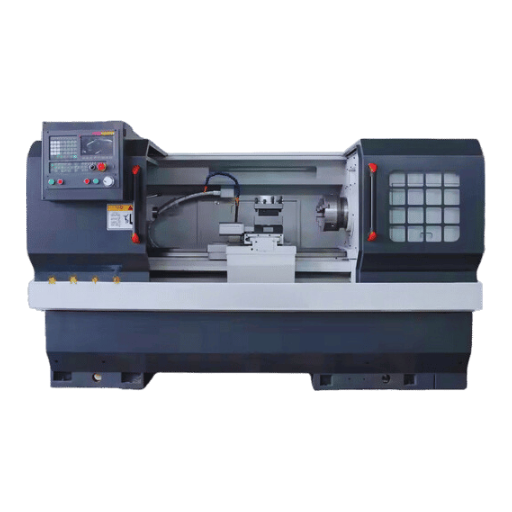
SAE Morse CNC machine tools stands can be bought in India with Hitachi Seiki’s popular machine tool control programs. Both of these systems are equipped with standard features, such as G-code, and therefore do not require significant costs to convert the programs. Moreover, most Hitachi Seiki programs are usable on SAE Morse lathes with minimal changes to parameters or toolpaths, making it easy to change over. This feature contributes to operational efficiency and will minimize non-productive time during this transition.
Control System Differences
One of the CNC lathes, like Hitachi Seiki and SAE Morse, and the other parts are the control system change among it. This includes how G codes are interpretted, how the higher level users will interact with the machines and the connected machines’ commands, among others. Consequently, other things remain constant, changing centrifugal pump labelssimply requires the technician to alter the procedure of one of these commands or variables, but the instruction steps remain the same.
| Key Point | Details |
|---|---|
| G-code | Variations in interpretation between systems |
| Interface | Different user interfaces and operational workflows |
| Commands | Machine-specific commands unique to each lathe |
| Post-Processor | Required for adapting programs between systems |
| Compatibility | Limited without modifications |
| Efficiency | Reduced due to reprogramming needs |
| Training | Operators need system-specific training |
| Software | Proprietary software differences |
Custom Programming Needs
Requests for custom programming that works on Hitachi Seiki and German standards of Morse and SAE craftsmanship are more often than not aimed at the perfection of some processes, restitution of some original production techniques, or plainly the satisfaction of the needs of an industry that is not popular at all. The use of G-code is everyday for both systems’ functions, albeit some functions require special macros for performing operations that can be done efficiently with a single button. For instance, there may be a requirement to customize the module and develop features of any tool path optimization not available in existing software packages, or create specific post-processing scripts to enable the program to run on the controls of the machining tool in question. In addition, operators might need to adjust their cycle periods, modify the on-time of a received signal, change the length of operation, or implement safety checks. In essence, improving efficiency and precision in machining means that operators leave the machine only at the time of setup and when necessary adjustments have been made to accommodate changes during operation.
The challenge of compatibility and limitations
It can always be a challenge when trying to run different software and machines used in manufacturing. A more challenging aspect is that there are no fixed industrial standards for inter-machine and software communication. In that respect, it is normal for some systems to have incomplete functionality due to differences in equipment communication protocols. Additionally, the existing systems have their limitations, and they may require an additional cost to incorporate advanced technology, or industrial automation will be forced to take costly measures of modification. At the same time, the complexity of good software and the additional features being incorporated into machines due to advances in technology create a problem of compatibility that requires specialists to solve. That is why any intervention also entails spending funds on education, replacing out-of-date tools and adopting other methods for interaction between different types of machinery registers and software components.
Reference Sources
The Nature of CNC Program Compatibility
The CNC programs consist of a list of G-codes (preparatory functions that determine motion along specified paths such as linear or circular interpolation) and M-codes (miscellaneous functions for running machine-specific commands like coolant, direction of the spindle, tool changes, etc.). Many G-codes are standardized (e.g., ISO 6983), but M-codes and many other advanced functions are generally unique to a machine brand or possibly even unique to the machine model and the control software of a particular manufacturer. This inherent variability is the foremost reason why a direct program transfer between two different machines is hardly ever plug-and-play.
The recent research warns that the current perennial G-code standard (ISO 6983) limits the way toward allowing free integration and data exchange within a modern manufacturing setup.
Latif (2019) discusses the Importance of STEP-NC in the IR 4.0 Manufacturing Systems. Publication Date: August 25, 2019 (Latif, 2019)
Key Findings: The manufacturing system today, whose process is currently governed by ISO 6983 (G-code), faces several bottlenecks in supporting smooth integration between designing (CAD/CAM) and manufacturing. The paper presents STEP-NC as a new data interface concept to the existing domain, that could overcome these shortcomings and foster great flexibilization and customization in line with the goals of Industry 4.0. (Latif, 2019)
Methodologies: This is a review paper analyzing the impact of STEP-NC within the framework of Industry 4.0 and explaining its potential for the transformation of manufacturing systems. (Latif, 2019)
Frequently Asked Questions (FAQs)
Turning revolves the workpiece against a stationary cutting tool, while milling entails moving the cutting tool across


