


Today, polyoxymethylene, known as acetal, is one of the most versatile and wisely used engineering thermoplastics. Mechanical components of one kind or another, automotive parts, or anything that requires fine styling: the strength, durability, and flexibility this material offers make it necessary in all fields. So what is it that makes POM stand out among other plastics? How do the thermoplastic and thermoset formulations measure up to that peculiar performance?
Thermoplastics versus thermosets is a two-way distinction for polyoxymethylene and determines why it is preferred by engineering and manufacturing professions worldwide. Let’s embark on an exploration of the science, applications, and benefits of this fascinating polymer.
What is POM?
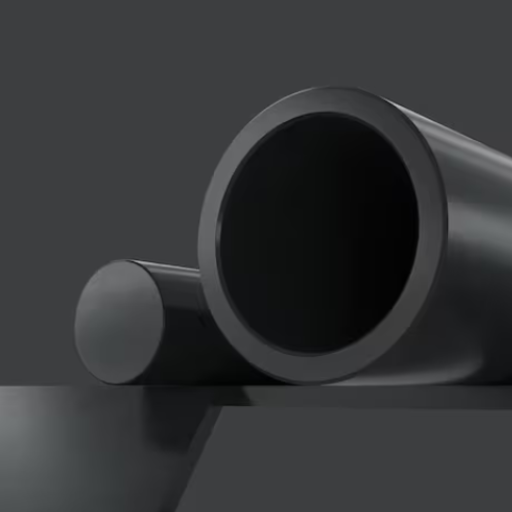
A project object model, or POM, is the fundamental modeling of Apache Maven, a build automation and project management tool. The POM file, commonly known as the pom.xml file, contains information about the project, such as its dependencies, configuration, and how it will be built. This file is fed as input to Maven, which thereafter manages the project’s build lifecycle, thereby creating consistent builds and dependency management.
Overview of Thermoplastic and Thermoset
Thermoplastics and thermosets are two broad classifications of polymers, with each category having distinct properties and uses. Thermoplastics are polymers that soften and can be molded when heated and harden once cooled. The process is reversible, whereby thermoplastics can be remoulded and recycled several times. Some of the common thermoplastics are polyethylene, polypropylene, and polystyrene, which are used in packaging, automotive, and consumer goods.
Thermosets, conversely, undergo curing upon the application of heat or chemical additives, rendering this process irreversible. Once cured, a thermoset stays rigid and never softens or remolds. This phenomenon makes thermosets extremely durable and heat-resistant, so much so that their best uses are electrical insulation, adhesives, and high-performance composites in aerospace or automotive. These are epoxy resin, polyurethane, and phenolic resin. Knowledge of the difference between the two classifications is essential to making a wise judgment for an engineering or manufacturing requirement.
The Importance of Material Classification
Material classification is essential across industries as it enables one to choose materials for specific applications based on their properties, performance, and cost-efficiency. For instance, thermoplastics such as polyethylene (PE) and polypropylene (PP) are extensively employed in packaging because they are lightweight and recyclable. In contrast, thermosetting resins like epoxies, such as aerospace components, are vital wherever durability and heat resistance are needed.
According to a MarketsandMarkets report in 2023, the global industrial plastics market is anticipated to become $586 billion by 2028 at a CAGR of 5.2%. This growth shows the significance of material classification for optimizing production processes and sustainable end-product development. Aside from plastics, classification also applies to metals (ferrous vs. non-ferrous), composites, and ceramics, which all provide different advantages depending on their structural and mechanical characteristics.
Without proper classification, manufacturing effort, product performance, and cost management would all be seriously impaired. Thus, companies must invest in material sciences and keep abreast of developments in material engineering to stay ahead while addressing environmental concerns through innovative means of sustainability in materials.
What Are The Typical Applications Of POM?

With POM (Polyoxymethylene) being used widely in applications demanding high strength, stiffness, and excellent dimensional stability, the usual applications will include:
- Automotive Components: POM is suitable for gears, fuel system parts, and door handles because it is resistant to wear and has low friction.
- Consumer Goods: Zippers, buckles, and appliance parts for durability and a smooth surface.
- Electrical Components: Switches, connectors, and housing due to insulation properties and heat resistance.
- Industrial Machinery: Bearing, conveyor belts, and pump components because of mechanical strength and chemical resistance.
These properties make it the preferred solution for POM across industries due to its reliability and versatility.
Physical Properties of POM
Polyoxymethylene (POM), or acetal, is best known for its outstanding mechanical and physical properties and is thus preferred in design and manufacturing engineering applications. Below are descriptions and data on its physical properties:
- Density: The POM rate ranges from 1.41-1.61 g/cm³, providing a measure of strength coupled with a slight disadvantage of weight. It is particularly efficient for precision components.
- Tensile Strength: This material usually has a tensile strength range of 60-70 MPa, depending upon the grade, ensuring its resistance against deformation under tensile loads.
- Elongation at break: Depending on various secondary conditions, POM can elongate between 10 and 75% during stress, thus demonstrating its bearing ability for varying dynamic applications.
- Melting Point: With a relatively high melting point of 175°C to about 180°C, POM could, therefore, sustain under the heat with good structural integrity.
- Hardness: With a Rockwell hardness of around M80-M95, this structure provides an adequate surface that resists scratches and impacts.
- Coefficient of Friction: Due to POM’s low coefficient of friction of about 0.2-0.3, moving equipment like gears and bearings can be made from it for smooth movement.
- Moisture Absorption: It absorbs only a little moisture—usually 0.2 to 0.5%—but remains stable even in humid or wet environments.
- Thermal Stability: In addition to maintaining acceptable dimensional stability at room temperature, POM exhibits excellent thermal stability in the continuous service temperature range of -40 to 100 degrees Celsius.
- Chemical Resistance: The material offers superior resistance to fuels, lubricants, aliphatic hydrocarbons, and weak acids.
These physical properties exhibit their strong character while illustrating industrial, automotive, and consumer applications where they fit in. The synergy between POM strength, low wear ability, and thermal and chemical stability will keep it amongst the most utilized engineering plastics available.
Dimensional Stability of POM
Polyoxymethylene (POM) is ranked top among plastics used in precision engineering due to its excellent dimensional stability. Low thermal expansion and lower moisture absorption rates enable components made of POM to maintain their shape and function under varied environmental conditions. The stability offered through these properties reduces the chance of warping; hence, POM is most suitable for applications such as gears, bearings, or any other critical parts with tight tolerances. Moreover, the best suitability of POM is attributed to its retention of mechanical properties over a wide temperature range, which enhances long-term dependable applications in varied industries.
Comparison of Acetal Homopolymer and Copolymer
The homopolymer variant of acetal has greater strength and stiffness, while the acetal copolymer variant is stronger in chemical resistance, thermal stability, and porosity.
|
Property |
Homopolymer |
Copolymer |
|---|---|---|
|
Strength |
Higher |
Moderate |
|
Stiffness |
Higher |
Moderate |
|
Chem. Res. |
Moderate |
Higher |
|
Thermal Res. |
Moderate |
Higher |
|
Porosity |
Higher |
Lower |
|
Moisture Abs. |
Low |
Very Low |
|
Wear Res. |
Excellent |
Excellent |
|
Applications |
Precision Gears |
Food, Medical |
Manufacturing Processes Involving POM
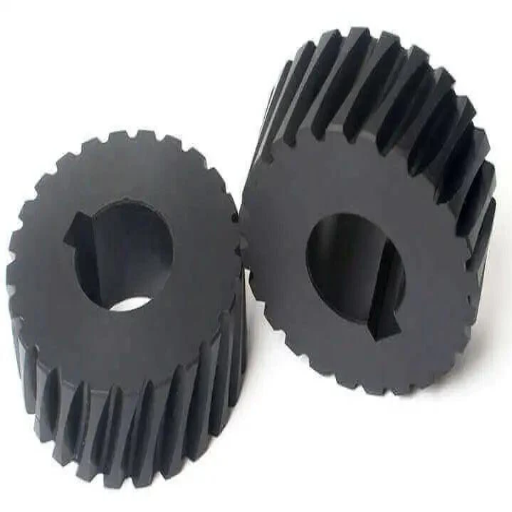
Polyoxymethylene has excellent thermal stability and flow characteristics, making these processes suitable for manufacture.
- Injection Molding: The most common method of processing POM is probably injection molding. It consists of melting and injecting the material under high pressure into a mold, where the POM can cool and solidify into a finished part. The injection molding process is used for complex yet precisely dimensioned shapes and is highly efficient in producing these parts.
- Extrusion: This process involves POM, passing through a die with an opening of the desired profile. This way, sheets, rods, or tubes of POM can be extruded. Extrusion is used to prepare raw materials for further machining or fabrication.
- Machining: The dimensional stability of POM makes it an easy material to machine. Popular machining methods consist of drilling, turning, and milling.
These ensure high accuracy and quality, and they are thus applicable to POM in various industrial and commercial applications.
Injection Molding Techniques
Injection molding is mentioned as one of the more efficient and popular manufacturing methods for making POM products. In the process, POM resin is melted and injected into a mold under high pressure. Key considerations that influence the attributes of injection molded POM products include:
- Temperature Control: Barrel and mold temperatures must be maintained within the correct range so that the material can flow freely without defects such as voids or warping.
- Injection Speed and Pressure: Along with injection pressure, injection speeds should be adjusted so that the material fills the mold cavity evenly and avoids shrinkage or incomplete filling.
- Cooling Time: It must be sufficiently long to ensure dimensional stability and decreased residual stress.
- Mold Design: Great care must be taken when designing molds used with POM to enhance production yield and consistency.
Further refinements along these lines are occurring as even newer technologies and intelligent control systems become affordable to manufacturers, who must increasingly address challenging design and performance requirements with POM.
Extrusion Processes for POM
Extrusion is a versatile procedure for fabricating continuous profiles and components from POM. It begins by feeding polymer granules into a heated barrel to melt and homogenize them. The molten polymer is forced through a die to obtain the desired shape. Temperature control is required in extrusion to avoid thermal degradation, as POM is sensitive to excessive heat. Cooling systems, such as water baths or air cooling, are employed when the material leaves the die to solidify and stabilize the extruded shape. Since the improvement of extrusion technology, including better screw design or dynamic monitoring systems, production of POM parts of complex geometry has become efficient and precise for use in the automotive-to-consumer-goods domain.
Blow Molding Applications
Blow molding is widely used to manufacture hollow plastic components and products for various industrial sectors. This manufacturing process suits items like bottles, containers, tanks, and other lightweight but sturdy hollow components. The blow molding technique allows extrusion, injection, and stretch blow molding designs to be manufactured with excellent design intent and precision. This versatile method is preferred in packaging, automotive, and medical industries, where customization of shapes and cost-effective manufacturing are needed.
Thermoplastic vs Thermoset: Key Differences
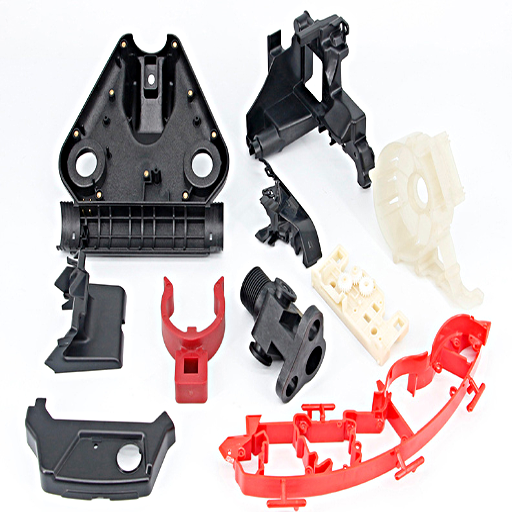
- Reusability: Thermoplastics may be reheated, reshaped, and recycled several times with minimal degradation. However, thermosets cannot be reshaped or recycled once cured, for they constitute a permanent, rigid structure.
- Heat Resistance: Thermosets enjoy superior heat resistance and durability under high temperature conditions compared to thermoplastics, which can soften or melt with heat application.
- Strength and Flexibility: Thermoplastics are flexible and impact resistant, which is why they are used in applications that require bent parts. Thermosets possess higher rigidity and are strong enough for structural purposes.
- Applications: Thermoplastics are mainly used in packaging, consumer goods, and medical devices, all of which demand versatility and recyclability.
- Thermosets, on the other hand, are used in automotive components, electrical insulation, and adhesives that demand durability and heat resistance.
These differences are fundamental parameters for choosing which material to use in a particular industrial application.
Mechanical Properties Comparison
Some further principal differences emerge when assessing the mechanical properties of thermoplastics versus thermoset polymers. Thermoplastics generally exhibit less tensile strength than thermosets but show much greater flexibility and impact resistance. This advantage becomes useful in applications that require adaptability and resilience. On the other hand, thermosets are highly rigid with superior tensile strength and dimensional stability; hence, they can be used in high-stress environments that might elevate temperatures without much concern over deformation.
Both materials have special strengths and are selected depending on the application while balancing performance, environment, and economic values.
Thermoset Materials vs Thermoplastic Materials
Unlike thermoplastics, which can be remolded for an n-number of times, thermoset only forms permanent bonds while curing, rendering the plastic unsuitable for remelting or reshaping.
| Property | Thermoplastics | Thermosets |
|---|---|---|
|
Recyclability |
Recyclable |
Non-recyclable |
|
Heat Resistance |
Moderate |
High |
|
Flexibility |
High |
Low |
|
Durability |
Moderate |
High |
|
Cost |
Lower |
Higher |
|
Applications |
Packaging, Toys |
Electronics, Tools |
|
Processing |
Re-moldable |
Permanent Bonds |
|
Examples |
PVC, Nylon |
Epoxy, Silicone |
Polymerization Processes in Thermoplastics and Thermosets
Thermoplastics and thermosets undergo quite different polymerization processes that determine their attributes and intended uses. Generally, thermoplastics are manufactured by means of either addition polymerization or condensation polymerization. In polymerization, heat is applied for the material to soften and take the form it is designed to have. This makes thermoplastics recyclable and can be reshaped several times. Therefore, these plastics have wide applications throughout industries, from packaging to automotive to consumer products.
In contrast, thermosets undergo an irreversible chemical reaction known as curing, sometimes using heat, sometimes pressure, and often a combination of both. This cross-links the polymer chains to create a rigid, three-dimensional network. In the cured state, thermosets cannot be remelted to be reprocessed. Their resistance to conditions and extreme durability make them suitable for aerospace and electrical insulation applications.
Reference Sources
- Title: A review: Enhancing tribological properties of journal bearings composite materials
Authors: S. Ghani, Ali Sadiq Alithari, Hala Salman Hasan
Publication Date: January 1, 2024
Summary: This review discusses various composite materials used in journal bearings, including POM. It highlights POM’s thermoplastic nature and its role in enhancing tribological properties when combined with other materials. The paper emphasizes the advantages of using POM in applications requiring low friction and high wear resistance.
Methodology: The authors conducted a comprehensive literature review, categorizing previous studies based on the types of composite materials and their applications in journal bearings. They analyzed the impact of different thermoplastic and thermoset materials on performance metrics such as wear resistance and friction coefficient(Ghani et al., 2024). - Title: Thermoset and thermoplastic polymer composites reinforced with flax fiber: Properties and application—A review
Authors: Shahidul Islam et al.
Publication Date: December 13, 2024
Summary: This paper provides an overview of thermoset and thermoplastic composites, including discussions on POM as a thermoplastic. It explores the mechanical properties and applications of various fiber-reinforced composites, emphasizing the benefits of thermoplastics like POM in recyclability and processing flexibility.
Methodology: The authors compiled and analyzed significant research on flax fiber-reinforced composites, focusing on the properties of thermoplastic and thermoset matrices. They discussed various industries’ processing methods and applications (Islam et al., 2024). - Title: Thermoset and thermoplastic polymer composite with date palm fiber and its behavior: A review
Authors: Shahidul Islam et al.
Publication Date: September 5, 2024
Summary: This review discusses the properties of thermoset and thermoplastic composites, including POM. It highlights the advantages of thermoplastics in composite applications, particularly in terms of mechanical performance and environmental sustainability.
Methodology: The authors reviewed existing literature on date palm fiber-reinforced composites, analyzing thermoset and thermoplastic matrices’ mechanical properties and potential applications (Islam et al., 2024). - Top POM CNC Machining Parts Manufacturer and Supplier in China
Frequently Asked Questions (FAQs)
Is POM a thermoplastic or thermoset?
POM (Polyoxymethylene) is a thermoplastic material that can be melted, reshaped, and reused multiple times without a permanent chemical change.
What makes POM a thermoplastic material?
POM is classified as a thermoplastic because it softens when heated and hardens upon cooling, without forming permanent cross-linking chemical bonds.
What are the key advantages of POM being a thermoplastic?
Key advantages include recyclability, versatility in processing such as injection molding, and the ability to create high-precision components with low friction and excellent dimensional stability.
How does POM behave under heat compared to thermosets?
POM softens and becomes moldable under heat, whereas thermosets retain their solid form and degrade rather than melt when exposed to high temperatures.
What applications benefit from POM being a thermoplastic?
POM’s thermoplastic properties are used in applications that require precision and durability, such as gears, bearings, automotive fuel system components, and medical device parts.
Does being a thermoplastic make POM environmentally friendly?
While POM is not biodegradable, its thermoplastic property makes it recyclable, reprocessing end-of-life products into new materials.
Can POM compete with thermosets in high-temperature applications?
POM performs well at moderate temperatures but has a lower heat resistance than thermosets, making it less suitable for extremely high-temperature environments.
What are the physical properties of POM that reinforce its thermoplastic nature?
POM has high mechanical strength, toughness, low moisture absorption, and the ability to be reshaped, characteristic of thermoplastics.
Is POM re-moldable like other thermoplastics?
POM is easily reprocessable, making it a cost-effective and sustainable choice for applications requiring manufacturing flexibility.
What are examples of thermosets, and how do they differ from POM?
Examples of thermosets include epoxy, silicone, and polyurethane. Unlike POM, thermosets form permanent cross-links during curing, making them inflexible and non-recyclable.


