Polypropylene Melting Point: Understanding PP and Its Properties
Polypropylene (PP) is much preferred in plastic engineering circles for its properties, including its flexibility and durability, as well as its low cost of manufacturing as a thermoplastic. The melting point of the polymer is an important role being one more to define the formability of the product meaning the process conditions this material can be formed. In this guide, we shall cover everything about polypropylene melting point, why it is important, what affects melting point and how it is applied practically in different sectors.
🔬 Chemical Structure
Semi-crystalline polymer with excellent strength and flexibility
🌡️ Melting Point
160-170°C (320-338°F) depending on polymer type
🏭 Applications
Packaging, automotive, medical, and textile industries
Understanding Polypropylene’s Chemical Structure

Polypropylene is a highly recyclable plastic formed as a polymer of propylene, a hydrocarbon engineered for specialized polymer applications. The main characteristic of this plastic is that every molecule in its backbone comprises three carbon atoms linked by single and double bonds: C₃H₆, which represents the repeat monomer unit of propylene.
🧪 General Structure Highlights
- Constituents: [(CH₃ H CH)C] n – repeat segments composed of units of propylene monomers.
- Characteristics: Light in weight, robust as well, and capable of eliminating water seepage.
- Confirmation: Exists as a semi-crystalline mass comprising organized layers of crystals and amorphous sections.
- Advantages: It is chemically resistant, flexible, and unbreakable.
Types of Polypropylene

Crystallinity and Tacticity in Polypropylene
The extent of structural order present in the polymer chains is referred to as crystallinity in polypropylene. An increase in crystallinity results in increased strength, stiffness, and thermal stability and reduced impact properties. There are three tactical types of polypropylene:
🔹 Isotactic Polypropylene
Methyl groups on one side of the backbone. Highly crystalline with excellent mechanical and thermal properties. Most widely used type.
🔹 Syndiotactic Polypropylene
Methyl groups on alternating sides. Less crystalline, more transparent, and flexible compared to isotactic.
🔹 Atactic Polypropylene
Random methyl group arrangement. Prevents crystallization, resulting in soft material with poor mechanical properties.
Factors Affecting the Melting Point of Polypropylene
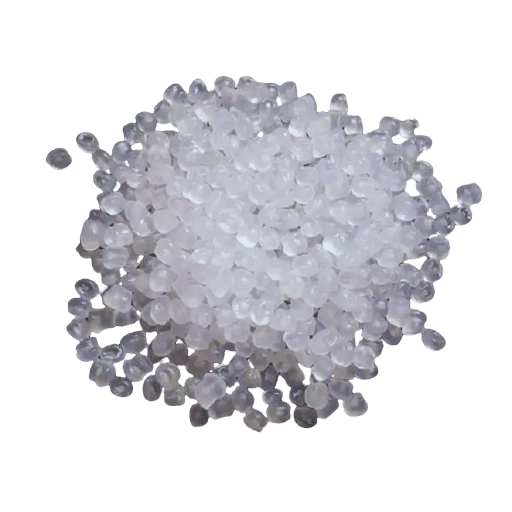
Influence of Polymer Type on Melting Point
The melting point of polypropylene is influenced by molecular weight, crystallinity, and structural properties. Higher crystallinity and molecular weight generally lead to elevated melting points, affecting the material’s processing characteristics and end-use applications.
📊 Key Influencing Factors
- Molecular Structure: Linear vs. branched configurations
- Crystallinity Level: Higher crystallinity increases the melting point
- Stereoregularity: Isotactic vs. atactic configurations
- Molecular Weight: A Higher molecular weight elevates the melting temperature
- Additives and Stabilizers: Can modify thermal properties significantly
Additives and Stabilizers Affecting Melting Behavior
- 🧪 Nucleating Agents: Promote crystal formation, raising crystallization temperature, and accelerating processing
- 🧪 Plasticizers: Reduce intermolecular interactions, lowering melting temperature and enhancing flexibility
- 🧪 Stabilizers: Include antioxidants and UV absorbers that maintain thermal stability without significantly affecting the melting point
Practical Applications Influenced by Melting Point
Polypropylene-Based Packaging Solutions
Polypropylene’s melting point range of 130°C to 171°C makes it ideal for packaging applications. Its thermal resistance allows it to withstand sterilization and hot-filling processes without deformation, while maintaining lightweight and durable characteristics.
🌟 Packaging Benefits
Automotive Industry Applications
🚗Inside the Vehicle
Aside from door panels and dashboards, polypropylene is also used for instrument panels and trims because it is lightweight and wear-resistant.
🛡️ Outside of the Car
Bumpers, fender liners, and other exterior parts that require impact resistance and protection against climate stress also have a polypropylene melting point in use.
⚙️ Components Under the Hood
Battery cases, air ducts, and fluid reservoir tanks use polypropylene for its heat and chemical resistance.
Medical Equipment Heat Resistance
🏥 Medical Applications
Polypropylene’s ability to survive steam sterilization and autoclaving makes it essential for medical device manufacturing. It withstands high-temperature sterilization processes while maintaining structural integrity.
Recent Advancements and Innovations
Biobased Polypropylene Characteristics
Derived from plant-based sources and vegetable oils, biobased polypropylene offers an eco-friendly alternative to conventional polypropylene. It maintains the beneficial properties of traditional PP while reducing environmental impact through minimized fossil fuel consumption.
Expanded Polypropylene (EPP) Benefits
Industry Standards and Material Comparisons

Melting Point Comparison with Other Polymers
Advantages of Polypropylene Over Other Materials
🏆 Key Advantages
Frequently Asked Questions (FAQs)
There is a lot that dependence of melting on the crystal structure of polypropylene. Isotactic polypropylene is characterized by its present crystallinity in order, enhancement of heat properties [ as against Mann–Whitney and Kruskal–Wallis for atactic polypropylene], which has more ‘glassy’ features since there is less extent of crystallinity.
The range of service temperatures of polypropylene ranges between the minimum -20°C and, on the other extreme, +100°C, with temperatures converted being -4°F at the bottom and 212°F at the top. The extended reac, however, shows that one can fabricate polypropylene in a wide variety of applications, with the presence of old without compromising functionality.
Polypropylene has greater advantages than its counterpart PVC, mainly chemical resistance and stability, light weight, high melting point, and ease of recycling. This is the reason why PP is used in hot environments as well as those applications that advocate for the green movement.
Reference Sources
1. Determination of Melting Point and Solid–Liquid Coexistence Suspension of Molar Mass of α1 Isotactic Incremental Polypropylene through Simulation of Isomeric Incremental Suspension
- Names of Authors: Nikolaos Romanos and D. Theodorou
- Periodical: Macromolecules
- Date of Dz publication: June 14, 2016
- Reference Thread: (Romanos & Theodorou, 2016, pgs 4663–4673)
- Abstract: In this paper authors have modeled the melting point of its molecule and consider the mutual existence of two phases: the solid and the liquid for isotactic polypropylene (iPP). This is explored primarily with simulations based on molecular dynamics, as the storied characteristics of iPP have been well documented. Primarily, the proportion of high probability of melting due to the sphere form is considered. Higher molecular weights cause higher melting points; such an increase in freezing temperature is more energetic, and molecular weight in pansters is further increased. The article also looks at the temperature resistance of iPP and why it is important to build applications involving this polymer.
2. Elevated Melting Point Analysis of Isotactic Polypropylene
- Source: Paul Phulkerd and Colleagues Journal of Macromolecular Science, Part B
- Published On: March 4, 2014
- Reference (EndNote): Phulkerd, P., et al., 2014, pp.1222–1230
- Summarized: The present report focuses on the isotactic polypropylene melting point (elevation). All the analyses presented by the authors are affected by the presence of more advanced additives, and the processing technique is also systematically considered by the authors. Differential scanning calorimetry (DSC) technique was used to detect the increase of melting temperatures, and it was comprehensively explained in the research, the ‘melting point elevation’ process, which is aimed at the incorporation of higher levels of polypropylene in the polymer and its increase in thermal stability.
3. Modifying Polypropylene Characteristics to Allow High and Low-temperature Foaming of Linear and Long Chain Branched Polypropylene upon Partial and Complete Melting
- Compiled by: M. Kweon et all.
- Journal Warehouse: Polymers
- Publication Date: 232JTGHK21
- Respective Reference Token: (Kweon et al., 2021)
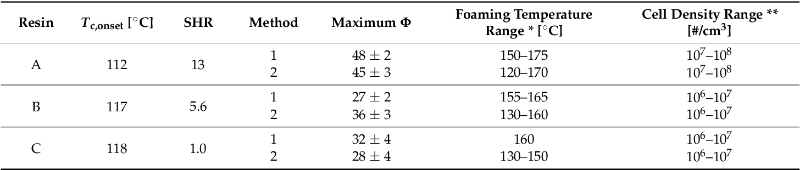
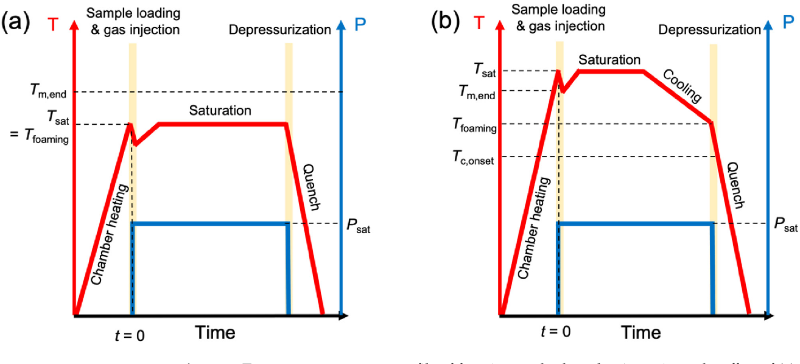
- Brief: This research report explores several aspects of the foaming performance of polypropylene at both high and low temperatures with respect to the partial and complete melting of the polymer. The relationship between melting point and the ability of the material to foam has been illustrated further, proposing that the melting point of polypropylene is one characteristic that has to be addressed when wanting to extend its foaming ability, especially for commercial benefits. The results are important for the design of new foaming processes using thermosensitive foaming techniques using polypropylene material.