


CNC machines have made it so much easier to process materials for precision manufacturing and woodworking. CNC milling and CNC routing machinery always come up as popular options for discussion, yet they serve different industries and requirements. So, which machine is the right fit for your next project? This article gets into the basics of how different CNC rerouting machines and milling machines are, wherein lies their application, and what advantages they bring to the table. By the time you finish reading this, you should be onto which specific machine suits your needs the best. This guide offers something valuable for the professional and the beginner alike.
What is a Mill and How Does It Work?

A mill, or CNC milling machine, is a basic tool used to cut and shape solid materials such as metals, plastics, or wood. The cutting tool rotates while either the material is kept stationary or moved in controlled directions. Mills are particularly used for creating precision shapes, holes, and contours. Hence, these are more employed where precision and intricate detailing are emphasized in the industries like manufacturing, aerospace, and automotive production.
Getting to Know the Milling Machine Basics
Milling machines are the most versatile and precise machines in a modern workshop. Milling machines come in varied configurations-the most common being vertical and horizontal mills. With a vertical axis to the spindle, the vertical milling machine is especially apt for drilling and boring tasks. Horizontal mills, with their horizontal spindle, cut horizontal grooves much deeper or work on heavier materials.
With modern CNC milling machines, machining processes have been transformed. As of the latest industry data, CNC milling machines can reach positional accuracy of ±0.002 inches for the first time in history. They are run by sophisticated software that permits the automation of repetitive tasks, which minimizes down human errors, thus increasing efficiency in production.
Unique features of milling machines include spindle, table, column, and cutting tools. Spindles rotate the cutting tools, which can have speeds anywhere from 100 RPM to over 30,000 RPM considering the type of the machine. Cutting tools, on the other hand, are interchangeable, usually manufactured from high-speed steel or carbide, and differ in form and size depending on application.
Moving from 3-axis to 5-axis, modern milling machines provide an array of options; the 5-axis milling machine is considered the best, offering the flexibility to bring the tool to the workpiece from almost any angle. This ability comes in handy when working on complicated surfaces like turbine blades or medical implants.
Having implemented Industry 4.0 ecosystem, remote monitoring of milling processes ensures safety and further reduces downtime. In 2023, the integration of AI and IoT ushered in predictive maintenance as an essential feature to maintain peak efficiency and extend machine lifespan.
In combining precision, automation, and flexibility, milling machines have become a backbone for industries that require top engineering in fine detailing and customization of their components.
The Role of Cutting Tools in CNC Milling Machine
Cutting tools are crucially important within CNC milling machines inasmuch as they directly affect the quality, accuracy, and speed of machining. Cutting tools are meant to remove material from a workpiece by actually engaging it at specific angles and speeds.
Modern cutting tools are made of advanced materials such as HSS, carbide, and ceramics, assuring them durability, resistance to heat, and sustenance under high-speed operations. Application reports verify that carbide tools can run at cutting speeds from three to five times greater than those of HSS tools, thereby significantly increasing productivity.
The geometry of the cutting tool is also a determining factor. Flutes, rake angles, and coatings such as TiN (Titanium Nitride) or AlTiN (Aluminum Titanium Nitride) assist cutting instruments in resisting high temperatures and wear, hence prolonging the tool’s life. Another report from MarketsandMarkets anticipated that the demand for coated cutting tools will grow at a compound annual growth rate of 4.1% between 2023 and 2028, adding weight to the increasing need for coated tools in modern milling operations.
Cutting tools work hand-in-hand with CNC technology. Tool condition monitoring and automatic tool changers contribute to a smooth machining process, lessening downtime caused by tool failure or wear. Smart tooling with embedded sensors for real-time performance monitoring is another recent development to optimize machining.
By choosing the proper cutting tool according to the material and expected result, manufacturers can achieve plus or minus 0.001-inch precision tolerance in sectors such as aerospace, automobile, and medical instruments. With an upward trend in innovations, cutting tools continue to lead the way for CNC milling machine transformation in favor of improved efficiency and brilliant results.
Understanding the Machining of Milling
Milling is a machining process whereby the material is removed from a workpiece by a rotating shape cutter. This process is fit for making exact shapes, sizes, and surface finishes upon a workpiece; hence, its popularity in manufacturing because of its versatility and ability to work on many materials-inter-metal, plastic, composites, etc.
How Does a CNC Machine Differ from a Traditional Mill?
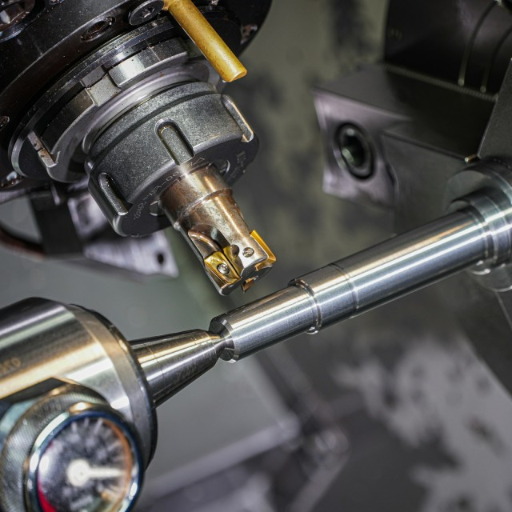
This distinction arises in that CNC machines require computer control, thus ensuring accuracy, automation, and efficiency. With a traditional mill, each cut must be done by hand-this machining is manual. A CNC machine, on the other hand, follows programmed instructions for the movement of the cutting tool, resulting in consistent and repeatable machining operations. Since there is less operator involvement, human error is diminished and CNC machines are therefore best as machining tools for complex and high-volume production.
Exploring the Difference Between CNC and Manual Mills
CNC mills differ from manual mills in terms of operation, precision, speed, labor, and complexity.
| Key Point | CNC Mill | Manual Mill |
|---|---|---|
| Operation | Computerized | Manual |
| Precision | High | Moderate |
| Speed | Fast | Slower |
| Labor | Less | More |
| Complexity | Handles more | Limited |
| Efficiency | High | Lower |
| Setup | Requires coding | Simple |
| Error Margin | Minimal | Higher |
Advantages of Use of CNC Machining
- Precision: A CNC can provide the highest degree of accuracy and consistency possible, guaranteeing tight tolerances for each piece produced.
- Efficiency: CNC machines operate more swiftly—thus providing higher productivity—and in the process minimize production time.
- Versatility: CNC machines are capable of creating designs that range from moderately complicated to quite complex in nature so that detailed components may be generated that a manual process will find difficult or, at best, time-consuming.
- Reduced Labor: CNC operation being automatic reduces the manual intervention; in turn, it decreases the labor cost and the chance of human error.
- Repeatability: CNC can copy a given design a number of times without loss of quality, making it suitable for mass production.
What Is a Router and How Does It Compare to a CNC Mill?
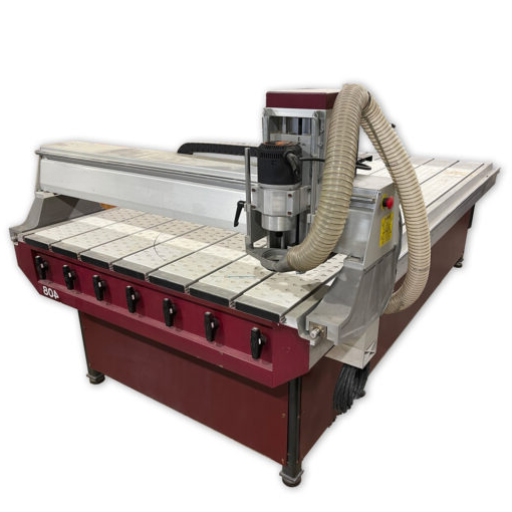
Both router and CNC mill are machining tools but they are different in design and applications. A router, usually, focuses on cutting softer materials such as wood, plastic, or foam and runs at high speeds. It is mostly used for intricate patterns and designs in woodworking or engraving.
A CNC mill is intended for heavier work and will cut through hard materials such as metals. It runs at slower speeds but compensates for this with greater accuracy and durability, and hence is more suitable for fine and intricate machining tasks. Both machines are versatile, but the primary distinction is the material they can work on and, therefore, the tasks that can be performed by them.
Knowing Router Capabilities in Complex Shapes
When it comes to making complex shapes, especially in woodworking, plastics, and soft metals, routers are up to the task. Recent advancements in technology and software have improved their accuracies and capabilities so much that users are now able to work on highly detailed patterns that were previously too difficult to do by hand. The major factors affecting their capability include router bit selections, speed, and their interoperability with CAD (Computer-Aided Design) software.
At high speeds, with the correct bits, routers carve elaborate designs, including floral arrangements, decorative trim, and even 3D relief. For carving, a V-groove bit is great for clean details, whereas for smooth curved surfaces, a ball-nose bit is preferred. Speed settings, of course, also depend on the material and are of utmost importance to ensure accuracy without causing any burn marks or inconsistencies on the surface. Research states that using proper woodworking bits and integrating routers with CNC software can offer accuracy up to 0.001 inches.
Supported with CNC systems, they extend the bounds of routers to make more complex shapes. CNC routers running software like Fusion 360 or AutoCAD allow users to simulate the cut and tool paths and then go ahead and execute the designs with little effort. According to some recent statistics, the CNC router of a professional environment can work at around 1,000 inches per minute depending on how hard the material is and the type of bit used, thus maintaining the strength at a high level of efficiency.
When used with the right skills and tools, a router can deal with complex shapes with a high degree of accuracy. These are the skills that allow the industry of cabinetry, furniture design, sign making, and custom art fabrication to have practically endless creative possibilities.
Key Differences Between a CNC Router and a CNC Milling Machine
Key differences between a CNC router and a CNC milling machine include their design, speed, precision, material compatibility, and intended applications.
| Parameter | CNC Router | CNC Mill |
|---|---|---|
| Design | Lightweight | Heavy-duty |
| Speed | Faster | Slower |
| Precision | Moderate | High |
| Materials | Soft | Hard |
| Applications | Cutting | Engraving |
| Versatility | High | Moderate |
| Spindle Power | Lower | Higher |
| Cost | Lower | Higher |
How Do Forge Turning and Milling Differ?

CNC Turning gives away the rights for the workpiece to rotate on a spindle while a stationary cutting tool shapes the piece. Production of cylindrical parts such as shafts or pipes is more suited to this method.
CNC Milling, on the other hand, holds the material stationary while the cutting tool rotates and traverses across it to cut away material and shape the piece. By this method, it is possible to produce complex shapes as well as flat surfaces.
Delving on the Turning Process in CNC Turning
In CNC Turning, the workpiece rotates on a spindle against which a stationary cutting tool applies force to remove material and produce the required shape. This process is extremely efficient for manufacturing cylindrical and symmetrical parts such as shafts, bushings, or couplings. This CNC Turning operation can maintain precision at a tolerance level of ±0.005 inches or even less. Because of such precision, this method has found considerable use in the manufacturing industries of automotive, aerospace, and medical.
Since large quantities of parts can be produced with consistent quality, turning is among the rare processes that combines quality with fast turnaround. Modern CNC lathes cut at speeds of 200 to 450 meters per minute with feed rates of 0.1 to 0.5 millimeters per revolution, depending on the material and type of tool used. CNC Turning also supports operations like threading, grooving, and drilling, allowing manufacturers to achieve intricate designs with fewer secondary operations.
Alongside the line of modern CNC Turning, there’s the consideration of live tooling, and in such cases, milling, drilling, and tapping operations can be run at the same time, thereby lessening the production time and costs involved. With the demand for precision component and automation in manufacturing increasing, analysts in the CNC Turning industry have forecasted this market to reach a CAGR of 6.5 percent through to 2028.
Differences in Machining Processes and Machine Tools
Machining processes differ primarily in the type of operation performed, material removal methods, machine configurations, and tools used.
| Key Point | Details |
|---|---|
| Operation | Turning, Milling, Drilling |
| Material Removal | Cutting, Abrasion, Erosion |
| Machine Type | Lathe, Mill, Grinder |
| Tool Type | Fixed, Rotating, Abrasive |
| Precision | High, Medium, Low |
| Automation | Manual, Semi, Full |
What are the Key Differences Between CNC Milling and CNC Turning?
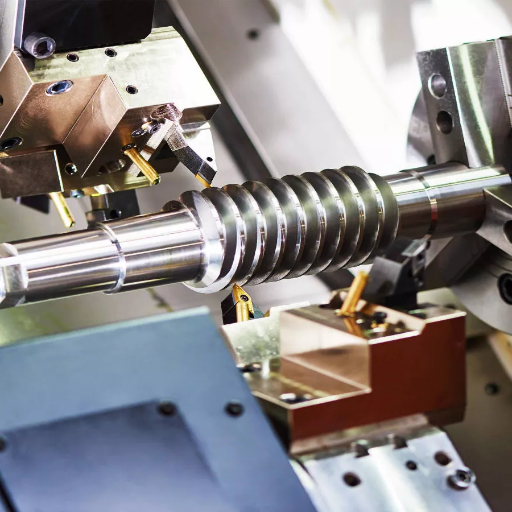
- CNC Milling: The workpiece is kept stationary while the rotating cutting tool removes material from it. It is suitable for forming complex shapes such as slots, holes, or more complicated surfaces.
- CNC Turning: The workpiece rotates, and the cutting tool is fixed so that the material is removed. Turning is famously used for working on cylindrical parts, such as shafts or rods.
Comparing the Machining Operations of Milling vs. Turning
Both CNC milling and CNC turning differ in their machining operations through workpiece movement, tooling method, material shapes, and suitable applications.
| Key Point | CNC Milling | CNC Turning |
|---|---|---|
| Workpiece Motion | Stationary | Rotating |
| Tool Motion | Rotating | Stationary |
| Suitable Shape | Complex | Cylindrical |
| Material Removal | Multi-surface | Along-axis |
| Applications | Slots, Holes | Shafts, Rods |
Understanding How the Spindle and the Axes Differ in Machines
The spindle in CNC machines is the holder of the tool or the workpiece while cutting, shaping, or other processes occur. The rotation of the spindle, which can vary in speed according to what is needed, is the most important aspect of a spindle. The axes of a CNC machine define the possible movement directions for tools or workpieces. For instance, milling machines have three or more axes (X, Y, Z) for multi-directional cutting, whereas turning machines mainly use two (X, Z) as workpieces rotate while the tool moves linearly. Together, the spindle and axes largely determine the adaptability and complexity of various machines for the machining processes.
How Differences in Material Affect Processing for Metal and Plastic
There are a few basic differences I notice between CNC processing of metals and plastics: Metals require hard, durable tools and slow cutting speeds to suit their hardness and density so that machining results in precision and tool life. Being softer, plastic requires faster cutting speeds and slower feed rates to avoid melting or deformation due to heat. Metals may be best machined accompanied by coolants, whereas some plastics may be best left without them or with minimal fluid application to preserve surface integrity. Such distinctions assure equilibrium results for each type.
Reference sources
- Paper: “Digital Twin Based Machining Condition Optimization for CNC Machining Center” (Sim & Lee, 2023)
- Published in 2023
- Key Findings:
- Proposed a method for optimizing the machining conditions of a machine tool using a digital twin of a commercial machine tool.
- The digital twin is constructed and evaluated based on machining experiments, and a genetic algorithm is adopted to determine the optimal feed rate and spindle speed to minimize the machining time and production cost.
- After optimization, the machining time decreased by 16.9% and the production cost reduced by 36.4%.
- Methodology:
- Developed a digital twin of a commercial machine tool comprising physical models of a controller, feed drive systems, and cutting load.
- Utilized a genetic algorithm to optimize the machining conditions based on the digital twin.
- Paper: “A data-driven digital twin framework for key performance indicators in CNC machining processes” (Vishnu et al., 2023, pp. 1823–1841)
- Published in 2023
- Key Findings:
- Presented a data-driven digital twin (DT) framework that predicts key performance indicators (KPIs) in a CNC machining environment, such as energy consumption and surface roughness.
- The proposed DT framework can help decision-makers choose cutting parameters to accomplish the required KPIs in the CNC machining process.
- Methodology:
- Developed predictive models for energy and surface roughness using experimental data from a CNC milling process.
- Integrated the predictive models into a data-driven digital twin framework to predict the KPIs.
- Paper: “Machine Learning in CNC Machining: Best Practices” (Hahn & Mechefske, 2022)
- Published in 2022
- Key Findings:
- Illustrated several best practices and challenges discovered while building a machine learning (ML) system to detect tool wear in metal CNC machining.
- The best-performing random forest model on the CNC dataset achieved a true positive rate of 90.3% and a true negative rate of 98.3%, suitable for deployment in a production environment.
- Methodology:
- Developed an ML system based on classical ML algorithms and techniques to detect tool wear in CNC machining.
- Focused on the data infrastructure, simple modeling, data leakage, open-source software, and computational power to build the ML system.
- Top CNC Milling Parts Manufacturer and Supplier in China
Frequently Asked Questions (FAQs)
Q: What is CNC Machining?
A: CNC Machining is a manufacturing process where pre-programmed computer software dictates the movement of factory tools and machinery. The process could entail controlling main machinery, such as grinders and lathes, to secondary machinery, like mills or routers. CNC stands for Computer Numerical Control and has been a term that has seen usage in precision machineworking in a number of different industries.
Q: What is the CNC Milling Process?
A: CNC Milling is a mechanical process of material removal using a rotating cutting tool from a workpiece to create a desired shape or design. Also called a subtractive manufacturing technology, it requires precision and is a key part of CNC machining services. It is conventionally used for the fabrication of parts with intricate geometries and tight tolerances.
Q: How does CNC Milling differ from CNC Turning?
A: It is important to understand the difference between CNC Milling and CNC Turning. In CNC Milling, milling tools rotate and remove material, whereas CNC Turning removes material by a single-point cutter as the workpiece rotates; this, therefore, forms the main distinction in the operation of the two machining processes.
Q: Different types of CNC Machines are there?
A: Several types of CNC Machines are there, each designed for specific jobs. The common types include CNC Mills, CNC Lathes, CNC Routers, and CNC Plasma Cutters. Depending on the particular requirements of the machining process, each configuration will meet a unique manufacturing need.
Q: What is the role of CAD and CAM software in CNC Machining?
A: CAD and CAM software is critical in CNC machining. CAD designs the parts while CAM creates toolpaths that instruct CNC machines on how to make those parts, enabling precision machining and efficient production.
Q: What is a Lathe, and How Is It Used in CNC Turning?
A: A lathe is an essential machine-tool capable of rotating the workpiece about a stationary cutting tool for performing a number of operations such as cutting, sanding, knurling, drilling, etc. Lathes provide perfect accuracy while shaping the workpiece in CNC Turning, hence they are the very heart of CNC Turning solutions.
Q: What’s the difference between CNC Routers and CNC Mills?
A: CNC Routers and CNC Mills are both used to cut material with some difference in application and capacity. Usually, CNC Mills are meant for harder material and more precise work, whereas CNC Routers tend to use for softer materials such as wood and plastics and are great on a speedy production of intricate designs.
Q: How does precision machining help manufacturing?
A: It has its contributions to manufacturing. Precision machining focuses on making parts to exactly the specifications, and tight tolerance are usually required in giving a high-quality CNC machining service. By doing this, the process decreases waste, improves quality, and increases efficiency in the manufacturing processes.
Q: Why is CNC Turning considered a subtractive manufacturing process?
A: CNC Turning is considered a subtractive manufacturing process because it removes material from a workpiece under the operation of a single-point cutting tool; this is in contrast with additive manufacturing processes where material is added to build up a part.
Q: How do Turning Machines contribute to CNC Machining Services?
A: Turning machines, such as CNC lathes, are extremely important to CNC machining services due to their ability to produce cylindrical parts in an efficient manner with very tight specification requirements. They serve as the core requirement in CNC machining services for those manufacturing needs allowing higher demands for repeatability.


