


In today’s fast-moving era, powered by innovation, precision manufacturing has really come to the forefront. Enter 5-axis CNC milling, wherein advanced machining has revolutionized the manufacture of complex parts and components. But what really makes 5-axis CNC milling so much more concerning, and why has it earned this designation of being an industrial game-changer for aerospace, automotive, and medical technology industries? This blog post goes deep into the world of 5-axis CNC milling, shedding light on the unique features it offers, the advantages it presents over conventional machining methods, and how it enables manufacturers to bring forth extreme accuracy and efficiency. If you are an industry person or just curious about modern manufacturing technology, this guide should help you gain insight into how powerful and promising 5-axis CNC milling services are.
What is a 5-Axis CNC Machine?
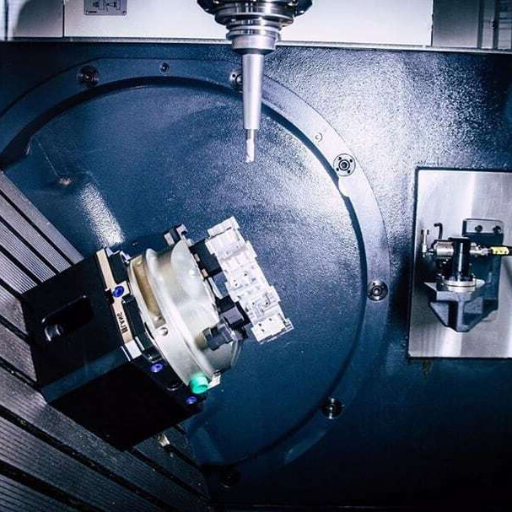
A custom part manufacturing machine that can work with absolute precision is a 5-axis CNC machine. Whereas a 3-axis machine moves only in three directions linearly – X, Y, and Z – a 5-axis machine can rotate about at least two more axes. These additional movements allow it to cut intricate shapes, reach tough angles, or create detailed contours without repositioning the workpiece. Industries where ultimate precision and efficiency are valuable, such as aerospace, automotive, and medical, obviously value such capabilities.
Basic Understanding on CNC Machines
The CNC stands for Computer Numerical Control imparting readings fed through program codes into the computer that actually create instruments for machining various operations like cutting, drilling, or milling. CNC machines thus operate under a definite sequence according to the instructions given through either CAD (Computer-Aided Design) or CAM (Computer-Aided Manufacturing) package. The CNC system differs from manual machining; it can carry out the same task repeatedly with greater accuracy than a person and thereby enhances productivity while keeping human error to a minimum.
CNC machines are classified based on their axes of movement, with 3-axis, 4-axis, and 5-axis CNC machines being the most common ones. A 3-axis CNC machine works on three linear axes, namely X, Y, and Z, suitable for simple and less demanding geometries. But a 5-axis CNC machine capable of rotating about two other axes is required when dealing with designs created with complex geometries or demands cuts along angles. According to an ongoing market analysis, the entire CNC machine market in 2022 had an elusive valuation of USD 94 billion and is expected to rise at a CAGR of 6.8% from 2023 to 2030. Such growth is fostered by automation trends alongside demand in precision manufacturing across aerospace, automotive, and healthcare sectors.
The key parts of a CNC machine are the controller, drive system, spindle, and tool changer. The controller serves as the brain of the setup, whereby it interprets the G-code and instructs the machine to move accordingly. The spindle holds the cutter and can rotate at different speeds depending on the material used and the cutting requirement.
Today CNC machines exemplify high precision and repeatability with flexibility with regards to working on actual materials, which may be metals, plastics, composites, and a myriad more. Following the introduction of IoT and AI technologies, CNCs, henceforth, are thrown into a new era where real-time monitoring, predictive maintenance, and advanced communication systems take manufacturing to greater heights.
Operating Procedure of a 5-Axis CNC Machine
The five-axis CNC machine simultaneously moves a tool or part in five axes, enabling this type of machining to achieve an unmatched level of precision and complexity. Five axes include the three linear axes (X, Y, and Z) and two additional rotational axes (commonly referred to as A and B, or at times C) that allow the cutting tool or workpiece to tilt, turn about, and approach from nearly every conceivable angle. This further enables this machining to bypass several setups, thus significantly saving on production time and human errors.
The operation of a 5-axis CNC machine starts with a CAD model, which is passed through CAM software for the generation of tool paths specific to the five axes under consideration. In modern-day settings, 5-axis CNC machines are super-intelligent, where the controllers can coordinate all axis movements to enable smooth machining. Moreover, it has been reported that these machines can produce precision tolerances as high as ± 0.003 mm, making them suitable for industries that demand extreme precision, such as aerospace and medical device manufacturing.
Less number of procedures and setups to machine complex geometries such as turbine blades, impellers, and medical implants further enhance the productivity and efficiency of operation. Data available on the internet indicates that 5-axis CNC machining increases production by 20-30% and cuts material wastage by 15% owing to fewer errors and optimized tool paths. Also, by incorporating real-time monitoring and AI-based optimization, advanced 5-axis systems enable prediction of operational deviations and help maintain throughput, thus elevating modern manufacturing to new heights.
Comparison with Traditional 3-Axis Machines
Compared to traditional 3-axis CNC machines, 5-axis machines offer superior efficiency, precision, flexibility, and reduced material waste.
| Key Point | 3-Axis Machines | 5-Axis Machines |
|---|---|---|
| Efficiency | Moderate | High |
| Precision | Limited | Advanced |
| Flexibility | Low | High |
| Tool Paths | Basic | Optimized |
| Material Use | More Waste | Less Waste |
| Setup Time | Longer | Shorter |
| Maintenance | Standard | Advanced |
Why Choose 5-Axis CNC Milling?

5-Axis CNC Milling is best suited for an industry requiring high levels of precision, efficiency, and versatility. Quickly wielding the ability to create a highly complex part while minimizing material wastage, a 5-axis machine backs speedier manufacturing while ensuring the highest accuracy levels. Ability to apply to highly complex geometries and the elimination of various setups renders this machine a very economical and dependable solution for the current needs of advanced manufacturing.
Advantages of 5-Axis CNC Machines
5-Axis CNC offers so many advantages that it has been a mainstay of modern manufacturing and would generally belong to such industries as aerospace, automotive, and perhaps medical device production. One of their many benefits is the ability to machine very complex geometries in a single setup. Unlike 3-axis or even 4-axis, which usually require several setups for any one job, 5-axis CNC machines drastically reduce production time while reducing human error considerably. That efficiency could translate to cost savings for the manufacturer.
The machinery also provides excellent and smoother surface finishes compared to traditional methods. Since the workpiece moves continuously in five axes, the chance of machining marks and surface irregularities are reduced, improving the surface finish and precision of the final product severely. According to Engineering.com, the use of 5-axis machining has been observed by companies to enhance production efficiency by up to 25% over conventional machining processes.
The cost savings due to the eradication of the need for jigs and fixtures to allow more setups also enhance productivity and lead to lower operation lead times. One of their strengths has always been the accommodation of the design of highly complex parts, especially ones with curved surfaces or intricate contours. New integrated control software allows these machines to deliver tighter tolerances and waste less material. For example, CNC Analysis declares that 5-axis systems typically cut down material waste by approximately 20% and considerably contribute to sustainable manufacturing.
The perfect dynamics between speed, accuracy, and adaptability is what makes 5-axis machines so well placed for modern manufacturing needs.
Precision and Tolerance in 5-Axis Milling
Precision and tolerance are the core factors in 5-axis milling, and industries that require high degrees of accuracy include aerospace, automotive, and medical ones, where it is preferred. They are capable of achieving tolerances as tight as ±0.0001 inches (±0.00254 mm), depending on operational setup, materials, and tooling used. This degree of precision allows for the manufacturing of very complicated designs to exact specifications.
Because of the fact that a part and the tooling can be moved simultaneously in five directions in those machines, it minimizes the number of setups that need to be done. Fewer setups equate to reduced human interventions, errors, and misalignments, thus guaranteeing consistency in accuracy. Some studies even indicate that with modern 5-axis CNC systems, lead times are reduced by up to 30%, thus improving manufacturing efficiency and cost management.
Apart from that, these machines use linear and rotary encoder types of calibration methods with feedback loops that continuously monitor tool and machine positioning, making further adjustments as required. The machines support adaptive machining methods where deviations are compensated for in real-time to maintain the best tolerances. Such mechanisms include dynamic collision detection and advanced surface finishing algorithms as well; thus, 5-axis milling results in much better surface quality and dimensional accuracy.
Thus, the integration of the latest and most advanced technology brought to bear on 5-axis milling has acquired an unmatched level of precision and tolerance, thereby giving modern manufacturing a new benchmark, enabling the making of very complex components.
Applications for Complex Geometries
Industries that require the creation of complex geometries at work with very high precision cannot do without 5-axis milling. The capacity to manufacture subtle shapes and contours makes it an important tool for the aerospace, automotive, medical, and energy sectors. In aerospace manufacturing, for example, 5-axis milling creates turbine blades, aerostructures, and engine components, requiring precise curvature and tight tolerances. Industry reports show aerospace as holding about 35% of the global advanced milling market in 2022.
For the medical field, 5-axis milling is also used to manufacture custom implants, prosthetics, and surgical instruments. The need for custom-made medical solutions has initiated interest in machining patient-specific components with utmost precision. The latest reports reveal that the global market for medical implants is expected to grow at a CAGR of 6.3% toward 2027, whereby the high-precision manufacturing act will play being a major facilitator.
The automotive sector uses the tool to make light but well-performing parts like engine blocks and transmission components, and the energy sector truncates its use for milling turbine parts and specialized equipment for renewable energy installations. Moreover, marketing information suggests that the advanced machining market is said to breach over 25 billion dollars by 2030, especially pushed on by 5-axis milling in improving operational efficiency and product quality.
5-Axis milling allows manufacturers to achieve a higher level of complexity and repeatability that has, thus, changed the face of modern production by bridging innovation in industries that demand intricate designs coupled with trustworthy performance.
What are the Capabilities of 5-Axis CNC Machining Services?
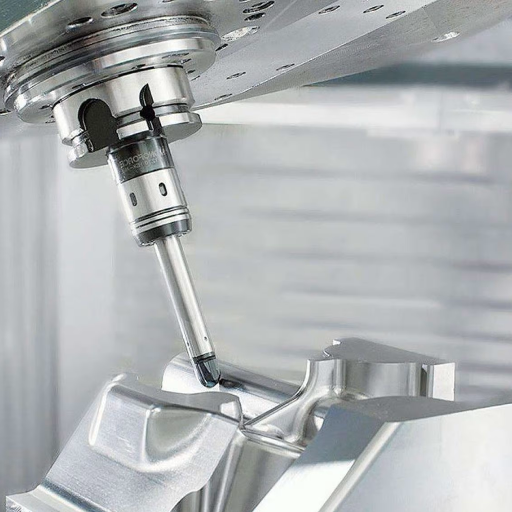
The 5-axis machining services are notorious for guaranteeing accuracy and versatility in manufacturing complex parts. The tool axis can be moved simultaneously along five axes, producing truly complex shapes with utmost accuracy and detail. 5-Axis CNC machines have an advantage of reducing lead time and enhancing surface finish on machining with minimal human error while machining in a single setup. These qualities render 5-Axis CNC machining ever so suitable for aerospace, automotive, and medical industries where tight tolerances and intricate designs are mandatory.
High Precision Machining for Intricate Parts
Precision machining is required for manufacturing intricate and complex components with extreme accuracy. The 5-axis CNC machining technology enables tolerance requirements with the precision of about ±0.001 inches. Such accuracy is of utmost importance in aerospace, where it guarantees the design of utmost functional turbine blades, structural components, etc., beyond that for safety and interfacing.
Modern design and production methods combine with CAD and CAM software to enable a straightforward transfer from the digital model to a physical part. Recent data shows that the global CNC machining market is predicted to hit $130.5 billion by 2030, stimulated by heightened requirements for high-precision parts from different sectors. Aerospace and medical sectors, in particular, are among those increasingly adopting these advancements due to their needs for lightweight materials, intricate geometries, and consistent repeatability.
Such advancements of high precision machining simultaneously lead to better production yields by reducing material wastage and therefore cutting down on the production cost. By employing real-time monitoring and adaptive controls, modern machining systems verify that each part complies with stringent quality requirements even on the basis of high volume. This capability bears testimony to the significance of precision machining for the modern manufacturing environment.
Material Compatibility: Metals and Plastics
High precision machining is well-adapted to dealing with a broad array of materials, including both metals and plastics, each with unique benefits towards professionals and end applications. Metals such as aluminum, stainless steel, titanium, and brass are usually machined for their strength, corrosion resistance, and high-temperature resistance. For example, aluminum is lightweight and corrosion-resistant-perfect for aerospace components, whereas titanium finds its uses as medical implants and military equipment because of its incredible strength-to-weight ratio. Stainless steel, on the contrary, is chosen for its strength and resistance to elevated temperatures and mainly goes into industrial and automotive applications.
In contrast, plastics like ABS, polycarbonate, PTFE (Teflon), and nylon bring the benefit of flexibility, lightweight, and low high production cost precision manufacturing. Medical devices, electronic enclosures, and prototyping are some applications of high precision machining that may rely on these materials. Recent reports declare the global market for precision plastic machining to be that of significant growth, spurred by the increasing demand for lightweight yet durable components in industries like consumer electronics and healthcare.
Compatibility between metals and plastics in the production environment is mostly a function of the actual machining parameters adjusted to suit the material’s inherent properties. For example, metals compellingly require higher cutting forces with heat management whereas plastics will advantage from slower machining speeds for the avoidance of deformation caused by heat. With multi-axis CNC machining and state-of-the-art tooling, manufacturers today have the ability to easily switch between machining of metals and plastics, placing the same demands for accuracy and quality on all production runs regardless of mix materials. This in itself tells the story of how flexible modern machining has grown servicing the diversifying requirements of various industries.
Surface Finish and Quality Considerations
An auspicious surface finish is prioritized in machining because it creates an impression on the working performance, aesthetic view, as well as the specification of the finished product. The surface finish of any metal is dependent upon several properties, such as its tool hardness, tool life, cutting speed, and feed rate, etc. However, aluminum components can attain very low roughness numbers like Ra 0.4 µm when nylon polishing and high-speed tooling are utilized. On the contrary, steel can rarely obtain such level of surface finish before it undergoes further process such as grinding that will eventually provide augment to its surface smoothness.
Installing considerations on machining plastics against melting, chipping, and warpage must also be adopted. Depending on plastic types and machining conditions, surface roughness usually ranges from 0.8 to 3.2 Ra µm. Polymers such as acrylic and PEEK will need slower machining speeds and special tooling to ensure that their structural integrity is unaffected and a good surface finish is attained.
Advanced processing of precision CNC machining and surface finishing processes now guarantees manufacturers can meet tighter tolerances, and apply consistent finishing techniques for both metals and plastics. Recent industry data support an estimate that utilizing advanced technology could reduce surface defects by 30% and improve overall dimensional accuracy to increase product reliability for applications in aerospace, medical devices, and consumer electronics.
How to Optimize the Machining Process?
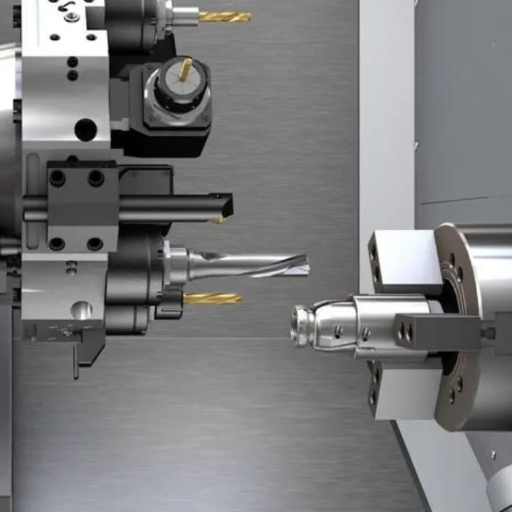
- Tool Selection: Use high-quality, long-lasting tools specifically designed for the material being machined. Tool wear is thus reduced, providing workpiece precision.
- Process monitoring: Real-time monitoring can be considered to detect and resolve instances of tool wear or vibration, thereby reducing downtime and product scraps.
- Cutting Parameters: Cutting parameters such as speed, feed rate, and depth of cut should be adjusted to correspond with the material properties and finish required so that both efficiency and quality are balanced.
Choosing the Right Cutting Tool
Selecting the right tool depends on both the material to be machined and the tooling specification or requirements. Carbide or high-speed steel tooling tends to be best for the majority of applications because of its wear resistance and accuracy. Consider the geometry of the tool, such as the number of flutes from four, three to two, and the design of the cutting edge (sharp or chamfered), considering the hardness of the material to be machined and whether to perform roughing or finishing. When selecting a tool, always consider what has been specifically designed for the particular task, as those will provide the best performance and longest tool life.
Efficient machine setups require less lead time for setup to result in a faster throughput-making process, higher productivity, and cost-effectiveness. To achieve shorter setup times, further adoption of standardized parts and modular fixtures for setup tasks will significantly reduce changeovers. Recent literature suggests that SMED can improve setup time reduction by up to 50%, giving production lines great flexibility in shifting to produce other products.
The supporting technology cannot be ignored either. For example, CNC machines integrated with an intelligent setup system allow operators to pre-load setup configurations, which reduces the time required for manual setup operations by a large margin. Data indicates that manufacturers implement setup automation achieve operational efficiency improved by 30%. Also, through efficient preventative maintenance of machines ensures worthy level is kept and also prevents delay or downtime when expected if not.
Finally, another highly important factor is that of training and retraining. Qualified operators who are able to lead quick setups will make transitions easier with fewer errors and in accordance with lean manufacturing principles. Setup times are therefore greatly improved and throughput enhanced when combining the use of technology and standards with skilled personnel.
Maintaining Quality in Production Parts
Maintaining quality production leads guarantees customer satisfaction and continued business success. Quality parts produce fewer defects and returns and build a greater reputation in the market. Thus, for the investigation to maintain quality, manufacturers must adopt quality control systems forging, technology, and data-driven practices.
Besides, automated inspection systems, such as vision inspection tools and AI-based defect detection, reduce human errors and thus contribute to high precision. Several statistics from Deloitte stated that manufacturers using AI quality-assurance technologies have achieved about a 30% decrease in defects. Meanwhile, Statistical Process Control (SPC) methodologies can monitor production processes in real-time that point to trends and variations whenever those trends become issues.
Another issue lies in consistency in material procurement and supplier assessment. A report from McKinsey identified that 56% of manufacturing defects arise out of inconsistent raw materials. Developing strong relationships with dependable suppliers and conducting regular inspections will lessen that risk.
Furthermore, keeping the production equipment in good repair goes a long way towards ensuring quality. Predictive maintenance, supported by IoT sensors and machine-learning algorithms, has reduced machine failure by 70%, as reported by PwC. It minimizes downtime and ensures that equipment is running optimally, producing consistent and quality outputs.
A workforce committed to quality is the final element needed to tie all this together. Regularly training workers on quality standards and instituting feedback mechanisms can empower teams to take responsibility for sustaining production quality. Through the combination of advanced technologies, precise monitoring, and a focus on material and workforce inputs, manufacturers can successfully adhere to very high quality standards and remain competitive in a very rapidly changing industry.
How to Get a Quote for 5-Axis CNC Milling Services?
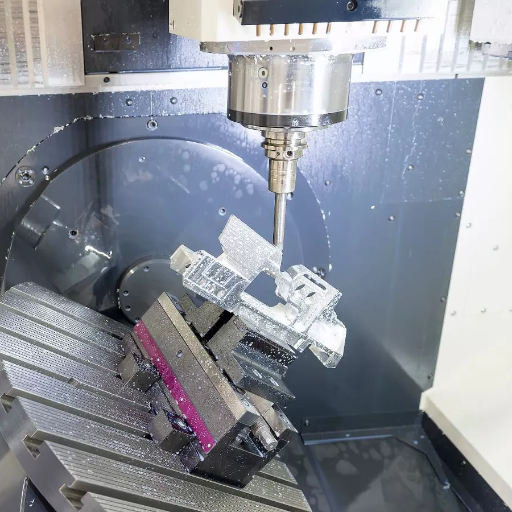
- Prepare Your Design Files: Your design must be in a CAD-compatible file format, such as STEP or IGES, and meet all dimensional and tolerance specifications.
- Specify Material Requirements: Clearly state any desired material from which to fabricate the project.
- Provide Quantity Details: Specify how many pieces must be made, as this has an effect on pricing.
- Outline Delivery Expectations: Indicate timeframe or deadline for completion, if any.
- Contact a Reliable Provider: Now send this great information to the CNC service provider, either through their website, by email, or fill out an online quote request form.
Factors Determining Price of CNC Milling
- Material Type: Different materials are different in price. Compared to aluminum or plastics, metals such as titanium go for far more.
- Design Complexity: More complicated designs need more machining time and accuracy to increase prices.
- Quantity: The higher production run means a lesser charge per item.
- Tolerances: A tight tolerance will require more precise machining, thus making costs higher.
- Finishing: Finishing requirements imply surface treatment or surface coating types, which add to the total cost.
- Lead Time: While a short lead-time shortens delivery, it might bring with it a rush fee.
About Online CNC Machining Services
Online CNC machining services allow users to upload design files, select material and finishing requirements, and receive parts custom manufactured without any handshake between supplier and buyer. They are highly efficient and provide quick turnaround time and so assist a large variety of industries in having access to quality components manufactured with precision.
Steps to Get a Quote for Custom CNC Milling
The first step in obtaining a custom CNC milling quote involves preparing a design file in any compatible format like CAD or STL. I then upload the file onto the manufacturer’s online platform where I specify the required materials, dimensions, quantity, and finishing options. Once all this information has been provided, the platform generates a quote almost immediately based on the specifications applied. The order may be placed via the same online platform if the quoted price is agreed upon.
Reference sources
- A Hybrid Type Small 5-Axis CNC Milling Machine – Discusses the design and precision challenges of 5-axis CNC milling machines.
- Analysis of Backside Sample Preparation for Failure Analysis Using a 5-Axis CNC Grinding Mill – Explores the application of 5-axis CNC milling in sample preparation for failure analysis.
- Multi-Process CNC Build Preliminary Proposal – Highlights the capabilities and advantages of 5-axis CNC milling compared to traditional 2 or 3-axis machines.
- Top CNC Milling Parts Manufacturer and Supplier in China
Frequently Asked Questions (FAQs)
Q: What is a 5-axis machine and how does it differ from other CNC machines?
A: 5-axis milling machines allow simultaneous movement of a part or the tool in five axes for more complex and precise milling operations, such as machining of complex geometries. This is in contrast to 3-axis or other types of CNC machines that may not be able to provide such complex machining operations.
Q: What machining operations can be performed by 5-axis CNC milling machines?
A: 5-axis CNC milling machines can provide machining operations able to manufacture intricate and complex parts with high precision. These machines can handle complex geometries and achieve finer surface finishes, thus gaining importance in aerospace, automotive, and medical fields.
Q: What materials are machined using 5-axis CNC milling services?
A: 5-axis CNC Milling Services can machine a broad range of machining materials, including metals such as Aluminum, Steel, and Titanium, as well as some plastics and composites. The material choice depends on the specific requirement of the part.
Q: What kinds of parts does 5-axis CNC machining produce?
A: 5-axis CNC machining is used to manufacture parts with complex geometries that require precise detailing. It’s commonly used in the manufacture of prototypes and production parts for the aerospace, automotive, and medical industries.
Q: What tolerances are typically achievable in CNC 5-axis milling?
A: CNC milling tolerance achievable on 5-axis machines are usually ±0.005 inches or better. Exact tolerances depend on the material, complexity of the part, and the capabilities of the particular machine.
Q: How fast can 5-axis CNC machining services finish a job?
A: While it depends on the complexity of the design and the current workload of the machine shop, parts are produced as quickly as within a few days with 5-axis CNC machining services.
Q: What are some parts common to CNC machining processes and, in particular, 5-axis milling?
A: Some common applications of 5-axis CNC machining are aerospace components, medical devices, automotive parts, and any other applications that require high precision and complex geometries.
Q: What makes 5-axis milling machines different from a traditional 3-axis milling machine?
A: Further flexibility and higher precision are provided by 5-axis milling machines with respect to the traditional 3-axis milling machines. They can carry out designs of greater complexity, saving time in production since multiple setups for individual tasks are not required. Also, this results in increased accuracy.
Q: Can 5-axis CNC machining be applied to CNC turning?
A: Though mainly used for milling purposes, some of the advanced machining centers offer both milling and CNC turning. CNC turning, however, is generally performed on dedicated lathe machines.


