Copper is one of the CNC machining materials of versatility, prized for its electrical conductivity, thermal properties, and corrosion resistance. The performance and machinability of copper might considerably vary across different grades. These distinctions are essential for manufacturers and engineers to optimize machining processes and get better results. In detailing the various copper grades offered, their respective properties, and applications in CNC machining, this article furnishes the means to produce more precise parts, impart durability, or simplify production processes useful insight about extracting every bit of advantage from copper in modern manufacturing.
What Are the Copper Grades Available for CNC Machining?

Copper grades suitable for CNC machining can be broadly categorized based on their composition and intended application. Commonly used grades include C101, C110, C172, and C145.
|
Grade |
Key Feature |
Conductivity |
Machinability |
Applications |
|---|---|---|---|---|
|
C101 |
Oxygen-free |
Maximum |
Moderate |
Electrical components |
|
C110 |
Electrolytic |
Excellent |
High |
Electronics, thermal |
|
C172 |
Beryllium |
Moderate |
Moderate |
Aerospace, precision |
|
C145 |
Tellurium |
High |
Very High |
High-speed machining |
Each copper grade possesses specific benefits, allowing manufacturers to choose a suitable material depending on the project requirements for mechanical, thermal, or electrical properties. Understanding such features and combining them with CNC methods will provide machinists with maximum performance from manufacturing and on the cost side thereof.
Understanding Copper and Its Alloys
Since copper and its alloys are so widely versatile, having corrosion resistance, conductivity, and adaptability to varied applications, it is among their set of features.
Exploring Pure Copper Grades and Their Uses
Pure copper, with its great conductivity, thermal, and electrical properties, finds immense various industrial and engineering applications. Its malleability and ductility, hence, enable easy shaping and design accommodation according to particular requirements. Let’s look into some common grades of pure copper and a bit of their properties and uses:
C110 Electrolytic Tough Pitch (ETP) Copper
C110 copper is among the most commonly used grades of pure copper. It contains more than 99.90% copper. Having superb electrical and thermal conductivities, it is used in fields such as electrical wiring, bus bars, and transformer winding. It generally has a conductivity that is more than 100% IACS (International Annealed Copper Standard), which draws the attention of system designers for high-performance electrical systems.
C101 (Oxygen Free Electronic – OFE) Copper
In comparison with C110, the C101 grade is free from oxygen and has improved hydrogen embrittlement resistance. Having a purity above 99.99%, it implies even higher electrical conductivity and is used in vacuum systems, high-end electronics, and RF (radio frequency) applications. It is primarily used in situations where extreme assurance is required and minimum impurities are present.
C102 (Oxygen Free – OF) Copper
C102 gives an alternate oxygen-free grade, almost similar to C101 in terms of characteristics, but with a slightly lower degree of purity. It finds application poles in the manufacture of electrical components such as connectors and fine cables due to its superior conductivity and resistance to oxidation.
Uses of Pure Copper Grades
- Electrical Industry –Pure copper grades, such as C110 and C101, are used for electrical conductors to ensure that there is hardly any energy lost and that efficiency is very high.
- Heat Exchangers –Due to its high thermal conductivity, pure copper is used to manufacture heat-exchanger tubes for application in HVAC systems and power plants.
- Electronics–Oxygen-free coppers, like C101, are usually chosen for precision electronic components where superior performance and low impurities matter the most.
Key Data on Pure Copper Properties
|
Property |
C110 (ETP Copper) |
C101 (OFE Copper) |
C102 (OF Copper) |
|---|---|---|---|
|
Purity (%) |
≥ 99.90 |
≥ 99.99 |
≥ 99.95 |
|
Electrical Conductivity (% IACS) |
100–101 |
101+ |
100+ |
|
Thermal Conductivity (W/m·K) |
390–400 |
390–401 |
390–400 |
|
Corrosion Resistance |
Excellent |
Excellent |
Excellent |
By selecting the proper copper grade according to performance requirements, industries have the option of taking advantage of this material’s singular features that allow an application to sustain its function and existence over time.
Comparing Free-Machining Copper vs. Electrolytic Copper
Free-machining copper has superior machinability for certain substances. Some sulfur or tellurium is added in to achieve this. Electrolytic copper, on the other hand, has better electrical conductivity and ductility, allowing it to find different applications from free-machining copper.
|
Parameter |
Free-Machining Copper |
Electrolytic Copper |
|---|---|---|
|
Machinability |
High |
Moderate |
|
Conductivity |
Moderate |
Very High |
|
Composition |
~99.5% Cu + Sulfur/Tellurium |
~99.9% Cu |
|
Ductility |
Moderate |
High |
|
Applications |
Machined components, nozzles |
Electrical wiring, busbars |
|
Cost |
Higher |
Lower |
|
Heat Resistance |
High |
Moderate |
How to Choose the Right Copper Grade for CNC Machining?
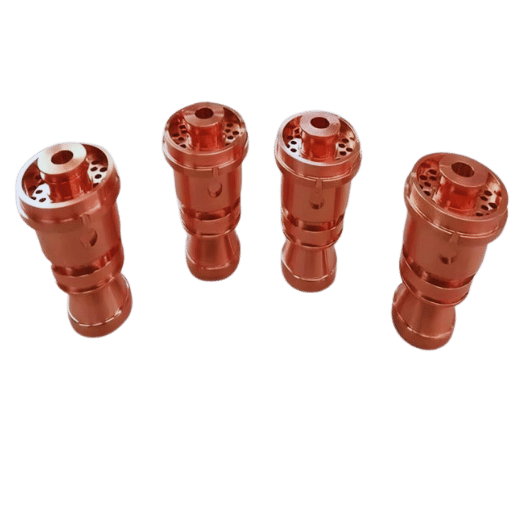
Factors Influencing CNC Copper Machining Decisions
1. Machinability
The ease of machining a copper grade greatly affects the productivity of operations and tool life. Free-machining copper is recommended for making complex or precision components due to its machinability.
2. Electrical Conductivity
Unlike applications, high conductivity may be required. Electrolytic copper has fine conductivity properties and is, hence, preferred for electrical or electronic components.
3. Mechanical Properties
Attributes like ductility, tensile strength, and hardness differentiate copper grades for a particular machining project, as and when durability or flexibility is required.
4. Thermal Resistance
In applications exposed to high temperatures, the selected copper grade must be heat-resistant enough to ensure long-term performance.
5. Cost and Budget Constraints
The availability of the copper grade dictates its fees and, in turn, feasibility to go for as a machining proposition. Higher-grade material designating some special property may pay higher charges.
6. Purpose and End-Use
Depending on what the finished component has to do (electrical conduction, heat dissipation, structural support, et cetera), the material is chosen according to the expected performance.
7. Surface Finish Requirements
Depending upon the copper grades and their properties, there are certain occasions where an excellent surface finish is expected.
8. Tooling Compatibility
The way the copper grade interacts with CNC tooling affects tool wear, cutting speeds, and machining efficiency.
Evaluating the Properties of Copper for Machining
Dry machining is highly appreciated for its excellent properties; copper is an outstanding conductor of heat and electricity, and strongly resists corrosion. Yet its soft and ductile nature gives the machine operator problems in machining; hence, it is usually alloyed to improve machinability.
Assessing Corrosion Resistance and Electrical Conductivity
Copper is known for its best corrosion resistance, which ensures durability under varying environments. It issued a patina of some sort that prevents wear and tear, making it ideal for long-term usage. Further, the metal has a very high electrical conductivity, the second best only to silver; thus, it is the metal of choice for electrical works, allowing efficient transmission of energy with negligible losses. The aforementioned qualities have set copper apart as a trustworthy metal for industries that require durability coupled with excellent conductivity.
What Are the Best Techniques for CNC Machining Copper?
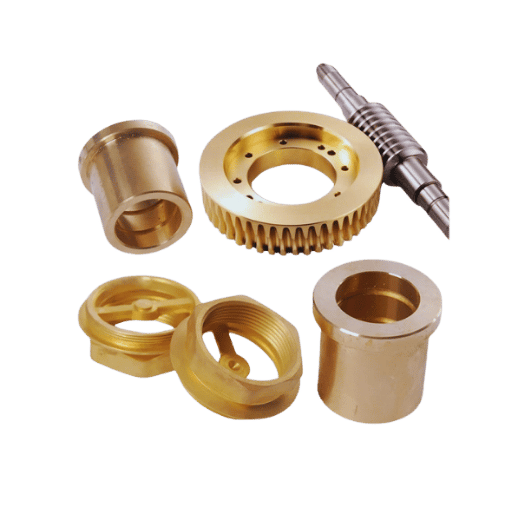
Advanced CNC Milling and Turning Methods
Advanced CNC milling and turning methods for copper machining serve the purpose of attaining greater precision and higher efficiency. Making use of special tooling and optimal cutting conditions results in minimal tool wear and keeps the surface finish intact, which is of utmost importance considering the metal’s softness and its tendency to deform under stronger forces. Methods like high-speed machining (HSM) allow materials to be processed much faster and with less heat; higher heat would otherwise change the properties of copper and leave blemishes on it.
Using coated carbide or diamond tools also protects the tool and reduces the adhesion of the copper to the tool surface. With the help of advanced CNC systems and real-time monitoring technologies, the machining process is further optimized as these systems automatically adjust the speeds and feeds based on the live data received. Such improvements reduce wastage and improve repeatability, which are all needed in high-precision industries such as electronics and aerospace.
Innovative Machining Processes for Copper
Great care must be taken to hold in mind thermal and tool considerations while machining copper. Since copper is highly thermally conductive, heat dissipation itself can be a problem; thus, one must ensure sufficient cooling medium to keep both machines and tools at a comfortable temperature. Moreover, the choice of sharp tools, whether titanium- or diamond-coated, will limit wear on the tool surface and lessen the tendency of the material to stick onto the cutting surface. Feed rates and cutting speeds are predetermined and controlled by pre-programmed CNC systems, so no variation occurs between operations, resulting in uniform finishes at a consistent quality level for critical components. The amalgamation of these processes ensures both efficiency and reliability in high-precision applications.
Ensuring Quality in CNC-Machined Copper Parts
Essential to machining copper in CNC to the highest level is a set of advanced process controls and quality assurance strategies. Proper calibration of CNC equipment and its maintenance practices are crucial to achieve precision and the reduction of defects. Incorporation of CAD (computer-aided design) and CAM (computer-aided manufacturing) software allows accurate simulations and strict adherence to tolerances. Lastly, ultrasonic or X-ray scanning are NDT techniques used to test for defects or the excellent quality of parts without rendering finished goods unusable.
During machining, the utilisation of in-process monitoring systems, such as thermal imaging and vibration analysis in real time, has proven in many instances to prevent potential problems from fully developing. This monitoring is coupled with control of material specifications, dimensional inspection using a coordinate measuring machine (CMM), thus guaranteeing components churned out as per extreme standards required for aerospace, automotive, and electronics markets. With the recent upsurge in demand for precision and reliability, the integration of the methods thus becomes imperative for the copper machining industry to maintain performance and customer satisfaction.
What Applications Benefit from CNC-Machined Copper Parts?
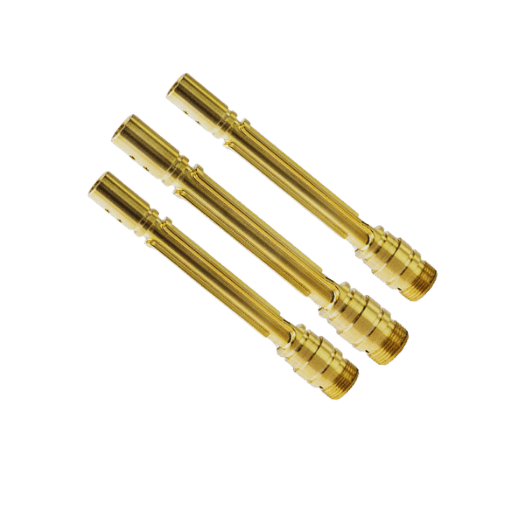
Industries Leveraging Copper and Copper Alloys
Copper features the highest conductivity of all the metals and alloys, also possessing strength and corrosion-resistant qualities, thus ensuring great demand in some of the critical industries. Some of the important areas of application are:
- Electronics and Electrical Engineering: For wiring, connectors, and components’ manufacture, copper must be used as it permits efficient electrical conduction.
- Aerospace: Complex componentry is installed that must ensure reliability under severe conditions.
- Automotive: Electrical systems, thermal management systems, and braking components.
- Telecommunications: Transmission of signals through cables and connectors.
- Renewable Energy: Copper is used in solar panels, wind turbines, and associated infrastructure.
What these industries require are copper materials for the best combination of performance and life.
Exploring Electrical and Thermal Conductivity in Applications
- Wiring and Cabling: As copper is the best conductor of electricity, it is the most commonly used material for wiring in homes, offices, and industries.
- Electrical Motors: Copper windings in motors make them more energy-efficient and durable.
- Power Distribution: Due to its capacity for high electrical loading with relatively minimal losses, copper is used in transformers, generators, and power lines.
- Heat Exchangers: By using its high thermal conductivity, copper becomes effective for heat transfer in heating, ventilation, air conditioning (HVAC) systems, and industrial processes.
- Electronics: Copper is required for PCBs, heat sinks, and connectors where both electrical and thermal performance is needed.
- Automotive Systems: Active in advanced vehicles, copper forms battery connections, onboard chargers, and thermal management for engine components.
- Renewable Energy Systems: Copper plays a vital role in solar cells, solar panel wiring, and heat dissipation for wind turbines.
Common Machining Projects Utilizing Copper
The general machining projects for copper work include electrical components, heat exchangers, plumbing parts, musical instruments, decorative fixtures, and aerospace components.
|
Key Point |
Details |
|---|---|
|
Applications |
Electrical, Heat, Plumbing, Music, Decor, Aerospace |
|
Material Types |
Pure, Alloys |
|
Alloys |
Brass, Bronze, Beryllium |
|
Properties |
Conductive, Thermal, Corrosion-resistant |
|
Techniques |
Milling, Turning, Drilling |
|
Challenges |
Tool wear, Heat, Chip control |
|
Industries |
Electronics, Energy, Automotive, Architecture |
How Do Surface Finishes Enhance CNC-Machined Copper Parts?
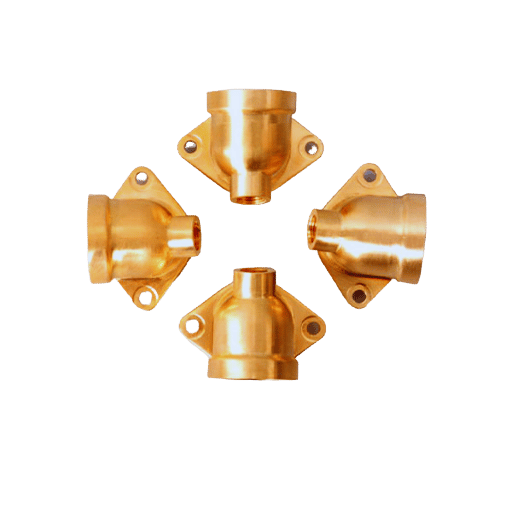
Importance of Surface Finishes for CNC Machined Copper
The surface finish is of utmost importance for CNC-machined copper parts as it directly impacts performance, durability, and function. In my opinion, the right finish will minimize the surface roughness, resulting in better electrical conductivity and corrosion resistance. Furthermore, surface finishes increase the attractiveness of the parts and protect them from environmental degradation, thus ensuring dependable operation in various industries.
Methods to Achieve Desired Surface Finishes
1. Polishing
Polishing is one usual practice for diminishing surface roughness and obtaining a smooth-reflective finish. In general, a slight polish is required for parts that appeal more to the eye and those having better conductivity.
2. Electroplating
Electroplating deposits a thin, even metallic layer on the surface, offering antirust and antiwear protection. This method is widely used for copper parts exposed to harsh environments.
3. Chemical Etching
The function of chemical etching is to either create a uniform matte finish or remove any surface contaminants, thereby permitting better durability and optimum performance for a particular technical application.
4. Passivation
Passivation treats the copper surface while forming a protective oxide layer to diminish corrosion hazards and extend the component’s life.
5. Sandblasting
The sandblasting method involves cleaning and texturing the surface by abrasive material, thus suitable for further treatment like coating or painting. This technique ensures better adhesion with a consistent surface quality.
Impact on Machined Parts Performance and Longevity
Advanced surface-finishing techniques play a pivotal role in boosting the performance and life duration of machined gears. Recent figures suggest that techniques such as passivation and sandblasting endow the components with resistance against adverse environments, including oxidation and wear; both are characteristic of component deterioration. Passivated surfaces, at industrial scale, have shown in studies to resist corrosion up to 30% better than non-treated ones. Likewise, sandblasting maximizes the adhesion of coatings, thereby averting premature failures of coating layers by almost 25% as recorded in studies for material durability. Such enhancements, backed by up-to-date analytics, tend to prove that an industrially apt method for maintaining machine component integrity entails the integration of such techniques, which, in turn, reduces maintenance costs and downtime.
Frequently Asked Questions (FAQs)
Q: What are the advantages of CNC machining copper?
A: Heat and electricity are the two areas where copper as a material does well, and copper gives most people the ability to solve them in those areas effectively, hence the thinking would be an advantage in the case of using one for most cases. This, along with the advantages of the copper material, makes for a low-effort production of cut CNC machined components.
Q: What is the most suitable copper material for CNC machining?
A: Perhaps the most popular in terms of standard pure copper grades available for CNC machining is copper 101, which is high-purity copper. This grade has very good electrical and thermal properties and hence is widely used in electronics and heating, and cooling systems.
Q: Give the available copper grades for machining in a CNC.
A: There are a few grades of copper that are CNC machinable waist coat, including the copper 101, copper 110, copper C110, also known as electrolytic tough pitch and oxygen-free coppers. Each of these grades has distinct characteristics that suit the needs of different CNC machining assignments.
Q: Why should I choose one grade of copper over the other in a CNC machining work?
A: This is determined by the requirements of the project, such as those relating to heat stub, electrical, and mechanical properties, particularly relative to the ease of material expansion and removal. EndinX CNC machining services offer consultations and advice on the most suitable copper grade to use within your circumstances.
Q: When is CNC Copper Machining most appropriate?
A: In CNC copper machining, heat exchangers, connectors, and electrical components, or the fabrication of any other part that requires conductivity needs is what the CNC copper machine is used for. It is, however, a multi-application material, and this helps in great dimensional applications.
Q: What is the copper CNC machining technique?
A: CNC turning, milling, and drilling are some of the other most common techniques used in the CNC machining of copper. Ways to enhance the performance of the process and the output of the copper machining include finding the proper cutting tools, fine-tuning the speeds and feeds to the technique used.
Q: What are some of the difficulties that may be experienced when machining copper with CNC?
A: Due to the nature of the material, filling in pain points associated with copper machining, it propagates tool wear out, while it causes chatter. The use of an inappropriate copper cutting tool and adjusting machining parameters may cause these problems, however.
Q: What is the difference between oxygen-free copper and other copper used in machining?
A: Oxygen-free copper contains meager impurities and little or no oxygen to improve the properties of the copper in this case, such as working age thermal conductivity or electrical conductivity. These qualities are essential in some applications, making this type of copper applicable in high CNC parts machining.
Q: What are the benefits of a free machining copper during the CNC cutting process?
A: Unlike other forms of copper, the free machining type is specifically prepared and contains small amounts of alloying chemicals to improve the making it easy and smooth for workability. Hence, there is less resistance towards the tools and more moulding efficiency with less tool wear, without losing their good electrical and thermal properties.
Q: Is there anything specific I need to know about copper CNC machining to begin working on it?
A: You should know what to do for your designated task as well as the respective copper grade, and machining processes, and the issues that may arise. Build the ideas with the help of professional CNC machining services, in order not to fail with your copper workpiece, and to complete it efficiently.
Reference Sources
1. Dimensional Characterization and Hybrid Fabrication of Copper Components Using Atomic Diffusion Additive Manufacturing CNC Machining and CNC Processing
- Authors: Elena Monzón et al.
- Publishing Date: March 1, 2024
- Summary: This investigation is based on the concept of combining Atomic Diffusion Additive Manufacturing (ADAM) and conventional CNC machining to elaborate monolithic copper parts. The study is largely centered on the dimensional characterization of the parts manufactured by ADAM, which were further machined by the 5-axis CNC system. Some of the key outcomes include characterization of dimensional anomalies for different structural forms and the influence of surface roughness on the resultant product. The need to compensate for dimensional flaws in copper components for their precision is strongly advocated in this work (Monzón et al., 2024).
2. Copper Complex Electrodes Machining Using CNC
- Primary Authors: I. A. Popan et al.
- Date of Publication: July 1, 2015
- Synopsis: The article describes the difficulties encountered when machining copper workpieces with complex geometry due to their inherent flexibility and gumminess. The study outlines techniques of CNC machining of copper electrodes, so that dimensional precision and appropriate finishing of surfaces are achieved. It underscores the importance of customized tools and operating conditions in enhancing the machinability of shaped electrodes (Popan, et al. 2015, 153–158).
3. Process Parameter Optimization in CNC Turning of Copper and Aluminium Alloy through Taguchi Method
- Authors: Ruby Haldar, Santanu Duari
- Date: April 30, 2022
- Overview: This article discusses the best way to use the Taguchi method to optimize CNC turning parameters of copper and aluminum alloys. The main goal is to reduce the surface roughness and optimize turning parameters: speed, feed rate, and depth of cut. The results show that the Taguchi method improves the performance of machining operations of both materials in different ways as well (Haldar & Duari, 2022).
4. Bronze
5. Copper
6. Alloy